
7 Bookshelf Styling Formulas That Look Curated Instead of Crowded
Repeatable layouts, rules and ratios for shelves with a lot of books, no books at all, or somewhere in between.

A crowded bookshelf is not a storage problem. It is a layout problem. The same shelf and the same books can look cluttered or considered depending on where things sit, which is why these bookshelf styling formulas that look curated instead of crowded work: they replace guesswork with rules you can repeat on every shelf.
You will get seven formulas, including separate ones for shelves full of books and shelves with none, a checklist of what looks good on a bookshelf, seven quick-reference rules and an FAQ. Pick one formula, apply it to a single shelf, and judge the result before you touch the rest.
Bookshelf Styling Formulas That Look Curated Instead of Crowded: Quick Answer
- The rule of thirds: books, objects, empty space
- The zigzag layout
- The heavy-bottom rule
- How to style a bookshelf with a lot of books
- How to style a bookshelf without books
- The living room bookshelf formula
- The small bookshelf formula
Formula 1: The Rule of Thirds (Books, Objects, Empty Space)

The eye needs rest between objects. Without a gap, everything competes for attention and the shelf reads as clutter. The empty third is what makes the other two thirds look chosen.
- Split the shelf into three equal zones by eye.
- Fill one zone with books, one with an object or small group, and leave one empty.
- Change the order on the next shelf so the empty spaces do not line up in a column.
Formula 2: The Zigzag Layout
 What it is
You alternate where the objects sit from one shelf to the next, so the eye travels down the bookcase in a zigzag instead of a straight line.
Why it worksStacking objects directly above each other creates a stiff vertical pattern. The zigzag adds movement, which is one of the quiet tricks behind a shelf that looks professionally styled.
- Put the main object on the right side of the top shelf.
- Put the main object on the left side of the next shelf.
- Repeat down the bookcase, filling the gaps with books.
Formula 3: The Heavy-Bottom Rule
 What it is
Place the heaviest, largest items on the lower shelves and the lightest, smallest pieces higher up.
Why it worksVisual weight grounds the shelf. When big objects sit up high, the bookcase looks top-heavy and seems to float.
- Bottom shelves: large art books, baskets and heavy vases.
- Middle shelves: framed art, bowls and medium objects.
- Top shelves: small ceramics, a plant or one light statement piece.
Formula 4: How to Style a Bookshelf With a Lot of Books
 What it is
A method for shelves where books are the main event. You group, break the run and use objects as punctuation.
Why it worksA long, uniform row of spines is visually noisy. Grouping and breaking it up gives the eye clear sections.
- Group by color, size or subject. Pick one system per shelf, not all three.
- Break up long vertical runs with a flat stack of two or three books.
- Close each run with a bookend or an object so leaning books have a stop.
Formula 5: How to Style a Bookshelf Without Books
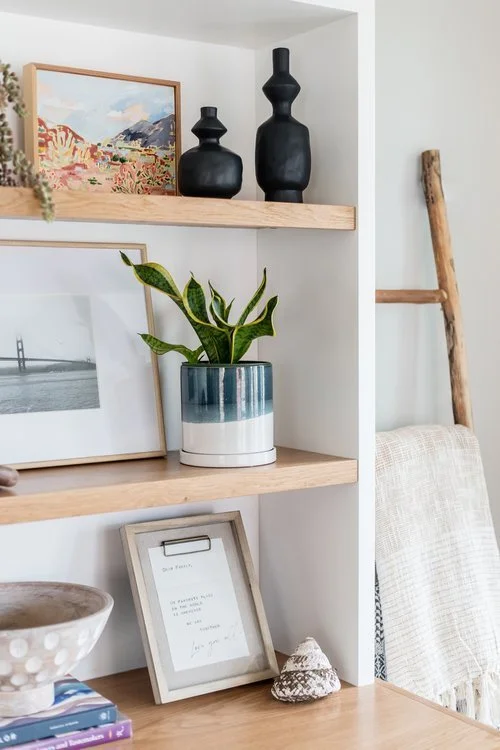 What it is
An object-only layout built from vases, framed art, plants and bowls.
Why it worksWithout books to fill space, a shelf can look sparse. Grouping objects in odd numbers and varying their heights gives it structure.
- Choose one family of objects: vases, bowls, framed art or plants.
- Group them in odd numbers. Three is the safe default.
- Vary the heights: one tall, one medium, one short.
Formula 6: The Living Room Bookshelf Formula
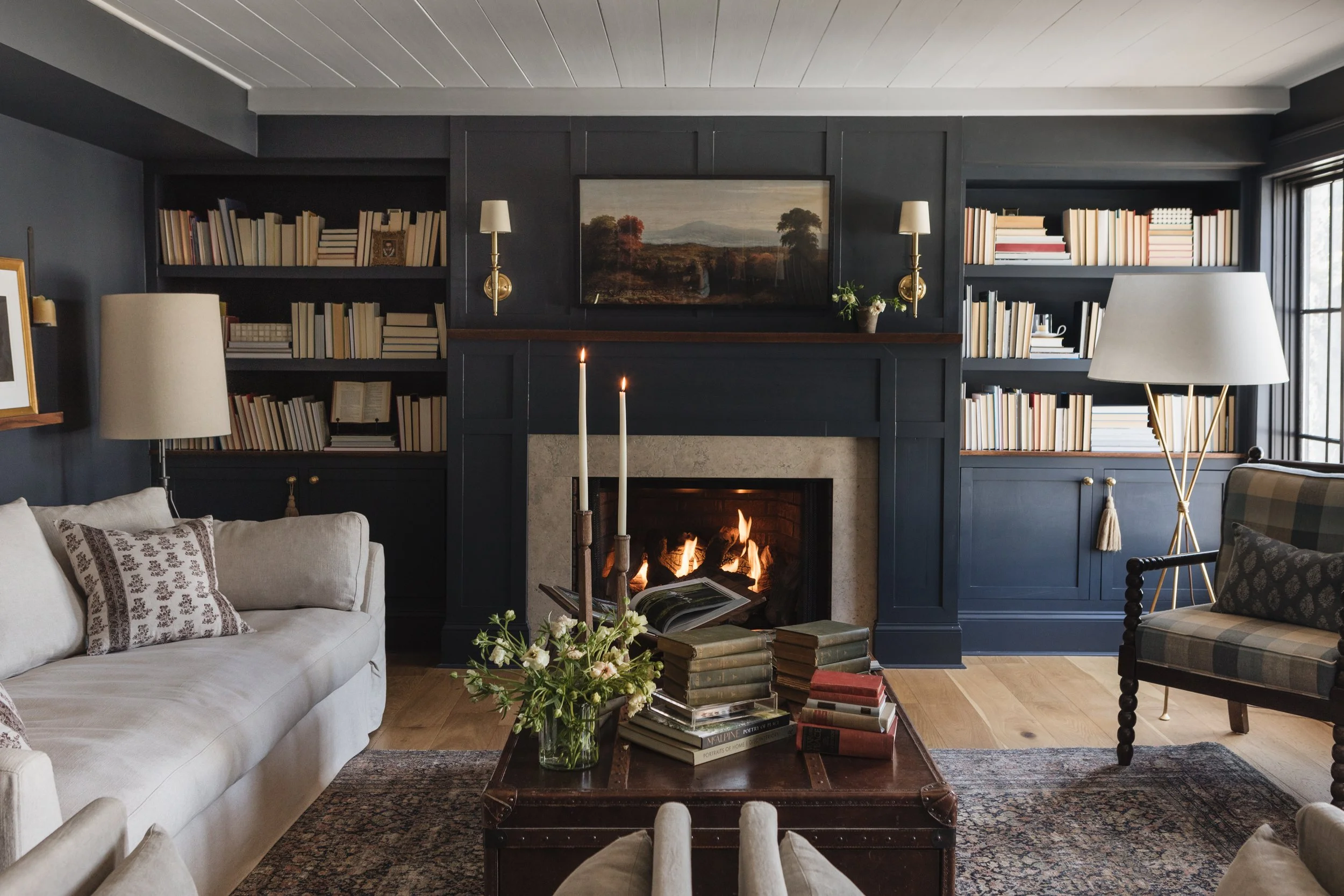 What it is
A balance for living room shelves, where the bookcase is seen from the sofa and has to read as decor.
Why it worksMixing books with objects at about half and half keeps the shelf useful and polished. A single statement piece on top gives the whole bookcase a focal point.
- Aim for roughly 50 percent books and 50 percent decor objects.
- Add candles, frames and one plant to the object half.
- Leave the top shelf for a single statement piece.
Formula 7: The Small Bookshelf Formula
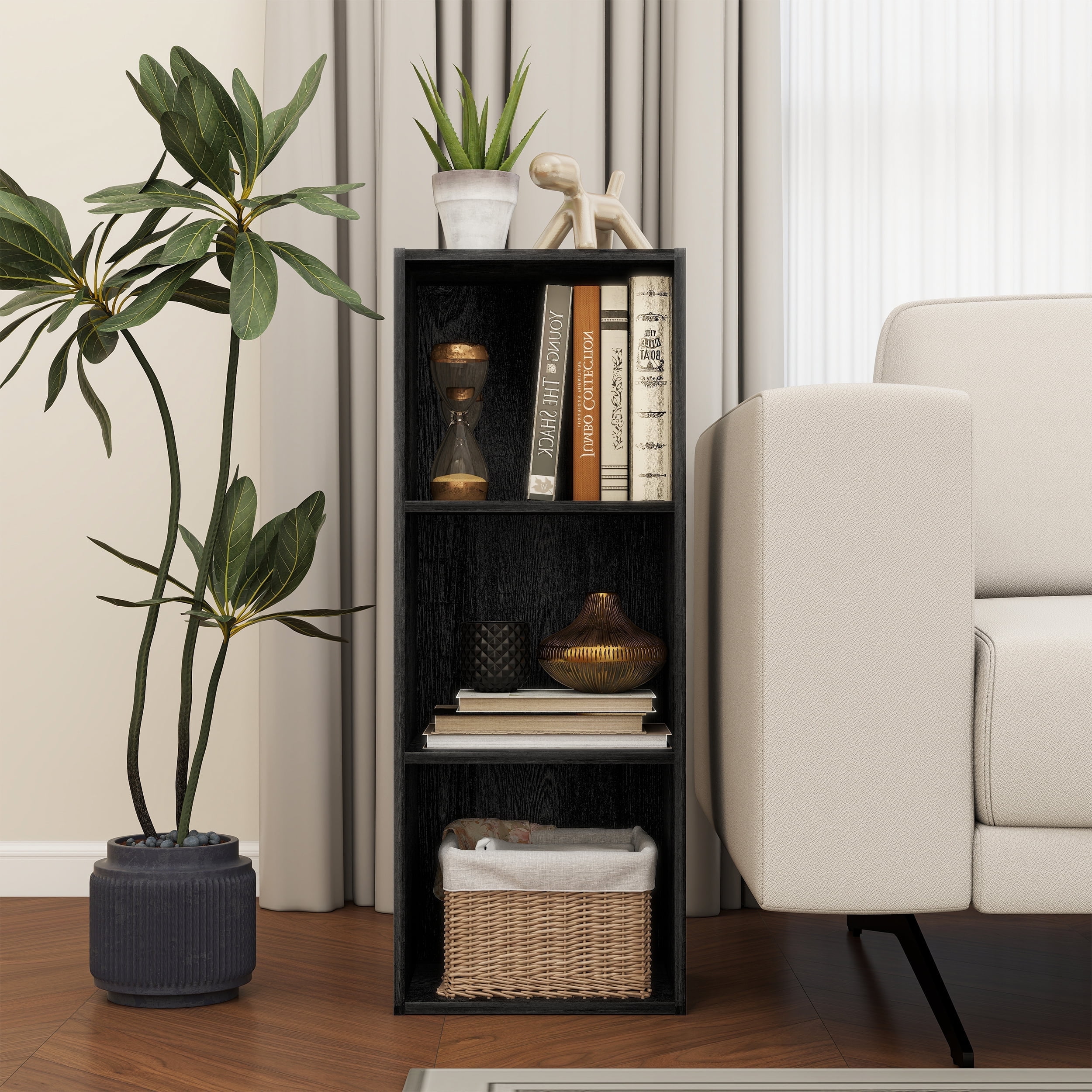 What it is
Fewer items, bigger impact. Small shelves show every object, so there is no room for filler.
Why it worksVertical styling uses the height of the shelf instead of its width, and a small cap on items keeps each one readable.
- Cap each shelf at about three items.
- Style vertically: a tall vase, a short stack of books and a small plant.
- Make one item per shelf the larger piece and keep the others quiet.
What Looks Good on a Bookshelf (Item Checklist)
Use this as a shopping and styling list. You do not need all nine, and a good shelf usually uses books plus two or three of them.
Bookshelf Styling Rules (Quick Reference)
- Odd numbers over even. Groups of three and five look more natural than pairs.
- Vary heights on every shelf. Tall, medium, short.
- Leave 30% empty space. It is the same idea as the rule of thirds.
- One color palette per shelf. Two or three colors that repeat.
- Group by category, not chaos. Books with books, ceramics with ceramics.
- Layer items front and back. A frame behind, a vase in front.
- Remove one item before you think it is done. It is almost always the right edit.
Bookshelf Styling FAQ
How can I style my bookshelf to make it look better?
Edit first, then apply a layout: leave about a third of each shelf empty, put heavier items low, vary heights, group in odd numbers and keep one color palette per shelf. Removing one item at the end usually helps the most.
What are some basic rules for decorating a bookshelf?
Use odd numbers, vary heights, leave about 30 percent of the space empty, keep one palette per shelf, group by category, layer front and back, and remove one item before you think you are done.
What looks good on a bookshelf?
Books, bookends, vases, ceramics and bowls, framed art, plants, candles, sculptural objects and baskets. A good mix is books plus two or three kinds of objects, with open space between them.
How do I style a bookshelf with a lot of books?
Group books by color, size or subject, choosing one system per shelf. Break long vertical runs with a flat stack of two or three books, and close each run with a bookend or object. Pack away books you will never open.
How do I style a bookshelf without books?
Use vases, framed art, plants and bowls. Group them in odd numbers, vary heights from tall to short, and lean framed art at the back with smaller items layered in front.
How do I style a bookshelf like a designer?
Designers use repeatable formulas: the rule of thirds, a zigzag layout, heavy items at the bottom, odd-numbered groupings and generous empty space. They also edit hard and keep the palette limited.
What is the rule of thirds for bookshelf styling?
It divides each shelf into three zones: about one-third books, one-third decorative objects and one-third empty space. The empty zone gives the eye a place to rest. Shift the order from shelf to shelf for variety.
How many items should go on each shelf?
On a typical 30 to 36 inch shelf, aim for about three to five groupings, counting a stack of books as one. On a narrow shelf, about three items is enough. These are guidelines, and the empty space matters as much as the count.
Should books be vertical or horizontal on a shelf?
Both. Vertical runs form the base, and a flat stack of two or three books breaks the rhythm and can act as a riser for a small object. Using only one orientation looks stiff.
A Simple Takeaway
Start with the rule of thirds and keep one third empty. Put heavy things low, vary the heights, and take one item away before you call it finished. A shelf looks curated when each thing on it has room to be seen.
Keep Reading
 Apartment decorating ideas
 8 Lighting Mistakes Making Your Home Look Cheaper Than It Is
 10 Thrift Store Finds That Look High-End When You Style Them Like This
 7 Things Interior Designers Remove From Every Living Room (And What They Use Instead)
 9 dollar organizing products that look expensive on shelves
8 things I always buy on Facebook marketplace
 9 accent wall ideas that doesn't require paint or nails
 7 peel and stick wallpaper picks that fool every one into thinking they are custom
 9 renter Friendly kitchen Backsplash Option that Feel off Damage Free
 7 Apartment Balcony Ideas That Don't Require Drilling (No Drill, No Deposit Risk)
 10 coastal grandmother piece under 30$
 8 Small Patio Ideas That Make a Concrete Slab Feel Like a Getaway
 Ceiling tricks that make low ceilings feel taller
 7 Nightstand Mistakes That Make Your Bedroom Look Messy
 10 Kitchen Updates Under $100 That Look Like a Full Remodel
 8 Cabinet Hardware Swaps That Make Builder-Grade Kitchens Look Custom
 7 Backsplash Alternatives That Cost Less Than Tile But Look Just as High-End
 9 bathroom upgrades under 75$ that feels like spa
 10 Bedroom Styling Tricks That Make a Bed Look Hotel-Expensive
 11 Coffee Table Styling Tricks Designers Use
 Gallery Wall Layouts That Look Custom-Curated, Not Cluttered
 7 Entryway Upgrades Under $40 That Change a Guest's First Impression
 6 Small Entryway Ideas That Make a Tiny Foyer Feel Designed
 8 Home Office Upgrades Under $60 That Look Like a Pinterest Dream
 6 Desk Styling Tricks That Make Remote Work Setups Look Professional
 10 Storage Tricks That Make Small Closets Feel Twice the Size
7 Signs Your Home Is Cluttered
 8 Curtain Hanging Mistakes That Make Ceilings Look Shorter
 9 Minimalist Decor Swaps That Make a Small Home Feel Calmer
 7 Plant Styling Tricks That Make a Room Feel Instantly Finished
 9 Paint Colors Designers Never Use (And What They Pick Instead)
 Dollar Store Finds That Look Custom-Made With One Simple Trick
 7 Living Room Clutter Fixes Designers Use Before Buying More Storage
 9 Ways to Make a Builder-Grade Living Room Look Custom Without Remodeling
 6 Awkward Living Room Layout Fixes for Rooms With Multiple Doors
 8 Living Room Corners You Can Turn Into Useful Space for Under $50
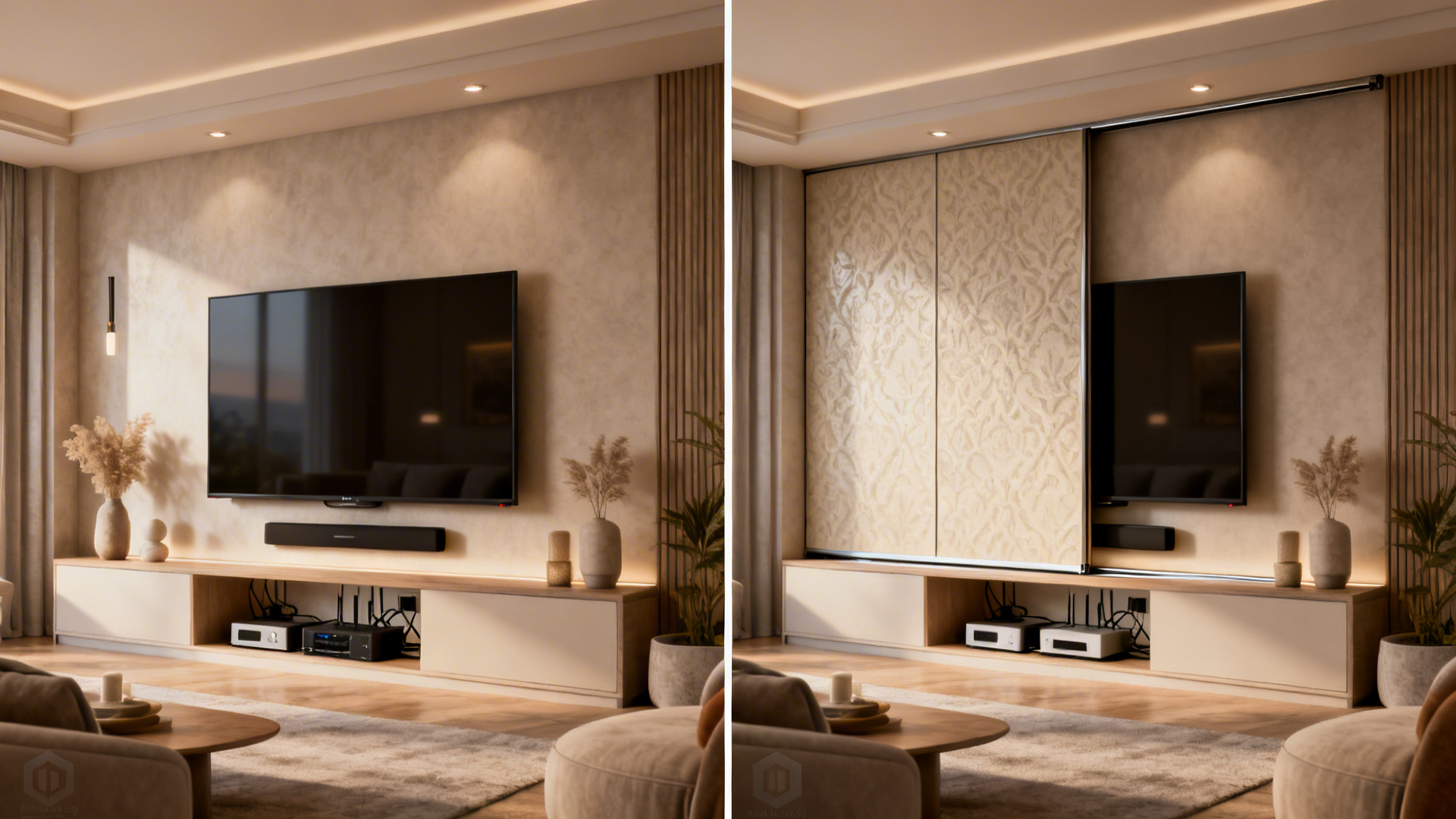 7 TV Wall Tricks That Make the Screen Feel Less Noticeable
 8 Media Console Styling Fixes That Make a TV Stand Look Finished
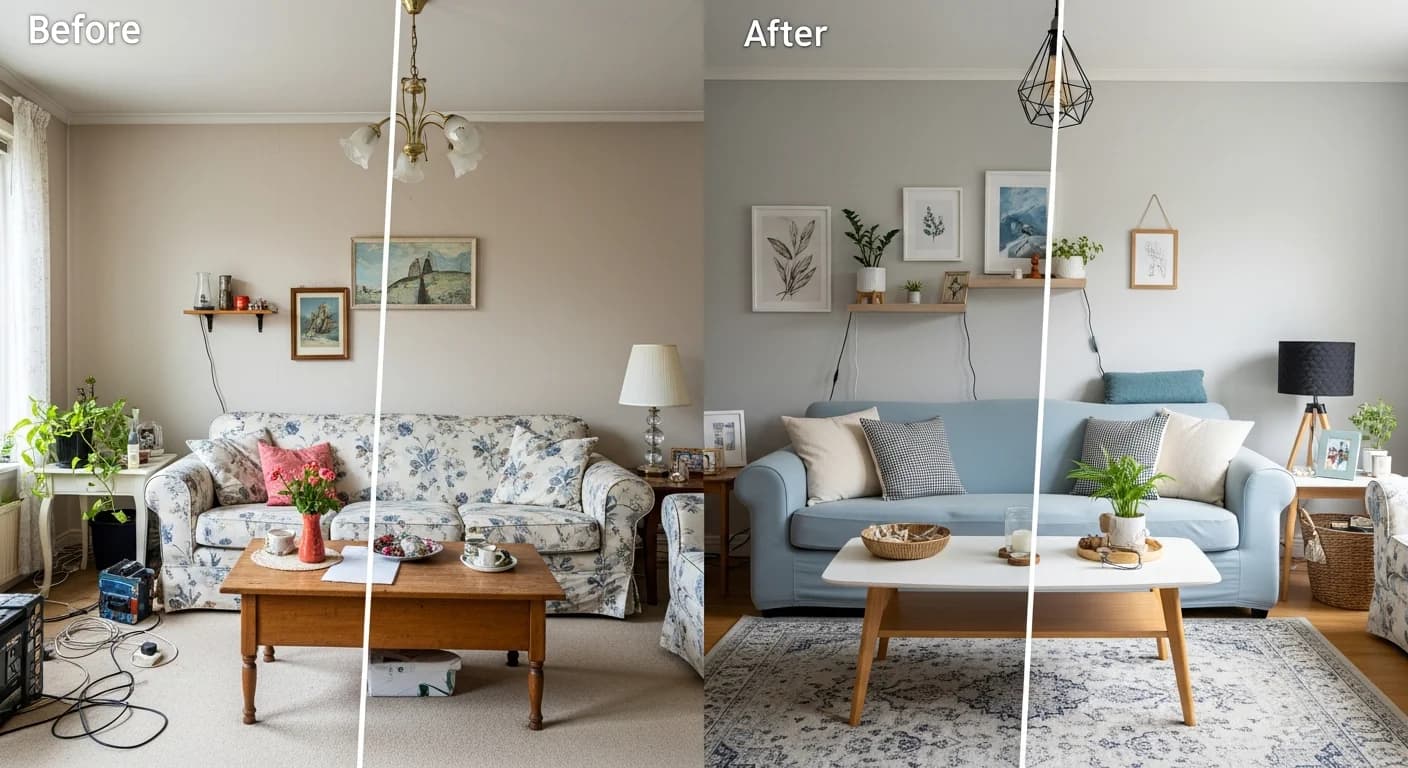 9 Budget Living Room Changes With the Biggest Visual Impact