7 Nightstand Styling Mistakes Making Your Bedroom Look Cluttered
Small mistakes that quietly make a bedroom feel chaotic — and the fix.
My nightstand used to be a catch-all for everything that didn't have a home elsewhere. A water glass. Three half-read books. A phone charger that had somehow coiled itself into a knot. A random receipt I kept meaning to throw away. It looked exactly like what it was, a place where clutter went to settle, not a piece of furniture I'd actually styled.
It took me years to realize that a chaotic nightstand doesn't just look messy, it makes the whole bedroom feel unsettled. It's the last thing you see before sleep and the first thing you see when you wake up, and if it's cluttered, that low-level stress follows you into both.
A quick note before we start: a few of the stories ahead are shared as told to me directly, and a few are offered as illustrative examples to make a principle easier to picture, I've tried to be clear about which is which.
Here are seven nightstand styling mistakes that quietly make a bedroom look cluttered — and how to fix each one.
Table of Contents
- Treating It Like a Dumping Ground
- Keeping Things You Don't Actually Use
- Mismatched Heights That Look Accidental
- Leaving Cords Visible and Tangled
- Using It as a Storage Unit Instead of a Styling Surface
- Forgetting the Rule of Three
- Skipping a Lamp Altogether
- Nightstand Styling by Bed Size
- The 60-Second Nightstand Edit
- The Nightstand-Only Toolkit
- The Full Cost Comparison
- Common Questions
Treating It Like a Dumping Ground
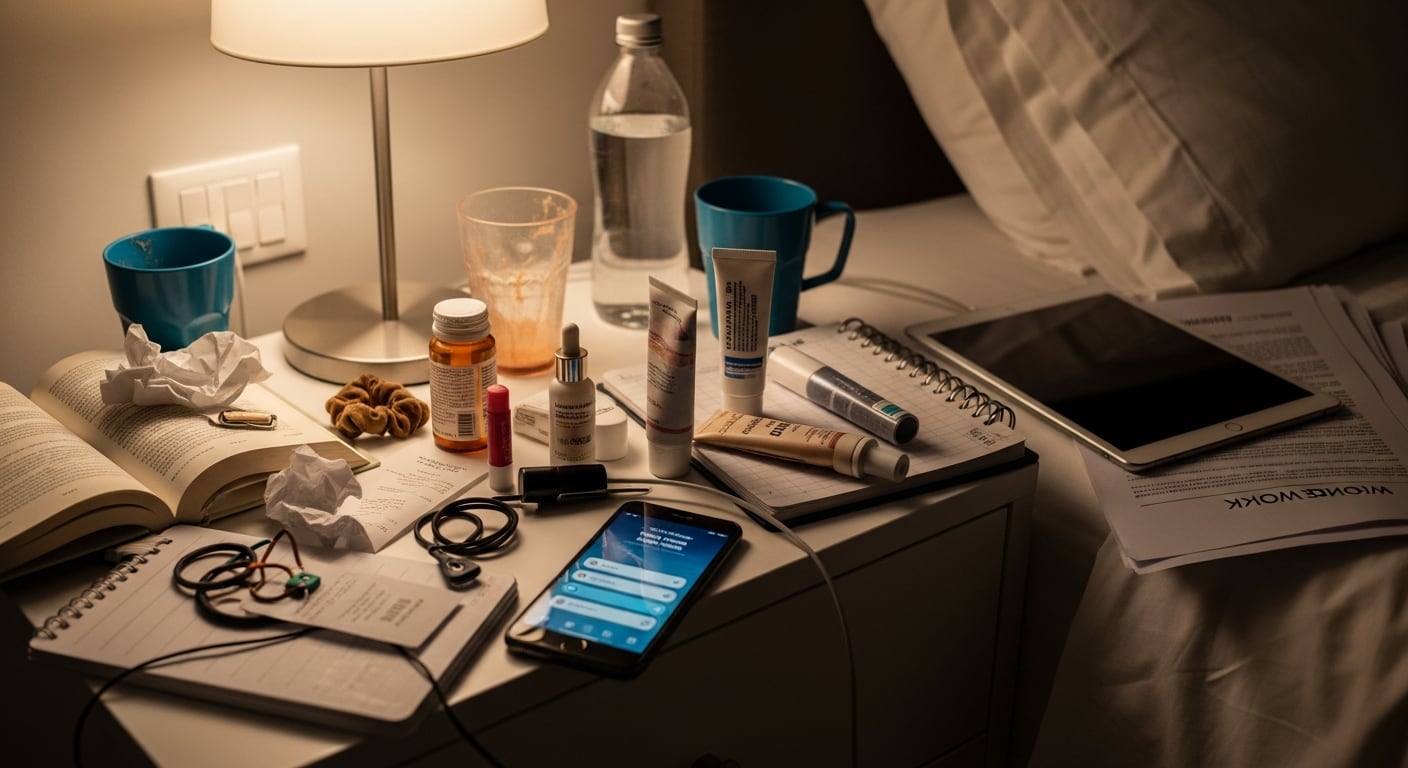
The biggest mistake I made was treating my nightstand as a catch-all for anything I didn't want to deal with. A receipt I'd sort later. A pen I'd put away eventually. A ring I'd taken off and wasn't sure where to store. It wasn't one big mess, it was a dozen tiny things that never got put back where they belonged.
- Clear everything off the surface and only put back what you genuinely use daily.
- Give every remaining item a specific home, not just "somewhere on the nightstand."
- Add a small catch-all dish for tiny things like rings or airpods, but limit it to that one dish.
- Commit to clearing the surface once a week, even if it feels like there's nothing to clear.
- Keep a small trash can nearby so receipts and wrappers never make it to the nightstand at all.
- Creates a clear visual boundary for what belongs and what doesn't
- Reduces the low-level stress of waking up to clutter
- Makes the bed the focal point instead of the mess beside it
Search terms: "small catch-all dish," "nightstand tray," "ceramic trinket dish"
Keeping Things You Don't Actually Use
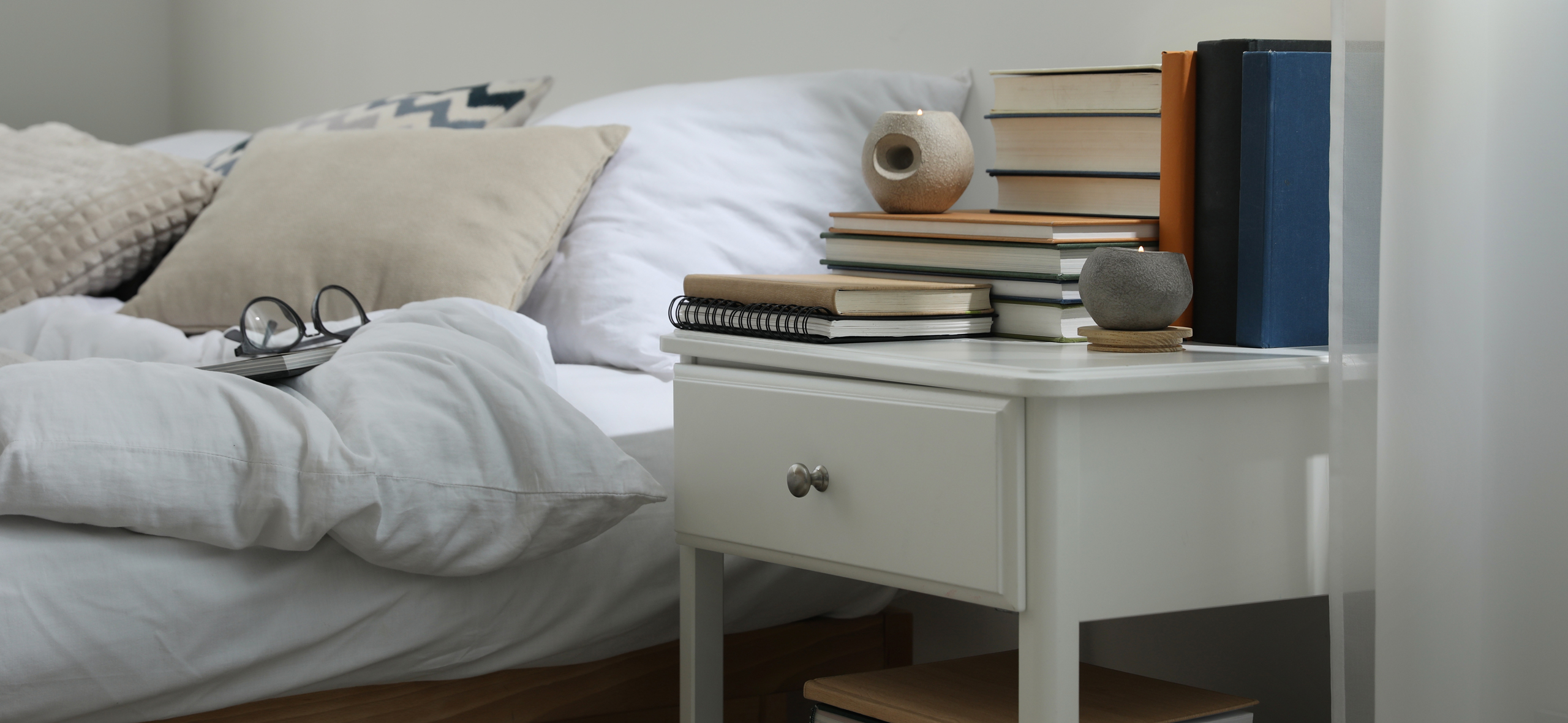
One homeowner shared that her nightstand held a stack of books she'd started but never finished, a candle she'd never lit, and a coaster she didn't need because she never brought drinks to bed. It was entirely aspirational, not functional, and that quietly made the whole room feel heavier than it needed to.
- Ask yourself: Did I use this in the last week? If not, it doesn't need to be on the nightstand.
- Move aspirational items (unread books, unlit candles) to a shelf or basket elsewhere.
- Keep only one book at a time on the surface, the one you're actually reading.
- Replace unused decor with something that has a genuine purpose, a lamp, a clock, a small plant.
- Reassess every season as your routines change with daylight and weather.
- Removes the visual weight of aspirational clutter
- Makes room for things you actually reach for daily
- Creates a surface that works for you, not against you
Search terms: "small bedside plant," "alarm clock minimalist," "book stand for current read"
Mismatched Heights That Look Accidental

I used to place items on my nightstand without any thought to their height, a short candle, a tall glass, a medium-sized book, all just sitting there like they'd been placed by someone who didn't care. The result was a surface that felt chaotic even when the items themselves were fine.
- Choose one tall item (a lamp, a vase, a large candle) as the anchor.
- Choose one medium-height item (a stack of two books, a small plant) to sit beside it.
- Choose one low item (a small dish, a single book) to balance the visual weight.
- Arrange them in a triangle formation rather than a straight line.
- Avoid grouping items of the same height together, that's what reads as cluttered rather than curated.
- Creates visual rhythm that feels intentional
- Draws the eye in a calm, predictable pattern
- Makes a small surface feel balanced and complete
Search terms: "stacked coffee table books," "small plant pot," "tall ceramic vase"
Leaving Cords Visible and Tangled
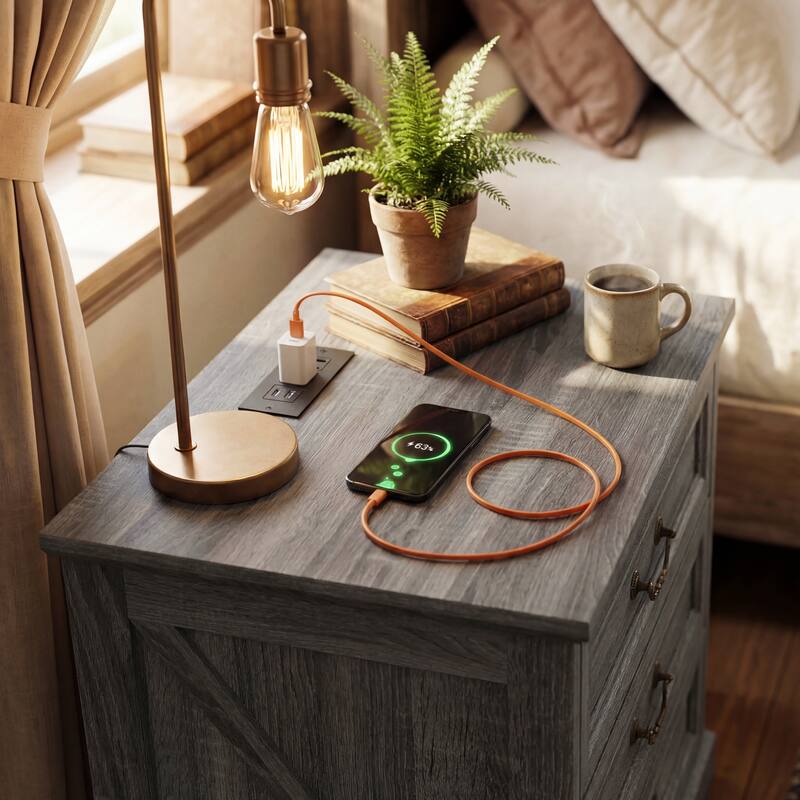
A reader shared that her nightstand looked beautifully styled right up until she plugged in her phone, and the visible, tangled charger immediately ruined the whole effect. It wasn't the items that made it look cluttered, it was the cord snaking across the surface in plain sight.
- Run the cord behind the nightstand or along the back edge where it's not visible from the bed.
- Use a small cord clip or adhesive hook to keep the cord in place along the furniture's back edge.
- Charge devices on a nearby dresser or desk instead of directly on the nightstand surface.
- If you must charge on the nightstand, choose a cord that matches the furniture color (white on white, black on dark wood).
- Unplug and store the cord when not in use, rather than leaving it permanently draped across the surface.
- Removes the visual clutter of visible cords
- Makes the styled items read as intentional rather than competing with the cable
- Creates a calmer, cleaner visual line from the bed
Search terms: "cord clip adhesive," "cable management for nightstand," "phone charger with long cord"
Using It as a Storage Unit Instead of a Styling Surface
I used to keep everything I might need at night on my nightstand, a book, a glass, a phone, a charger, tissues, lip balm, reading glasses, earplugs, a remote, a pen, a notepad. The result wasn't a styled surface, it was a mini storage unit, and it made the whole room feel smaller than it was.
- Identify the three to four things you genuinely reach for every single night.
- Keep a small basket or drawer in the nightstand for things you need occasionally (tissues, earplugs, chargers).
- Allow only one small decorative object that has no practical purpose, a candle, a small vase, a framed photo.
- Everything else goes elsewhere, a nearby shelf, a dresser, a bathroom cabinet.
- Reassess weekly, if you haven't used it, it doesn't belong on the surface.
- Makes the nightstand a visual anchor rather than a storage surface
- Creates a calm, intentional focal point beside the bed
- Reduces the mental weight of visual clutter before sleep
Search terms: "nightstand drawer organizer," "small bedside basket," "tabletop tray"
Forgetting the Rule of Three
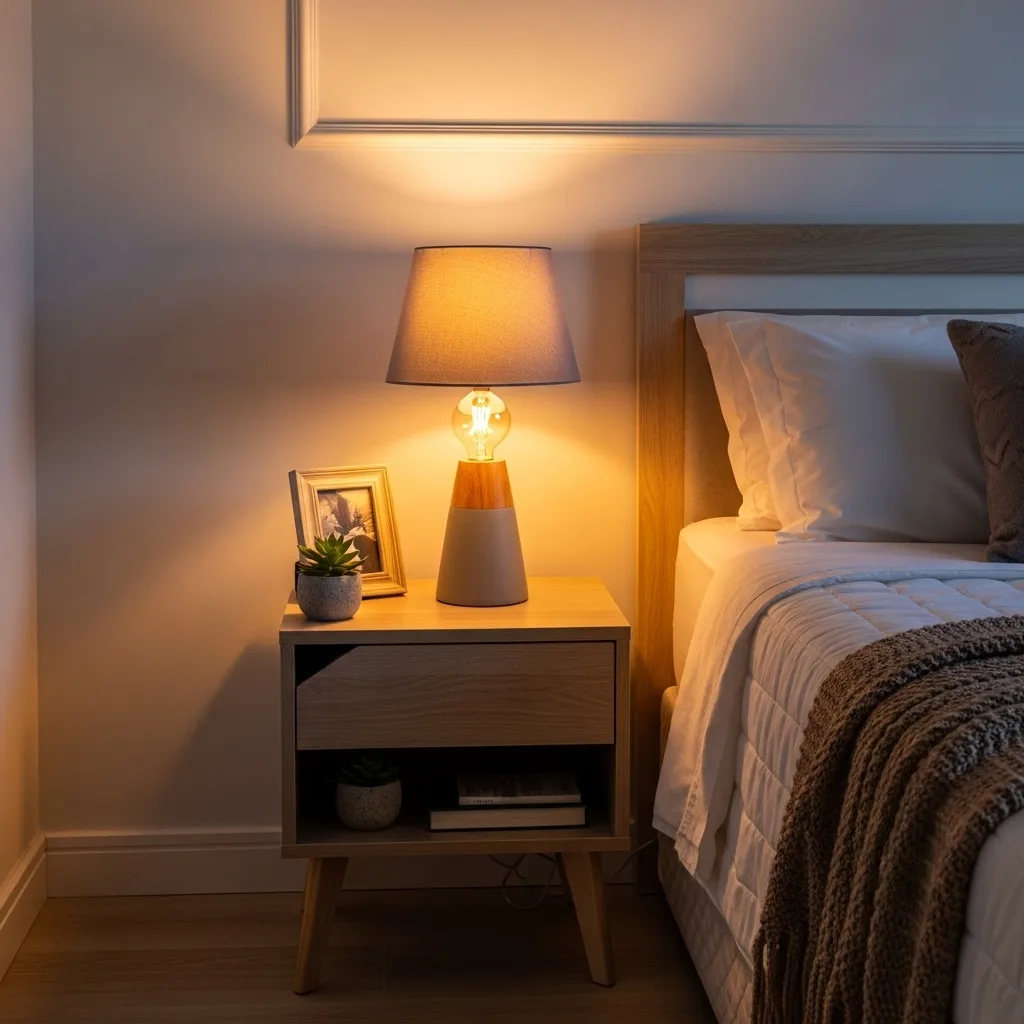
Imagine a reader who had styled her nightstand with a beautiful lamp, a candle, a small plant, a stack of books, a framed photo, and a trinket dish. Each piece was lovely individually. But all six together created visual noise instead of a calm, cohesive look. The fix wasn't to buy nicer things, it was to edit what was already there.
- Limit yourself to three main items on the surface: a lamp (or tall item), a medium-height item, and a low item.
- Keep one small, meaningful personal item (a photo, a small vase) and edit out the rest.
- Avoid displaying multiple items of the same type, two candles, two books, two plants.
- Leave visible negative space between items rather than clustering them together.
- If you want to display more, use a nearby shelf or the wall above the nightstand instead of the small surface.
- Creates calm visual breathing room
- Each item is seen and appreciated rather than lost in the crowd
- Makes the nightstand look intentionally styled rather than cluttered
Search terms: "small table lamp," "mini succulent pot," "ceramic bud vase"
Skipping a Lamp Altogether
My own nightstand felt unfinished for years because I didn't have a lamp, just a bare bulb overhead I never used. Adding a single warm-toned table lamp didn't just light the space, it anchored the whole surface, making everything else on it feel intentionally placed rather than randomly scattered.
- Choose a lamp with a warm-toned shade (cream, off-white, natural linen) rather than a stark white one.
- Use a warm-toned bulb (2700K) for soft, flattering light rather than harsh, cool-toned light.
- Position the lamp on the side of the nightstand closest to the bed for easy reach.
- Choose a lamp height that sits at eye level when you're lying in bed, so you're not looking directly into the bulb.
- If you have two nightstands, use matching or complementary lamps for visual balance across the bed.
- Adds warm, flattering light that changes the whole room's feel
- Provides vertical visual weight to anchor the nightstand
- Signals that the nightstand is intentionally styled, not just holding things
Search terms: "small warm table lamp," "linen lamp shade," "bedside lamp nightstand"
Nightstand Styling by Bed Size
Twin bed: A single small nightstand should hold only the essentials (lamp, one book, one small dish). A taller, narrower nightstand works best here.
Full bed: One medium nightstand with space for a lamp, a stack of two books, and a small plant or dish. Keep the visual line clean.
Queen bed: Two medium nightstands, each with a matching (or complementary) lamp and one small personal item per side.
King bed: Two larger nightstands, each with a lamp, space for a book, and room for one or two small personal items without feeling crowded.
General rule: The nightstand should be roughly the same height as the top of the mattress or slightly higher for easy reach.
The 60-Second Nightstand Edit
If your nightstand feels cluttered but you don't have time for a full restyle, try this 60-second fix: remove anything that doesn't belong to your nightly routine. Place those items in a small basket or on a nearby surface to be dealt with later. Then arrange the remaining items in a simple triangle formation (tall, medium, low). If you can do this in under a minute, the visual effect is immediate — a clean, intentional nightstand that makes the whole bedroom feel calmer. Repeat daily to keep the clutter from creeping back.
The Nightstand-Only Toolkit
- A small catch-all dish or tray — catches tiny items like rings, AirPods, or loose change so they don't scatter.
- A warm-toned lamp — anchors the surface and provides soft, flattering light.
- Cord clips — keeps chargers and cables hidden along the back edge of the nightstand.
- A small plant or vase — adds life and color without taking up much space.
- One current book — just one, not a stack of aspirational titles.
- A weekly clearing habit — two minutes once a week prevents clutter from accumulating in the first place.
The Full Cost Comparison
| Item | Typical Cost |
|---|---|
| Small catch-all dish or tray | $8–15 |
| Warm-toned table lamp | $20–50 |
| Linen lamp shade | $12–25 |
| Small plant or vase | $10–20 |
| Cord clips (set) | $5–10 |
| Small decorative book | $10–20 |
| Minimalist alarm clock | $15–25 |
| Typical nightstand makeover | Under $100 |
Common Questions
How many items should be on my nightstand? Three to five max, including the lamp. More than that reads as clutter rather than style.
What's the fastest way to make my nightstand look better right now? Remove everything, put back only three items (a lamp, a book, and one small decorative piece), and hide any visible cords.
Do both nightstands in a bedroom need to match exactly? They don't need to match exactly, but they should feel balanced, similar height, similar scale, and a complementary lamp style.
How often should I change my nightstand styling? Seasonally is ideal, or whenever you swap your bedside book. A small refresh keeps the look from feeling stagnant.
A nightstand is the smallest surface in a bedroom, but it's the one that sets the tone for the whole room. It's the last thing you see before you close your eyes and the first thing you see when you open them. A cluttered one quietly makes the whole space feel chaotic. A styled one makes the whole room feel calm.
Start with the 60-second edit tonight. Remove one thing you don't actually use. Hide one visible cord. And let the space beside your bed become the calm anchor your bedroom deserves.
Shop the Story
- small catch-all dish
- warm table lamp
- linen lamp shade
- small plant pot
- cord clips adhesive
- stacked coffee table books
- minimalist alarm clock
- ceramic bud vase
- nightstand tray
- small succulent