
6 Ceiling Tricks That Make Low Ceilings Feel Taller
Paint, lighting, and styling tricks that draw the eye upward, no construction required
I lived in a rental with 7-foot ceilings for three years before I understood why the space felt heavy even after I'd decorated it carefully. I kept buying furniture, hanging art, rearranging the same square footage, and nothing addressed the actual feeling of the room pressing down slightly on every visit.
It wasn't until a friend who'd worked in staging pointed at my ceiling, not my furniture, and said, "That's your problem, not the couch." I hadn't considered the ceiling as something to design at all. It was just the thing above everything else, unchangeable, low, and slightly claustrophobic.
A quick note before we start: a few of the stories ahead are shared as told to me directly, and a few are offered as illustrative examples to make a principle easier to picture, I've tried to be clear about which is which rather than presenting every anecdote as independently verified.
Here are six genuine tricks that changed how tall my low-ceilinged room actually felt, none requiring construction, and most costing very little.
Table of Contents
- Paint the Ceiling Lighter Than the Walls
- Use Vertical Stripes or Paneling
- Hang Curtains at the Ceiling Line, Not the Window
- Choose Furniture With a Low, Slim Profile
- Swap Bulky Fixtures for Flush or Recessed Lighting
- Add One Genuinely Tall Vertical Element
- Paint Sheen and Color Science for Low Ceilings
- Ceiling Illusions Ranked by Impact
- The Full Cost Comparison
- Common Questions
Paint the Ceiling Lighter Than the Walls
My ceiling was builder-standard flat white, which I assumed was already the safest, most height-maximizing choice available. It wasn't. A slightly warmer, softer white with a hint of the wall color mixed in made the transition between wall and ceiling far less visually abrupt, which paradoxically made the ceiling feel higher.
- Take your wall color to the paint counter and ask for the same color mixed at 50-75% strength for the ceiling.
- Test a small swatch on the actual ceiling, lighting changes color perception more on ceilings than walls.
- Use a flat or matte finish specifically for the ceiling, sheen reflects light in a way that can flatten the illusion.
- Cut in carefully where wall meets ceiling, a soft color transition only works with a clean, precise line.
- Reassess after the paint fully cures and dries, wet paint color reads noticeably differently than cured color.
- Removes the harsh visual stopping point stark white creates
- Costs only the price of paint already needed for upkeep
- Works with nearly any wall color already in place
Search terms: "flat ceiling paint," "paint color sample tester," "ceiling paint matte finish"
Use Vertical Stripes or Paneling
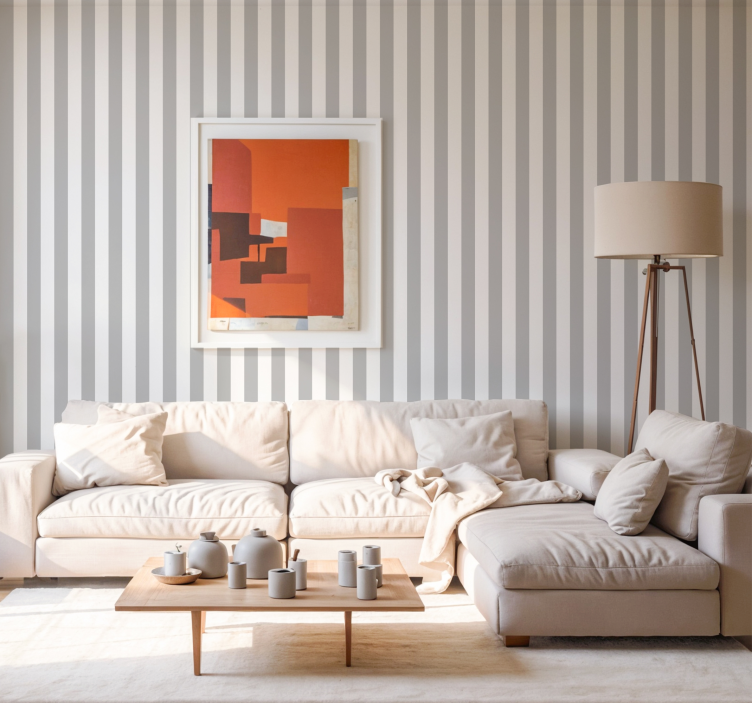
A homeowner shared that she'd resisted vertical striped wallpaper for years, worried it would feel dated. Once she found a subtle, narrow-striped removable wallpaper in a soft tone-on-tone palette, the effect was the opposite of dated, her low-ceilinged bedroom suddenly felt noticeably taller the moment she walked in.
- Choose a narrow stripe width, wider stripes read as bold pattern rather than a subtle vertical cue.
- Keep stripe colors close in tone to each other, high contrast stripes shift the effect from "tall" to "busy."
- Apply to one focal wall first if unsure, rather than committing an entire room at once.
- For paneling, choose narrow board widths and space them evenly using a level for a genuinely straight vertical line.
- Extend the vertical element as close to the ceiling line as possible, stopping short of the ceiling undermines the height illusion.
- Draws the eye upward along a continuous vertical line
- Works as removable wallpaper, no permanent commitment required
- Adds texture and interest beyond just a height illusion
Search terms: "subtle vertical stripe wallpaper," "tone on tone striped removable wallpaper," "narrow wood panel strips"
Hang Curtains at the Ceiling Line, Not the Window

This trick appears elsewhere in decorating advice for making windows look larger, but its effect on ceiling height specifically is often underestimated. Mounting curtain rods just below the ceiling, rather than just above the window frame, pulls the eye all the way up the wall before it even reaches the window.
- Measure from the floor to a point four to six inches below your actual ceiling.
- Mount the curtain rod at that height regardless of where the window frame technically ends.
- Choose curtain panels long enough to reach this new, higher mounting point without hemming.
- Let the curtain pool very slightly at the floor rather than hovering above it.
- Use a lighter-weight fabric in low-ceilinged rooms specifically, heavy fabric can visually add weight that works against the height illusion.
- Pulls the eye upward before it reaches the window itself
- Makes both the window and the ceiling read as taller
- Costs nothing beyond repositioning hardware you likely own
Search terms: "extra long curtain panels," "curtain rod ceiling mount," "lightweight linen curtains"
Choose Furniture With a Low, Slim Profile
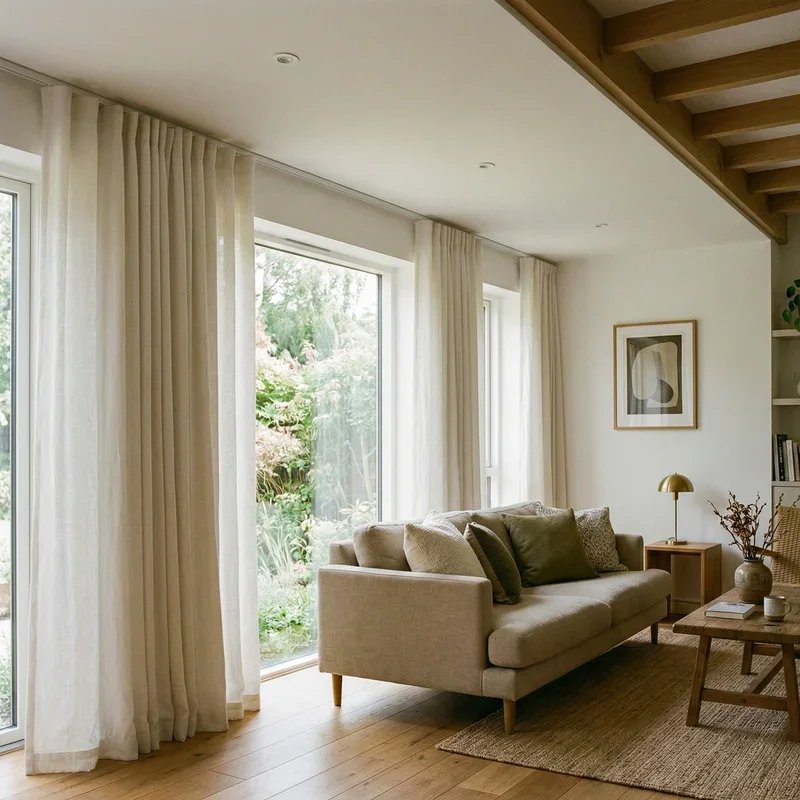
Imagine a reader who couldn't understand why her low-ceilinged living room felt cramped despite owning relatively little furniture. The issue turned out to be her sofa's tall, boxy back, which visually competed with the already-limited vertical space rather than leaving room for the eye to travel upward.
- Measure the vertical gap between your tallest furniture piece and the ceiling.
- Prioritize lower-profile sofas, chairs, and shelving in genuinely low-ceilinged rooms.
- Choose furniture with exposed, slim legs rather than skirted bases that visually add bulk near the floor.
- Keep the tallest items in the room (bookshelves, armoires) against the shortest wall or in the least visually prominent spot.
- Leave more visible negative space above furniture than instinct suggests, that gap is doing real visual work.
- Preserves visible ceiling space above furniture
- Reduces the "boxed in" feeling low ceilings can create
- Works with furniture you may already own, just rearranged
Search terms: "low profile sofa," "slim leg armchair," "low bookshelf wide"
Swap Bulky Fixtures for Flush or Recessed Lighting
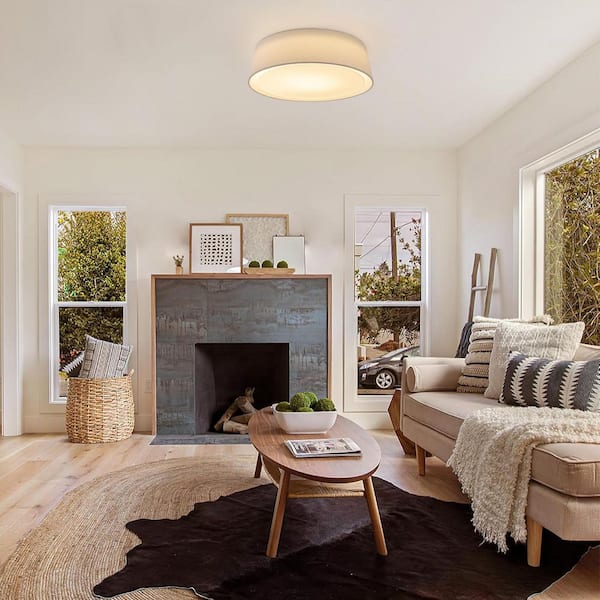
A hanging pendant light or a bulky flush-mount fixture eats into a low ceiling's already limited vertical space in a way that's easy to overlook until you compare it directly against a genuinely flush, low-profile alternative.
- Measure your current fixture's total drop from the ceiling to its lowest point.
- Choose a genuinely flush-mount or semi-flush fixture for low-ceilinged rooms specifically.
- If rewiring for recessed lighting isn't feasible, prioritize the flattest available flush-mount option instead.
- Keep any remaining pendant or hanging fixtures reserved for rooms with adequate clearance elsewhere in the home.
- Pair with warm white bulbs for additional coziness that offsets any starkness from a simpler fixture choice.
- Reclaims inches of visible ceiling height a bulky fixture consumes
- Reduces visual clutter at the room's lowest, most noticeable point
- Modern flush-mount options no longer look purely utilitarian
Search terms: "flush mount ceiling light," "low profile ceiling fixture," "warm white flush mount light"
Add One Genuinely Tall Vertical Element
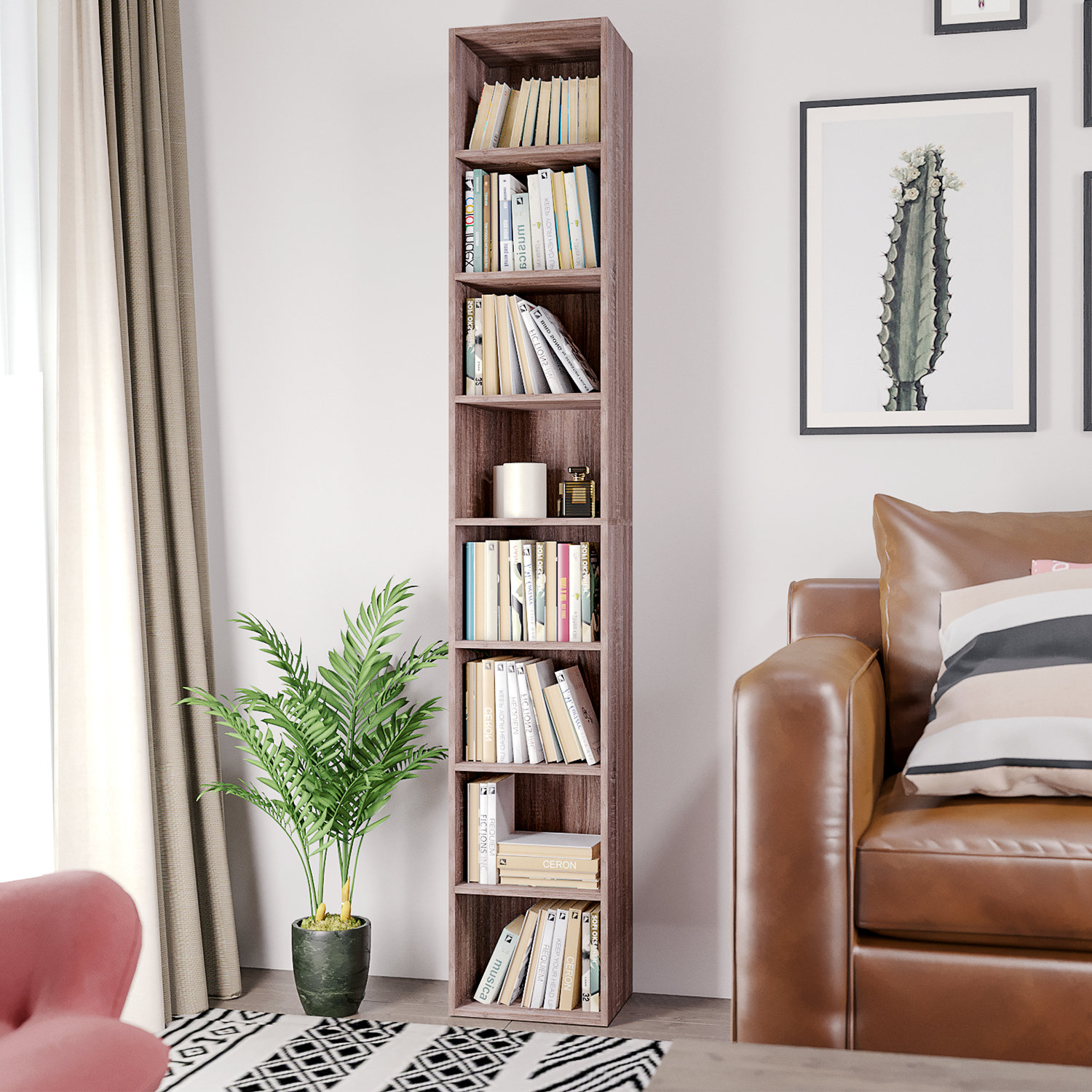
One homeowner shared that a single tall, narrow bookshelf reaching nearly to her low ceiling did more to make the room feel taller than any single other change on this list, one confident vertical anchor rather than several competing horizontal ones.
- Choose one narrow, tall piece, a bookshelf, a floor plant, a slim mirror, reaching as close to the ceiling as reasonably possible.
- Position it away from the room's most cramped corner, giving it room to actually be seen from a normal vantage point.
- Avoid adding a second competing tall piece nearby, one confident vertical anchor works better than several.
- Keep the surrounding furniture low-profile, per Trick 4, so the tall piece isn't visually competing with anything else.
- Style the top of the piece sparingly, an overly cluttered top shelf undermines the clean vertical line you're creating.
- Creates one confident vertical line the eye follows upward
- Emphasizes available height rather than exposing its limits
- Doubles as functional storage or display space
Search terms: "tall narrow bookshelf," "floor to ceiling shelving unit," "tall slim floor mirror"
Paint Sheen and Color Science for Low Ceilings
Beyond color choice alone, sheen level matters more on ceilings than most people realize. A flat or matte finish absorbs rather than reflects light, softening the ceiling's presence; a glossy finish bounces light and shadow across the surface in a way that draws attention directly to it, working against the height illusion. Cooler, softer tones (pale blues, soft greens) tend to recede visually more than warm tones, while warm off-whites remain the safest universal choice when in doubt. Whatever tone is chosen, keeping ceiling and upper wall trim in closely related tones, rather than stark contrast, is the single most reliable color principle across all six tricks above.
Ceiling Illusions Ranked by Impact
Based on relative cost and visible effect, roughly in order of impact: 1) curtains hung at ceiling height (free if you own long enough panels), 2) lighter ceiling paint (low cost, high impact), 3) one tall vertical furniture anchor, 4) flush-mount lighting swap, 5) low-profile furniture throughout, 6) vertical stripe or panel treatment. Start from the top of this list if budget or time only allows one or two changes right now.
The Full Cost Comparison
| Trick | Typical Cost |
|---|---|
| Ceiling paint (tinted) | $25–60 |
| Vertical stripe removable wallpaper | $40–100 |
| Ceiling-height curtain rehang | $0–40 |
| Low-profile furniture swap | Varies widely, $0 if rearranging existing pieces |
| Flush-mount light fixture | $30–90 |
| Tall vertical furniture anchor | $40–150 |
| Typical full ceiling-height project | Most setups fall under $300 total |
Common Questions
Which single trick makes the biggest difference for the least effort? Rehanging existing curtains at ceiling height, since it's often free and takes under fifteen minutes.
Do these tricks work in rooms with sloped or angled low ceilings? Most apply well, though vertical stripe treatments work best on the taller portion of a sloped ceiling rather than directly under the lowest angled point.
Is it worth combining all six tricks in one room? Yes, they compound rather than compete, a room with ceiling-height curtains, a tinted ceiling, low furniture, and one tall anchor piece shows a more dramatic combined effect than any single change alone.
Will a darker ceiling ever work instead of a lighter one? Occasionally, in a room with very high natural light and a specific moody design goal, but for the specific goal of maximizing height perception, a lighter, softly-tinted ceiling remains the more reliable default choice.
A low ceiling doesn't have to define how a room feels. Every trick here proves the same point: perceived height is shaped far more by where the eye travels than by the actual number of inches between floor and ceiling.
Start with the free one this weekend, rehang your curtains a few inches higher, and notice how much taller the exact same room suddenly feels.
Shop the Story
- flat ceiling paint
- subtle vertical stripe wallpaper
- extra long curtain panels
- low profile sofa
- flush mount ceiling light
- tall narrow bookshelf
- curtain rod ceiling mount
- warm white flush mount light