
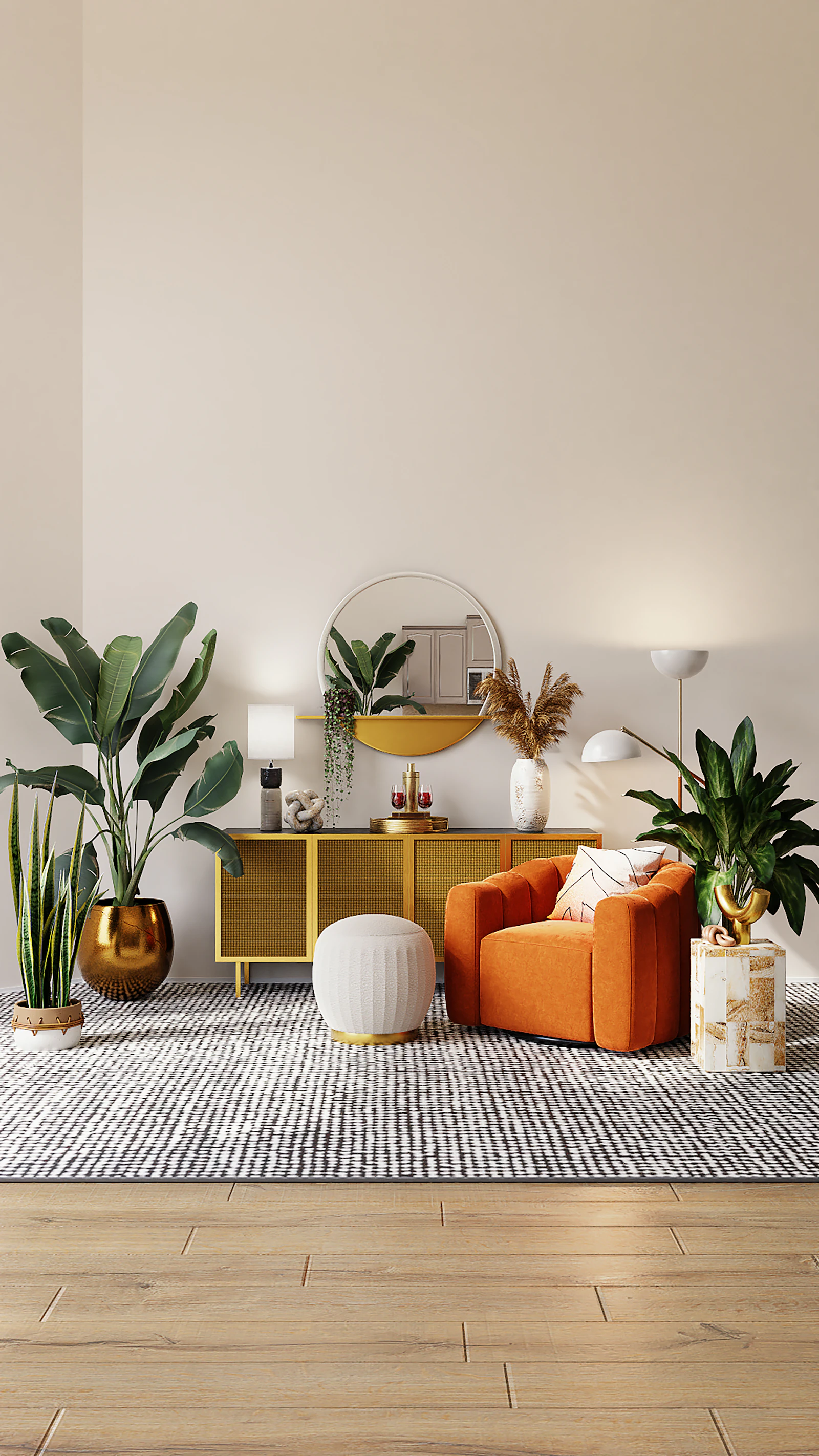
10 Thrift Store Finds That Look High-End When You Style Them Like This
What an interior designer sees in the same aisles everyone else walks past
I used to walk through thrift stores looking for bargains.
Then I watched an interior designer walk through the exact same aisles. She didn't see old furniture or chipped frames. She saw solid wood where others saw scratches. She saw character where others saw age. She saw possibilities I had completely missed.
That afternoon changed the way I looked at secondhand shopping forever. Since then, some of my favorite pieces in my home have come from places where everything cost less than a restaurant meal. Guests almost always assume they're expensive. They're always surprised when I tell them they came from a local thrift store.
A quick note: a few of the shopper stories below are shared as told to me directly, and a few are offered as illustrative examples to make a principle easier to picture — I've labeled those clearly rather than presenting them as verified accounts.
These are the treasures designers rarely leave behind, and exactly how to style them, spot them quickly, and know when to walk away.
Table of Contents
- Solid Wood Side Tables
- Vintage Wooden Picture Frames
- Brass Table Lamps
- Vintage Ceramic Vases
- Wool Area Rugs
- Leather Armchairs
- Wooden Bookshelves
- Vintage Mirrors
- Woven Baskets
- Glassware & Serveware
- What Designers Always Skip
- How to Spot Quality in Seconds
- Cleaning & Styling Guide
- The Real Cost Comparison
- Best Times & Places to Shop
- Room-by-Room Styling Guide
1. Solid Wood Side Tables
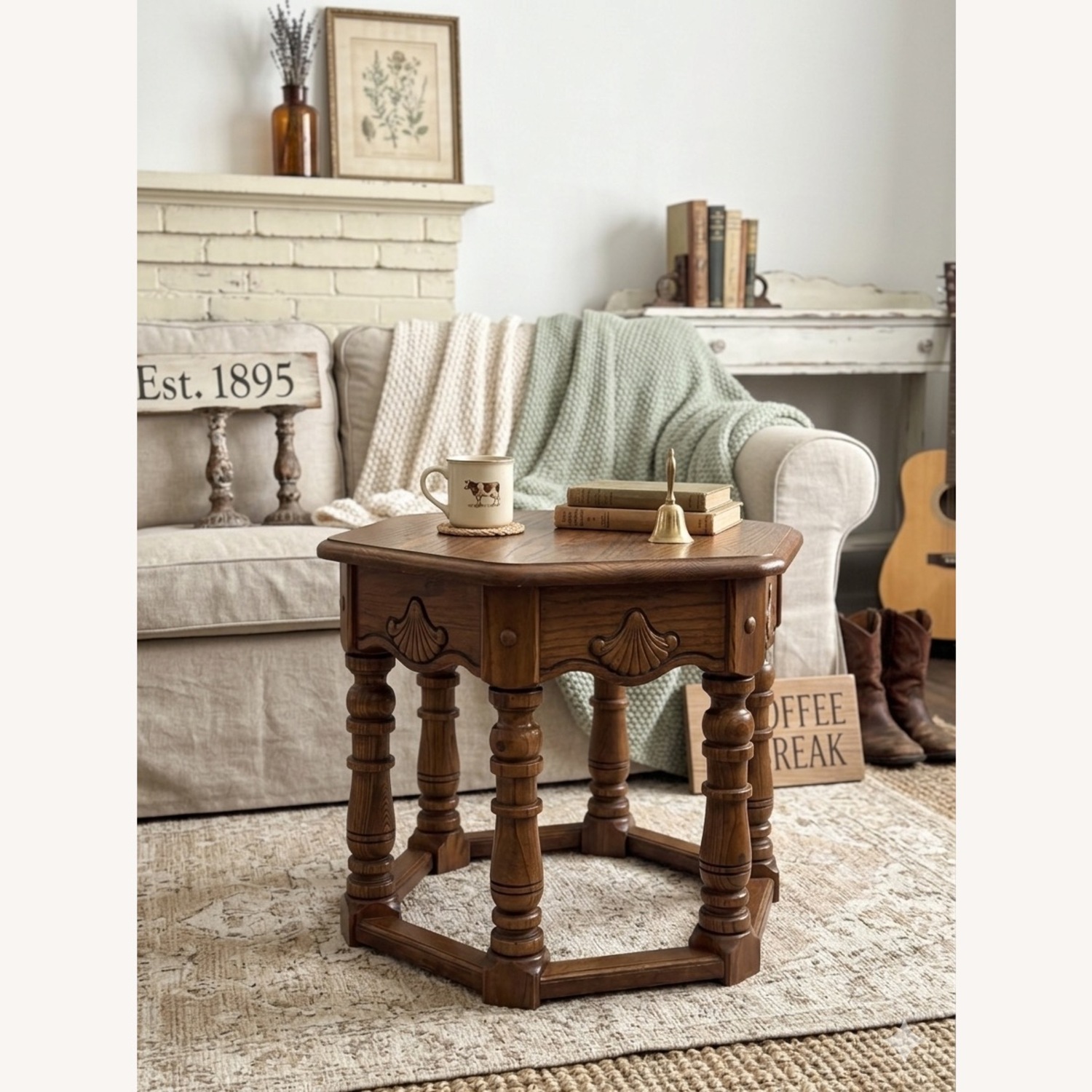
The first piece I learned to recognize wasn't glamorous. It was an old oak side table tucked beneath a pile of mismatched furniture. Most shoppers walked past it because the finish looked tired. But beneath the wear was something far more valuable: solid wood. A gentle clean, a light sanding, and a little furniture wax completely transformed it.
- Wipe down with mild soap and water to see the real condition underneath.
- Feel for genuine damage (deep gouges) versus simply dulled finish.
- Apply furniture wax and buff for light wear.
- Light sand + wood conditioner + wax for deeper scratches.
- Polish or swap the hardware last.
- Solid wood develops character over time
- Can be refinished instead of replaced
- Adds warmth veneer can't replicate
- Fits both modern and traditional interiors
Product ideas: furniture wax, brass drawer pulls, linen lampshade, decorative tray, ceramic vase
2. Vintage Wooden Picture Frames
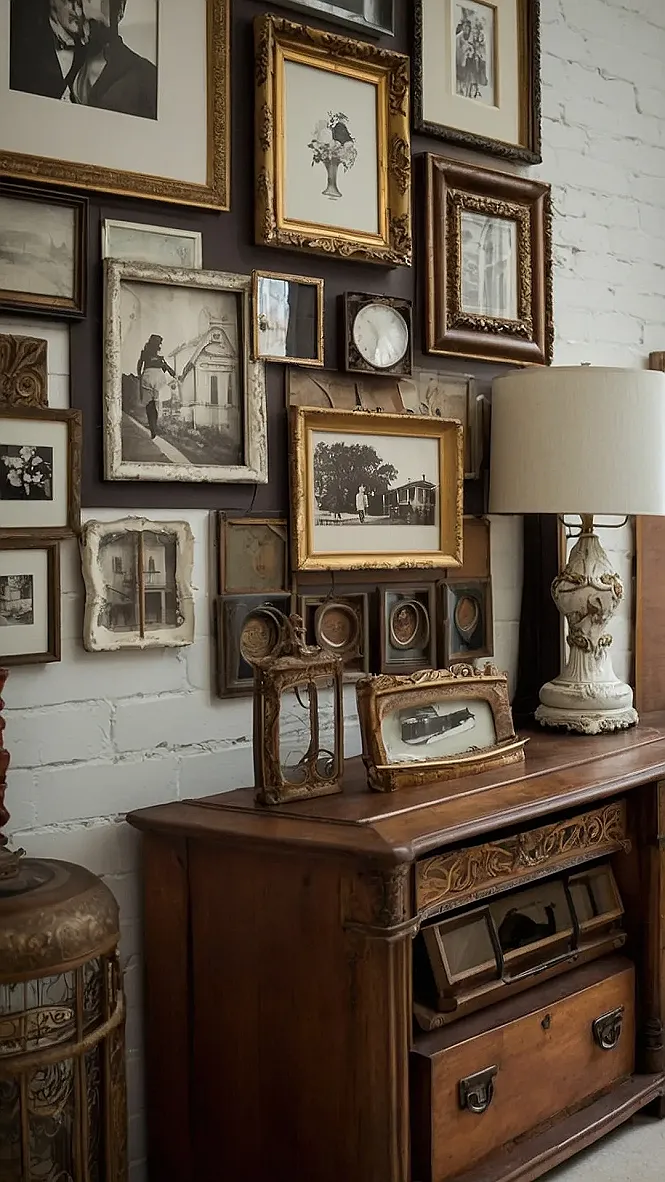
One of my favorite gallery walls began with a stack of dusty wooden frames that almost everyone else ignored. Once cleaned and filled with simple black-and-white prints, they looked like pieces from a boutique home store. Sometimes the value isn't in what something is, it's in what it can become.
- Remove the original backing, art, and glass.
- Clean glass and wood thoroughly, wax if dull.
- Choose one unifying element for new art across all frames.
- Lay the arrangement on the floor first before hanging.
- Hang in a loose grid, 2–3 inches apart.
- Solid wood frames have depth new frames often lack
- Mismatched styles read as "collected," not cluttered
- Priced far below comparable new frames
Product ideas: museum putty, picture hanging kit, printable black-and-white art, glass cleaner, felt frame pads
3. Brass Table Lamps

I almost passed on my first brass lamp because it was tarnished nearly black. A few minutes of brass polish later, it was gleaming, and paired with a new linen shade, it looked like something from a high-end lighting catalog. Tarnish is often mistaken for damage, when it's usually just surface oxidation.
- Test with a small magnet — brass is non-magnetic; if it sticks, it's plated steel.
- Apply dedicated brass polish in circular motions.
- Buff with a clean, dry cloth.
- Check the wiring for safety before use.
- Finish with a fresh fabric shade in a warm neutral tone.
- Solid brass can always be re-polished
- Vintage fixtures often have more weight and detail
- Adds a "collected over time" warmth
Product ideas: brass polish, linen lampshade, lamp rewiring kit, warm white bulb
4. Vintage Ceramic Vases and Ginger Jars

I used to walk past the ceramics section quickly. Then a designer friend pointed out a plain ginger jar and said, "That shape alone is worth more than the price tag." She was right, once cleaned and placed on my mantel, it became one of the pieces people ask about most.
- Wash thoroughly; tap gently to check for hairline cracks (dull vs. clear ring).
- Group in odd numbers, three or five.
- Vary height deliberately, tallest toward the back.
- Mix glazed and matte finishes.
- Fill one or two with branches, leave one empty.
- Classic shapes rarely go out of style
- Glaze variations read as handmade character
- Mismatched grouping reads as curated
Product ideas: decorative tray, small brass stand, faux or dried branches, furniture wax
5. Wool and Natural Fiber Area Rugs

I was hesitant to buy a used rug at first. But a genuinely well-made wool rug, even secondhand, is a different category than a synthetic budget rug. The one I bought had a small worn patch near one edge, easily hidden under a console table.
- Check the fiber content tag if present.
- No tag? A tiny burn test on a hidden fringe thread reveals natural vs. synthetic.
- Vacuum thoroughly on both sides.
- Deep clean with wool-safe shampoo or professional cleaning.
- Position worn patches under furniture, not open paths.
- Natural fibers develop soft patina, not just "used" look
- Vintage patterns add instant depth
- Quality wool rugs are dramatically more expensive new
Product ideas: rug pad, wool-safe rug cleaner, rug tape
6. Leather Armchairs
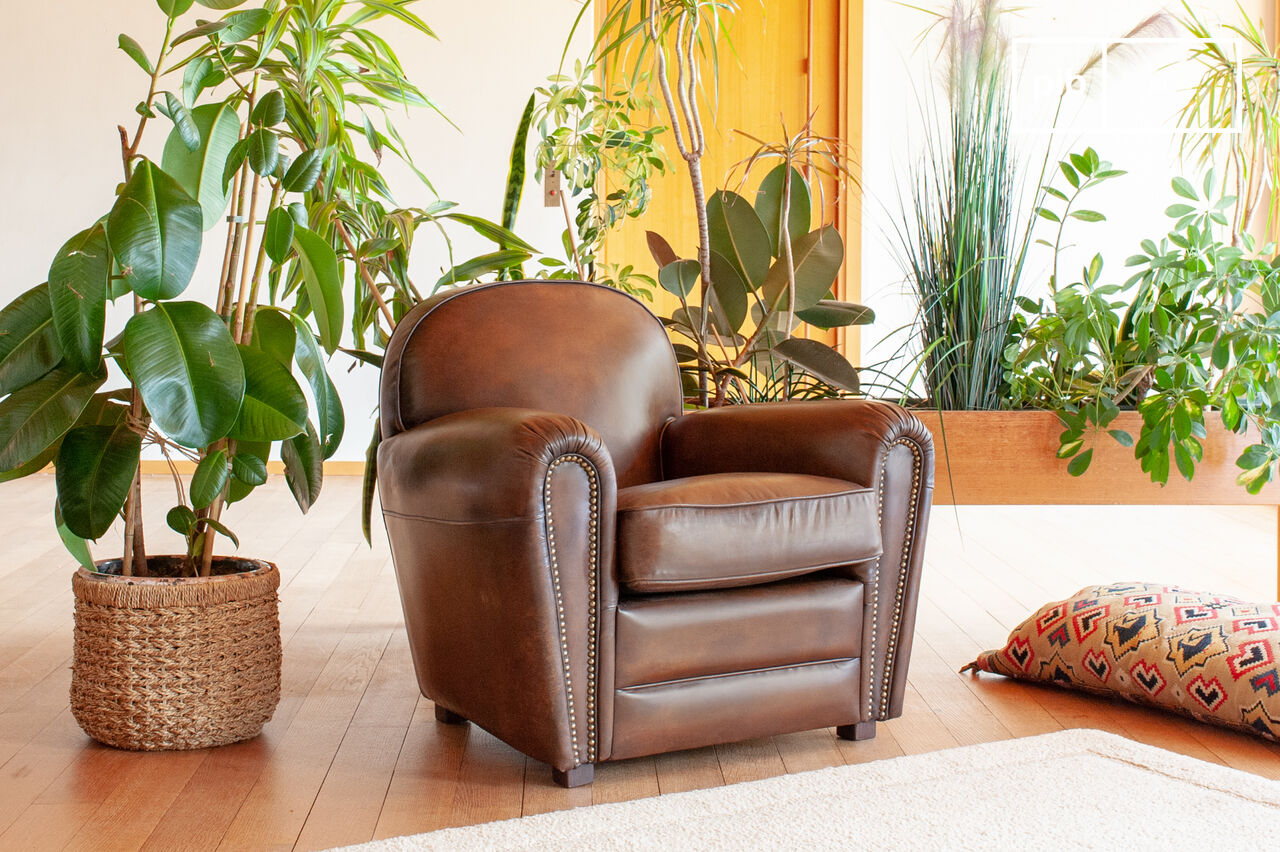
My first secondhand leather chair had a slightly darkened seat where years of use had worn the color unevenly. A friend who restores furniture told me that's called patina, and it can't be faked in a new piece at any price point.
- Confirm genuine leather (natural grain, distinct smell) vs. bonded leather.
- Vacuum seams and crevices.
- Wipe with a leather-specific cleaner, never all-purpose spray.
- Condition with leather balm, focusing on dry areas.
- Buff scratches gently with conditioner.
- Genuine leather develops character with age
- Adds warmth and visual weight
- New comparable leather furniture is dramatically pricier
Product ideas: leather conditioner balm, woven throw blanket, textured accent pillow
7. Wooden Bookshelves and Ladder Shelves

I nearly walked past a plain wooden ladder shelf because it looked like something from a big-box store. Closer inspection showed dovetail joints and solid wood, details flat-pack furniture almost never includes.
- Examine the joints — dovetail or mortise-and-tenon signals craftsmanship.
- Gently rock to check for stability; minor wobble is an easy fix.
- Clean and wax before styling.
- Style each shelf in odd-numbered groupings.
- Leave visible negative space on at least one shelf.
- Solid wood ages better than particleboard
- Real joinery is a signature of craftsmanship
- Open shelving is flexible to restyle over time
Product ideas: furniture wax, small potted plants, bookends, decorative bowl
8. Vintage Mirrors
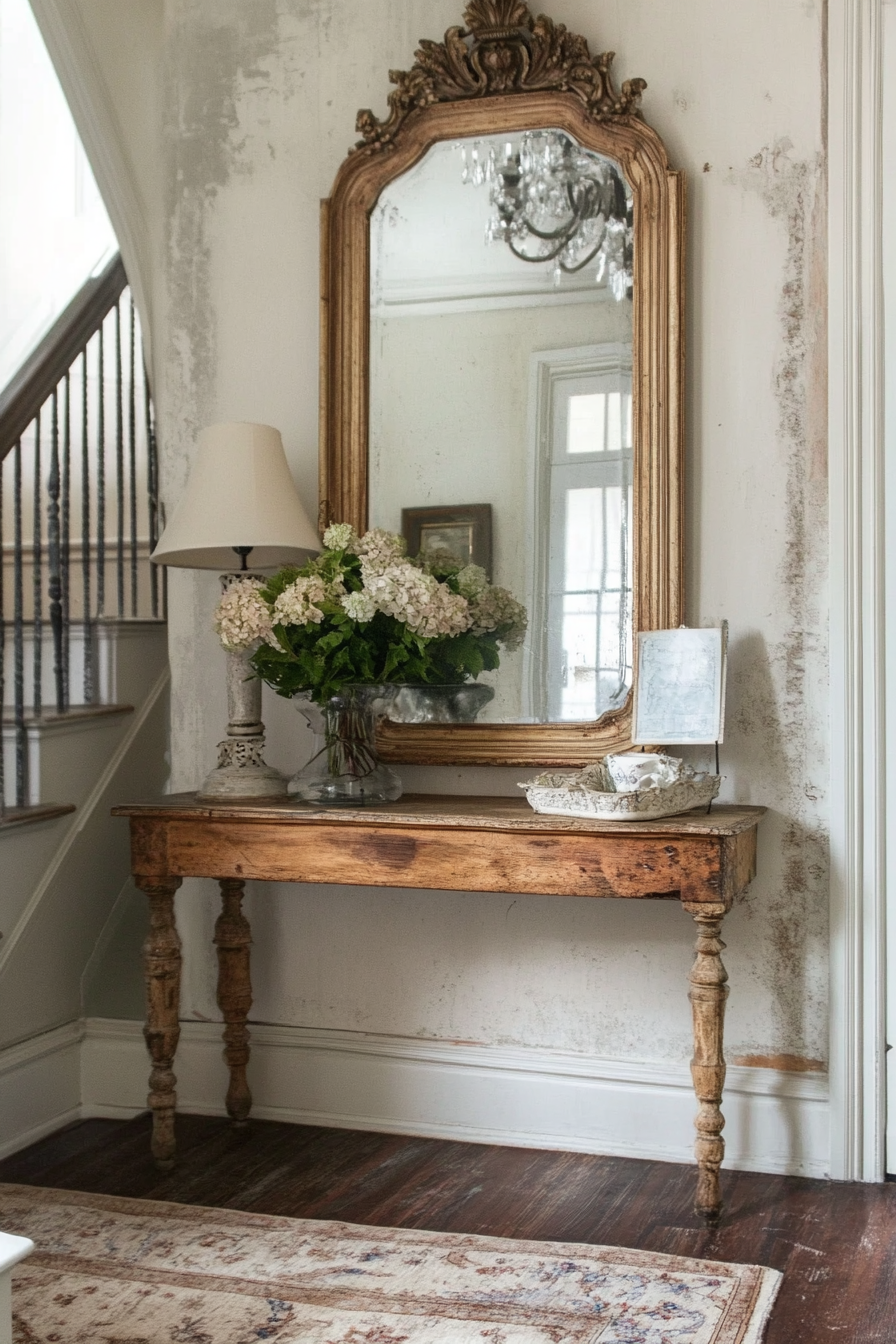
I once found a large mirror with a slightly foxed (naturally aged, spotted) surface, tucked behind smaller newer mirrors nobody wanted. Instead of a flaw, I saw exactly the antique character new "aged mirror" products try to fake, at a premium.
- Inspect the frame first — often cleanable regardless of glass condition.
- Assess foxing — light edge spotting is often desirable; heavy central clouding may obscure reflection.
- Clean glass gently, avoiding scrubbing foxed areas.
- Lean rather than mount for an effortless look.
- Position across from a window or main light source.
- Large mirrors are expensive new — best value on this list
- Aged character is now intentionally replicated at a premium
- Instantly makes a room feel larger and brighter
Product ideas: mirror mounting hardware, furniture wax, brass polish
9. Woven Baskets and Natural Fiber Storage

I used to think baskets were interchangeable. Then I found a set of tightly woven vintage baskets with warmth and texture new mass-produced versions simply didn't have, clearly made to last decades, not one season.
- Check weave tightness — tighter weaves resist sagging longer.
- Inspect the rim, the first place wear appears.
- Air out musty baskets outdoors for a day or two.
- Use varying sizes together intentionally.
- Group in odd numbers for visual rhythm.
- Adds texture hard storage can't replicate
- Vintage baskets are often sturdier than new budget ones
- Doubles as function and decor
Product ideas: basket liner fabric, natural fiber conditioner spray, decorative tray
10. Glassware and Ceramic Serveware
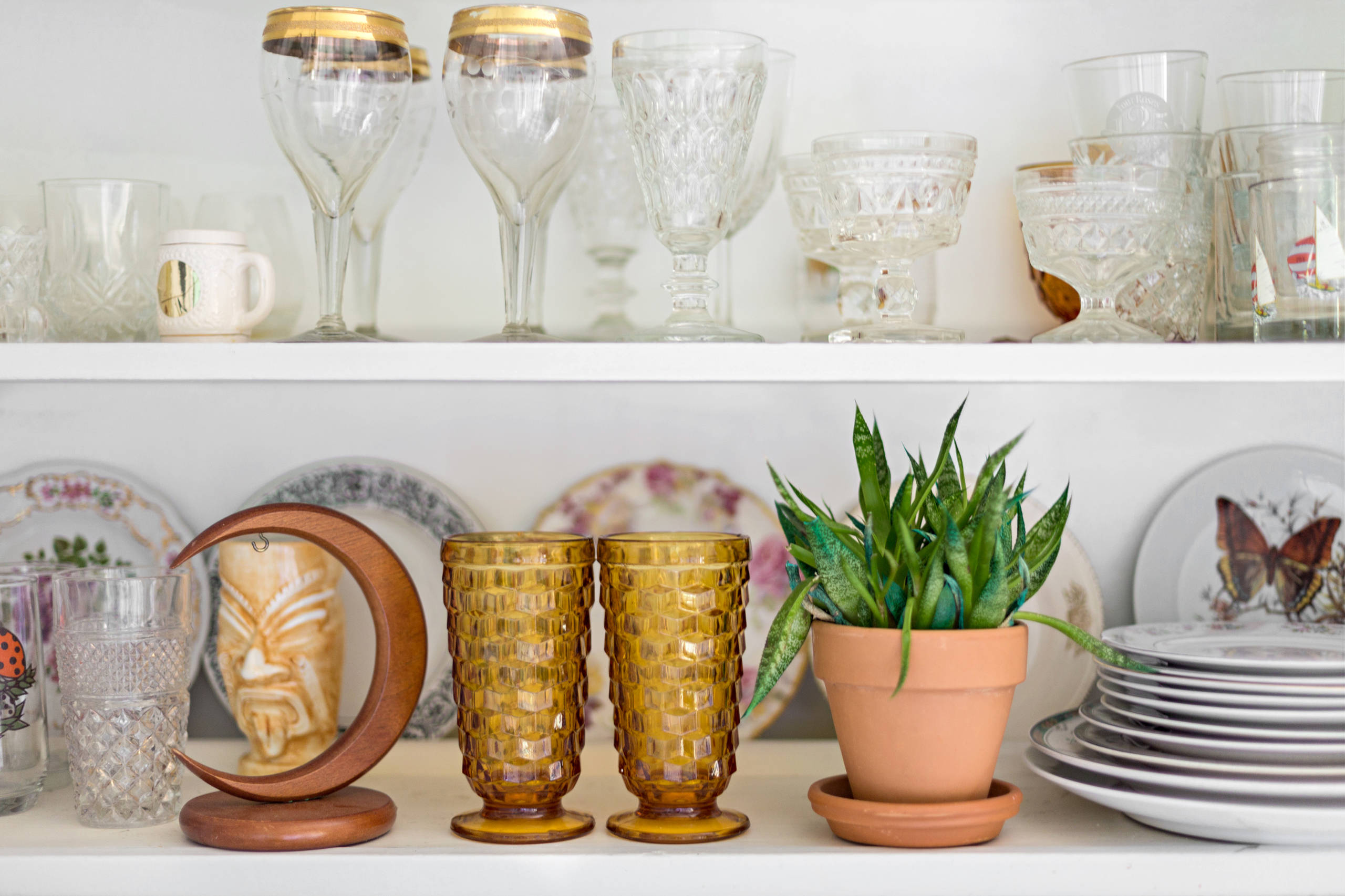
I almost overlooked a box of mismatched vintage glassware, assuming a full matching set was the only thing worth buying. A designer I know told me she never buys full sets anymore, she buys pieces that share one unifying trait and mixes the rest deliberately.
- Check for rim chips by running a finger gently along the edge.
- Hand wash; avoid dishwashers for hand-painted or gilded pieces.
- Choose one unifying trait — color, shape, or era.
- Display on open shelving or a bar cart, not a closed cabinet.
- Rotate pieces seasonally or for occasions.
- Vintage details rarely found in mass-market versions today
- Mismatched-but-coordinated reads as personal, not incomplete
- Priced far below new equivalents
Product ideas: glass cleaner, small display shelf, decorative tray, bar cart
11. What Designers Always Skip
- Particleboard/MDF with water damage — swells and crumbles, can't be repaired.
- Upholstery with unknown odors or stains — deep-set, hard to fully resolve.
- Multi-joint structural wobble — beyond a simple screw fix.
- Damaged or exposed wiring — a real safety issue, not just cosmetic.
- Fixer-uppers needing skills you don't have — only a deal if you'll actually do the work.
- Mattresses and deep upholstered cushions — hygiene concerns, generally a hard pass.
12. How to Spot Quality in Seconds
- Lift it — real wood and metal have noticeable weight.
- Check the joints — dovetail/mortise-and-tenon vs. staples and glue.
- Look underneath and behind — unfinished solid wood is a good sign.
- Magnet test for metal — sticking means plated steel, not solid brass/copper.
- Smell it — persistent musty or chemical odor is a hard pass.
- Look for a maker's mark — a strong quality indicator.
13. Cleaning and Styling Secondhand Finds
Wood: mild soap and water, dry fully, then furniture wax.
Metal: dedicated polish per metal type, test on a hidden spot first.
Fabric: vacuum, spot-clean, fabric refresher spray for odors.
Glass/ceramic: warm soapy water; avoid abrasives on painted details.
Leather: leather-specific cleaner + conditioner balm, never all-purpose spray.
Always clean before you style — a dusty piece undercuts even the best arrangement.
14. The Real Cost Comparison
| Item | Secondhand | New |
|---|---|---|
| Solid wood side table | $15–40 | $150–400 |
| Vintage wooden frame (each) | $2–8 | $20–50 |
| Brass table lamp | $10–30 | $80–200 |
| Ceramic vase | $3–15 | $30–90 |
| Wool area rug | $30–100 | $300–1,200 |
| Leather armchair | $50–200 | $600–2,500 |
| Wooden ladder shelf | $20–60 | $150–350 |
| Large vintage mirror | $20–75 | $200–600 |
| Woven basket (each) | $3–12 | $20–45 |
| Vintage glass (per piece) | $1–6 | $10–30 |
| Typical savings | 70–90% below new retail | |
15. Best Times and Places to Find These Pieces
Weekday mornings, right after restocking, tend to have the freshest selection before weekend crowds. Estate sales often yield higher-quality furniture than typical thrift stores, since entire households are sold at once. End-of-month and end-of-season timing means better restocking, as many people donate during moves or spring cleaning. Online marketplace listings often have less competition for large furniture than in-person browsing. Building a relationship with staff at a favorite location can mean advance notice on new arrivals.
16. A Room-by-Room Thrifted Styling Guide
- Living Room: wool rug + solid wood side table + brass lamp + a leaning vintage mirror across from the light source.
- Bedroom: small side table as a nightstand, a styled ladder shelf, a woven basket for blankets.
- Entryway: a leaning mirror by the door, a basket for shoes or mail, a small cluster of vintage frames.
- Dining Room: mismatched glassware on open shelving, a ceramic vase centerpiece, a vintage rug underfoot.
- Home Office / Reading Corner: leather armchair + brass floor lamp + a small side table within reach.
One of the things I love most about decorating with thrifted pieces is that they remind me beauty doesn't always arrive polished.
Sometimes it arrives with scratched corners, faded finishes, or hidden beneath a shelf where almost everyone else walked past.
A thoughtful home isn't built by buying the most expensive things. It's built by noticing potential, making intentional choices, and surrounding yourself with pieces that tell a story.
The next time you step into a thrift store, don't ask, "What is this worth today?" Ask, "What could this become?"
Shop the Story
- furniture wax natural
- brass polish cream
- linen lampshade neutral
- picture hanging kit
- museum putty
- lamp rewiring kit
- leather conditioner balm
- wool safe rug cleaner
- rug pad non slip
- mirror mounting hardware
- basket liner fabric
- fabric refresher spray
- small bar cart
- decorative tray wood