9 Minimalist Decor Swaps That Make a Small Home Feel Calmer
Choosing better, not having less — swaps that instantly calm a space

For a long time I thought minimalism meant getting rid of things, and every time I tried it, my apartment ended up feeling less cluttered and somehow no calmer at all. Just emptier. A bare shelf isn't the same thing as a peaceful one, and I genuinely didn't understand the difference until I started paying attention to which rooms, in other people's homes, actually made my shoulders drop when I walked in.
It was never the rooms with the least stuff. It was the rooms where everything present had clearly been chosen, not just kept. A single good ceramic bowl instead of four small trinkets. One warm lamp instead of a harsh overhead light. The same tonal family of colors running through a rug, a throw, and a set of curtains, instead of six unrelated patterns competing for attention.
This is actually the direction minimalist design has been moving for a couple of years now, away from the stark, cold, all-white "minimalism" of a decade ago, and toward something interior designers are calling warm minimalism, a calmer, more grounded version built on restraint plus texture, not restraint plus absence. I've checked every swap on this list against multiple current design sources rather than a single trend piece, because "calm" is a real, researchable design outcome, not just a feeling to chase blindly.
Here's the actual mechanism behind why this works: your brain processes a room's visual information almost instantly, and a space with fewer, more coherent visual signals, consistent tone, consistent material, deliberate negative space, simply gives it less to sort through. That's the literal, physiological difference between a cluttered room and a calm one, and it's why swapping is so much more effective than just subtracting.
Here are the nine swaps that made the biggest difference in my own small apartment, roughly in the order I'd tackle them if starting from scratch today.
Table of Contents
- One Statement Object, Not Many Small Ones
- A Tonal Rug Instead of a Patterned One
- Warm Neutrals Instead of Stark White
- Natural Materials With Visible Grain
- One Large Art Piece, Not a Gallery Wall
- Layered Warm Lighting, Not One Overhead Fixture
- Frosted Window Film Instead of Heavy Curtains
- Fewer, Textured Throw Pillows
- One Biophilic Element Instead of Scattered Knickknacks
- Why This Works: The Psychology of a Calm Room
- How the Swaps Compare
- Common Mistakes That Undo a Calm Room
- Common Questions
One Statement Object, Not Many Small Ones

This is the swap that reframed the whole idea for me. It's not about owning fewer objects for its own sake, it's about every object earning its actual place, which in practice usually means one considered piece replacing a cluster of smaller, less intentional ones.
- Pick one surface, an entry table, a shelf, a nightstand, and remove everything currently on it.
- Choose your single best object from what you removed, the one with the most interesting shape, material, or personal meaning.
- If nothing qualifies, that's a signal to invest in one genuinely nice piece rather than replacing several mediocre ones.
- Give that single object real breathing room, empty space around it is part of the effect, not a gap to fill.
- Removes the visual noise of several small competing objects
- A single well-chosen piece often functions as decor and utility at once
- Makes a room feel curated rather than either bare or cluttered
Search terms: "sculptural ceramic candle holder," "handmade ceramic catch-all bowl"
A Tonal Rug Instead of a Patterned One
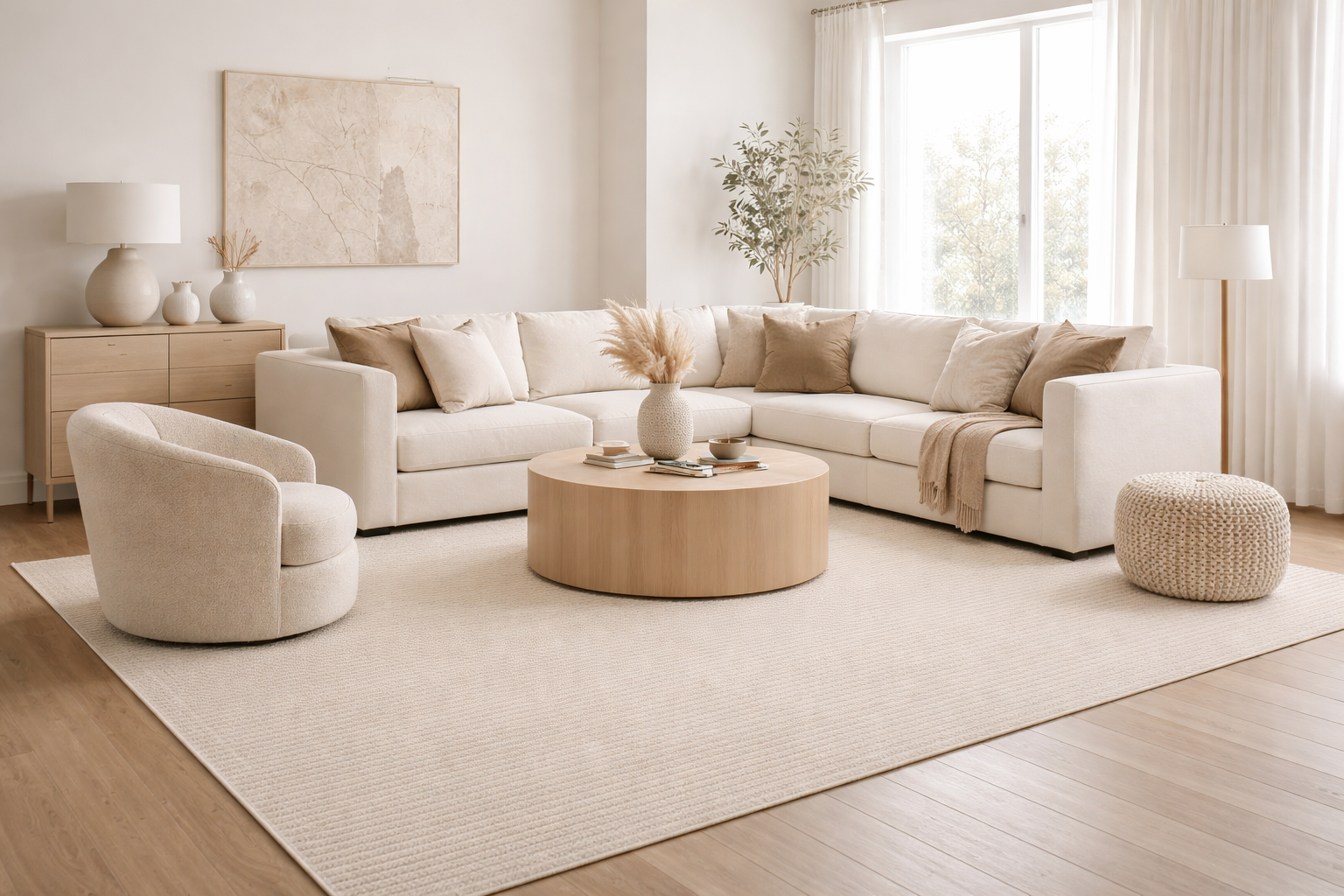
A rug covers more visual real estate than almost anything else in a small room, which means a busy, high-contrast pattern underfoot does an outsized amount of the "visual noise" work in the whole space, whether you notice it consciously or not.
- Choose a rug in one color family, varying only in shade or weave texture rather than pattern.
- Look for texture variation within the tone, a subtle high-low pile or a woven pattern in the same color reads as rich, not flat.
- Size the rug to genuinely fit the room, at least the front legs of major furniture should sit on it.
- Let the rug's tone echo your wall color or your largest piece of furniture for a cohesive base.
- Removes the single largest source of visual pattern noise in most rooms
- Creates a calm base the rest of the room's texture can layer onto
- Genuinely photographs and lives as more sophisticated than "safe"
Search terms: "tonal area rug," "monochromatic textured rug"
Warm Neutrals Instead of Stark White

Stark white was the defining color of an older, colder version of minimalism, the kind associated with sterile showrooms rather than lived-in homes. Current design guidance is consistently moving away from it toward warmer, softer neutrals specifically because they read as calm without reading as cold.
- Swap one stark white item, a lampshade, a throw, a set of curtains, for a warm off-white or taupe version.
- Choose no more than two or three tones total across the whole room's textiles and decor.
- Pair warm neutrals with natural wood tones, which reinforces the effect far more than white-on-white does.
- Test paint or fabric swatches in your room's actual light before committing, warm neutrals shift noticeably under different lighting.
- Trades a cold, sterile feeling for genuine warmth without adding visual busyness
- Works with nearly any existing furniture or wood tones
- The current, more livable direction minimalist design has moved toward
Search terms: "warm taupe paint sample," "cream linen throw blanket"
Natural Materials With Visible Grain

Painted or laminated wood surfaces read as flat and, ironically, more like a showroom than a genuinely restful home. Designers now specifically point to visible wood grain, light oak, white ash, warm walnut, as the calming, "real" texture a truly minimalist room needs.
- Swap one painted or laminate surface, a side table, a shelf, a picture frame, for an unfinished or lightly oiled wood version.
- Choose linen over synthetic blends for at least one textile, curtains, cushion covers, or bedding.
- Add one chunky wool or bouclé texture, a throw or an accent chair, for tactile warmth.
- Let wood grain and linen wrinkles show rather than fighting them, that imperfection is specifically the intended, calming signal.
- Adds real tactile warmth a smooth, uniform surface can't replicate
- Signals "genuine home" rather than "showroom," which is the actual source of calm
- Layers naturally with the tonal color swaps earlier on this list
Search terms: "light oak side table," "washed linen cushion cover"
One Large Art Piece, Not a Gallery Wall

A multi-frame gallery wall is genuinely beautiful when it's done well, but it's also one of the busiest visual arrangements a wall can hold, several separate images, several frame styles, several spacing decisions all competing for attention at once. A single oversized piece gives a small room's most prominent wall exactly one thing to focus on instead.
- Choose your room's most visible wall, the one you see first entering the room, for this swap.
- Select art in your existing color palette, abstract work, architectural photography, or a single typographic print all work well.
- Size up, a piece that feels almost too large is usually closer to correct for this effect than one that feels safely modest.
- Leave the wall around it genuinely bare rather than adding smaller supporting pieces nearby.
- Gives the eye one clear focal point instead of several competing ones
- Reads as confident and considered rather than accumulated
- Scales beautifully in a genuinely small room where wall space is limited
Search terms: "large abstract art print," "oversized framed wall art"
Layered Warm Lighting, Not One Overhead Fixture
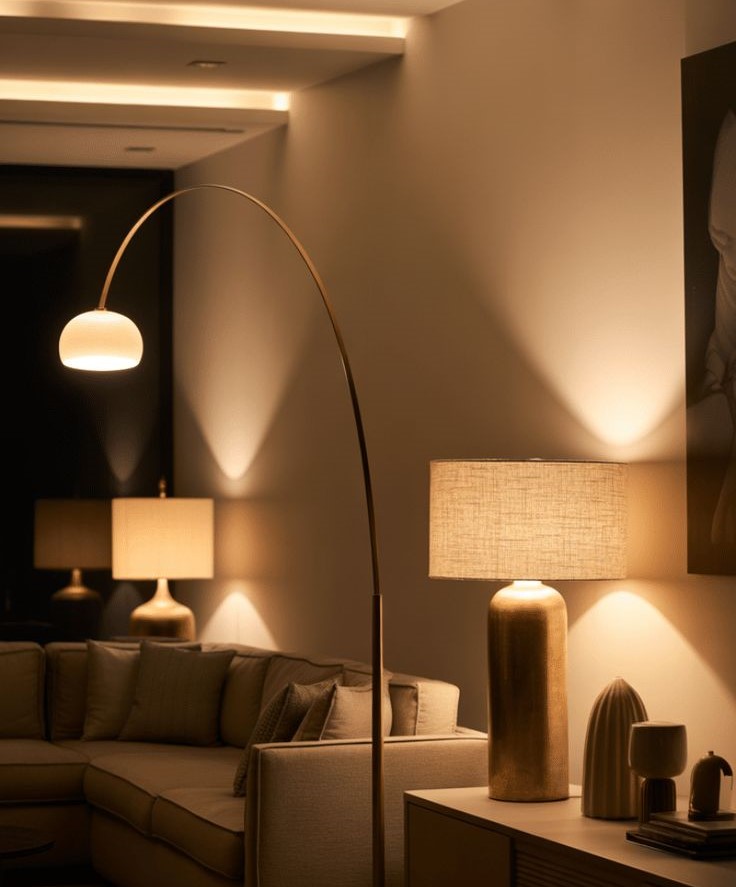
A single, bright overhead light is one of the most common reasons a well-decorated room still feels sterile rather than calm, it flattens shadow and texture uniformly across the whole space, the opposite of the soft, diffused lighting current design guidance consistently recommends for a genuinely relaxing atmosphere.
- Add at least one table or floor lamp with a warm bulb, in the 2700K range, to any room relying solely on overhead light.
- Turn the overhead fixture off in the evening entirely where possible, letting the lamp carry the room instead.
- Choose a fabric or paper lampshade over a bare or metallic one, it diffuses light more softly.
- Position the lamp near where you actually sit or read, not just centrally in the room.
- Adds genuine depth and shadow a flat overhead light eliminates
- Changes the felt temperature of a room without changing a single wall color
- One of the cheapest, fastest swaps on this entire list
Search terms: "warm white table lamp," "fabric shade table lamp"
Frosted Window Film Instead of Heavy Curtains
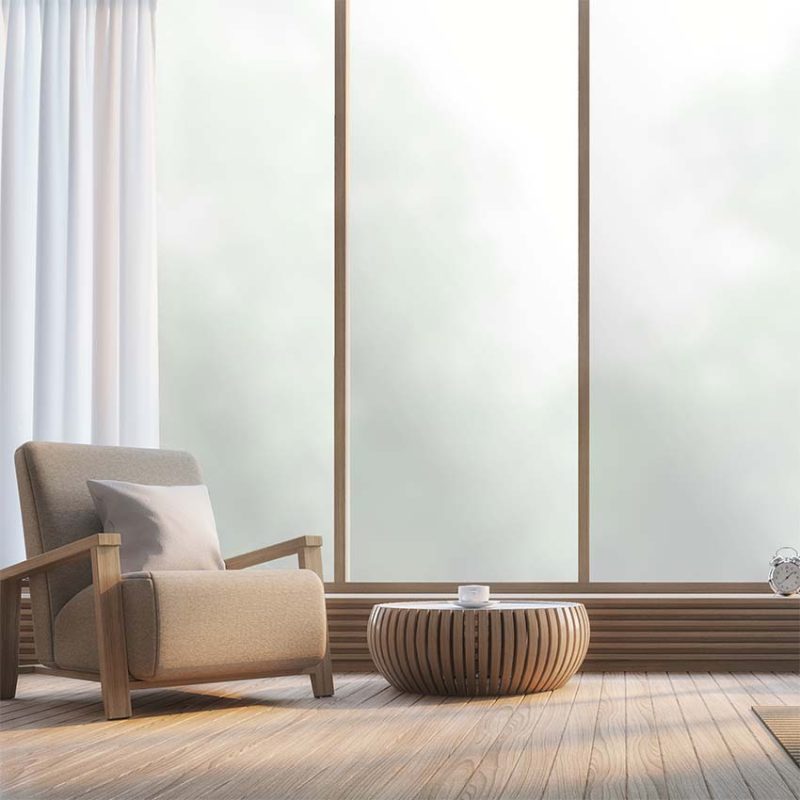
Clean, unobstructed windows are a genuine hallmark of calm minimalist design, but privacy is still a real need in most homes, especially in small apartments close to neighbors. This is the specific swap current design guidance recommends to solve both at once.
- Measure your window pane precisely before ordering film, most static-cling films are cut to size at home with scissors.
- Clean the glass fully and apply the film using the water-and-squeegee method most products specify.
- Reserve a lightweight, sheer curtain panel only where you want a softening layer of fabric texture in addition to the film.
- Choose a simple frosted or subtly textured film over an ornately patterned one for the calmest effect.
- Solves privacy without adding visual bulk or pattern
- Keeps a small room's window feeling clean and unobstructed
- A one-time application that requires no ongoing styling decisions
Search terms: "frosted privacy window film," "decorative static cling window film"
Fewer, Textured Throw Pillows

A sofa piled with six or seven mismatched decorative pillows is one of the most common sources of accidental visual clutter in a small living room, and it's an easy swap to fix without touching the sofa itself.
- Remove every pillow from the sofa and start from zero.
- Choose two to three pillows maximum, varying texture, bouclé, linen, chunky knit, rather than pattern.
- Stay within your room's established warm neutral palette rather than introducing a new accent color here.
- Add one folded throw blanket for extra texture instead of a fourth or fifth pillow.
- Removes one of the most common sources of accidental clutter
- Texture variation keeps a restrained arrangement from feeling flat
- Makes the sofa itself, not the pillow pile, the visual anchor
Search terms: "boucle throw pillow cover," "chunky knit cushion cover neutral"
One Biophilic Element Instead of Scattered Knickknacks

This is the closing swap because it's the one that ties every other change together, a genuine connection to something living or natural, in place of the small, purely decorative knickknacks that tend to accumulate in every home over time.
- Choose one significant natural element, a single large-leaf plant, a piece of driftwood, or a substantial stone or ceramic vessel.
- Remove three or more small decorative knickknacks to make genuine visual room for it.
- Position it somewere it gets natural light if it's a live plant, or somewhere it can be genuinely seen if it's a static natural object.
- Resist adding a second and third plant immediately, one well-placed element is the actual point of this swap.
- Adds a genuine sense of life without adding visual clutter
- Naturally replaces several smaller, less considered objects at once
- The single most research-backed calming design element on this entire list
Search terms: "large leaf indoor plant low maintenance," "driftwood decor accent"
Why This Works: The Psychology of a Calm Room
Every swap on this list points back to the same underlying mechanism. A cluttered, high-contrast, mismatched room gives your eyes and brain more distinct visual signals to process at once, competing colors, competing patterns, competing textures, competing light sources. A calmer room reduces the total number of distinct signals without necessarily reducing the number of objects.
That's the real difference between "having less" and "choosing better." Nine mismatched decorative objects and one considered statement piece can occupy the exact same shelf, but only one of them gives your brain a single, coherent thing to rest on instead of nine small things to sort through. This is also why simply removing items without addressing color, material, and lighting cohesion often leaves a room feeling empty rather than calm, subtraction alone skips the actual mechanism that creates the effect.
How the Swaps Compare
| Swap | Effort | Typical Cost |
|---|---|---|
| One statement object | Low | $20–$45 |
| Tonal rug | Moderate | $60–$200 |
| Warm neutrals | Low–Moderate | $10–$40 |
| Natural materials | Moderate | $15–$50 |
| One large art piece | Low | $40–$120 |
| Layered warm lighting | Low | $20–$50 |
| Frosted window film | Low | $15–$35 per window |
| Fewer textured pillows | Low | $20–$60 |
| One biophilic element | Low | $15–$40 |
Common Mistakes That Undo a Calm Room
- Subtracting without choosing. Emptying a shelf without adding one considered object usually reads as bare, not calm.
- Mixing more than two or three tones. Even warm, individually pleasant colors compete once you introduce a fourth or fifth.
- Skipping texture entirely. An all-smooth, all-matte room can feel just as cold as an all-white one; texture is what keeps warm minimalism from tipping into sterile.
- Treating this as a one-time project. Small accumulations creep back in; a seasonal five-minute edit keeps the effect intact.
- Chasing trends over your own palette. Swap toward colors and materials that already exist in your home, not whatever is newest.
Common Questions
Which single swap should I try first? Layered warm lighting, it's the cheapest and fastest change on this list, and it affects how every other swap reads in the room.
Does this approach work in a rented apartment? Yes, nearly every swap here, lighting, textiles, rugs, window film, art, plants, is fully reversible and requires no permanent changes or landlord approval.
Is warm minimalism just a passing trend? The color and material choices may shift over time, but the underlying principle, a limited, cohesive palette of natural materials and considered objects, is consistently described by designers as durable specifically because it's built around how people want to feel in a space, not around novelty.
How do I keep a small home from feeling empty rather than calm once I declutter? Replace what you remove with one better, more intentional version rather than leaving true visual emptiness, that's the core distinction this entire list is built on.
Can I do this in a home that already has a lot of color and pattern I love? Yes, start with just one or two rooms, or even just the swaps around lighting and materials, which layer onto an existing colorful palette without requiring you to repaint or replace furniture.
None of this was ever really about owning less. It was about every single thing in the room actually earning its place there, instead of just having accumulated over time because nothing prompted its removal. A calm home isn't an empty one, it's a considered one.
Start with the lamp tonight, turn off the overhead light and see what one warm bulb does to a room you thought you already knew. That one swap costs almost nothing and tells you more about this whole approach than reading about it ever will.
Shop the Story
- sculptural ceramic candle holder
- tonal area rug
- warm taupe paint sample
- light oak side table
- large abstract art print
- warm white table lamp
- frosted privacy window film
- boucle throw pillow cover
- large leaf indoor plant low maintenance