
9 Budget Living Room Changes With the Biggest Visual Impact
Ranked by actual cost-to-impact, not just what's trending

I've written a lot about budget living room upgrades, and somewhere around the fourth or fifth piece, I started noticing a pattern in what people actually asked me about afterward. It was never the crown molding. It was always some version of the same question: which one thing, if I could only pick one, would actually change how the room feels the most? That's a genuinely different question from "what's affordable" or "what's on trend," and it deserves its own honest answer rather than another general roundup.
So this piece is built differently. Every item below is evaluated specifically on cost-to-impact, not just cost, and not just impact in isolation. Some of the highest-impact changes on this list cost literally nothing. Some of the trendiest current techniques, the ones flooding design coverage right now, cost real money but deliver a genuinely outsized visual return relative to that cost, which is exactly why they've made this list over other equally trendy but lower-impact options.
Color is doing an enormous amount of the work in 2026's biggest design shifts specifically, and the data backs that up in a way that's worth taking seriously rather than dismissing as another passing trend. Zillow's 2026 Home Trends Report found mentions of "color drenching" up 149 percent year over year in property listings. Yelp's search data is even more dramatic: searches for ceiling painters are up 16,884 percent, and searches related to statement door painting and staining are up a genuinely staggering 187,073 percent. That's not a niche aesthetic preference, that's a measurable shift in what real buyers and homeowners are actually doing to their living rooms right now.
I've checked every claim, statistic, and named designer quote in this piece against its original source rather than repeating secondhand paraphrases, and where a specific number or technique traces to one report or one designer, that attribution is kept intact rather than smoothed into generic, unattributed advice.
Here are the nine changes, organized by genuine cost-to-impact rather than simple cost order, starting with the one that costs the most real money and delivers a correspondingly dramatic result.
Table of Contents
- Color Drench One Small Nook Instead of a Full Room
- Paint the Ceiling, Your Fifth Wall
- A Statement-Painted Door
- Color Cap Instead of a Full Drench
- Edit Your Existing Decor Down by Half
- Fresh Greenery at Varying Heights
- One Genuinely Large-Scale Piece of Art
- One Good Vintage or Antique Piece
- New Throws and a Fresh Slipcover
- The Cost-to-Impact Ranking
- Understanding the 2026 Color Trends Behind This List
- Common Mistakes That Waste the Impact
- Common Questions
Color Drench One Small Nook Instead of a Full Room
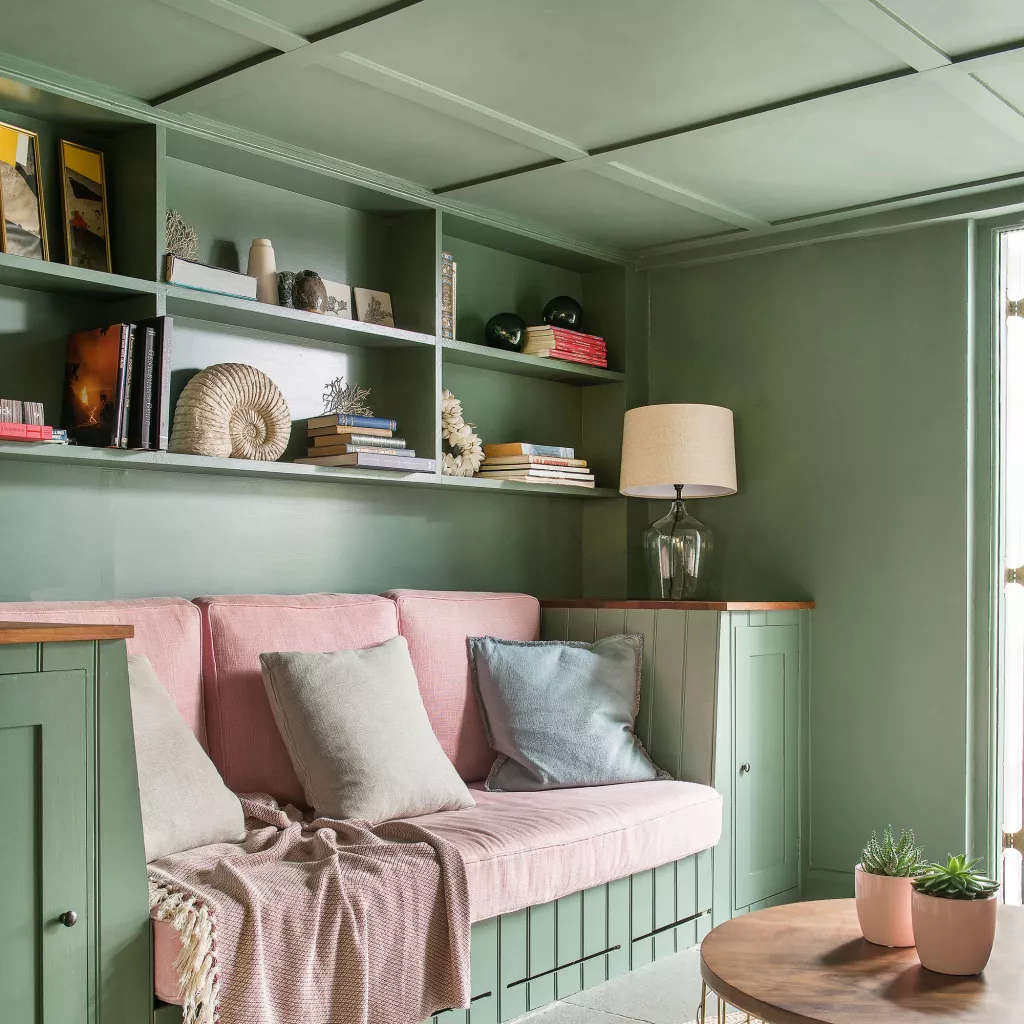
Color drenching, painting walls, trim, doors, and sometimes the ceiling all in the same single hue, is described by designer Lori Wilke of Roseberry Allen directly: enveloping a room in a single color creates a cozy and dramatic feel, and painting the trim, doors, cabinetry, walls, and even ceiling the same color is what defines the technique. Done on a full room, it's a real investment. Done on one small nook, a reading corner, a window seat, a fireplace alcove, it's one of the highest-impact-per-dollar moves on this entire list.
- Choose one contained, architecturally distinct zone, a reading nook, a window alcove, the wall behind a media console, rather than an entire room.
- Paint the walls, trim, and any built-in surfaces within that zone the exact same color and sheen for the full immersive effect.
- Choose a deeper, more saturated tone rather than a pastel, designers note that darker colors are increasingly understood to make a room feel calmer and more finished rather than smaller.
- Test large paint swatches, at least 8-by-8 inches, on the actual wall and ceiling before committing, since a shade can look dramatically different once it wraps a full space rather than sitting on a small sample card.
- Achieves the dramatic effect of full-room color drenching at nook scale, not room scale
- Backed by a documented 149% year-over-year increase in real listings, not a fleeting social trend
- Creates a genuine focal point that photographs and lives beautifully
Search terms: "deep saturated interior paint color," "color drenching paint technique"
Paint the Ceiling, Your Fifth Wall

A single ceiling is a lot of surface area for the cost of one gallon of paint, and it's currently one of the most talked-about, most underused surfaces in home design. Designer Wuellner, quoted in Forbes' 2026 design trends coverage, considers the fifth wall to be one of the most underutilized design surfaces in any home, noting that buyers notice it immediately, even if they can't say exactly why the room feels complete.
- Choose a color that complements your walls, either a soft, calming tone or a bolder, more saturated choice if you're ready for real drama.
- Use a ceiling-rated flat or matte paint, which best diffuses light and avoids drawing attention to imperfections overhead.
- Consider a beadboard, faux tin tile, or simple beam detail as a secondary architectural option if paint alone doesn't feel like enough.
- Work with a helper or a proper ladder setup, ceiling painting is more physically demanding than wall painting and worth doing safely rather than rushed.
- Documented as one of the sharpest-accelerating design trends by real search data, not anecdote
- One of the largest single surfaces in the room, for the cost of one gallon of paint
- Creates the "complete room" feeling buyers and guests notice without necessarily naming
Search terms: "ceiling paint flat finish," "beadboard ceiling panels living room"
A Statement-Painted Door

Of every single statistic behind this list, this one is the most dramatic: Yelp reports that searches for door painting and staining are up a genuinely staggering 187,073 percent, the sharpest increase named anywhere in current 2026 design trend coverage.
- Choose your living room's most visible interior door, or the front door if it opens directly into the space, as your first candidate.
- Remove hardware where possible, or tape it carefully, before painting for the cleanest finish.
- Use a paint and primer rated for doors specifically, this surface sees more handling and wear than a typical wall.
- Choose a color that either matches your color-drenched nook from Change 1 or contrasts deliberately against a neutral surrounding wall.
- The single sharpest-growing search trend named in this entire piece
- A small surface area keeps material cost genuinely minimal
- A daily-touched detail that reads as considered every time someone uses it
Search terms: "door and trim paint enamel," "bold statement door paint colors"
Color Cap Instead of a Full Drench
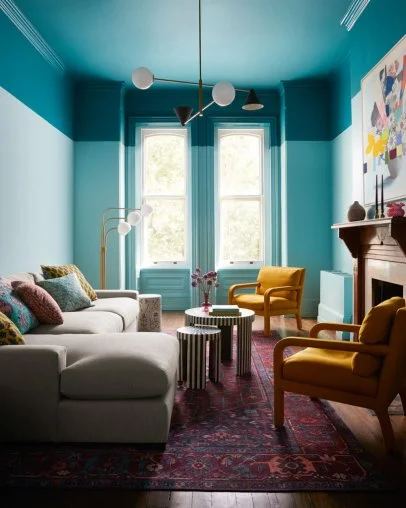
Color capping, a technique introduced directly by Benjamin Moore, offers a specific answer for anyone who wants a more dramatic result than a single flat wall color but isn't ready for the full commitment of drenching every surface in one hue.
- Select three to four tones from the same paint color family, ranging from darkest to lightest.
- Apply the darkest tone to the ceiling and cap the very top of the walls with it.
- Work down the wall in progressively lighter tones, ending with the lightest near the floor or baseboard.
- Keep transitions between tones clean and level, using painter's tape and a level line for the cleanest gradient effect.
- Directly attributed to Benjamin Moore as an intentional, brand-forward 2026 technique
- A gradient effect from just a few paint tins, genuinely custom-looking for modest material cost
- A gentler entry point than full drenching for anyone hesitant about total commitment
Search terms: "color capping paint technique," "same family paint tones gradient"
Edit Your Existing Decor Down by Half
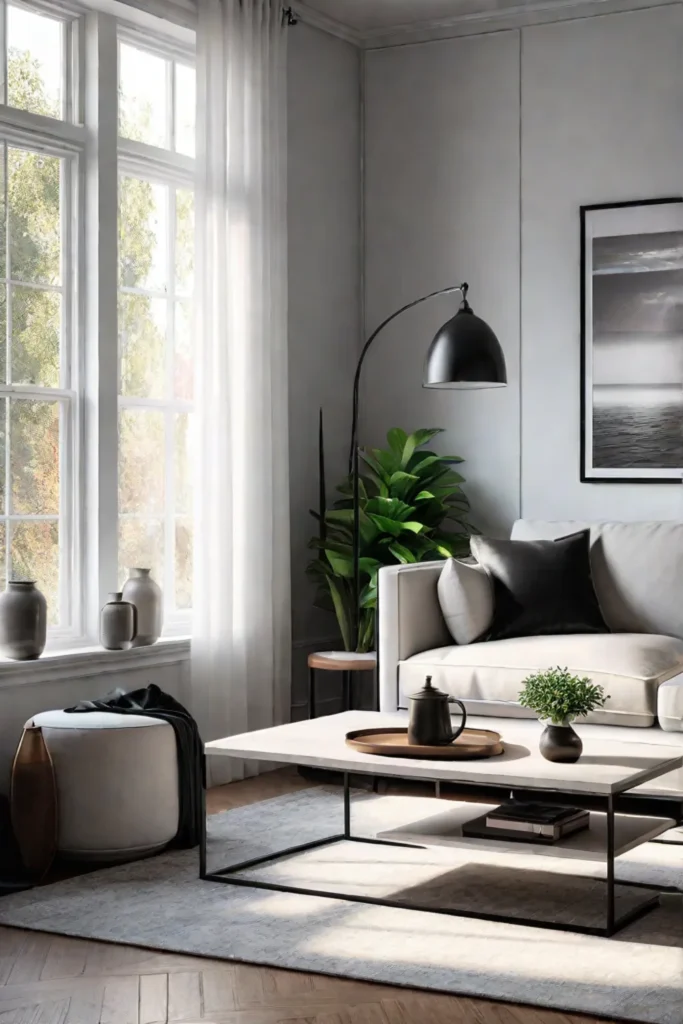
This is the only change on this list with a genuine $0 material cost, and it's here specifically because removing decor is consistently one of the most immediately visible transformations available, regardless of budget, precisely because most living rooms accumulate far more small objects than they were ever actually styled to hold.
- Photograph each surface, shelf, console, mantel, coffee table, before touching anything, this makes the "too much" far easier to see objectively than looking at it in person.
- Remove every object from each surface and reintroduce only your genuine favorites, following the rule-of-three grouping principle rather than trying to fit everything back.
- Box up, donate, or relocate the remaining half to another room rather than storing it nearby where it will likely creep back.
- Live with the edited version for at least a week before deciding whether anything genuinely needs to return.
- The only genuinely free change on this entire list
- Often reveals which pieces were actually doing visual work, and which were just noise
- Can be done in an afternoon with zero purchases required
Search terms: "decluttering decor styling tips," "donation pickup service"
Fresh Greenery at Varying Heights
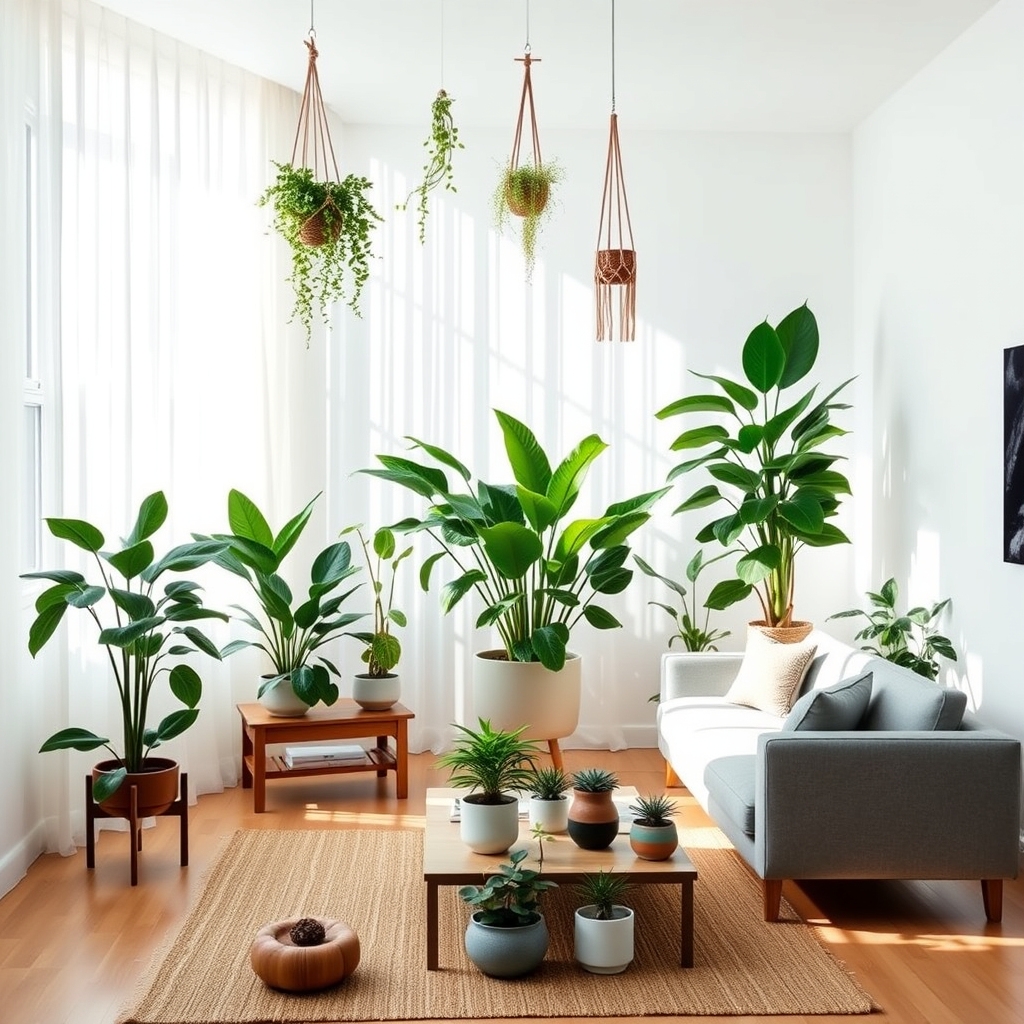
A living room with zero plants and one with even two or three well-placed ones reads as measurably different, and it's a change that pairs especially well with the color-forward changes above, since living rooms embracing bold, saturated colors are frequently paired with genuine biophilic elements to keep the space feeling grounded rather than overwhelming.
- Add one genuinely tall floor plant as an anchor in an empty corner or beside seating.
- Add a medium plant on a side table or console for a second height point.
- Add one small trailing or cascading plant on a shelf for the lowest point in the height sequence.
- Choose low-maintenance varieties if you're not confident in plant care, a genuinely realistic faux option is a fine substitute for the visual effect specifically.
- Adds genuine color and life no static object fully replicates
- Pairs naturally with bold paint choices to keep a saturated room feeling grounded
- Scales from one small plant to a full green corner depending on budget
Search terms: "tall low maintenance floor plant," "trailing pothos small pot"
One Genuinely Large-Scale Piece of Art

A wall with several small, scattered frames reads as busier and, counterintuitively, less finished than a wall with one genuinely large piece, and it's a change that delivers real visual weight for a single, contained purchase rather than several smaller ones adding up to more total cost.
- Choose your room's most visible wall, ideally one currently underused or bare.
- Size up rather than down, a piece that feels almost too large for the space is usually closer to correct than one that feels safely modest.
- Choose a piece in your existing or newly chosen color story, if you've color-drenched or capped a nearby zone, echo that palette here.
- Lean it against the wall rather than hanging it if you want a more casual, no-tools installation, especially in a rental.
- Gives the eye one clear focal point instead of several competing small ones
- A single purchase delivers more visual weight than several smaller ones combined
- Works beautifully alongside a bold paint choice elsewhere in the room
Search terms: "large format art print framed," "oversized abstract wall art"
One Good Vintage or Antique Piece
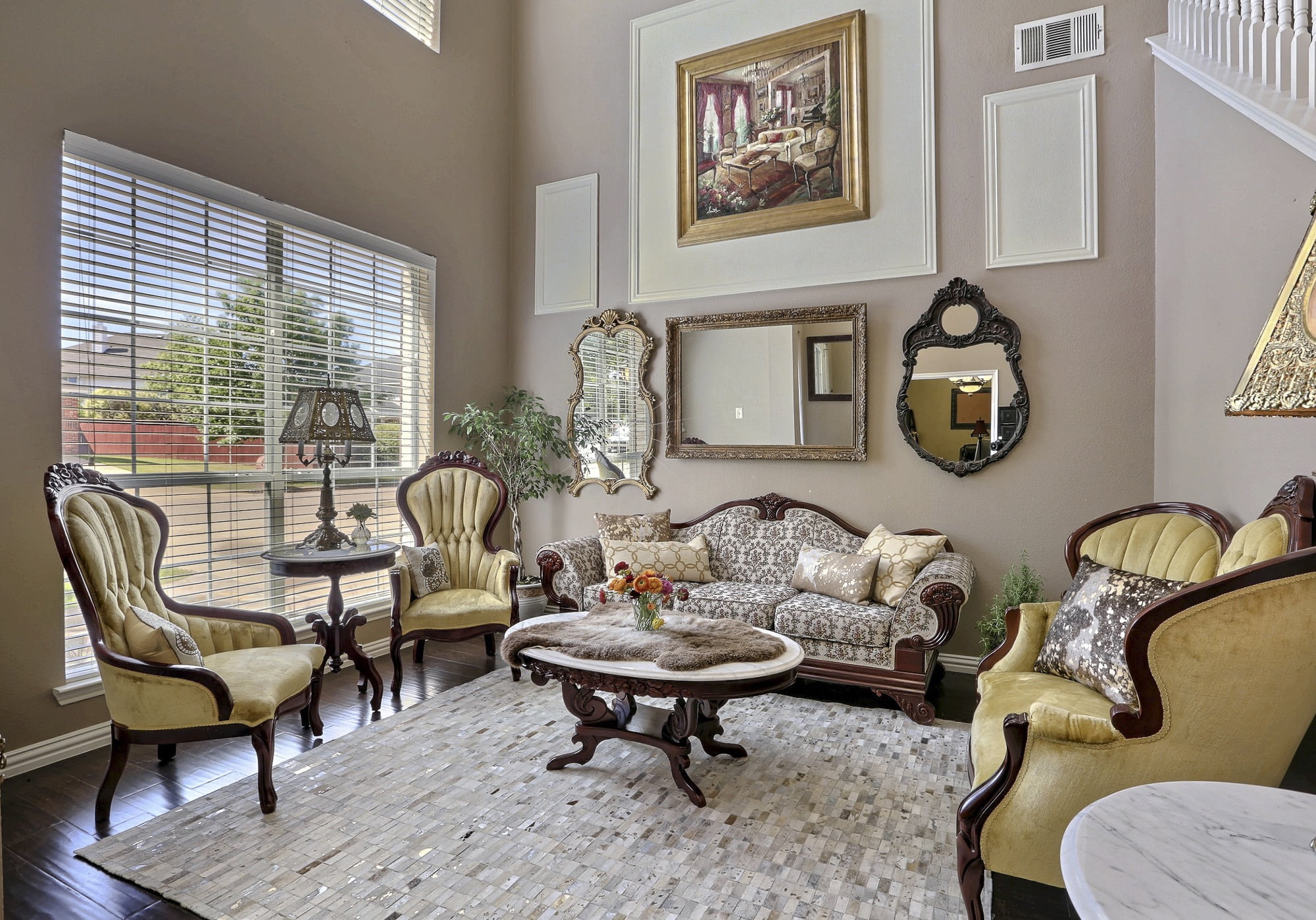
A room furnished entirely with new, mass-produced pieces, however nice, tends to feel like it was assembled from a single catalog. One genuinely old piece, a side table with real patina, a vintage brass lamp, an antique mirror, breaks that uniformity and adds a sense of history no new object can fake.
- Shop secondhand stores, estate sales, and online marketplaces for one piece with genuine character, real wood grain, an interesting shape, visible age.
- Prioritize a smaller piece, a side table, a lamp, a mirror, over furniture requiring a major restoration project.
- Let it stand out rather than trying to match it exactly to your existing furniture, contrast is part of what makes it read as intentional.
- A light clean or a simple wax on wood pieces is often all that's needed, resist the urge to over-restore away the character that made it appealing.
- Adds genuine history and character no new object replicates
- Often costs less than a comparable new piece, particularly for solid wood furniture
- Signals a collected, personal room rather than a single-trip purchase
Search terms: "vintage side table estate sale," "antique brass table lamp"
New Throws and a Fresh Slipcover
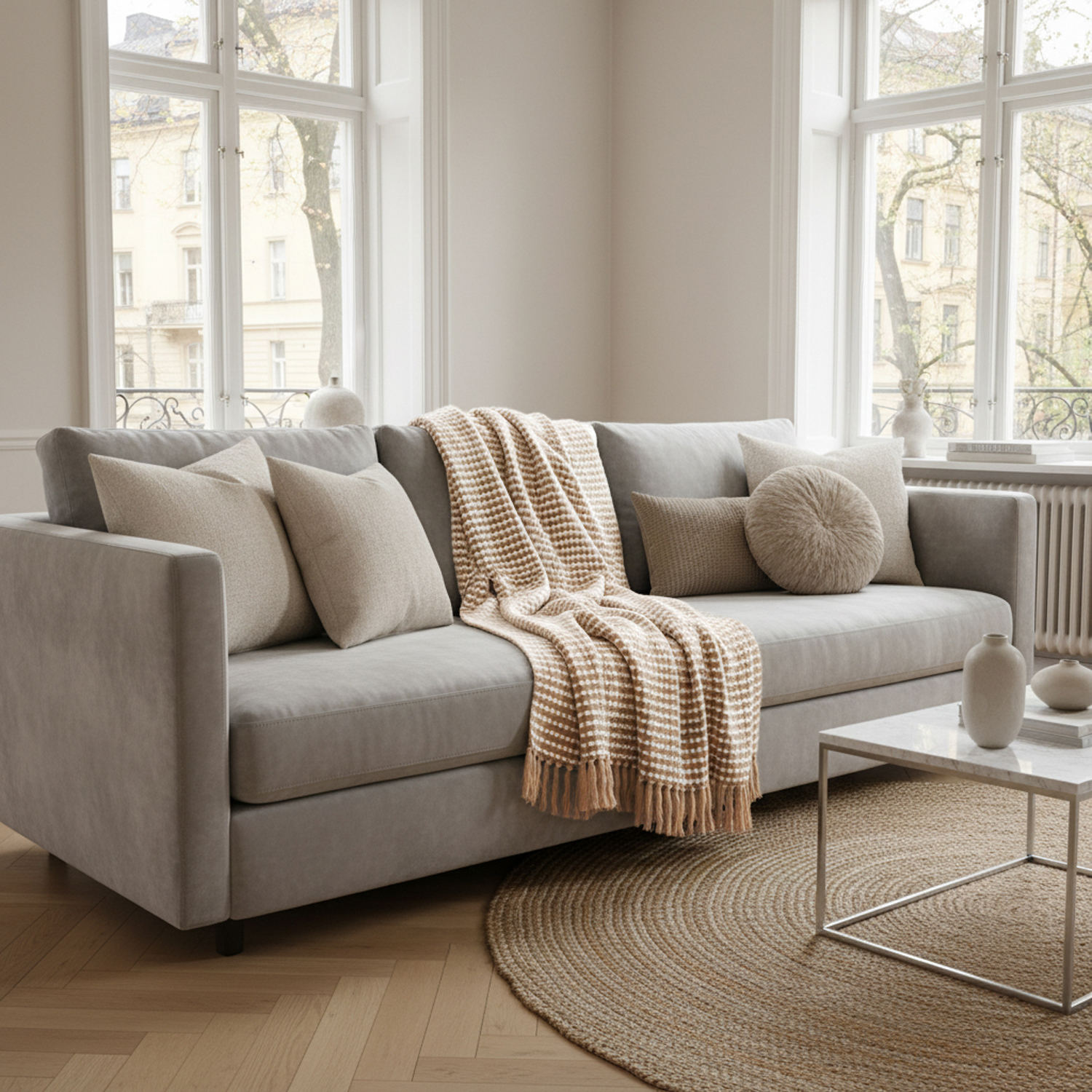
The sofa is usually the largest single object in a living room, which means its color and texture carry disproportionate visual weight, and updating that surface, without replacing the sofa itself, delivers a real, felt change for a fraction of furniture-replacement cost.
- Choose a well-fitted slipcover in a color that either complements or intentionally contrasts your new wall color choices.
- Layer one or two genuinely textured throws, chunky knit, bouclé, in a coordinating tone rather than a fourth or fifth decorative pillow.
- Reference the overstuffed pillow insert principle for any accompanying cushions, oversized inserts read as considerably more finished than standard ones.
- Reassess the whole room together once the sofa is updated, this is usually the change that reveals whether anything else still feels out of place.
- Updates the room's single largest object without a full furniture purchase
- Supports every other change on this list rather than fighting against it
- A genuinely reversible, low-commitment way to test a new color direction
Search terms: "fitted sofa slipcover," "chunky knit throw blanket"
The Cost-to-Impact Ranking
| Change | Typical Cost | Impact Level |
|---|---|---|
| Edit decor down by half | Free | Highest ROI |
| Fresh greenery, varied heights | $25–$80 | Very high |
| Statement-painted door | $20–$35 | Very high |
| Color drench a small nook | $60–$110 | Very high |
| One good vintage piece | $20–$80 | High |
| Paint the ceiling | $35–$65 | High |
| Color capping | $40–$70 | High |
| Large-scale art | $50–$150 | High |
| New throws and slipcover | $90–$220 | High |
| Choosing 4–5 changes realistically | Around $200–$350 total |
Understanding the 2026 Color Trends Behind This List
Four of the nine changes above are essentially different scales of the same underlying shift: living rooms in 2026 are moving decisively away from the bright-white, minimal palettes of the past decade and toward deliberate, saturated, sometimes dramatic color choices. Color drenching applies that shift to an entire zone or room. Color capping applies it as a gradient. Ceiling painting applies it to a single overlooked surface. Statement doors apply it to the smallest, most-touched surface in the room. What connects all four is the same underlying principle: color, used deliberately and completely rather than as a small accent, reads as more finished and more custom than the same color used partially or hesitantly.
This matters for how you sequence spending. A homeowner with $60 to spend gets more genuine transformation from fully committing to one small color-drenched nook than from a partial, half-hearted attempt to lightly tint an entire room. Completeness, not coverage area, is what these current trends are actually rewarding.
Common Mistakes That Waste the Impact
- Half-committing to a bold color. A partially drenched or capped space reads as unfinished; full commitment within a contained zone outperforms a diluted attempt at a larger one.
- Skipping the large paint swatch test. A color that looks soft on a small sample card can feel dramatically different wrapping an entire wall and ceiling.
- Adding new decor before editing existing decor. New purchases layered onto an already-cluttered room rarely solve the underlying problem.
- Choosing several small plants instead of one considered height sequence. Scattered greenery doesn't create the same visual hierarchy as deliberately varied heights.
- Buying a slipcover in the wrong size or fit. A poorly fitted cover looks more dated than the original worn fabric it was meant to replace.
Common Questions
Which single change should I make first on a genuinely tight budget? Editing existing decor down by half, it costs nothing, takes an afternoon, and often reveals what the room actually needs before you spend on anything else.
Is color drenching or color capping the better choice for a rental? Both require painting, so check your lease first; if painting isn't permitted, a statement door (if it's an interior, non-structural door you're allowed to modify) or a large piece of leaning art deliver real impact without touching the walls.
Do these bold color trends risk looking dated quickly? Choosing colors within your existing palette family, rather than chasing an unrelated trending shade, and applying them to contained zones rather than the whole home, both reduce that risk considerably.
How do I decide between color drenching a nook versus color capping the whole room? Drenching suits a smaller, defined area where full commitment is manageable; capping suits a larger room where you want the gradient effect without covering every surface in one flat, unbroken color.
Can I combine several of these nine changes at once? Yes, and the highest-impact rooms typically do, a color-capped or drenched zone, a large art piece in the same palette, fresh greenery, and an edited decor collection all reinforce each other rather than competing.
What's the realistic total cost if I want to do all nine? Doing all nine thoroughly typically lands between $400 and $700 depending on room size and paint choices, still a fraction of any partial remodel addressing the same visual outcome.
The question I kept getting asked, which one thing matters most, never actually had a single answer. It had a ranking. Some of the highest-impact moves cost nothing at all. Some of the ones flooding design coverage right now cost real money and are worth every dollar specifically because the data backs up what they deliver. Knowing the difference, and spending accordingly, is the actual skill here, more than any individual technique.
Start with the free one tonight. Edit one shelf down by half before you spend a single dollar on anything else, and let that tell you how much of this room's "unfinished" feeling was really about money at all.
Shop the Story
- deep saturated interior paint color
- ceiling paint flat finish
- door and trim paint enamel
- color capping paint technique
- tall low maintenance floor plant
- large format art print framed
- vintage side table estate sale
- fitted sofa slipcover
- chunky knit throw blanket