7 Peel-and-Stick Wallpaper Picks That Fool Everyone Into Thinking They're Custom
Removable wallpaper that reads as a real install, not a rental fix.
The first time I put up peel-and-stick wallpaper, I did it wrong in almost every way a person can. I didn't clean the wall. I didn't measure twice. I definitely didn't watch a single tutorial first. I just ripped the backing off a roll of floral vinyl I'd bought on a whim, slapped it up in my rental bathroom, and stood back proud of myself for about four days — right up until the corners started curling like old wallpaper in a haunted house and a bubble the size of a fist showed up dead center over the mirror.
So I get the skepticism. For a long time, "peel-and-stick" was decorator code for cheap, shiny, and obviously fake — the kind of wallpaper you could spot from across the room because it caught the light wrong and the pattern repeated in a way real wallpaper never does. If that's the picture in your head, I don't blame you. It used to be earned.
But the category has quietly gone through a complete materials overhaul in the last few years, and almost nobody who moved on from it the first time has gone back to check. Poly-woven textiles have replaced glossy vinyl. Pattern designers are matching seams the way traditional wallpaper hangers do. Some companies will now cut a custom size to your exact wall so you're not stretching or piecing together mismatched rolls. The gap between "looks removable" and "looks custom" has nearly closed — you just have to know which seven products actually closed it, instead of buying whatever shows up first in a search result.
This is the list I wish I'd had before that bathroom disaster. Real brands, tested against real reviews, sorted by the kind of room and budget you're actually working with.
Table of Contents
- What Actually Makes Peel-and-Stick Look Custom
- Chasing Paper — Best Overall / Easiest First Project
- Tempaper — Best for Designer Collaborations & Grasscloth Depth
- Fancy Walls — Best for an Exact, Custom Fit
- Society Social — Best Subtle Texture (No Bold Pattern)
- Love vs. Design — Best for a Distinct, Curated Aesthetic
- Rebel Walls — Best Oversized Mural for a Statement Wall
- Bungalow Rose (Wayfair) — Best Budget Entry Point
- How the Styles Compare
- How to Install It So It Actually Looks Custom
- Renter FAQ
- The Takeaway
What Actually Makes Peel-and-Stick Look Custom
Before the picks, it's worth naming the four things that separate a wall that reads as "designer install" from one that reads as "dorm room, 2011." I learned most of these the hard way; you don't have to.
With that in mind, here's what's actually worth your money.
Chasing Paper — Best Overall / Easiest First Project
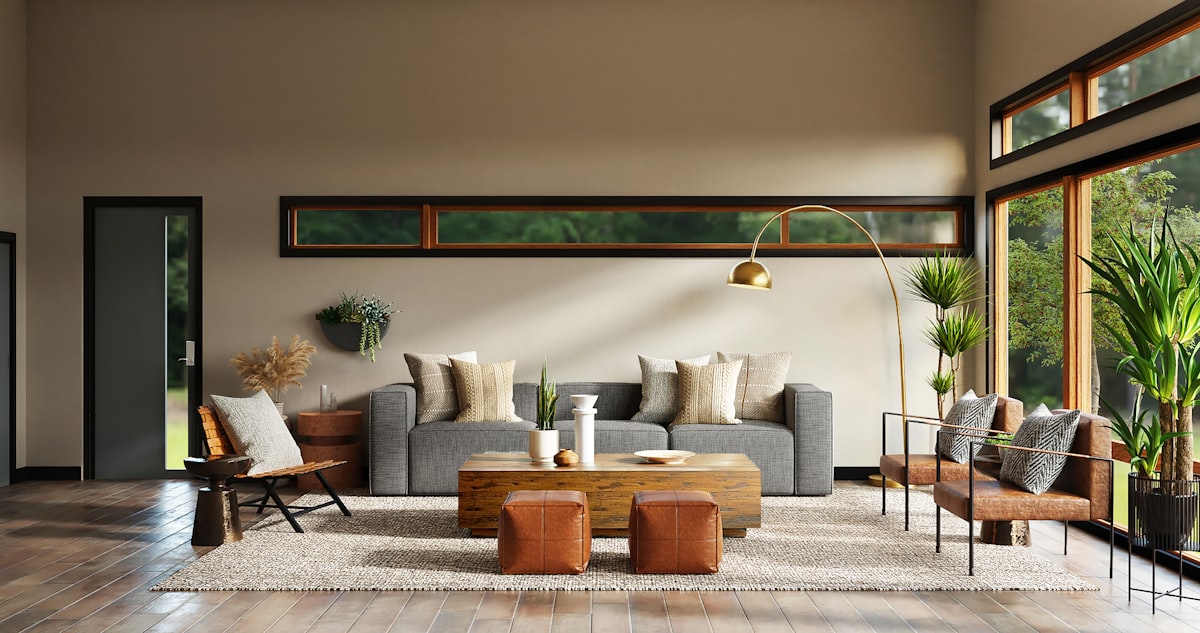
Chasing Paper is where I'd point anyone doing this for the first time, and it's not just my opinion — in side-by-side product testing, reviewers have consistently found its poly-woven material to be the easiest to apply and, more importantly, the easiest to remove without tearing paint off underneath. That second part is the one that actually protects your deposit.
- The poly-woven base has a soft, almost linen-like texture instead of a vinyl sheen, so from three feet away it genuinely reads as fabric wallcovering.
- The catalog spans everything from quiet neutral textures to maximalist botanical prints, so you're not stuck picking a "safe" pattern just because it's the most forgiving to install.
Best for: First-time installers, rental bathrooms and powder rooms, anyone nervous about damaging a security deposit.
Typical price: Roughly $50–$110 per roll depending on print exclusivity.
Tempaper — Best for Designer Collaborations & Grasscloth Depth
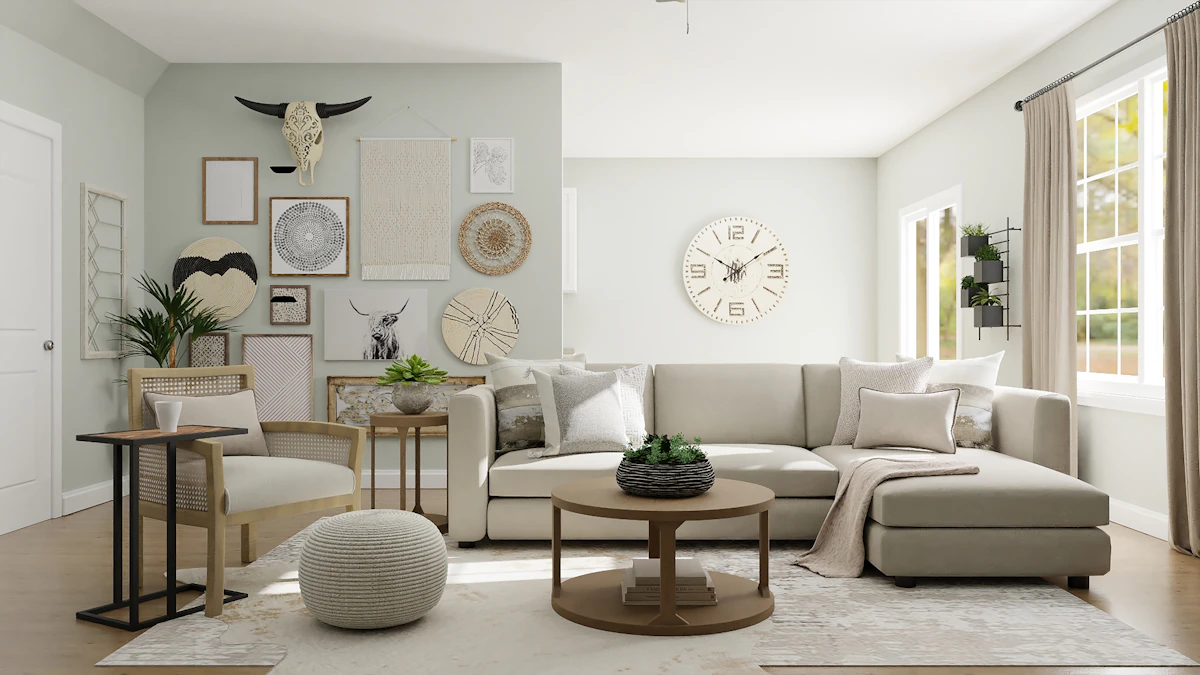
Tempaper markets itself as the original peel-and-stick wallpaper company, and the reputation is largely earned — it's the brand interior designers reach for when a client wants texture without the cost of real, unpasted grasscloth. The current catalog includes collaborations with names like Jeremiah Brent, Bobby Berk, and The Novogratz, which is part of why it shows up in so many "designer look for less" roundups.
I want to be honest about this one rather than just wave it through: customer reviews are genuinely mixed. A meaningful number of buyers describe the faux grasscloth as elevated and "surprisingly textured for the price," and plenty mention using it to reface cabinets or line a powder room with zero regrets. But a smaller, vocal group reports adhesion problems — strips that wouldn't stay up on the first try, or a texture that read as flatter and cheaper in person than in photos. The pattern in the complaints is telling: most trace back to skipping wall prep or applying over a matte or textured paint finish, both of which Tempaper explicitly says to avoid.
- The grasscloth and paperweave lines add real dimensional texture, which is the single hardest thing for any peel-and-stick product to fake convincingly.
Best for: Bedrooms, dining rooms, and anyone chasing a real grasscloth look on a fraction of the budget — as long as you prep the wall properly.
Typical price: Roughly $40–$100 per roll, grasscloth lines running higher.
Fancy Walls — Best for an Exact, Custom Fit

This is the brand to reach for when "peel-and-stick" is doing the most work to disguise itself. Fancy Walls is a PVC-free, phthalate-free polyester textile with a catalog running past 3,000 designs, and — the part that actually matters for the "custom" goal — you can request a custom size quote to adjust a panel's width and length to your specific wall.
- A wall with zero seams and zero leftover pattern repeat simply doesn't look like a product you peeled off a roll. It looks like it was made for that wall, because in a real sense, it was.
Best for: Awkward wall dimensions, stairwells, and any feature wall where you want zero visible seams.
Typical price: Custom sizing runs higher than standard rolls — expect to pay a premium for the made-to-measure option.
Society Social — Best Subtle Texture (No Bold Pattern)

Not every wall needs a statement. Society Social's peel-and-stick faux grasscloth leans into subtle texture instead of bold print, which makes it the pick for hallways, home offices, or bedrooms where a busy pattern would fight with everything else in the room.
- Texture without pattern reads as more expensive, not less — it's the visual equivalent of a good linen shirt. It also means you can use it in a small room without it becoming the only thing anyone notices.
Best for: Hallways, home offices, primary bedrooms, anywhere you want warmth without a loud print.
Love vs. Design — Best for a Distinct, Curated Aesthetic
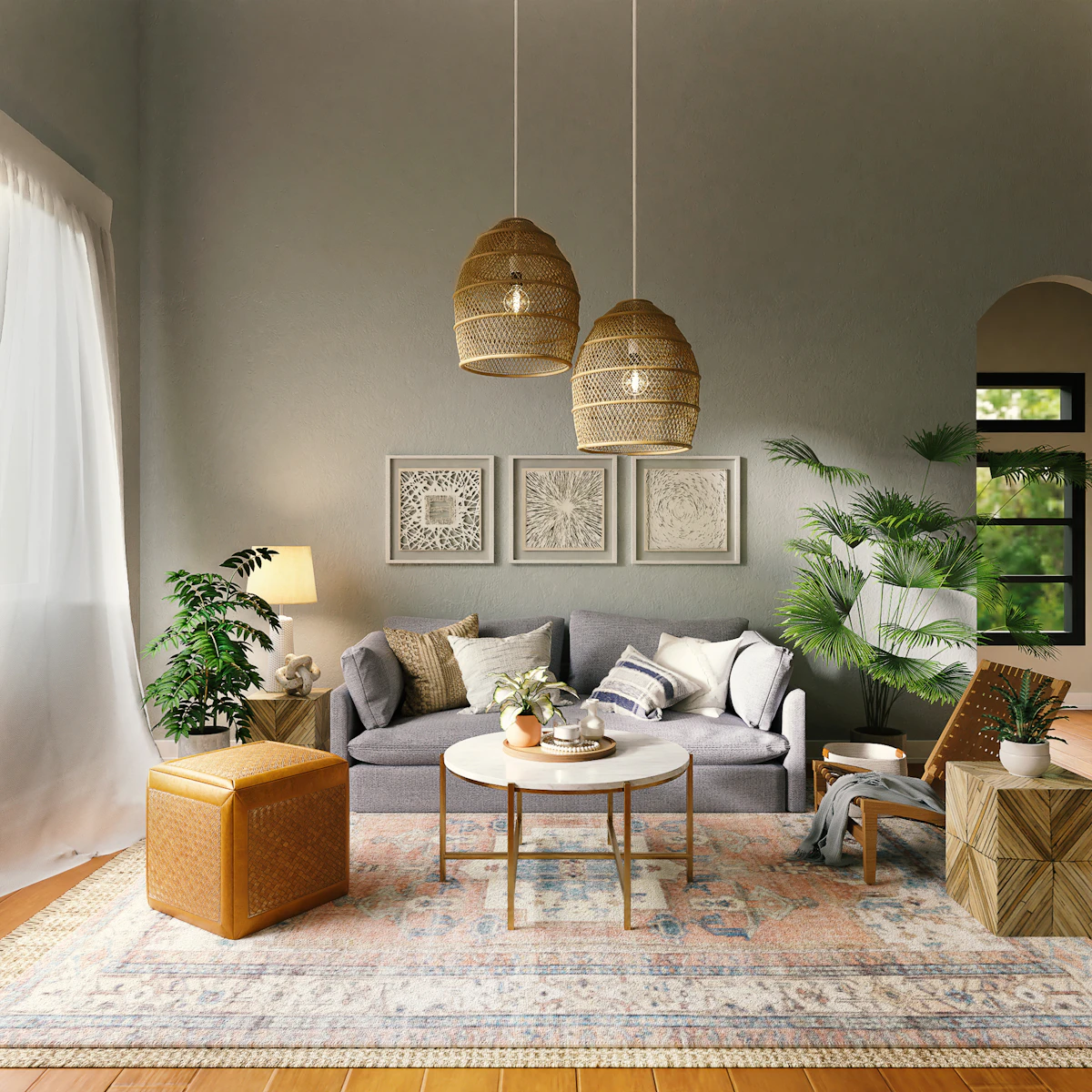
If you already know your aesthetic down to the paint chip and you're tired of "trend-driven" catalogs that feel like everyone else's Pinterest board, Love vs. Design is worth the look. Reviewers consistently point to how cohesive the catalog feels — like there's a clear design point of view behind it rather than a grab-bag of whatever's trending.
- A tightly curated catalog means less risk of picking a print that looks dated in two years. The tradeoff is flexibility — you're buying into a specific point of view, not endless customization.
Best for: Design-forward renters who know their aesthetic and want something that won't look generic.
Rebel Walls — Best Oversized Mural for a Statement Wall

Rebel Walls specializes in large-format wall murals sized to match your wall precisely, including fully customized versions of their most popular art. If your goal is a wall that looks like it belongs in a design magazine rather than a rental listing, this is the category to shop in.
- Murals sidestep the "obvious pattern repeat" problem entirely, since the image is usually one continuous scene rather than a repeating tile. That's the single fastest way to make a wall stop looking like wallpaper altogether.
Best for: Dining rooms, entryways, and feature walls where you want a genuine "wow" moment.
Bungalow Rose (Wayfair) — Best Budget Entry Point

Not every project needs a designer price tag, and Bungalow Rose — Wayfair's in-house peel-and-stick line — is proof that affordable doesn't have to mean it looks it. The designs are genuinely trend-driven, ranging from subtle textures to bolder statement prints, without the price climbing into designer-collab territory.
- This is the pick for testing whether you even like wallpaper in a space before committing real money — a small accent wall, a closet interior, or the back of a bookshelf.
Best for: First-time renters, small accent areas, anyone testing the waters before a bigger investment.
How the Styles Compare
| Brand | Material Feel | Best Room | Custom Sizing | Price Range |
|---|---|---|---|---|
| Chasing Paper | Poly-woven, matte | Powder room, bathroom | No | $50–$110 |
| Tempaper | Faux grasscloth/vinyl | Bedroom, dining room | No | $40–$100 |
| Fancy Walls | Polyester textile | Stairwell, feature wall | Yes | Premium |
| Society Social | Faux grasscloth, subtle | Hallway, office | No | Mid-range |
| Love vs. Design | Curated print | Living room accent | No | Mid-range |
| Rebel Walls | Large-format mural | Dining room, entry | Yes | Premium |
| Bungalow Rose | Standard vinyl | Nook, closet, small accent | No | Budget |
How to Install It So It Actually Looks Custom
This is the part every roundup skips, and it's the part that actually determines whether your wall looks intentional or looks like a rental patch job.
Prep the wall first — always.
- Clean the surface with a mild soap solution and let it dry completely.
- Peel-and-stick adheres best to eggshell, satin, or semi-gloss paint finishes. Flat, matte, and textured walls are where most bad reviews come from — the adhesive simply can't grip evenly.
- If you've just painted, wait a minimum of four weeks before applying wallpaper. Fresh paint is still curing and won't hold adhesive properly.
- Fill and sand any nail holes, dents, or dings. Peel-and-stick will telegraph every imperfection underneath it.
Tools that make it look professional:
- A smoothing tool (a credit card wrapped in a soft cloth works if you don't own one)
- A level or laser level for your first strip — every strip after it depends on the first one being straight
- A sharp utility knife for trimming at edges and outlets
- A blow dryer on low heat, for smoothing out any warping that happens during application
Application steps:
- Start in the most visible corner of the room, not a hidden one — that's the reference point for the whole wall.
- Peel back six to twelve inches of backing at a time. Don't remove the whole backing at once; it's how bubbles happen.
- Use the smoothing tool in overlapping strokes, working from the center of the strip outward, to push air toward the edges.
- Overlap the next strip slightly and match the pattern before pressing it down — this is the single step that separates a seamless wall from an obvious repeat.
- Trim excess at outlets and baseboards last, once the strip is fully smoothed.
Removal, when you're ready for a change:
- Peel slowly from a top corner, pulling down and toward yourself at a low angle rather than straight out.
- If a wall was properly primed and prepped before application, most quality peel-and-stick papers come away clean. If it wasn't, expect some touch-up paint to be needed — this is almost always a prep issue, not a product one.
Renter FAQ
Will this actually protect my security deposit?
On a properly painted (not flat/matte), properly prepped wall, yes — that's the entire selling point of quality peel-and-stick wallpaper, and it's the single most common piece of praise in customer reviews. The risk shows up when it's applied to bare drywall, matte paint, or a textured surface that wasn't primed correctly first.
Can I use it in a bathroom with humidity?
Some lines are rated for moisture and higher-humidity rooms, but not all of them — check the specific product listing before buying for a bathroom, since this varies brand to brand and even line to line within a brand.
Does it work on textured walls?
Generally, no — most manufacturers explicitly recommend against textured surfaces, since the adhesive can't make even contact. If your wall has any texture at all, order a sample and test a small section first rather than committing to a full roll.
How long does it actually last?
Quality peel-and-stick wallpaper can reasonably stay up for years on a well-prepped wall, but it's genuinely best suited to accent walls and temporary updates rather than a whole-house install you expect to last a decade the way traditional pasted wallpaper does.
The Takeaway
Peel-and-stick wallpaper will never be traditional pasted wallpaper, and that's exactly the point. The best versions on the market right now have closed the visual gap so convincingly that your guests won't know it's removable unless you tell them — and in a rental, that's not a compromise. That's the entire win.
Start small. Order the sample. Prep the wall. And let the first strip be the one you learn on, not the one you judge yourself by.