
8 Small Patio Ideas That Make a Concrete Slab Feel Like a Getaway
Size isn't the limit, it's the styling, real resort-feel ideas for the smallest patios
My patio was a single slab of gray concrete, roughly the size of a parking spot, wedged between a shared fence and a utility meter. For two summers I treated it exactly like that, a place to store a bike and a folding chair I never sat in, because I genuinely believed a space that small couldn't be worth styling.
What changed my mind wasn't more square footage, it was watching a neighbor with an identical slab turn hers into something I found myself wanting to sit in every evening, string lights, a small rug, two chairs angled toward each other instead of the fence. Nothing about the actual size had changed. Everything about how it felt had.
A quick note before we start: a few of the stories ahead are shared as told to me directly, and a few are offered as illustrative examples to make a principle easier to picture, I've tried to be clear about which is which rather than presenting every anecdote as independently verified.
Here are eight ways to make even the smallest concrete patio feel like an actual escape, not just overflow storage.
Table of Contents
- One Defined Seating Zone, Not Scattered Furniture
- A Single Statement Chair Instead of a Mismatched Set
- Layered Evening Lighting
- An Outdoor Rug to Disguise the Concrete
- Vertical Greenery Instead of Floor Planters
- A Cohesive Textile Color Story
- Shade as a Room-Defining Element
- Scent and Sound Layering
- Making Concrete Disappear: Texture Tricks
- Small Patio Furniture Sizing Guide
- The Full Cost Comparison
- Common Questions
One Defined Seating Zone, Not Scattered Furniture
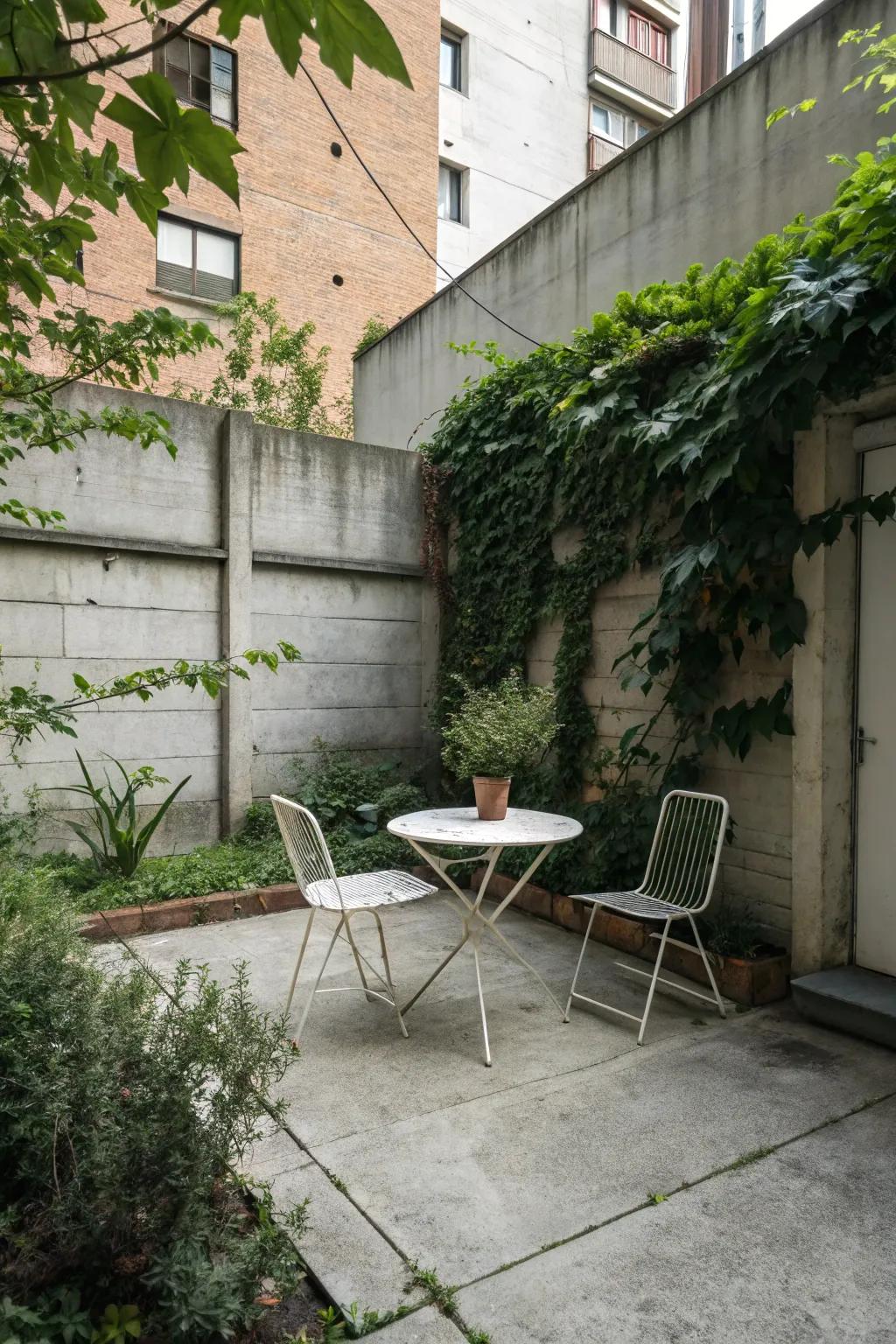
I used to place furniture on my patio the way I'd place storage, wherever there happened to be an open gap. The result never felt like a place to sit, it felt like a place things ended up. The shift came from treating the space like a single small room with one clear purpose, not a leftover corner.
- Measure your actual usable footprint first, subtracting any fixed obstacles like meters or vents.
- Choose one primary purpose, morning coffee for two, evening wine for one, and furnish for that specific use.
- Angle seating toward each other or toward a focal point, not simply lined up against the fence.
- Leave at least one clear walking path, even a narrow one, so the zone doesn't feel boxed in.
- Resist adding a second "maybe useful" piece until the first zone feels genuinely finished.
- Creates one clear sense of purpose instead of scattered clutter
- Makes a small footprint feel complete, not underfurnished
- Encourages actually using the space, not just storing things in it
Search terms: "small space bistro set," "compact outdoor chairs," "storage ottoman outdoor"
A Single Statement Chair Instead of a Mismatched Set
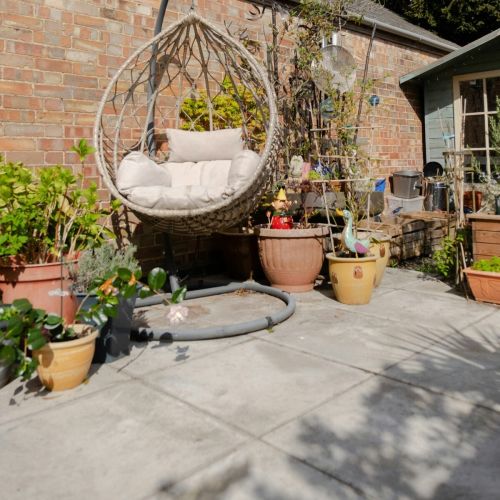
One homeowner shared that her tiny patio felt perpetually unfinished with a cheap plastic two-chair set she'd bought in a hurry. Replacing both chairs with one genuinely comfortable hanging egg chair transformed the entire feel, one confident piece instead of two forgettable ones.
- Measure your available floor space, including any clearance needed for a chair that swings or reclines.
- Choose one piece with genuine comfort and presence, a hanging chair, a deep papasan, an oversized lounge chair, rather than a generic folding option.
- Add a small side table or plant stand beside it rather than a second seat.
- Position it to face your best available view, even if that's simply a patch of sky or greenery.
- Layer a cushion and throw in a cohesive color to make the single piece feel intentional, not sparse.
- One confident piece reads as intentional, not compromised
- Frees up floor space a second chair would otherwise claim
- Creates a genuine personal retreat, not just generic seating
Search terms: "hanging egg chair outdoor," "outdoor lounge chair small space," "folding outdoor stool"
Layered Evening Lighting
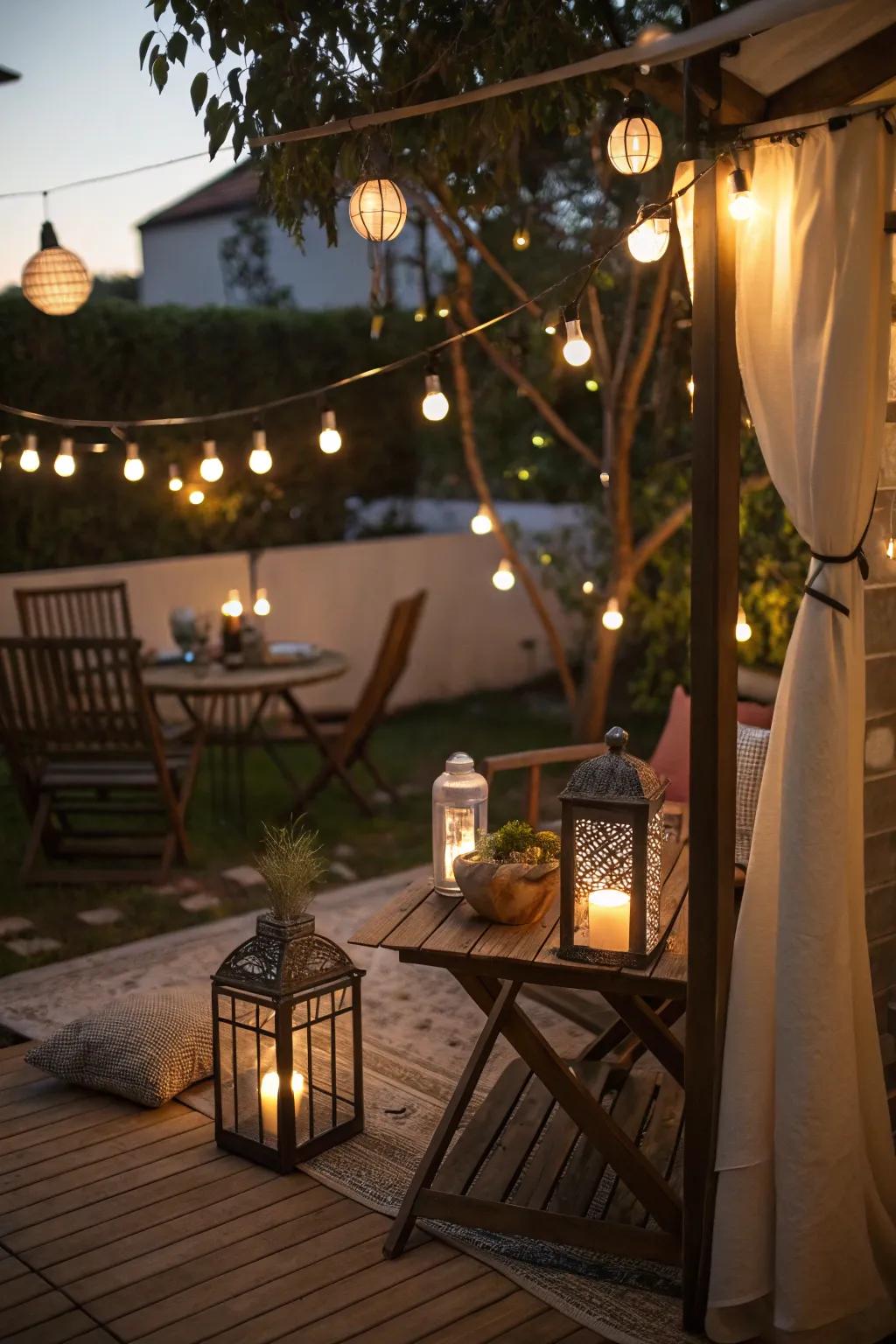
During the day, my patio was simply concrete and furniture. In the evening, with warm string lights overhead and a small lantern at chair height, it became the place I actually wanted to be, the exact same square footage, transformed entirely by when and how it was lit.
- Start with warm white string lights along the top perimeter, using adhesive outdoor hooks if drilling isn't an option.
- Add one battery or solar lantern at seating height for a softer, closer glow.
- Include one small ground-level light, a solar stake light or candle, to add depth rather than light from only one plane.
- Choose warm white (2700K–3000K) tones throughout for consistency, mixing cool and warm light undermines the cohesive effect.
- Test the full layered setup after dark before finalizing placement, daytime views don't reveal how the light actually falls at night.
- Creates genuine evening atmosphere from the same daytime space
- Layered heights add depth a single light source can't
- Most options require zero permanent installation
Search terms: "warm white outdoor string lights," "solar lantern outdoor," "outdoor adhesive light hooks"
An Outdoor Rug to Disguise the Concrete
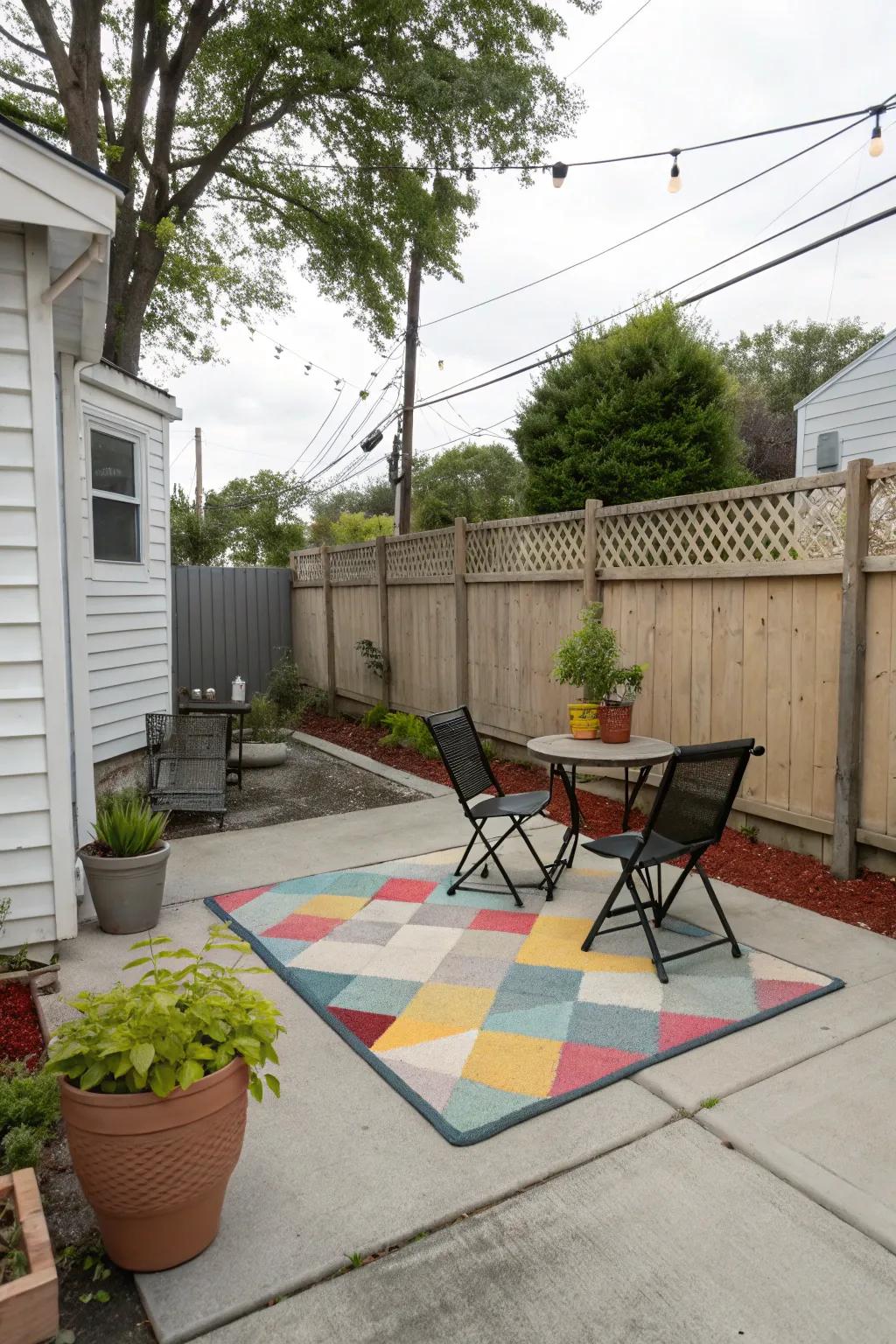
Bare concrete, no matter how clean, reads as a utilitarian surface, a driveway extension, not a room. A single well-placed outdoor rug was the fastest, single change that made my patio stop reading as "outside the house" and start reading as "part of it."
- Measure your seating zone specifically, not the entire patio, sizing the rug to that footprint.
- Choose a genuinely outdoor-rated rug material that tolerates direct weather exposure.
- Position furniture legs on the rug's edges, both for a grounded look and added natural weight.
- Lift periodically to check for trapped moisture underneath, preventing mildew on the concrete below.
- Roll and store during extended wet seasons if the specific material isn't fully weather-rated for year-round exposure.
- Instantly disguises bare, utilitarian-feeling concrete
- Grounds and unifies the furniture above it
- Adds color and pattern without needing any permanent change
Search terms: "small outdoor rug weather resistant," "outdoor rug grippers," "washable outdoor patio rug"
Vertical Greenery Instead of Floor Planters
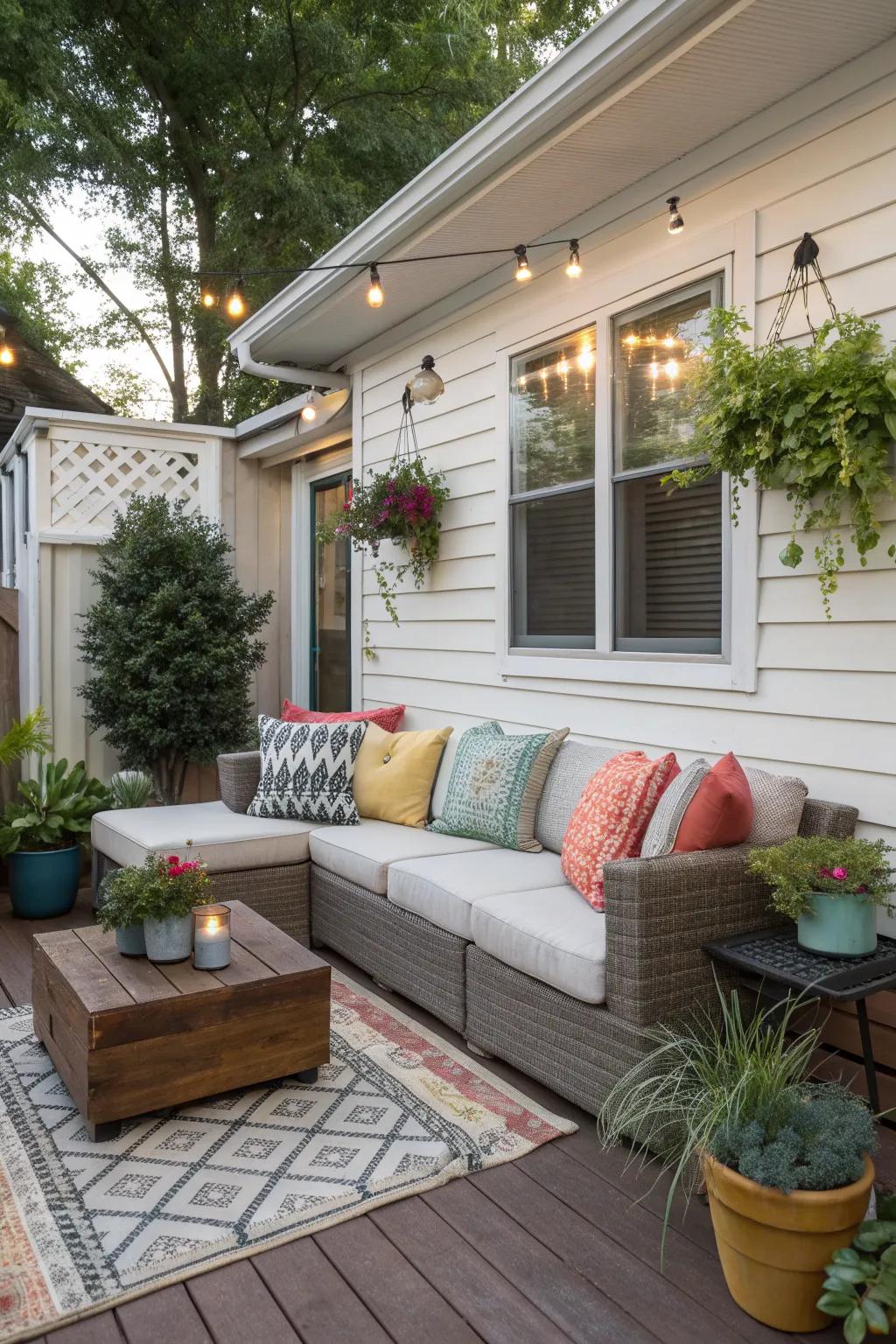
Imagine a reader with a patio so small that even two floor planters blocked her only walking path. She solved it by going vertical entirely, a hanging plant wall and a few railing-clipped pots, greenery filling the space without ever touching the actual floor.
- Assess available vertical surfaces, a fence, a railing, an exterior wall, before adding a single floor-based pot.
- Use railing clips, wall-mounted brackets, or a simple tension rod for hanging pots at varying heights.
- Choose trailing or climbing varieties for hanging positions, and upright compact plants for narrow shelf placement.
- Group three to five plants at varied heights for visual interest, rather than a single uniform row.
- Water hanging plants slightly more often than floor-level ones, they typically dry out faster with more air exposure.
- Adds real greenery without sacrificing precious floor space
- Creates visual height, making the whole space feel larger
- Easily reconfigured as plants grow or seasons change
Search terms: "railing planter clip," "hanging plant hooks outdoor," "tiered plant stand outdoor"
A Cohesive Textile Color Story

My first attempt at patio cushions was a mismatched collection, whatever was on clearance in whatever pattern was available that week. It looked exactly like what it was, an accumulation, not a design. Committing to one simple color story changed everything without buying a single new piece of furniture.
- Choose one dominant neutral tone and one accent color for the entire space.
- Repeat that same two-color combination across cushions, a throw, and any small accessories.
- Vary texture within that palette, a woven cushion, a smooth outdoor fabric, a knit throw, rather than seeking exact pattern matches.
- Replace one mismatched item at a time if a full textile refresh isn't affordable at once, rather than waiting to do it all together.
- Store cushions indoors or in a weatherproof bin between uses to extend their color and fabric life significantly.
- Transforms existing furniture without any new purchases
- Reads as a cohesive design choice, not an accumulation
- Easy to update seasonally by swapping just the accent tone
Search terms: "outdoor cushion covers," "weatherproof throw blanket," "outdoor fabric by the yard"
Shade as a Room-Defining Element

A homeowner shared that her patio never felt like a "room" until she added a simple shade sail overhead, before that, sitting outside felt like sitting in an open lot; afterward, the shaded footprint itself read as a defined, contained space.
- Assess your patio's actual sun exposure through the day before choosing a shade type and size.
- Choose a weighted-base umbrella or a properly tensioned shade sail rated for your space's dimensions.
- Position it to define your seating zone's boundary, not simply centered on the patio's full footprint.
- Secure freestanding shade structures with genuinely adequate weighted bases given local wind conditions.
- Lower or remove during storm warnings regardless of how secure the setup feels on a calm day.
- Visually defines the space the way a ceiling defines a room
- Makes the patio usable through more hours of a sunny day
- Adds a genuine sense of enclosure and intimacy
Search terms: "market umbrella weighted base," "small shade sail," "outdoor umbrella small patio"
Scent and Sound Layering

The final touch that made my patio feel like an actual getaway rather than just a nicely furnished slab was entirely non-visual, potted herbs releasing scent when brushed against, and a small solar water feature adding a soft, constant sound beneath the street noise.
- Choose one or two fragrant plants, rosemary, mint, jasmine, positioned where you'll actually brush against or smell them while seated.
- Add a small solar or battery-powered tabletop water feature if space allows, even a compact one adds meaningful ambient sound.
- Position any water feature away from direct furniture splash zones but within easy hearing distance of seating.
- Trim fragrant herbs regularly, not just for plant health but because fresh growth releases noticeably more scent than woody, overgrown stems.
- Test the full sensory setup in the evening specifically, since street and neighbor noise often peaks at different times than when you're styling during the day.
- Engages senses beyond sight, deepening the sense of escape
- Soft water sound helps mask street or neighbor noise
- Fragrant herbs double as both decor and functional cooking ingredients
Search terms: "potted rosemary plant," "small solar water fountain outdoor," "tabletop water feature"
Making Concrete Disappear: Texture Tricks
Beyond a rug, a few additional ways to visually soften bare concrete specifically: interlocking outdoor deck tiles snap directly over existing concrete without adhesive or drilling, instantly changing the floor's texture and tone. A washable outdoor paint or stain, if permitted by your lease, can also transform bare gray concrete into a warmer neutral tone in an afternoon. Where flooring changes aren't possible at all, layering textures above the ground plane, a rug, a woven pouf, a low wooden side table, draws the eye upward and away from the concrete itself.
Small Patio Furniture Sizing Guide
Under 30 square feet: one statement chair, a small side table, and vertical greenery only, floor space for a second seat likely isn't realistic.
30–60 square feet: a compact two-chair bistro set or a loveseat-style bench, plus one small side table and a properly sized rug.
60–100 square feet: a small table with two to four chairs becomes realistic, alongside a shade element and layered lighting.
General rule: leave at least 24–30 inches of clear walking space around any furniture grouping, tighter than that reads as cramped regardless of how nice the individual pieces are.
The Full Cost Comparison
| Idea | Typical Cost |
|---|---|
| Small bistro set or statement chair | $60–200 |
| Warm string lights + lantern | $20–45 |
| Small outdoor rug | $25–70 |
| Vertical planter setup | $20–55 |
| Cushion covers + throw | $25–60 |
| Market umbrella with weighted base | $40–110 |
| Herb plants + small water feature | $20–50 |
| Typical full small-patio makeover | Most setups fall under $400 total |
Common Questions
Can a genuinely tiny patio, under 30 square feet, really feel like a getaway? Yes, the ideas prioritizing verticality, lighting, and sensory layers (scent, sound) matter more than square footage; some of the most transformed small spaces are under 40 square feet total.
Where should I start if I can only do one thing this weekend? Warm string lights deliver the highest atmosphere-per-dollar and per-hour of effort on this entire list, and pair well with anything else added later.
Do I need permission from my landlord for any of this? Furniture, rugs, plants, and lighting on adhesive hooks typically require no permission; always check your specific lease regarding painting concrete or any permanent structural additions.
How do I keep a small patio from feeling cluttered as I add more elements? Add one layer at a time and live with it for a week before adding the next, this prevents the same "too much at once" clutter that hurts small indoor rooms too.
A concrete slab doesn't have to stay a concrete slab. Every idea here proves the same point: a small patio's biggest obstacle was never really its size, it was the assumption that a getaway requires more space than you actually have.
Start with the cheapest, fastest layer this weekend, string lights or a single rug, and let the space become somewhere you genuinely look forward to sitting, regardless of how many square feet it measures.
Shop the Story
- small space bistro set
- hanging egg chair outdoor
- warm white outdoor string lights
- small outdoor rug weather resistant
- railing planter clip
- outdoor cushion covers
- market umbrella weighted base
- small solar water fountain outdoor
- tiered plant stand outdoor
- potted rosemary plant