
7 Signs Your Home Is Cluttered (Even If It Looks Clean)
Hidden clutter signs that are quietly stressing you out
By every visible measure, my apartment was clean. Floors vacuumed, dishes done, surfaces clear, the kind of place that looked genuinely put together to anyone walking through it. And yet certain drawers made me flinch slightly before I opened them, I owned three of the exact same measuring cup, and there was a specific cabinet I'd quietly stopped opening at all, routing around it in my cleaning routine for what turned out to be over a year.
None of that showed up in a walkthrough. All of it showed up the moment I actually looked for something specific, or opened the wrong door, or tried to remember what I already owned before buying another one.
A quick note before we start: a few of the stories ahead are shared as told to me directly, and a few are offered as illustrative examples to make a principle easier to picture, I've tried to be clear about which is which rather than presenting every anecdote as independently verified. None of these seven signs are a judgment on how organized you are, they're common in genuinely tidy-looking homes, and most of them point to a system that needs a small update, not a full overhaul.
Here are the seven signs that actually mattered, why each one hides behind a home that already looks clean, and what to do about each one specifically.
Table of Contents
- You Have More Than One "Landing Zone"
- You Own Duplicates You Forgot You Had
- Your Storage Is Tidy in Front, Chaotic Behind
- You're Keeping Things for a "Someday" You Can't Picture
- You Feel a Flicker of Dread Before One Specific Space
- "Everything Has a Place" but You Still Can't Find Things
- Your Cleaning Routine Skips the Same Spots
- Why "Looks Clean" and "Feels Calm" Aren't the Same Thing
- If You Live With Roommates or Family
- Common Mistakes When Trying to Fix These Signs
- Which Sign to Tackle First If You Only Have One Weekend
- How Long Each Fix Actually Takes
- Common Questions
You Have More Than One "Landing Zone"
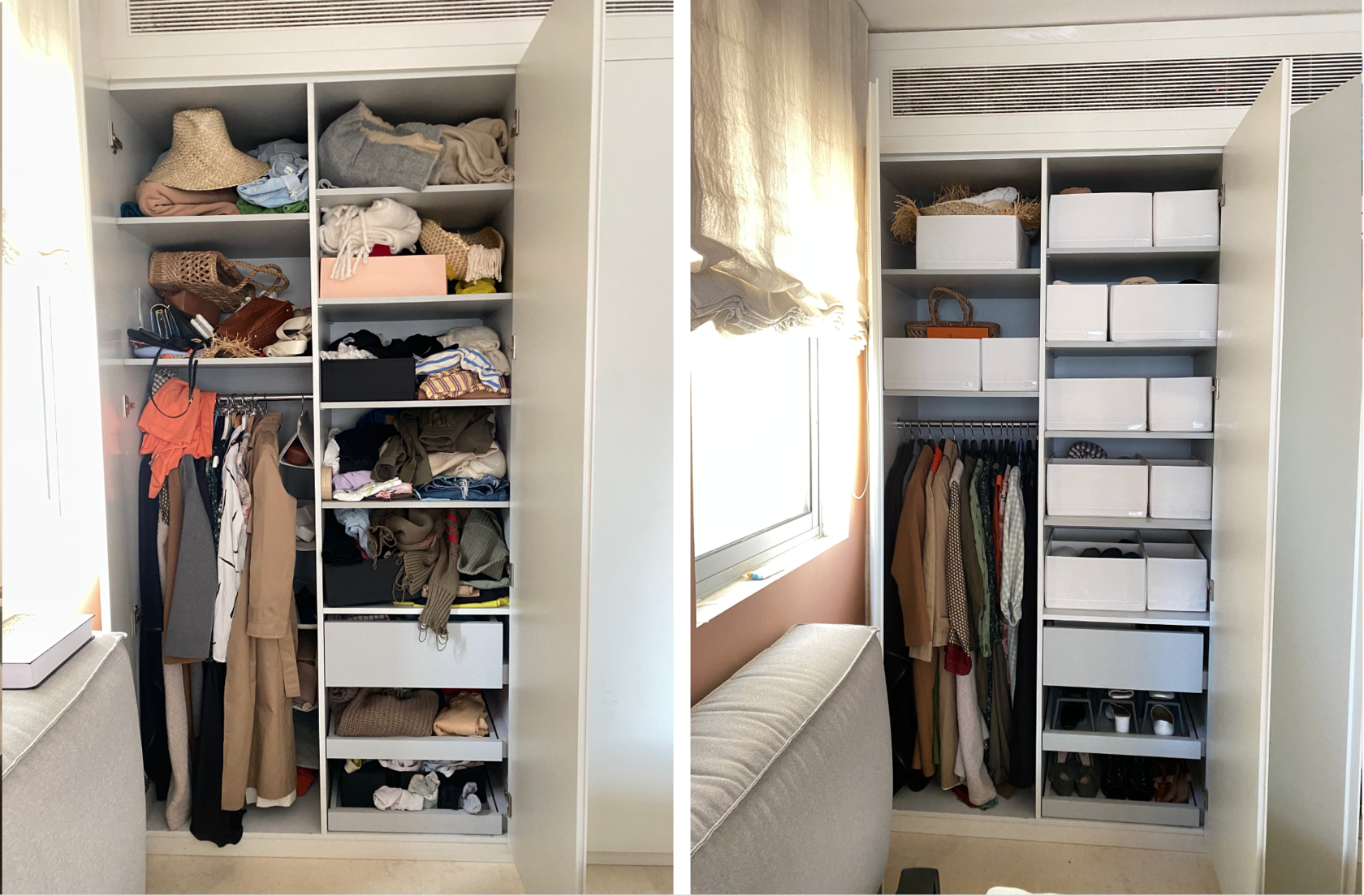
A homeowner shared that she thought she had a system, a bowl by the front door for keys, until she noticed mail was piling on the kitchen counter, the dog's leash lived on a specific dining chair, and a basket in the hallway had quietly become a catch-all for anything that didn't have an obvious home. Three landing zones, none of them fully working.
- Walk through your home once and note every spot where loose items currently tend to land.
- Consolidate down to one true "everything lands here first" zone, usually near the main entry.
- Give every category that lands there an actual next destination, mail goes to a folder, keys to a hook, rather than letting the landing zone become permanent storage.
- Set a nightly two-minute reset specifically for that one zone before the items move to their real homes.
- If a second zone keeps reappearing despite this, it usually means that category still doesn't have a real destination yet, not that you need a second official zone.
- Reveals which categories of items don't have a real destination yet
- Multiple visible piles create low-grade background clutter even in a tidy room
- Usually fixable by deciding on destinations, not by buying anything new
Search terms: "entryway catch all tray," "wall mounted key hooks," "mail sorter organizer"
You Own Duplicates You Forgot You Had
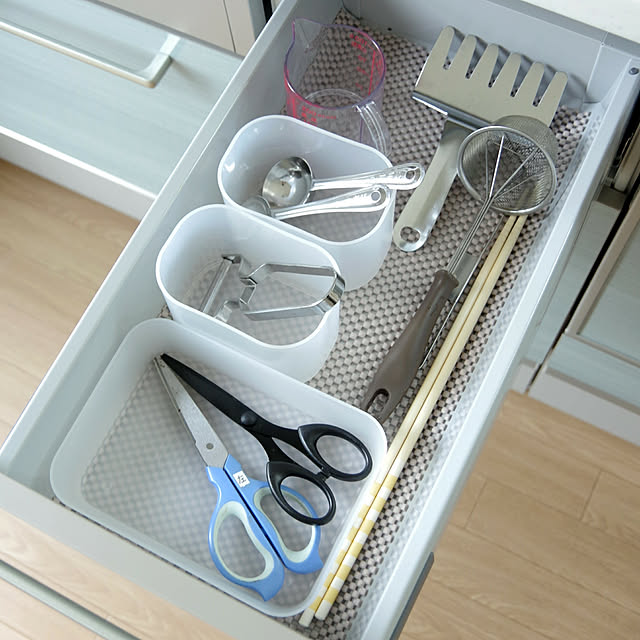
Picture a kitchen drawer with four pairs of scissors, none of them bought on purpose, or a bathroom cabinet with three nearly identical bottles of the same lotion. None of these were impulse purchases exactly, each one was bought because the original genuinely couldn't be found when it was needed.
- Pick one category at a time, kitchen tools, toiletries, or office supplies, rather than the whole house at once.
- Pull every item in that category out of its storage spot into a single visible pile.
- Consolidate down to the number you'd actually buy if you were starting completely from zero.
- Donate, recycle, or use up the extras before buying anything new in that category again.
- Store the keepers somewhere visible enough that you'll actually remember you own them next time.
- One of the clearest indicators that storage isn't visible or accessible enough
- Consolidating usually frees more physical space than expected from "just" a few extra items
- Reduces the ongoing habit of buying a third one later out of the same blind spot
Search terms: "clear pantry storage bins," "drawer organizer trays," "labeled storage containers"
Your Storage Is Tidy in Front, Chaotic Behind

A hall closet can look genuinely neat when opened casually, coats hung evenly, shoes lined up in front, until reaching for something in the back reveals a jumble that's clearly been pushed aside and ignored for months. The front row was doing all the visual work while the depth quietly filled with everything nobody wanted to deal with.
- Pick one storage space and empty it completely rather than just tidying the front row.
- Sort everything into keep, donate, and toss piles before anything goes back in.
- Use shallow bins or a turntable in deep cabinets so nothing gets pushed to a spot you can't see again.
- Return only what you're keeping, arranged so the back is as visible and reachable as the front.
- Repeat with one additional space each week rather than trying to empty every storage area in the home at once.
- Reveals space that looks fine on a walkthrough but adds friction during actual daily use
- Often where the most reclaimable space is hiding in a small home
- Fixing it once with the right bins tends to hold, since the system itself changes, not just the tidiness
Search terms: "cabinet lazy susan turntable," "clear stackable storage bins," "deep shelf organizer"
You're Keeping Things for a "Someday" You Can't Picture

A box of cords for devices nobody in the house owns anymore, clothes held onto "for when I lose the weight" or "for when I gain it back," craft supplies for a project that was planned three years ago and never started. Each item feels individually reasonable to keep, together they quietly take up a disproportionate amount of a home's storage.
- Pick up each "someday" item and ask specifically when, not just if, you'd realistically use it.
- If no real date or scenario comes to mind within a few seconds, place it in the donate or toss pile.
- For a genuinely uncertain few, use a labeled "maybe box" with a date written on it six months out.
- Revisit the maybe box only on that date, not sooner, and not indefinitely.
- If the box is untouched by that date, that's usually your answer, it can go without a second round of deliberation.
- Often accounts for a disproportionate share of clutter relative to how rarely these items get used again
- The emotional decision is usually harder than the physical one, the six-second question shortcuts it
- Frees space for things you use regularly instead of things stored out of obligation
Search terms: "labeled storage box with lid," "donation bins bags," "under bed storage box"
You Feel a Flicker of Dread Before One Specific Space

Almost everyone has one, a hall closet, a particular drawer, one specific cabinet, that comes with a small, automatic flicker of bracing before it's opened, in case something falls out or needs to be shoved shut again quickly. It's such a normal, minor feeling that it rarely gets treated as information.
- Name the one space that gives you this feeling, most people already know exactly which one it is without much thought.
- Block off twenty minutes specifically for that one space, rather than "the whole house" in general.
- Empty it completely and sort into keep, donate, and toss piles.
- Only return items that have an actual designated spot within that space, not just whatever happens to fit.
- Set a timer and stop when it goes off, regardless of how far you've gotten.
- A genuinely useful signal, not something to feel bad about noticing
- Addressing the one space people dread most usually creates the biggest felt relief of any single task on this list
- The dread itself tends to fade almost immediately once the space is sorted, well before it's perfectly organized
Search terms: "clear storage bins with lids," "drawer dividers set," "closet organization bins"
"Everything Has a Place" but You Still Can't Find Things
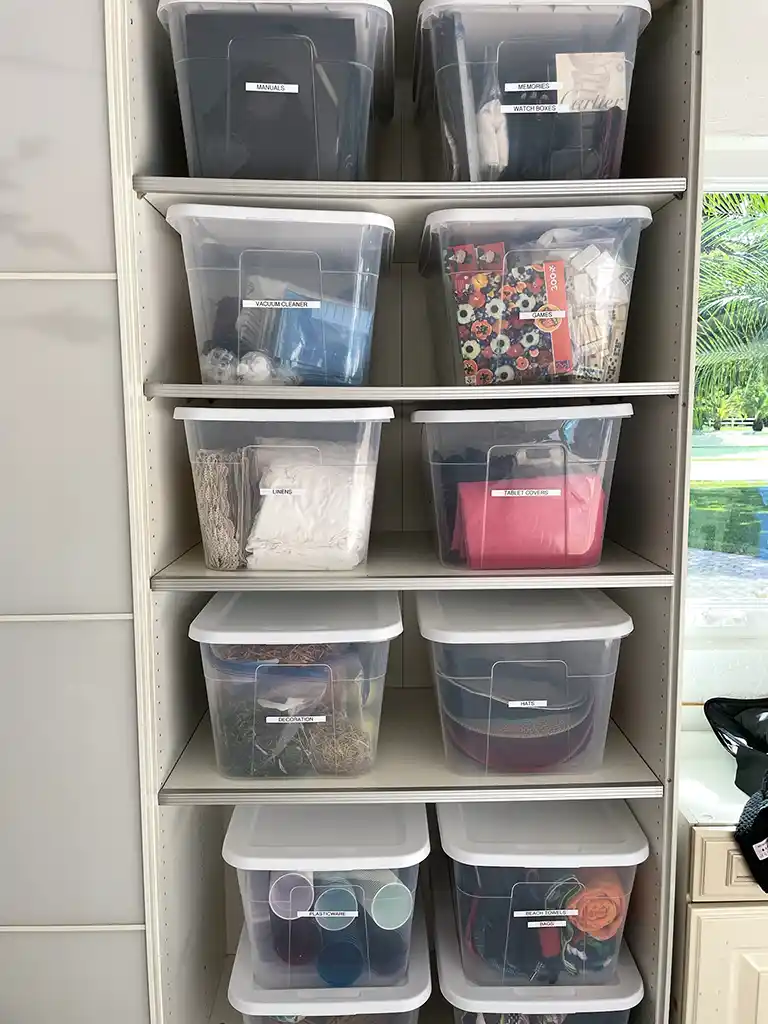
A fully labeled, bin-by-bin organized home can still leave you searching for a phone charger or a specific document, not because the system is bad, but because the place something was assigned to a year ago may no longer match how it's actually used today.
- Pick the three items you search for most often in a typical month.
- Trace exactly where each one currently lives versus where you actually look for it first out of habit.
- Move the item to match where you naturally look, not where it was originally assigned.
- Relabel if the system has shifted enough that the old label no longer describes what's there.
- Repeat this small check every few months, since how you use a space changes even when the system itself doesn't.
- Points to a mismatch between the system and actual behavior, not a lack of effort or organization
- Usually one of the fastest fixes on this entire list, since it's about moving a few items, not sorting a whole space
- Makes an already organized home actually function the way it looks like it should
Search terms: "adjustable drawer organizer," "label maker," "small catch all tray"
Your Cleaning Routine Skips the Same Spots
A home can get a genuinely consistent wipe-down and vacuum every week and still have a specific spot, the top of a closet, the back of one particular drawer, under one specific piece of furniture, that hasn't actually been touched in longer than anyone wants to admit, simply because it requires moving something first.
- Walk through your actual cleaning routine step by step and notice where your attention naturally skips or rushes.
- Pick one skipped spot and address it specifically this week, rather than trying to catch every skipped spot at once.
- Identify what made that spot hard to reach, something blocking it, an awkward angle, and remove that barrier.
- Add the spot explicitly to your routine list, so it doesn't rely on memory alone the next time.
- Check back on it in a month to confirm the barrier removal actually made it stick.
- Reveals a genuine blind spot in an otherwise solid routine, not a failure of effort
- Removing the barrier that caused the skip keeps the spot included going forward, not just a one-time deep clean
- Usually takes far less time to address than expected, since it's one specific spot, not a whole overlooked room
Search terms: "extendable duster," "under furniture cleaning tool," "closet organization checklist"
Why "Looks Clean" and "Feels Calm" Aren't the Same Thing
It's worth understanding why a home can look genuinely tidy and still feel quietly unsettled. Visible tidiness, clear counters, a vacuumed floor, made beds, is only one layer of what a home actually communicates. Hidden clutter, duplicates you've forgotten about, "someday" items with no real date attached, a space you avoid opening, still registers, even when it's out of sight, because each one represents a small, unresolved decision that hasn't actually been made yet. Every time you open that one dreaded drawer, or search for something you know you own but can't locate, that unresolved decision resurfaces briefly. None of these seven signs are really about mess in the traditional sense, they're a rough index of how many small decisions in a home are still sitting unfinished, which is a very different thing from how the home looks on a walkthrough.
If You Live With Roommates or Family
In a shared home, several of these seven signs shift meaning slightly. Multiple landing zones (Sign 1) might reflect multiple people rather than one broken system, worth confirming with a quick household conversation before assuming it's dysfunction. Storage that's chaotic behind the door (Sign 3) often becomes a question of shared responsibility, whose "someday" items are actually in there, rather than one person's habits. A useful shared exercise is having each person separately name their own dreaded space (Sign 5) and take ownership of sorting just that one, rather than one person trying to fix all seven signs for the whole household. Labeling specific zones by person, especially for shared closets, cabinets, or entryway storage, tends to resolve most of these signs faster in a shared home than trying to build one universal system everyone is expected to follow identically.
Common Mistakes When Trying to Fix These Signs
- Trying to tackle all seven signs in one sitting: pick one space or habit at a time rather than attempting a full-home overhaul in a single weekend.
- Buying storage bins before deciding what's actually staying: new organizers just contain the clutter more neatly instead of reducing it.
- Assuming a system failure means starting completely over: most fixes are small relocations, not full rebuilds of an entire system.
- Doing a single deep declutter and never revisiting it: habits and needs shift over time, so a system needs a light seasonal check, not a one-time fix.
- Feeling shame about "someday" items instead of just deciding on them: the six-second question in Sign 4 works better than guilt at actually resolving them.
Which Sign to Tackle First If You Only Have One Weekend
- 1. The one specific space you dread — the biggest felt relief for the smallest time investment.
- 2. Consolidating multiple landing zones — a quick decision with immediate, visible calm.
- 3. Sorting "someday" items in one category — often the single largest volume of actual clutter in a home.
- 4. Finding and removing duplicates — fast wins once you're already sorting a category.
- 5. Fixing storage that's tidy in front, chaotic behind — worth doing once you have more time to spare.
The remaining two signs, relocating frequently searched-for items and fixing a skipped cleaning spot, take very little time on their own and can be folded into an ordinary week rather than needing a dedicated weekend session.
How Long Each Fix Actually Takes
| Sign | Typical Time |
|---|---|
| Consolidating landing zones | 15–30 min |
| Finding and removing duplicates (one category) | 20–40 min |
| One deep storage space, front to back | 30–60 min |
| Sorting "someday" items (one category) | 20–45 min |
| The one dreaded space, timer-boxed | 20 min |
| Relocating frequently searched-for items | 10–15 min |
| Fixing one skipped cleaning spot | 10–20 min |
| Doing all seven across a weekend | Around 3–5 hours total |
Common Questions
Do I need to fix all seven signs to feel a difference? No, most people notice a shift after addressing just two or three, particularly the dreaded space and consolidating landing zones.
What if my home has all seven signs? That's common, not a special failure, pick one from the priority list and start there rather than trying to fix everything at once.
Does this mean I'm bad at organizing? No, these signs show up in genuinely tidy-looking homes; they're about hidden friction behind the scenes, not visible mess or personal habits.
How often should I recheck for these signs? A light seasonal check, roughly four times a year, catches most of these before they build back up.
A cluttered home was never actually just about visible mess. Every sign here points to the same underlying idea: a home can look completely put together and still be quietly asking for a handful of small, unresolved decisions to finally get made.
Start with the free one tonight, name the one space you've been avoiding, set a twenty-minute timer, and notice how much lighter that single space feels by the time it goes off.
Shop the Story
- entryway catch all tray
- clear pantry storage bins
- cabinet lazy susan turntable
- labeled storage box with lid
- drawer organizer trays
- clear storage bins with lids
- label maker
- drawer dividers set
- under bed storage box
- closet organization bins