7 Living Room Clutter Fixes Designers Use Before Buying More Storage
What designers actually do before adding a single new bin or basket
I owned four storage baskets, two shelving units, and a coffee table with a hidden lift-top compartment specifically for hiding clutter, and my living room still felt cluttered. It took me an embarrassingly long time to notice the pattern, every time the mess crept back, my instinct was to buy one more container, never to ask why the same surfaces kept filling up in the first place.
A friend who'd worked briefly for an interior designer finally said something that reframed the whole problem for me: "Storage doesn't fix clutter. It just gives clutter somewhere nicer to hide." Designers, she told me, almost always start somewhere else entirely, and it usually costs nothing at all.
A quick note before we start: a few of the stories ahead are shared as told to me directly, and a few are offered as illustrative examples to make a principle easier to picture, I've tried to be clear about which is which rather than presenting every anecdote as independently verified.
Here are the seven fixes that actually addressed my clutter, none of which involved buying a single new container.
Table of Contents
- Edit Before You Organize
- The One-In, One-Out Rule for Surfaces
- Give Every Category an Actual Home
- Use Vertical Space Before New Furniture
- The Nightly Two-Minute Reset
- Style What's Left Instead of Hiding It All
- Ask Whether It's Actually a Decision Problem
- The Psychology of Why Editing Beats Buying Storage
- The 20-Minute Clutter Audit
- A Zone-by-Zone Application Guide
- Common Clutter-Fixing Mistakes
- The Full Cost Comparison
- Common Questions
Edit Before You Organize

My first instinct, every single time, was to buy a bin to organize whatever was piling up. What actually worked was the opposite instinct: removing a third of it entirely before organizing anything at all, since a smaller, genuinely wanted collection of items is dramatically easier to store than a large, unfiltered one.
- Pick one specific clutter zone, a shelf, a surface, a basket, rather than attempting the whole room at once.
- Remove every item from that zone completely and sort into three piles: keep, donate or toss, and undecided.
- Be honest about the "undecided" pile, if you haven't used or thought about an item in six months, it likely belongs in the donate pile.
- Only return the genuine "keep" items to the zone, resisting the urge to find room for the undecided pile too.
- Organize what remains only after this editing step, not before, editing first means far less needs actual storage at all.
- Reduces the actual volume needing storage, not just its container
- Makes every subsequent organizing step genuinely easier
- Costs nothing and often takes less time than shopping for bins would
Search terms: "donation box labels," "storage sorting bins temporary," "decluttering checklist"
The One-In, One-Out Rule for Surfaces
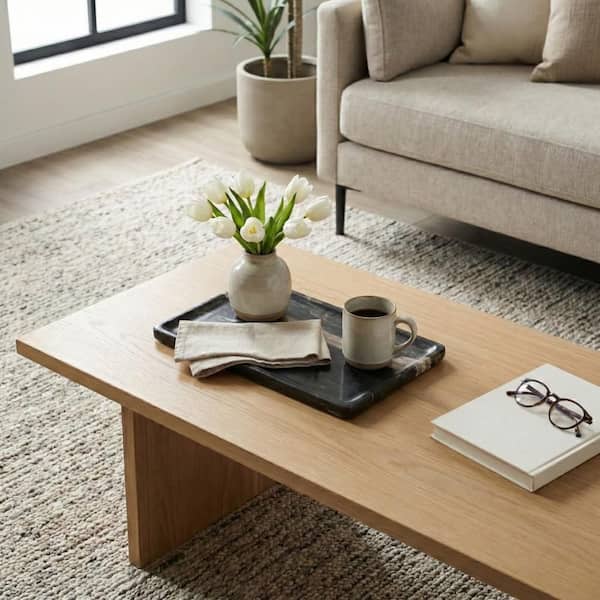
A homeowner shared that her coffee table and console had both become permanent landing zones for anything without an obvious home, mail, chargers, gift bags waiting to be reused. A simple rule, nothing new stays on a surface unless something else leaves it, kept both genuinely clear for the first time in years.
- Choose one or two "problem surfaces" specifically, the ones that reliably attract clutter fastest.
- Decide, in advance, how many items each surface is allowed to hold, a tray, one decorative object, nothing more.
- Before adding anything new to that surface, physically remove something else first, put it away, donate it, or relocate it.
- Treat this as a genuine rule, not a suggestion, the moment it becomes optional, the surface reverts to its old habits.
- Revisit the rule after a month, adjusting the item limit up or down based on what's actually proven sustainable.
- Prevents surfaces from silently growing in volume over time
- Forces a real decision instead of passive accumulation
- Requires no purchase at all, just a consistent habit
Search terms: "coffee table styling tray," "decorative catch all tray," "small entryway drawer"
Give Every Category an Actual Home
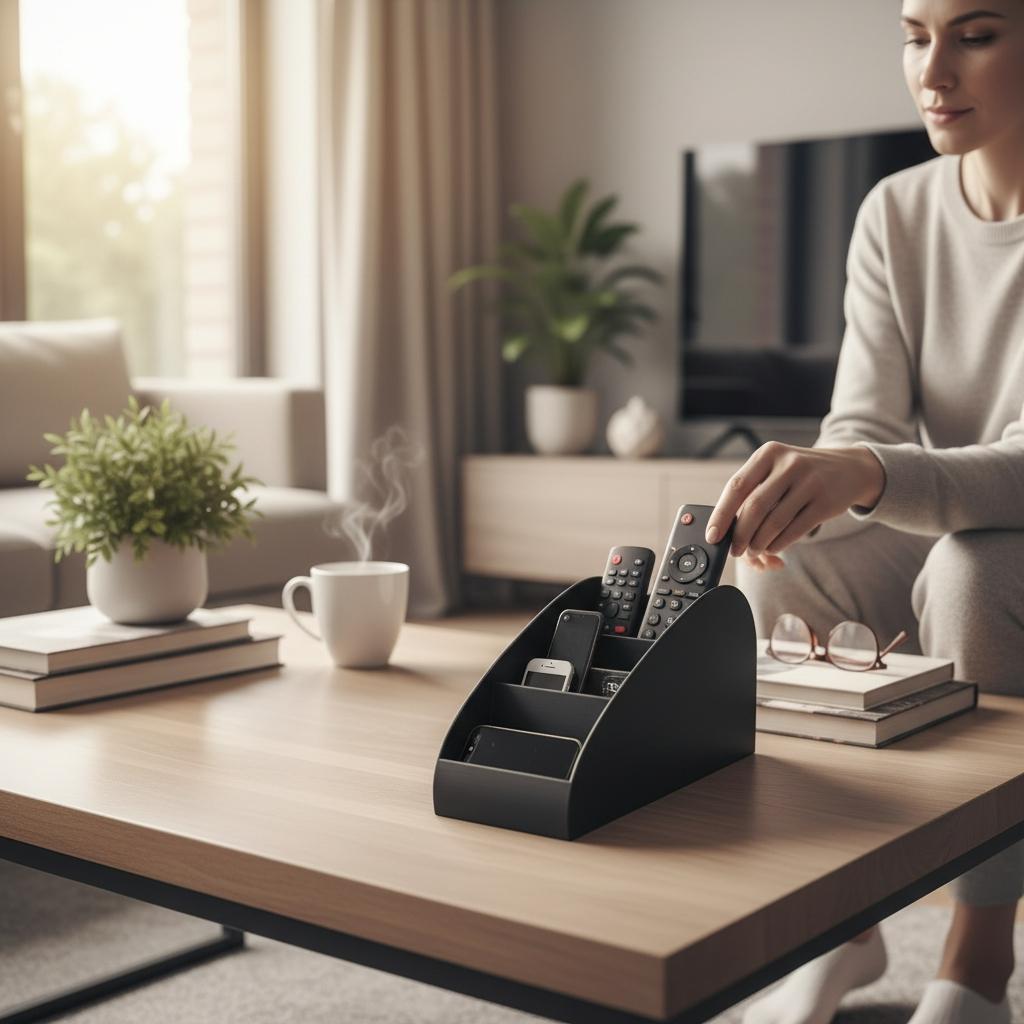
Imagine a reader whose remote controls, reading glasses, and phone chargers moved constantly around her living room, never in the same spot twice, because none of them had one specific, designated place to actually live. Once each category got its own fixed home, the daily search-and-scatter cycle simply stopped.
- Identify your most frequently "wandering" items, the ones that always seem to be in a different spot than last time.
- Assign each category exactly one specific home, a drawer, a small tray, a designated basket, not "somewhere in the living room."
- Make that home the most convenient possible spot for how the item is actually used, remotes near the seating, chargers near an outlet.
- Communicate the new system to everyone in the household, a system only one person follows breaks down quickly.
- Return items to their designated home immediately after use, rather than "later," which is often when the wandering starts again.
- Stops items from scattering across multiple surfaces over time
- Reduces daily frustration searching for commonly used items
- Often achievable using containers you already own
Search terms: "small drawer organizer," "remote control holder," "charging station tray"
Use Vertical Space Before New Furniture

A homeowner shared that she'd been eyeing a large new storage cabinet for months, convinced her living room simply needed more furniture to hold everything, until a designer friend pointed out an entire wall of unused vertical space above her existing furniture that could solve the same problem for a fraction of the cost and floor footprint.
- Look specifically at wall space above your existing furniture, shelving, media consoles, sofas, before considering any new floor piece.
- Add floating shelves or a wall-mounted cabinet sized to the specific items you need to store.
- Prioritize closed storage (a cabinet with doors) for genuinely unattractive necessary items, and open shelving for things worth displaying.
- Keep newly added vertical storage genuinely organized rather than becoming a second cluttered surface at a different height.
- Measure carefully to ensure new wall storage doesn't compete visually with existing art or windows in the same sightline.
- Uses space that's otherwise sitting completely empty
- Adds storage capacity without consuming additional floor footprint
- Often cheaper than equivalent floor-based furniture
Search terms: "floating wall shelf," "wall mounted storage cabinet," "shelf brackets set"
The Nightly Two-Minute Reset
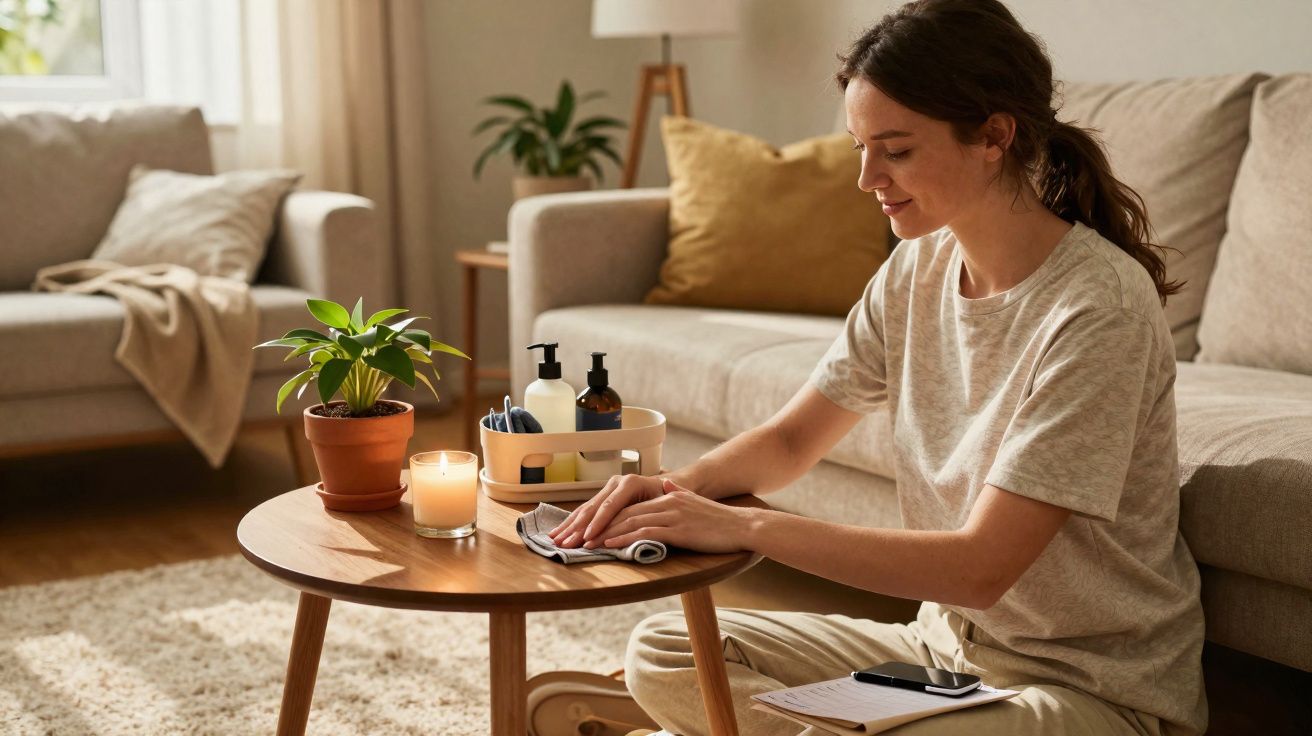
One homeowner shared that the single change that kept her living room consistently clutter-free wasn't a system at all, it was a two-minute habit, walking through the room each night before bed and returning anything out of place to its designated home from Idea 3.
- Choose a consistent time each evening, right before bed works well for most households, to do a quick two-minute walkthrough.
- Return any wandering items to their designated homes from Idea 3, rather than leaving them for "tomorrow."
- Clear any new clutter from surfaces per the one-in-one-out rule from Idea 2.
- Resist the urge to do a full deep clean during this reset, the goal is quick maintenance, not a complete reorganization each night.
- Involve the whole household in this habit if possible, a reset only one person does consistently is harder to sustain long-term.
- Prevents small clutter from ever accumulating into a bigger problem
- Takes only minutes rather than requiring a full cleanup session
- Costs nothing at all beyond a small, consistent time commitment
Search terms: "daily habit tracker," "evening routine checklist," "family chore chart"
Style What's Left Instead of Hiding It All
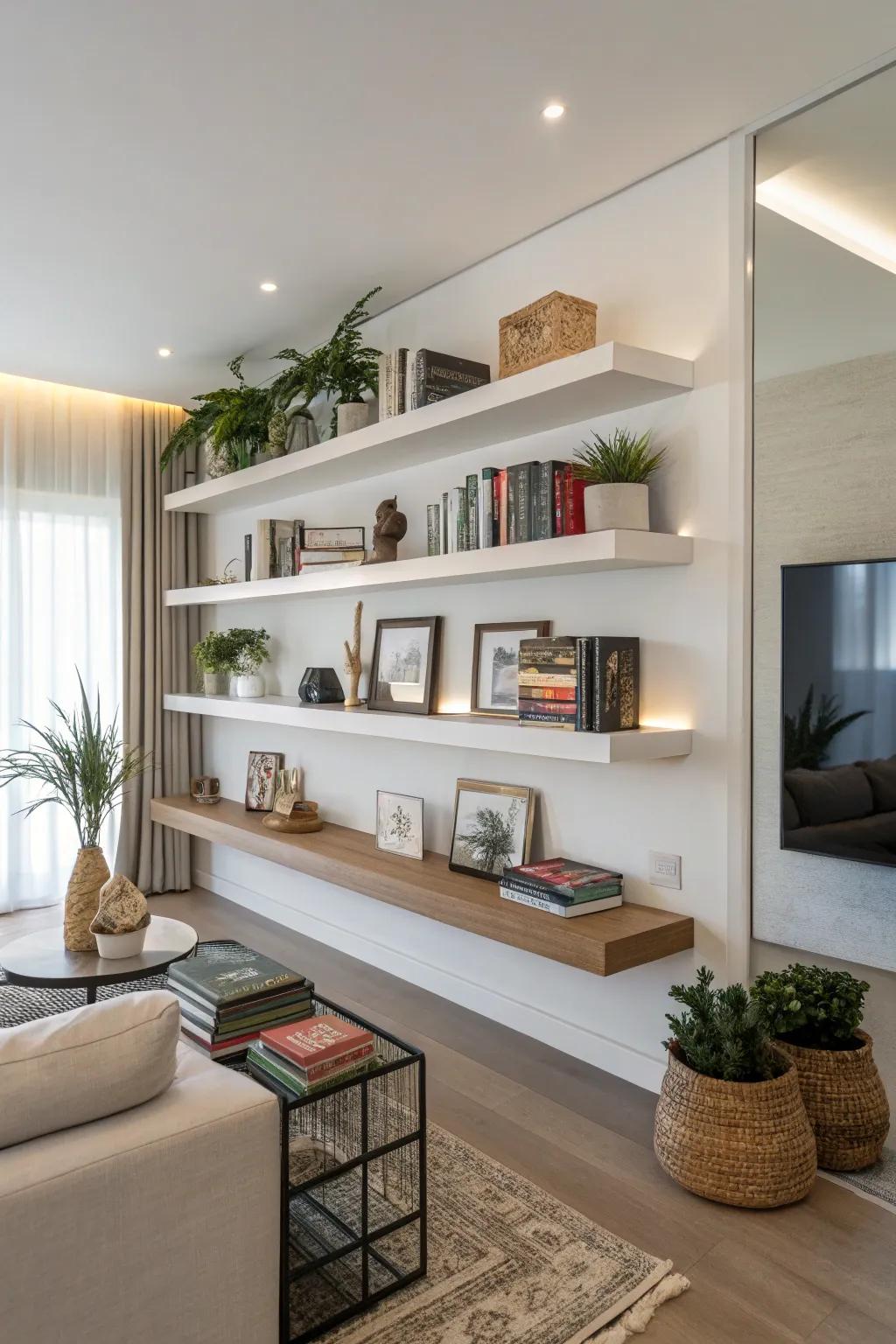
Imagine a reader who owned genuinely nice books, decor, and personal items, but kept them all hidden away in closed storage, assuming a "clutter-free" living room meant nothing should be visible at all. The room ended up feeling sterile and impersonal, not actually more organized, just emptier.
- After editing per Idea 1, choose your genuine favorites from what remains, books, small decor, personal items.
- Display these in small, intentional groupings of two to three items, rather than either hiding everything or displaying everything at once.
- Reserve closed storage specifically for genuinely unattractive necessary items, cables, paperwork, miscellaneous items without visual appeal.
- Rotate what's displayed occasionally, keeping the room feeling current without needing to buy new decor.
- Resist the urge to display everything you own, the goal is a curated selection, not the full collection at once.
- Keeps the room feeling personal and lived-in, not sterile
- Uses items you already own rather than requiring new purchases
- Balances organization with genuine personality and warmth
Search terms: "decorative tray for styling," "small bookend set," "shelf styling accessories"
Ask Whether It's Actually a Decision Problem
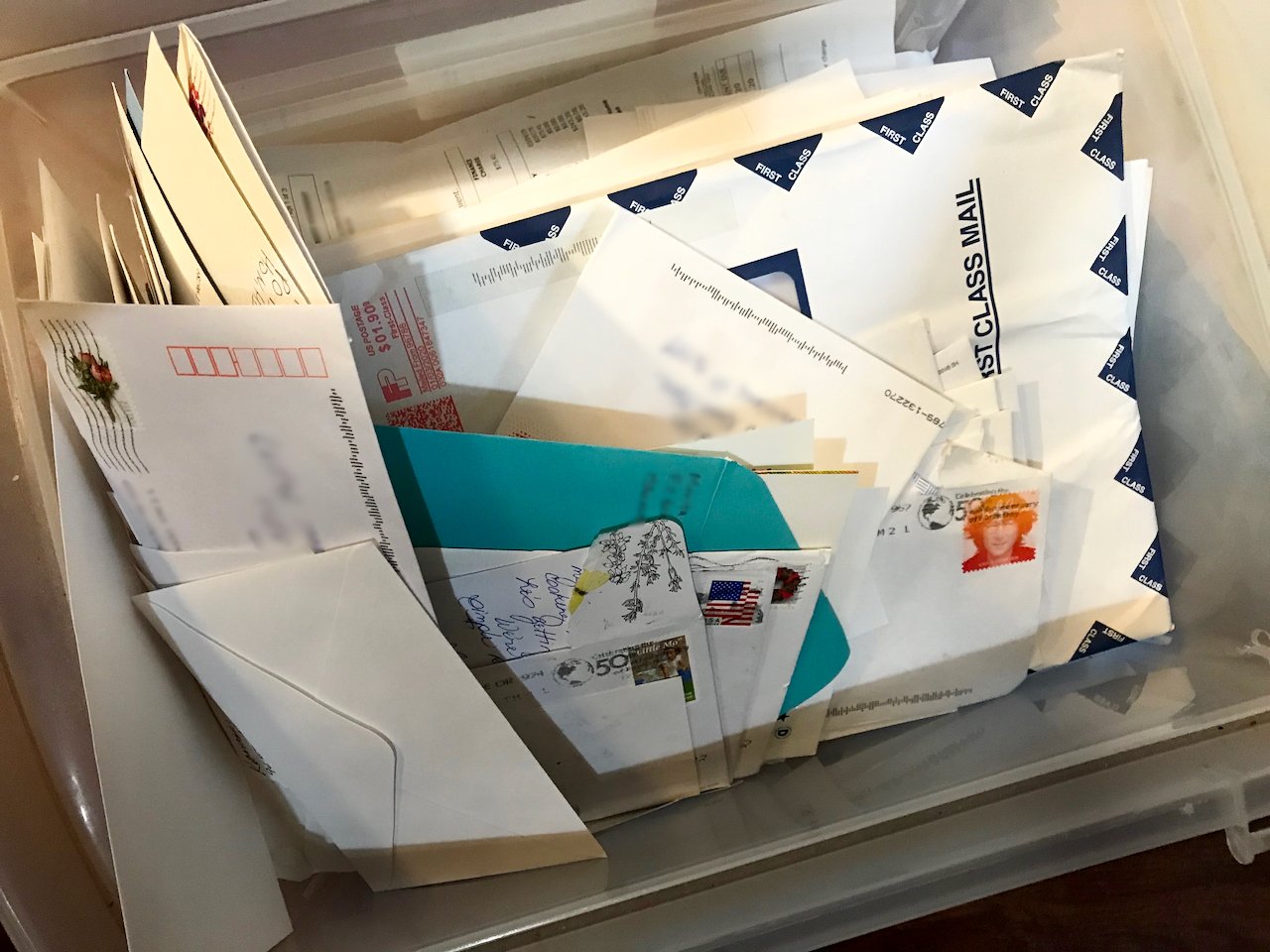
A homeowner shared that her recurring pile of mail and loose papers wasn't actually a storage problem at all, no bin or basket ever solved it for long, because the real issue was that each piece of mail represented an unmade decision, pay, file, or discard, that she was avoiding rather than a lack of a physical place to put it.
- Identify any pile that reliably returns no matter how often it's organized or contained, this is usually the decision-fatigue category, not a storage one.
- Set a specific, brief time each week to process that category fully, mail, loose papers, miscellaneous items, making an actual decision on each piece.
- Sort into immediate categories during this session: action needed now, file for later, or discard entirely, rather than re-piling it as "sorted."
- Keep the processing session genuinely short, fifteen minutes weekly is usually enough once the backlog is cleared, preventing it from feeling like an overwhelming task.
- Notice whether the same pile keeps returning even after this process, if so, the underlying issue may be a habit or system elsewhere, like mail arriving faster than it's processed.
- Addresses the actual root cause rather than repeatedly treating symptoms
- Prevents endlessly buying storage that never actually solves the recurring pile
- Requires only a small, consistent time commitment, not new purchases
Search terms: "mail sorting organizer," "action file folder system," "weekly paper processing tray"
The Psychology of Why Editing Beats Buying Storage
Buying storage feels productive because it involves a concrete purchase and an immediate, visible action, a new bin appears, items go inside it, the surface looks clear. But storage capacity, once filled, simply raises the threshold at which clutter becomes visible again, it doesn't change the underlying volume of items or the habits that generated the pile in the first place. Editing, by contrast, directly reduces that volume, and building small habits like the nightly reset or weekly decision-processing session addresses the actual behavior pattern that created the clutter to begin with. This is the same reason designers, whose actual job is a room's finished, functional feel rather than simply hiding mess, almost always start with editing and habit-building before ever recommending new storage furniture, storage is often the very last decision made in a real design process, not the first.
The 20-Minute Clutter Audit
Walk through your living room right now and answer honestly:
- Which surface fills up fastest, and what specifically tends to land there?
- Is there a pile that keeps returning no matter how often you've organized it?
- Do your most frequently used items (remote, glasses, charger) have one consistent home, or do they wander?
- Is there unused wall space above existing furniture that could hold storage instead of the floor?
- When you last bought storage for this room, did the underlying clutter actually decrease, or just relocate?
Your answers point directly to which of the seven fixes above will matter most for your specific room, rather than guessing where to start.
A Zone-by-Zone Application Guide
- Coffee table: apply the one-in-one-out rule (Idea 2) and style what remains (Idea 6) rather than adding a storage tray as the first solution.
- Media console or TV stand: use vertical wall space above it (Idea 4) before adding a second floor cabinet.
- Entryway or nearby drop zone: assign every category an actual home (Idea 3), this is usually where wandering items originate.
- Bookshelves or open shelving: edit first (Idea 1), then style the remainder intentionally (Idea 6) rather than filling every inch.
- Mail and paperwork pile: almost always a decision problem (Idea 7), not a storage one, regardless of how it initially appears.
Common Clutter-Fixing Mistakes
- Buying storage before editing: results in more organized clutter, not less actual clutter.
- Treating a one-time cleanup as a permanent fix: without an ongoing habit like the nightly reset, rooms drift back within weeks.
- Hiding everything in closed storage: overcorrects into a sterile, impersonal room rather than a genuinely organized one.
- Ignoring recurring piles as "just" a storage gap: missing the actual decision-avoidance pattern underneath.
- Skipping vertical space: defaulting to new floor furniture when wall space above existing pieces often solves the same problem more cheaply.
The Full Cost Comparison
| Fix | Typical Cost |
|---|---|
| Editing and sorting | $0 |
| One-in-one-out surface rule | $0 |
| Designated homes (using owned containers) | $0–15 |
| Floating shelf for vertical storage | $20–55 |
| Nightly reset habit | $0 |
| Styling what remains | $0 (using owned items) |
| Weekly decision-processing session | $0 |
| Typical total across all seven fixes | Usually under $55, often entirely free |
Common Questions
Does this mean I should never buy storage furniture at all? Not necessarily, once these seven fixes are in place, any storage you do add will actually hold, rather than immediately refilling with clutter that editing and habits would have addressed instead.
How long does it typically take to see a real difference? The editing step (Idea 1) often shows immediate results; habits like the nightly reset (Idea 5) usually need two to three weeks of consistency before they feel automatic.
What if my whole household resists these habits? Start with just the surfaces and systems you control directly, visible, consistent results often bring other household members on board naturally over time.
Which single fix matters most if I can only do one? Editing before organizing (Idea 1) has the broadest impact, since it reduces the actual volume every other fix on this list has to manage.
A cluttered living room was never really a storage shortage. Every fix here proves the same point: designers reach for editing, habits, and honest decisions long before they reach for a new bin, because those are the things that actually hold, not just relocate the mess.
Start with the free one tonight, a two-minute reset before bed, and notice how much less "clutter" is actually there to store in the first place.
Shop the Story
- floating wall shelf
- small drawer organizer
- decorative catch all tray
- remote control holder
- mail sorting organizer
- action file folder system
- wall mounted storage cabinet
- small bookend set
- charging station tray
- donation box labels