
Backsplash Tile Ideas for Coffee Nooks, for People Done With Subway Tile
Real texture, real shadow lines, and a corner that finally looks like someone loved it

My coffee corner had white subway tile for almost four years, the same 3x6 brick pattern I'd seen in every rental kitchen I've ever lived in, the same tile that shows up in every "kitchen refresh" post on Pinterest whether the rest of the room is farmhouse, modern, or nothing in particular. It wasn't ugly. It just had absolutely nothing to say. I could stand at that counter every morning waiting for the kettle and genuinely not see the wall behind it.
What changed things wasn't a new tile color. It was texture, tile with actual depth to it, edges that catch morning light differently than they catch the warm glow of an under-cabinet bulb at 6 a.m., grout lines that cast a real shadow instead of just marking a grid. Subway tile is flat by design. That flatness is exactly what makes it disappear.
A quick note before we start: a few of the stories ahead were shared with me directly by people who've done this in their own kitchens, and a few are offered as illustrative examples to make a point easier to picture. I've tried to keep that distinction clear rather than presenting every anecdote as independently verified.
Here are seven textured tile directions for a coffee nook specifically, most of them scaled to a single wall or backsplash zone, not a full kitchen remodel.
Table of Contents
- Handmade Zellige Tile
- Fluted, Ribbed Tile
- Scalloped Fish-Scale Tile
- Unglazed Terracotta Hex Tile
- Arabesque Moorish Tile
- Raised Relief 3D Tile
- Rough-Edged Artisan Ceramic
- Textured Tile vs. Subway Tile: How These Differ
- A Grout Pairing Guide
- Common Textured-Tile Mistakes
- The Full Cost Comparison
- Common Questions
Handmade Zellige Tile
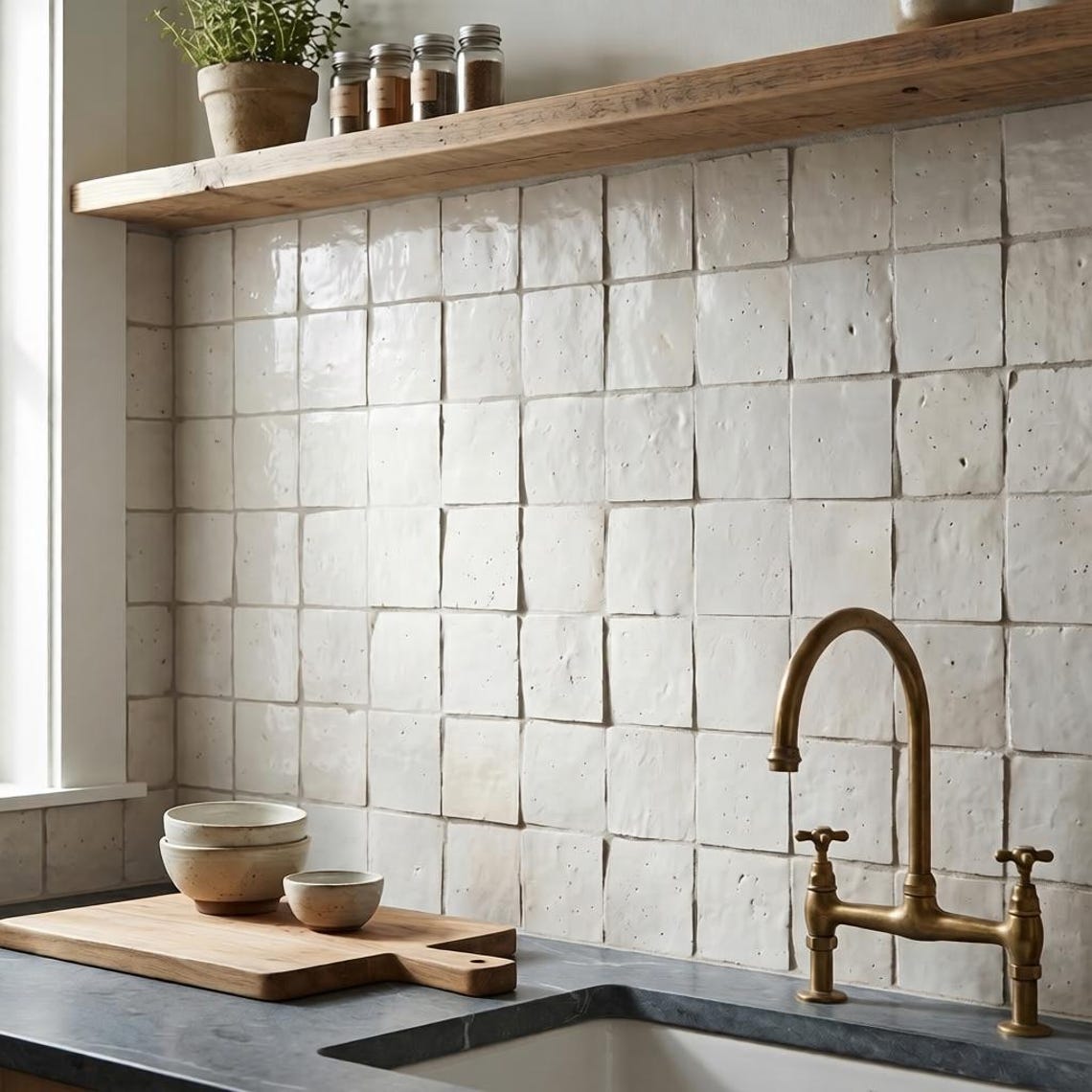
A reader told me that the first time she ran her hand over a zellige sample in the tile shop, she almost bought it on the spot, before even checking the price, because it didn't feel like a manufactured product. Zellige is handmade in Morocco, one tile at a time, and every piece has a slightly different thickness and a slightly different glaze pool, so the finished wall has a gentle, rolling unevenness that catches light like water.
- Order a sample batch first, and specifically ask for tiles from different production runs so you can see the true range of variation before committing.
- Budget extra installation time, zellige typically takes an experienced tile setter longer than a uniform tile because each piece is hand-fit.
- Keep the surrounding cabinetry simple, a plain shaker or flat-panel front lets the tile's texture stay the star.
- Use a slightly wider grout joint than you would with a factory tile, this accommodates the natural size variation between pieces.
- Genuine handmade variation that no manufactured tile can replicate
- Reads as warm and lived-in rather than showroom-perfect
- A small zone is enough, the texture does the work even in a modest footprint
Search terms: "handmade zellige tile," "Moroccan zellige backsplash," "wide joint tile grout"
Fluted, Ribbed Tile
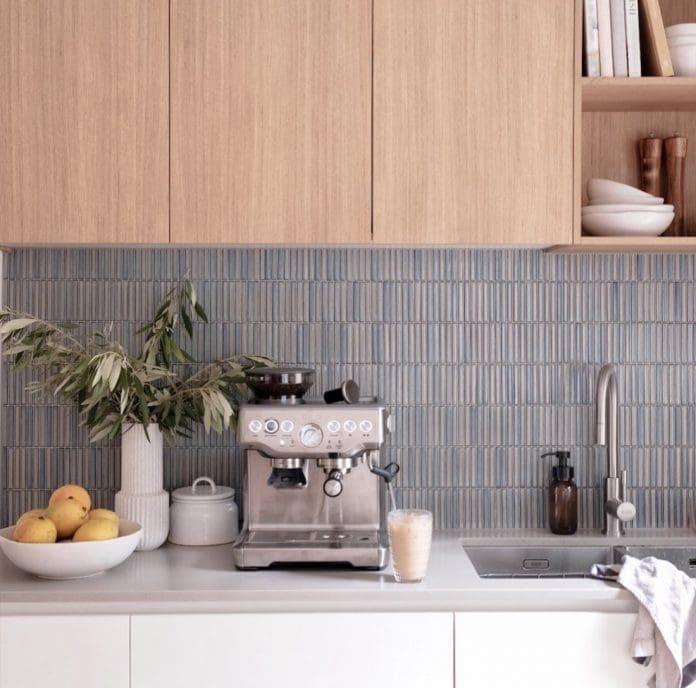
A homeowner shared that she installed fluted tile behind her coffee station specifically because of what happens to it at 6 a.m., when the low, raking light from her window hits the vertical ridges and throws a row of tiny shadow lines across the whole wall, something a flat tile simply can't do no matter the color.
- Stand in your coffee nook at the time you'll actually be using it most, and note where the strongest light comes from before choosing ridge orientation.
- Choose vertical fluting for a taller, more elegant read, or horizontal for a wider visual effect on a narrow wall.
- Keep grout close to the tile's own tone so the ridges, not the grid, define the texture.
- Add a single warm sconce or under-shelf light angled across the tile to activate the shadow effect after dark too.
- Genuine dimensional shadow play that shifts through the day
- Feels architectural rather than decorative
- Pairs naturally with warm task lighting for real depth after dark
Search terms: "fluted ceramic tile," "ribbed channel tile backsplash," "raking light task lighting"
Scalloped Fish-Scale Tile

Imagine a reader who wanted her coffee corner to feel a little playful without tipping into "theme kitchen," and found the balance in scalloped fish-scale tile, a shape with genuine visual movement but a soft, rounded edge that keeps it from reading as loud.
- Choose a single tile color for the whole scalloped zone, the shape alone is enough visual interest without adding a second color.
- Keep the scalloped section contained to the wall directly behind your coffee equipment, letting it read as a framed moment rather than a full backsplash.
- Use a matte or slightly textured glaze rather than high gloss, it softens the scallop shapes into something closer to a woven look.
- Finish the top edge with a simple bullnose or trim strip so the scalloped row doesn't end abruptly.
- Genuine shape-based texture without needing a bold color
- Reads as soft and inviting rather than sharp or clinical
- Contained well to a single small zone behind equipment
Search terms: "scalloped fish scale tile," "clay scallop backsplash tile," "matte glaze accent tile"
Unglazed Terracotta Hex Tile
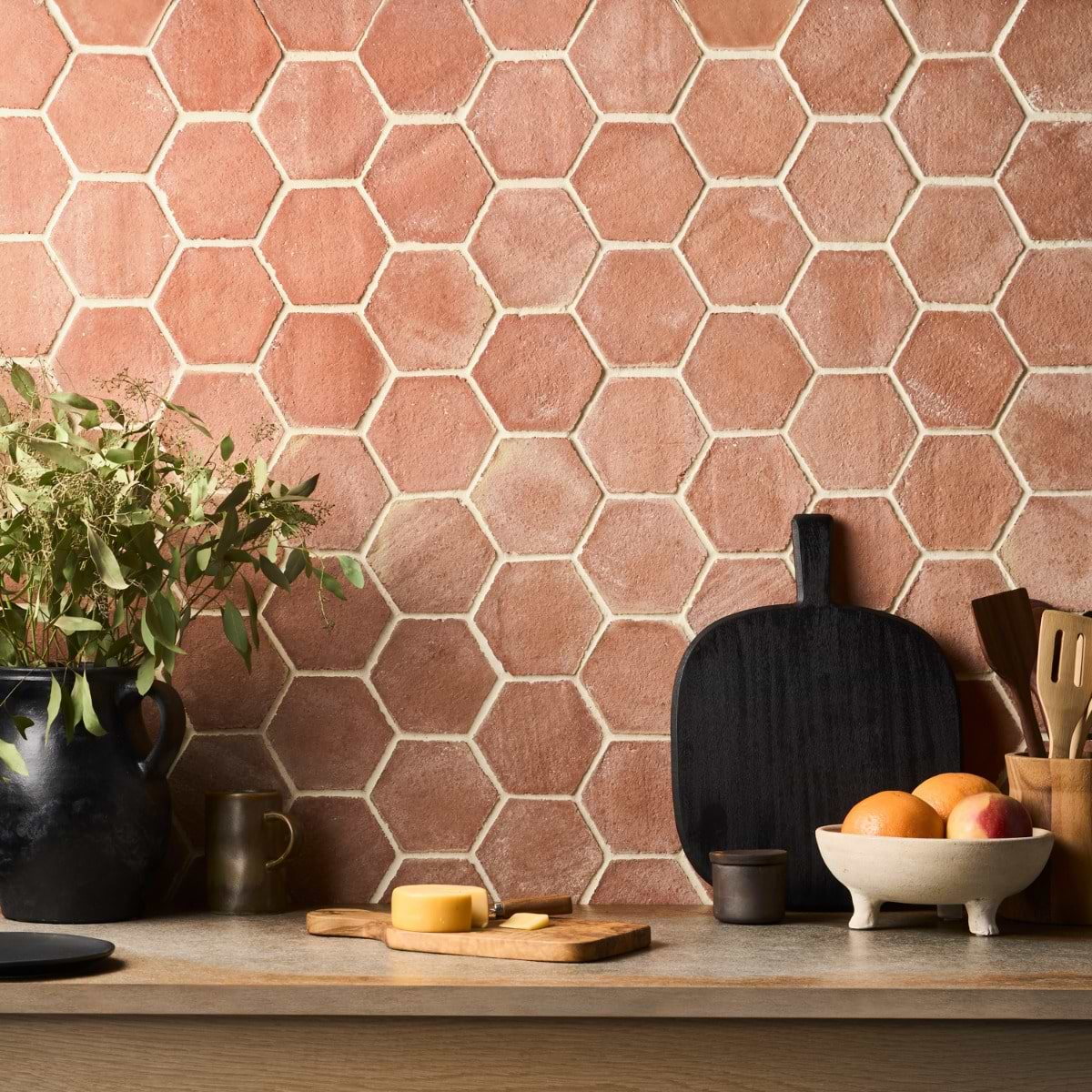
A homeowner told me she chose unglazed terracotta hex tile because she wanted her coffee corner to feel like it belonged in an old farmhouse kitchen someone had actually lived in for decades, not one styled to look that way, the raw clay surface ages and deepens in color the longer it's exposed to steam and daily use.
- Choose a genuine unglazed terracotta hex, confirm with your supplier that it is raw clay and not a glazed tile styled to look unglazed.
- Seal thoroughly before grouting and again after, this is not optional for a surface that will see daily coffee splashes.
- Pair with dark, close-toned grout so the honeycomb pattern of the hexagons reads clearly rather than getting lost.
- Expect and welcome some patina over time, this is part of the material's appeal, not a maintenance failure.
- Genuine raw material texture, not a glazed imitation of one
- Develops real character and depth with age and use
- Warm, earthy tone that flatters roasted coffee browns naturally
Search terms: "unglazed terracotta hex tile," "raw clay honeycomb tile," "penetrating tile sealer"
Arabesque Moorish Tile
Imagine a reader who wanted a genuine focal point behind her coffee station without repainting or retiling the whole kitchen, and found it in a small run of arabesque-shaped tile, the interlocking lantern-like silhouette carrying enough visual weight to anchor the entire corner on its own.
- Contain the arabesque tile to a single defined zone, directly behind equipment or shelving, rather than a full wall.
- Choose one tile color in a matte or lightly textured glaze so the shape itself carries the interest, not a busy pattern.
- Border the arabesque section with a simple straight-edge trim tile to give it a clean, framed stopping point.
- Keep hardware and fixtures nearby simple, letting the tile shape stay the clear focal point.
- Genuine shape-driven texture that reads as a real design statement
- Works beautifully as a small, contained accent zone
- Timeless pattern that doesn't depend on trend-driven color
Search terms: "arabesque lantern tile," "Moorish shape ceramic tile," "tile trim border strip"
Raised Relief 3D Tile
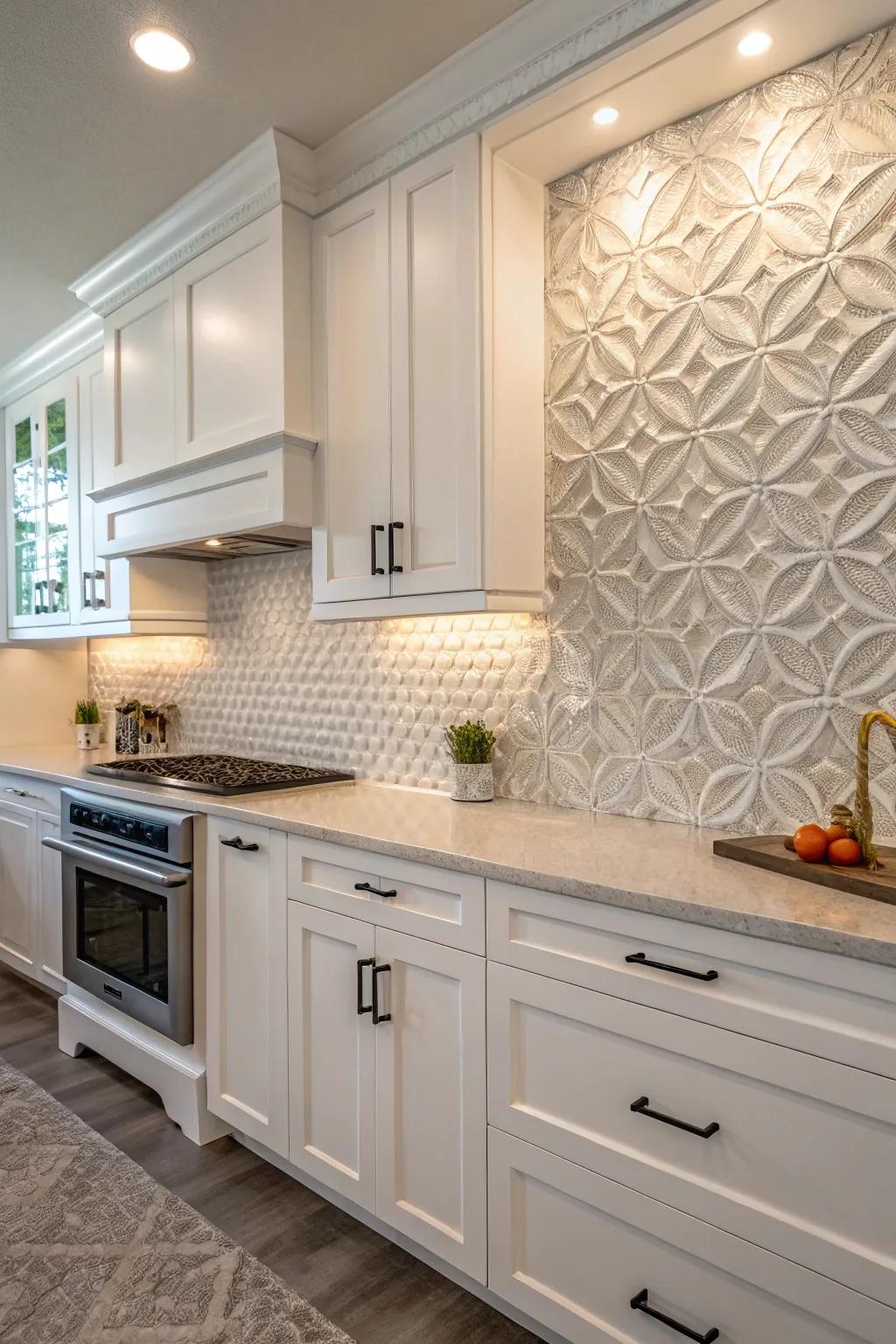
A reader shared that she'd been drawn to 3D geometric relief tile in photos for months before finally trying it, worried it would feel too modern for her otherwise traditional kitchen, and found instead that a single warm, off-white version softened the geometry into something closer to carved plaster than anything sleek or cold.
- Choose a warm-toned relief tile rather than a stark white or gray version if your kitchen leans traditional or cozy.
- Position it where side lighting, natural or from a sconce, can rake across the raised geometry and cast real shadow.
- Keep grout lines minimal and close in tone, the tile's own shape should read as the texture, not the grid.
- Limit the relief tile to one wall or zone, its dimensional quality is strong enough that a little goes a long way.
- Genuine physical dimension, not a printed or painted illusion of texture
- Dramatic shadow play under warm, angled light
- A small zone delivers real visual weight
Search terms: "3D geometric relief tile," "carved texture ceramic tile," "warm cream dimensional tile"
Rough-Edged Artisan Ceramic

A homeowner told me the tile she loved most wasn't the most photogenic one in her sample box, the artisan ceramic pieces had genuinely uneven, hand-cut edges that looked almost unfinished on their own, but laid together as a full wall, those irregular edges created a stacked, rustic texture no factory tile could match.
- Ask for a larger sample panel rather than a single loose tile, so you can judge the true stacked effect before committing.
- Choose a single earthy tone rather than a mixed color blend, letting the edge irregularity itself be the texture, not competing with color variation too.
- Work with an installer experienced in irregular tile, spacing and leveling take real skill with hand-cut edges.
- Use a grout tone close to the tile itself, so the irregular stacking reads as intentional texture rather than a messy grid.
- Genuine handmade irregularity that reads as rustic, not sloppy
- Full-wall texture with real depth and shadow between pieces
- Ages beautifully, imperfection only gets more charming over time
Search terms: "rough edge artisan ceramic tile," "hand cut stacked tile," "rustic texture backsplash"
Textured Tile vs. Subway Tile: How These Differ
Both approaches use ceramic in roughly the same footprint behind a counter, but they're solving different problems. Subway tile is a shape and pattern decision, a flat, uniform rectangle set in a consistent offset, prioritizing clean lines and predictability over depth. Textured tile is a material and light decision, real dimension delivered through handmade variation, raised relief, ridges, or shape, prioritizing shadow and touch over uniformity. A subway wall can be installed almost anywhere and photographs the same in any light; a genuinely textured wall changes character depending on time of day and light angle, which is exactly what makes it feel considered rather than default. The two can layer, subway tile on the main kitchen walls with one textured accent behind the coffee station specifically, but understanding the distinction helps you choose intentionally rather than defaulting to whichever one shows up first in a tile shop.
A Grout Pairing Guide
- Zellige or handmade glaze: pairs best with a cream or warm white grout that lets the glaze variation stay the focus.
- Fluted or ribbed tile: works with a close-toned grout so the ridges, not the grid, do the visual work.
- Scalloped or arabesque shapes: a soft cream grout keeps the shape reading clearly without a harsh outline.
- Unglazed terracotta or artisan ceramic: pairs naturally with a dark, close-in-tone grout that deepens the rustic effect.
- Raised relief tile: match grout closely to the tile color, contrast here can flatten the dimensional shadow effect.
Common Textured-Tile Mistakes
- Choosing a printed texture instead of a real one: genuine dimension, whether from handmade variation or raised relief, is what separates this look from a flat tile with a busy pattern printed on it.
- Skipping proper sealing on porous materials: unglazed and hand-cut tile especially needs real sealing before it sits anywhere near daily coffee splashes.
- Ignoring light direction: most of these textures depend on where your light comes from, worth checking at the actual time of day you'll use the space.
- Over-contrasting grout on shaped tile: a grout that's too far from the tile's own tone can turn a soft shape into a harsh grid.
The Full Cost Comparison
| Idea | Typical Cost |
|---|---|
| Handmade zellige tile | $60–160 |
| Fluted, ribbed tile | $45–110 |
| Scalloped fish-scale tile | $40–95 |
| Unglazed terracotta hex | $35–85 |
| Arabesque Moorish tile | $70–170 |
| Raised relief 3D tile | $55–140 |
| Rough-edged artisan ceramic | $50–130 |
Common Questions
Which idea is the easiest starting point for a first-time DIYer? Scalloped fish-scale tile (Idea 3) is typically sold in decorative sheets sized for small accent zones, a manageable first project.
Do textured tiles need different maintenance than subway tile? Porous options like unglazed terracotta need sealing that flat glazed tile doesn't; most glazed textured tile wipes clean the same way subway tile does.
Can a small coffee nook handle a bold texture like arabesque or relief tile? Often especially well, since contained accent zones are exactly where a strong texture reads as intentional rather than overwhelming.
Is textured tile more expensive to install than subway tile? Labor can run slightly higher for hand-cut, shaped, or irregular tiles, worth asking your installer for a specific quote before comparing against a standard subway job.
Subway tile was never actually required just because it's everywhere. Every idea here proves the same point: a coffee corner starts to feel like yours the moment the wall behind it has a little depth, something your hand would notice even with your eyes closed.
Start with a sample panel of just one texture this weekend, prop it against your existing wall at the time of day you actually make coffee, and let the light tell you if it's right before you commit to anything bigger.
Shop the Story
- handmade zellige tile
- fluted ceramic tile
- scalloped fish scale tile
- unglazed terracotta hex tile
- arabesque lantern tile
- 3D geometric relief tile
- rough edge artisan ceramic tile
- penetrating tile sealer
- wide joint tile grout
- warm sconce task lighting