
Bold Faucet and Fixture Ideas for Coffee Nooks Beyond Brushed Nickel
Real character at the tap, not the same satin finish every fixture aisle defaults to
My coffee nook has had a brushed nickel faucet since the day it was installed, the safe, forgiving finish that hides water spots and fingerprints well enough that nobody ever really has to think about it. That's exactly the problem. I stopped seeing it years ago. A faucet is one of the only things in a kitchen you physically touch every single time you use the space, and mine had become furniture, functional, forgettable, saying nothing.
What pulled me out of that wasn't a trendier neutral. It was realizing how much range actually exists once you look past brushed nickel, matte black with real depth, a faucet finished in two metals on purpose, a lever handle glazed in a color instead of metal at all. Small fixtures carry a surprising amount of personality once you stop defaulting to the safest option in the showroom.
A quick note before we start: a few of the experiences ahead were shared with me directly by people who've made this swap themselves, and a few are offered as illustrative examples to make a point easier to picture, I've tried to keep that distinction clear throughout.
Here are seven bold faucet and fixture directions for a coffee nook specifically, most of them a direct swap on your existing plumbing connections.
Table of Contents
- Matte Black Faucet and Fixtures
- Two-Tone Mixed-Metal Fixtures
- Living Finish Oil-Rubbed Bronze
- Colored Enamel Lever Handles
- Polished Chrome Gooseneck Spout
- An Industrial Bridge Faucet
- Hand-Painted Ceramic Cross Handles
- Bold Finishes vs. Brushed Nickel: How These Differ
- A Pairing Guide for Surrounding Fixtures
- Common Bold Fixture Mistakes
- The Full Cost Comparison
- Common Questions
Matte Black Faucet and Fixtures
A reader told me the first time she saw a matte black faucet against her pale marble counter, she assumed it would look harsh, and instead found it read as the single sharpest, most grounded line in the whole nook, the flat black holding its shape and definition in a way a reflective finish simply can't.
- Look specifically for "PVD matte black" in the product description if long-term durability matters most to you, powder-coated versions are usually less expensive but more prone to chipping at contact points over years of use.
- Confirm your existing faucet's mounting configuration, single-hole, widespread, or center-set, matches the new fixture before ordering.
- Wipe dry after use if you have hard water, matte black shows mineral spots more visibly than a satin or brushed finish.
- Coordinate at least one other black element nearby, a light switch plate or a drawer pull, so the faucet doesn't read as an isolated dark spot.
- Genuine visual definition and contrast against light counters
- Reads as intentional and modern rather than trend-chasing
- Widely available across nearly every price point
Search terms: "PVD matte black kitchen faucet," "matte black bar faucet," "matte black cabinet hardware"
Two-Tone Mixed-Metal Fixtures
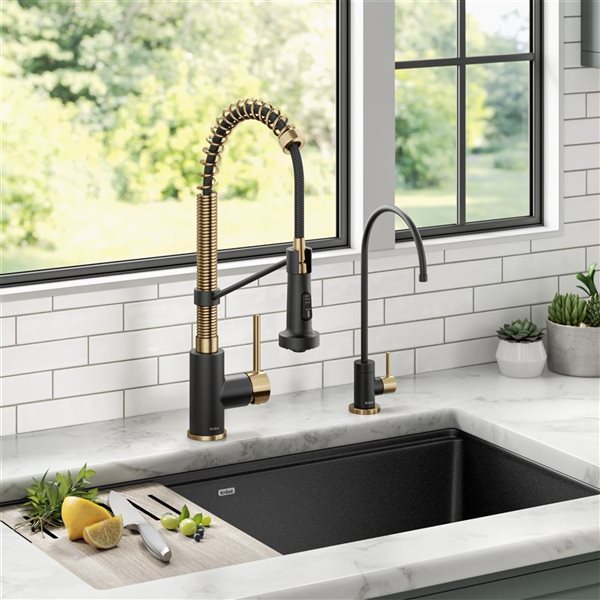
A homeowner shared that she'd been nervous about mixing metals in her kitchen for years, worried it would look accidental, until she found a faucet manufactured intentionally in two finishes, a matte black body with a brushed gold handle, which solved the problem for her by doing the mixing correctly from the factory.
- Choose a faucet explicitly described as two-tone or mixed-finish, rather than assembling the look from separate single-finish fixtures.
- Let the faucet's secondary metal tone guide your cabinet hardware choice, repeating it there ties the whole nook together.
- Keep other fixtures in the zone, a light switch, an outlet cover, in one of the two tones already present rather than introducing a third.
- Check the finish combination in person or in multiple photos if possible, mixed-metal proportions vary and what reads as balanced to one person can feel busy to another.
- Genuine mixed-metal styling without the guesswork of coordinating it yourself
- Naturally bridges two different metal tones already in your kitchen
- A single fixture does the visual work of two
Search terms: "two tone kitchen faucet," "matte black and gold faucet," "mixed finish bar faucet"
Living Finish Oil-Rubbed Bronze
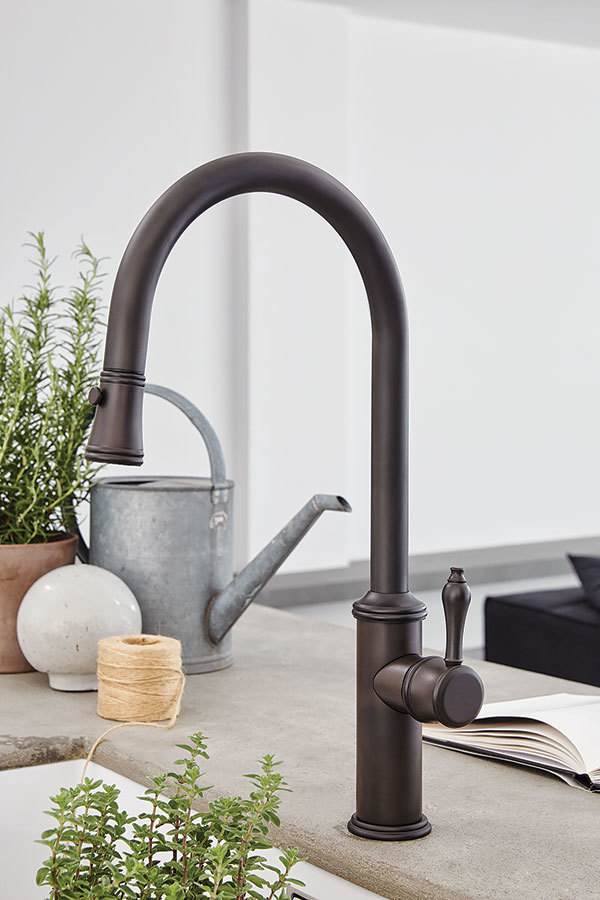
A reader told me she chose a genuine living finish oil-rubbed bronze faucet specifically because she wanted it to visibly change, and after about a year of daily use, the raised details on the handle had worn down to a warm brass tone underneath the darker bronze coating exactly where her hand grips it most.
- Look for "living finish" or "unsealed" specifically in the product description if you want the worn-through effect, a standard sealed ORB coating will not develop this look.
- Expect wear to appear first on raised details and handle grips, the highest-contact points, within the first year of regular use.
- Avoid abrasive cleaners on a living finish, they can accelerate wear unevenly rather than letting it develop naturally with normal handling.
- Pair with warm wood or brass accents nearby, the underlying brass tone that emerges through wear coordinates naturally with both.
- Genuinely changes and personalizes itself through daily use
- Deep, moody tone that grounds a lighter surrounding palette
- Classic finish with real staying power, not trend-dependent
Search terms: "living finish oil rubbed bronze faucet," "unsealed ORB fixture," "oil rubbed bronze bar faucet"
Colored Enamel Lever Handles
Imagine a reader who wanted actual color at the tap, not just a warm metal tone, and found it in a faucet with a lever handle finished in fired vitreous enamel, a deep slate blue in her case, glossy and cool against the warm brass body of the rest of the fixture.
- Choose one saturated color for the handle and let the rest of the faucet stay in a neutral metal finish, this keeps the color feeling deliberate rather than overwhelming.
- Confirm the enamel is rated for kitchen or bath use specifically, not all decorative enamel pieces are designed for regular water contact.
- Coordinate the handle color loosely with one other detail in the nook, a mug, a small tile accent, rather than matching it exactly.
- Clean with a soft cloth rather than an abrasive scrub pad, enamel is durable but can scratch under harsh abrasives over time.
- Genuine saturated color, not just a warm or cool metal tone
- Fired enamel holds its color far longer than painted finishes
- A single handle is enough to make the whole fixture feel custom
Search terms: "enamel lever faucet handle," "colored ceramic tap handle," "vitreous enamel kitchen fixture"
Polished Chrome Gooseneck Spout

A homeowner shared that after years of soft, satin-finished fixtures throughout her kitchen, switching her coffee station specifically to a tall polished chrome gooseneck spout felt almost dramatic by comparison, the genuine mirror shine catching light and throwing small reflections across the counter in a way no satin finish ever had.
- Choose a genuinely polished, high-gloss chrome finish rather than a satin or brushed chrome, the shine is the whole point of this idea.
- Pick a tall gooseneck or arched spout shape specifically, height and curve amplify the reflective quality more than a low, flat spout.
- Wipe down after each use if a spotless mirror shine matters to you, polished chrome shows fingerprints and water spots more readily than any satin finish.
- Pair with cool-toned surrounding materials, white marble or pale stone, chrome's coolness can feel disconnected next to very warm wood tones.
- Genuine reflective shine that satin and matte finishes can't offer
- A tall gooseneck shape adds real architectural presence
- Classic, timeless finish that isn't tied to a passing trend
Search terms: "polished chrome gooseneck faucet," "high arc chrome bar faucet," "chrome kitchen fixture"
An Industrial Bridge Faucet

A reader told me she chose a bridge faucet for her coffee station because of how the two separate hot and cold valves, connected by a visible horizontal bridge above the counter, made the whole fixture look more like a piece of functional equipment than a typical single-body faucet, which suited the more industrial feel she wanted for that corner.
- Confirm your existing under-counter plumbing has, or can accommodate, separate hot and cold supply lines, a bridge faucet's design requires this.
- Choose a dark or aged metal finish, black or bronze specifically, to lean into the industrial read rather than a bright polished finish.
- Pair with simple, unfussy surrounding hardware, this style already carries a lot of visual weight on its own.
- Budget for professional installation if you're not already familiar with dual-valve plumbing, this is a more involved swap than a standard single-hole faucet.
- Genuine architectural presence with real functional history
- Exposed design reads as intentional and industrial, not accidental
- Distinct silhouette that stands apart from any standard faucet shape
Search terms: "bridge faucet kitchen," "industrial bridge faucet black," "exposed pipe bridge faucet"
Hand-Painted Ceramic Cross Handles

A homeowner shared that swapping just her faucet's handles for a pair of hand-painted ceramic cross handles, a traditional farmhouse and clawfoot-fixture detail, gave her coffee station a small, personal detail without needing to replace the entire faucet body underneath.
- Confirm your existing faucet's handle stem type and size before ordering replacements, this varies by manufacturer and needs to match.
- Choose ceramic handles specifically rated for functional plumbing use, rather than a purely decorative piece not designed for regular turning and water contact.
- Pick a hand-painted pattern or color that echoes one other detail already in the nook, a tile, a canister, rather than introducing an unrelated new motif.
- Have a plumber or experienced installer swap the handles if you're unfamiliar with your specific stem type, a mismatched fit can cause leaking.
- A genuinely traditional detail with real farmhouse fixture history
- Updates a faucet's whole character without full replacement
- Brings actual hand-painted color and pattern to a small, tactile point
Search terms: "ceramic cross faucet handle," "hand painted faucet handle," "farmhouse faucet cross handle"
Bold Finishes vs. Brushed Nickel: How These Differ
Brushed nickel became the default fixture finish for a practical reason, the brushing process creates fine, directional grain lines across the metal that scatter light and visually break up fingerprints and water spots, making it genuinely low-maintenance and forgiving in a daily-use zone like a coffee station. Bold finishes trade some of that practicality for stronger visual presence. Polished chrome and glossy enamel reflect and show marks more readily precisely because they're smooth and non-textured. Matte black and living finish bronze show hard water spotting and wear more visibly because they lack brushed nickel's light-scattering texture. None of this makes bold finishes impractical, it just means the trade-off is real: more visual impact in exchange for slightly more regular wiping down or, in the case of a living finish, a deliberately changing look rather than a static one. Knowing which trade-off you're choosing, not just which finish looks best in a photo, is what makes the choice hold up over years of actual use.
A Pairing Guide for Surrounding Fixtures
- Matte black: pairs well with light counters and warm wood, echo the black in one other small detail like a switch plate or a light fixture.
- Two-tone fixtures: let the secondary metal tone guide your cabinet hardware, repeating it there ties the whole zone together.
- Living finish bronze: coordinates naturally with warm brass and wood, since worn areas will reveal a related warm undertone over time.
- Colored enamel handles: keep the surrounding faucet body in a neutral metal so the color reads as a deliberate accent, not a full-fixture commitment.
- Polished chrome: pairs best with cool-toned stone or marble, it can feel disconnected next to very warm, dark wood tones.
Common Bold Fixture Mistakes
- Not confirming plumbing compatibility before ordering: bridge faucets and some specialty fixtures require different supply configurations than a standard single-hole faucet, always check first.
- Assuming all "oil-rubbed bronze" or "matte black" fixtures behave the same: living finish versus sealed coatings, and PVD versus powder coat, age very differently, check which type you're buying.
- Choosing decorative-only handles for functional use: confirm ceramic or enamel handle pieces are rated for regular plumbing use, not just display.
- Skipping regular wiping on reflective or matte-dark finishes: polished chrome and matte black both show spots more readily than brushed nickel, factor that into your daily routine before choosing.
The Full Cost Comparison
| Idea | Typical Cost |
|---|---|
| Matte black faucet and fixtures | $80–220 |
| Two-tone mixed-metal fixtures | $100–280 |
| Living finish oil-rubbed bronze | $90–240 |
| Colored enamel lever handles | $60–160 |
| Polished chrome gooseneck spout | $50–150 |
| Industrial bridge faucet | $150–400 |
| Hand-painted ceramic cross handles | $30–90 |
Common Questions
Which idea is the easiest starting point? Hand-painted ceramic cross handles (Idea 7), often a handle-only swap on an existing compatible faucet body, no full plumbing change required.
Do bold finishes need more maintenance than brushed nickel? Generally yes, brushed nickel's texture hides spots and marks that polished, matte, or living finishes show more readily, a quick wipe-down after use keeps most of them looking sharp.
Can a bold faucet work if the rest of my kitchen fixtures are brushed nickel? Often especially well as a deliberate contrast in one contained zone, the coffee station reads as its own considered space rather than needing to match everything else exactly.
Is a bridge faucet or two-tone fixture harder to install than a standard faucet? Bridge faucets typically require more plumbing consideration and are often best installed professionally; most two-tone and single-body specialty finishes install the same way as any standard faucet.
Brushed nickel was never actually required just because it's the finish every fixture aisle defaults to. Every idea here proves the same point: the one fixture your hand meets every single time you use a coffee station is worth choosing on purpose, not by default.
Start with the smallest version this weekend, a handle swap or a single new fixture, and let it earn its place before deciding whether to go further.
Shop the Story
- PVD matte black kitchen faucet
- two tone matte black and gold faucet
- living finish oil rubbed bronze faucet
- enamel lever faucet handle
- polished chrome gooseneck faucet
- industrial bridge faucet
- ceramic cross faucet handle
- matte black cabinet hardware
- high arc bar faucet
- hand painted faucet handle