
Coffee Nooks Designed for Couples and Families
I built ours for a version of the morning I have alone, and it took a while to notice it never actually accounted for anyone else
I designed our coffee nook around my own habits almost entirely, the height I stand at, the mug I reach for, the one narrow shelf that fit exactly what I use. It wasn't until my partner tried to use it, reaching over me for the good spoon, standing slightly off balance because the counter was built for someone four inches taller, that I realized I'd designed a station for a household of one.
Our daughter noticed it too, in her own way, standing on a stepstool she'd dragged over from the bathroom just to see what was happening up on the counter. She wasn't asking to make coffee. She just wanted to be part of whatever the rest of us did every single morning without her.
Redesigning it properly meant asking a different question than I had the first time. Not what does my morning need, but what does everyone's morning need, at the same time, without anyone standing off to the side waiting their turn. Here's what I learned, and what other families figured out doing the same thing.
Table of Contents
- Two Counter Heights for Two Different Routines
- A Low Shelf Kids Can Actually Reach
- A Second Stool Tucked in for "Wait for Me"
- Initialed Hooks for Every Person in the House
- A Shared Notes Board Above the Station
- Facing Seating Instead of Side by Side
- A Hot Chocolate Station Built in Alongside
- Nook Guide by Household
- Mistakes I Made Designing Ours
- Common Questions
Two Counter Heights for Two Different Routines

A reader named Marcus split his coffee nook's counter into two slightly different heights, a taller section for his own espresso routine and a lower, deeper section for his wife's tea setup, kettle, strainer, and a small tin of loose leaves. "We used to bump elbows every single morning," he said. "Now we're standing at the same station without actually being in each other's way."
What made the idea work, he told me, wasn't really the height difference itself, it was finally admitting that two people sharing one counter don't necessarily share one routine. Once he stopped trying to force both habits into a single identical setup, the whole morning got quieter.
- Notice the specific habits each person actually has, not just "coffee" versus "tea," but the tools, motions, and space each routine genuinely requires.
- Even a few inches of height or depth difference between two sections can meaningfully reduce the daily collision of elbows and equipment.
- Keep each person's tools within their own zone specifically, this is what prevents the two routines from drifting back into one crowded space.
- Respects that two people sharing a station rarely share one identical routine
- Genuinely reduces the daily friction of two people working in one small space
- A small design choice that solves a real, recurring point of morning tension
Search terms: "counter riser platform," "two zone kitchen counter," "kitchen counter height difference"
A Low Shelf Kids Can Actually Reach
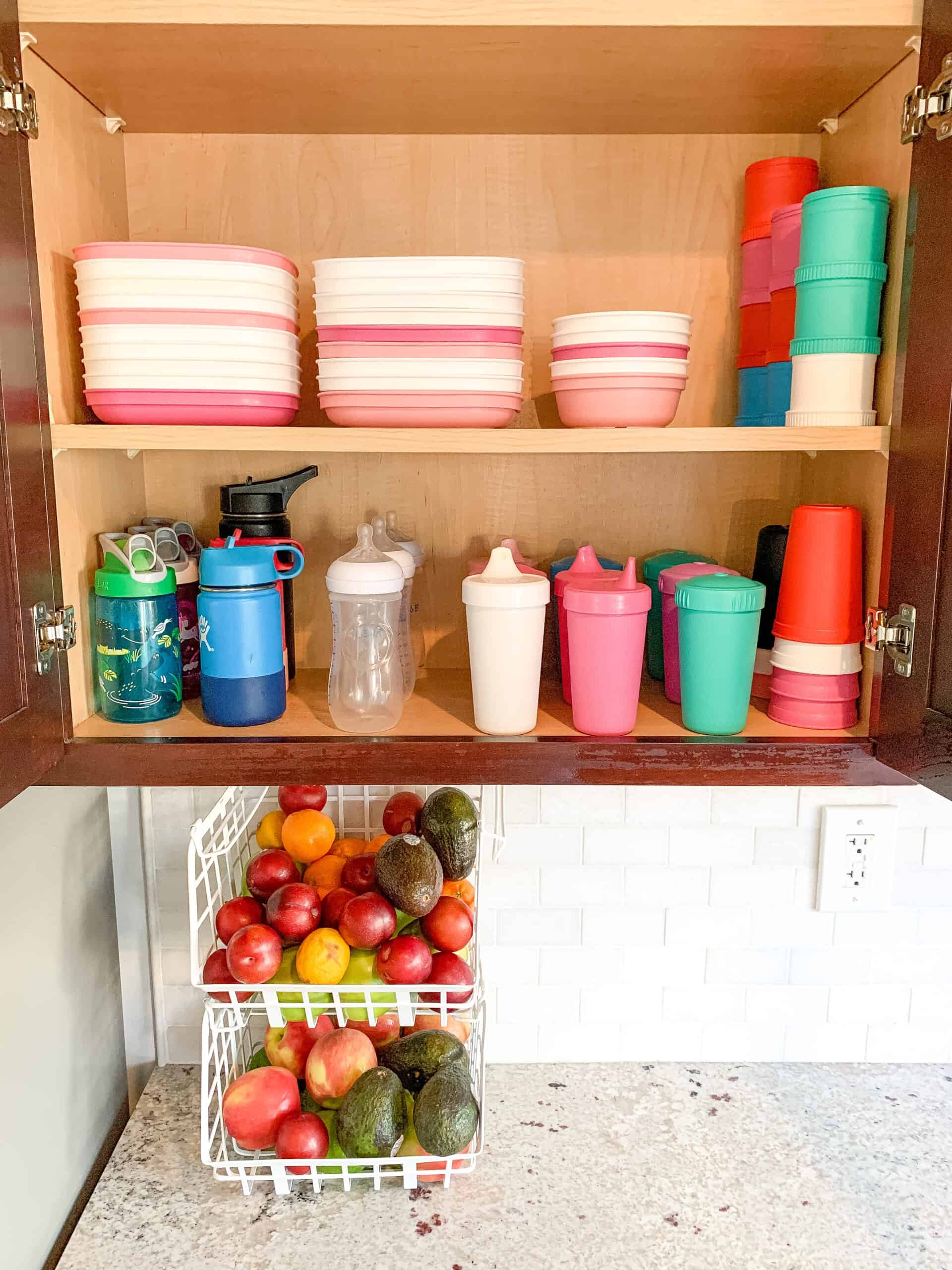
A reader named Ottavia added a single low shelf, well below the rest of the station, stocked with her son's own cup, a small pitcher of milk he can lift, and a jar of cocoa mix he's allowed to scoop himself under supervision. "He used to just stand there watching us," she said. "Now he has his own little corner of the same routine, and honestly some mornings he's more excited about it than either of us are."
What she noticed afterward wasn't really about convenience, it was about her son feeling genuinely included in something the rest of the family did daily without him. A shelf at his height turned watching into participating, and that shift, she said, changed the whole tone of the morning.
- Set the shelf at a height your child can comfortably reach without a stool, this is what makes it feel like theirs rather than something they're borrowing.
- Stock it with unbreakable, child-safe items specifically, a plastic cup and a lightweight pitcher rather than anything glass or hot.
- Keep the shelf's contents simple and consistent, this is what lets a young child do the same small routine independently each morning.
- Gives the youngest member of the household a genuine role in a daily family ritual
- Turns watching from the sidelines into actual participation
- A small, inexpensive addition compared to redesigning the whole station
Search terms: "low mounted floating shelf," "kids unbreakable cup set," "child height kitchen shelf"
A Second Stool Tucked in for "Wait for Me"

A reader named Reinaldo built his coffee nook with a small tucked-in stool, just enough for one person to sit while the coffee finishes, specifically so he and his husband wouldn't both be standing at the counter every single morning. "One of us always ends up sitting there scrolling through the news while the other one's still half asleep making the coffee," he said. "It sounds small, but it's become its own little ritual."
What he described is a kind of built-in patience, a spot that exists specifically so one person isn't hovering while the other one works. It doesn't ask anything of either person, it's simply there, available, for whichever one of them happens to be waiting that morning.
- Choose a stool that can tuck fully under the counter or against the wall when not in use, this keeps the footprint from feeling crowded.
- Place it slightly to the side of the main working area rather than directly in front, so the person sitting isn't in the way of the person actually making coffee.
- Keep it simple, a stool rather than a full chair, this is meant for a few minutes of waiting, not a long sit-down meal.
- Creates a small, built-in moment of togetherness in an otherwise solitary task
- Gives the person not making coffee somewhere to be, rather than hovering
- A simple, low-cost addition that changes the daily rhythm of the space
Search terms: "slim backless counter stool," "tuck under kitchen stool," "small counter height stool"
Initialed Hooks for Every Person in the House

A reader named Suvi had a row of small brass hooks stamped with each family member's initial mounted above the station, one per mug, so her two kids and her husband each had a designated, unmistakable spot for their own cup. "It stopped the constant mug shuffle," she said, "but honestly the bigger thing is my kids seeing their own initial up there. It's their spot too, not just ours."
What struck me hearing her describe it was how small the gesture actually is, a single stamped letter, and how much weight it seemed to carry anyway. It's a tiny, daily reminder that the station belongs to everyone in the house, not just whoever happens to get there first.
- Choose hooks with a stamped, engraved, or otherwise permanent initial rather than a removable tag that can fall off or get mixed up.
- Mount them at a range of heights if kids are involved, so each person's hook is genuinely reachable for them specifically.
- Keep the mugs themselves simple and matched to each hook, this is what prevents the daily shuffle from creeping back in.
- Gives every person in the household, including children, a genuine sense of ownership
- Solves the small, recurring daily friction of a shared, unlabeled mug pile
- A small, personal detail that costs very little to add
Search terms: "stamped initial hooks," "personalized mug hooks," "family mug hook rail"
A Shared Notes Board Above the Station

A reader named Delphine hung a small corkboard above her family's coffee station specifically because it was the one spot everyone genuinely passed through daily, unlike the fridge, which she said had become an ignored, cluttered mess nobody actually looked at. "It's the one place I know for a fact will get seen," she said. "A permission slip left there gets signed. A note left on the fridge just sits there for a week."
What makes the coffee station different from a fridge or an entryway, in her experience, is the pause built into it, everyone stands there for at least a minute or two, waiting, which is exactly long enough to actually read a note rather than walk past it.
- Keep the board small and specifically limited to time-sensitive items, permission slips, reminders, a grocery list in progress, rather than letting it become a general catch-all.
- Mount it directly at eye level near the station, somewhere it's genuinely impossible to miss while waiting for coffee to brew.
- Clear it regularly, an overcrowded board becomes as easy to ignore as a cluttered fridge did in the first place.
- Uses a spot everyone already stops at daily, rather than competing for attention elsewhere
- Gives the household one reliable, shared point of communication
- An inexpensive addition that solves a genuine, recurring logistical problem
Search terms: "small kitchen corkboard," "family notes board," "wall mounted memo board"
Facing Seating Instead of Side by Side
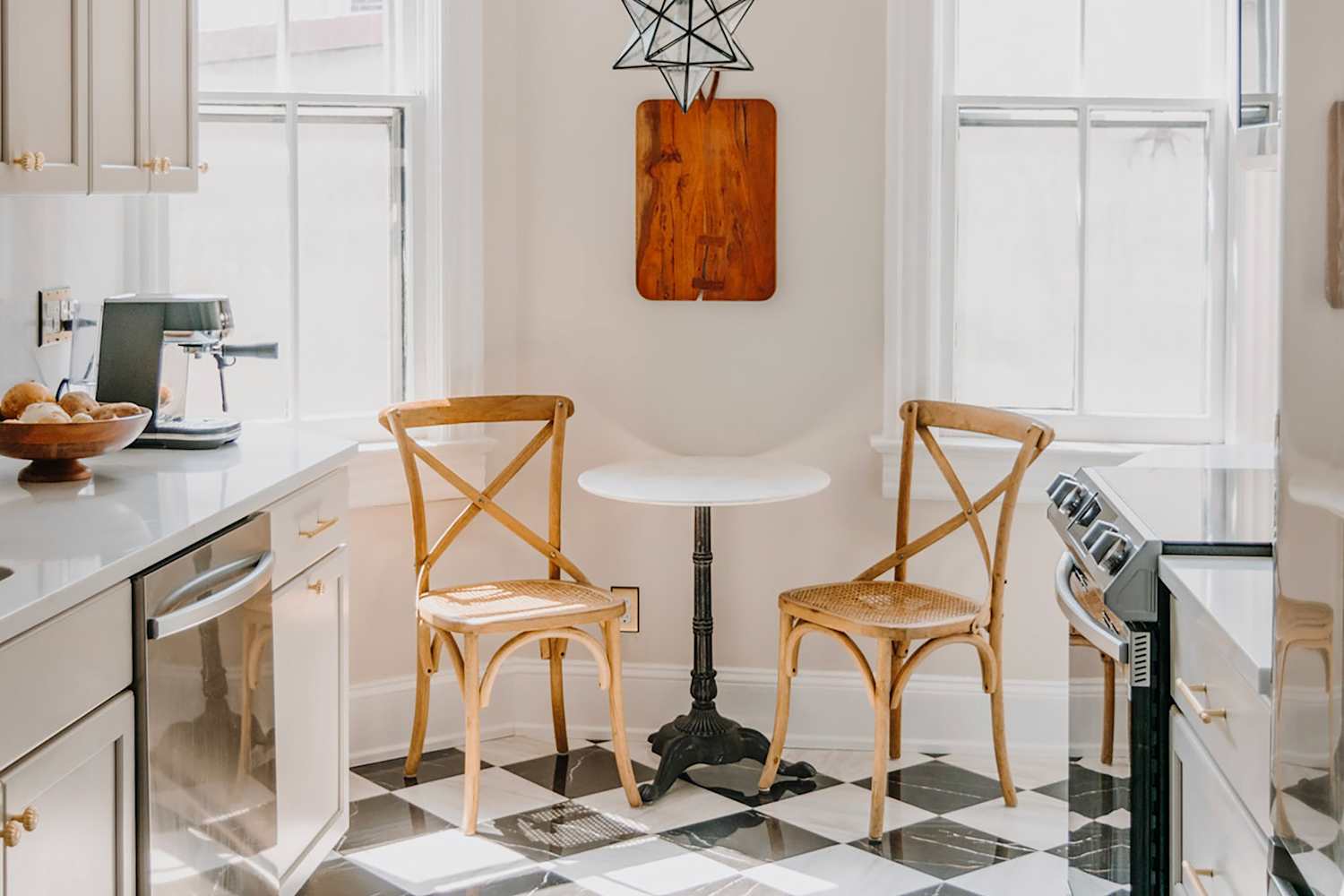
A couple I spoke with, Caspian and his wife, added two small stools angled slightly toward each other rather than lined up side by side facing the counter, a change he said came from noticing how rarely they actually looked at each other during their morning coffee. "We were always facing the same direction," he said. "Facing each other instead, even for ten minutes, changed the whole feel of it."
It's a small, almost architectural decision, angling seating a few degrees rather than in a straight line, but the effect he described was real, ten minutes of actual eye contact and conversation, rather than two people quietly existing next to each other while looking at their phones.
- Angle two stools slightly toward each other rather than lining them up in a straight row facing the same direction.
- Leave enough space between them for comfort, this isn't about crowding two people together, just orienting them toward one another.
- Keep a small shared surface within reach of both, even a narrow shelf, so nobody has to stretch across the other person to set down a cup.
- Encourages genuine conversation rather than two people quietly parallel to each other
- A small orientation change that costs nothing beyond how the stools are placed
- Turns a few minutes of coffee into a small, protected moment of connection
Search terms: "counter height stool pair," "angled seating kitchen nook," "small kitchen conversation seating"
A Hot Chocolate Station Built in Alongside

A reader named Anneliese built a small dedicated hot chocolate corner directly beside the family's coffee station, complete with its own tiny jar of marshmallows and a child-safe milk frother her kids are allowed to use with supervision. "I didn't want them to feel like coffee was the adult thing happening next to them," she said. "I wanted them to have their own version of the exact same morning."
What she noticed, watching her kids get genuinely excited over choosing their own marshmallow count each morning, was how closely their small ritual mirrored the adults' one right beside it, the same pause, the same care taken over something warm before the day properly starts. It wasn't a consolation setup. It was simply their own.
- Keep it genuinely parallel to the adult station, its own small shelf or corner, rather than an afterthought squeezed into leftover space.
- Choose child-safe tools specifically, a cool-touch frother or a simple pre-measured packet system, rather than anything involving direct heat unsupervised.
- Let kids make small choices within it, a marshmallow count, a flavor packet, this is what makes it feel like their own ritual rather than a service you're providing.
- Gives kids their own genuine version of a ritual the rest of the household already has
- Turns the coffee nook into a shared family space rather than an adults-only corner
- A small, inexpensive addition that pays off in daily connection rather than decor
Search terms: "kids milk frother cool touch," "hot chocolate station jars," "kids hot cocoa bar"
Nook Guide by Household
| Who the nook needs to serve | Try this |
|---|---|
| Two adults with different routines | Split counter heights and zones |
| Young kids wanting to join in | A low shelf and a parallel hot chocolate corner |
| A couple wanting more connection | Facing seating instead of side by side |
| A busy family losing track of notes | A shared board above the station |
| Kids old enough for their own mug | Initialed hooks for everyone |
Ours ended up the low shelf and the hooks first, the angled stools came later, once we noticed how much we'd been standing shoulder to shoulder instead of actually facing each other.
Mistakes I Made Designing Ours
- Building it entirely around my own height and habits: I designed a station for a household of one and called it finished.
- Assuming our daughter was too young to have her own spot in it: a low shelf turned out to be all she actually needed.
- Lining up seating to face the counter instead of each other: it took years to notice we were sitting parallel instead of together.
- Relying on the fridge for family notes, out of habit: the coffee station had been the better spot the entire time.
Common Questions
Which of these ideas works best for a couple without kids? Split counter zones and facing seating tend to matter most for two adults sharing a routine, the family-specific ideas can simply be set aside.
At what age can kids realistically start using their own station? Most families find somewhere around three or four is realistic for simple, supervised tasks like pouring or scooping, adjust to your own child.
Do I need a large nook to make room for a second zone or seating? Not necessarily, several of these ideas, hooks, a low shelf, a shared board, work in even a modest footprint without requiring extra square footage.
Is it worth redesigning an existing nook, or is this mainly for new builds? Most of what's here, hooks, a shelf, seating orientation, a notes board, can be added to an existing nook without any real construction at all.
I still think about our daughter on that stepstool, watching a ritual she wasn't part of yet, more than I probably should. It's such a small thing, a coffee station, until you realize how many mornings of a family's life actually happen standing right in front of it, half awake, reaching for the same cup.
If your coffee nook was built with just one person's morning in mind, it might be worth asking who else is standing there anyway. In nearly every family I've featured here, that question changed more than any material or layout choice ever could.
Shop the Story
- counter riser platform
- low mounted floating shelf
- slim backless counter stool
- stamped initial mug hooks
- small kitchen corkboard
- counter height stool pair
- kids cool touch milk frother
- hot chocolate station jars
- unbreakable kids cup set
- family mug hook rail