
8 Large Blank Wall Ideas That Fill the Space Without Looking Cluttered
Layouts, sizes and spacing rules for living rooms, TV walls, long hallways and extremely large walls.
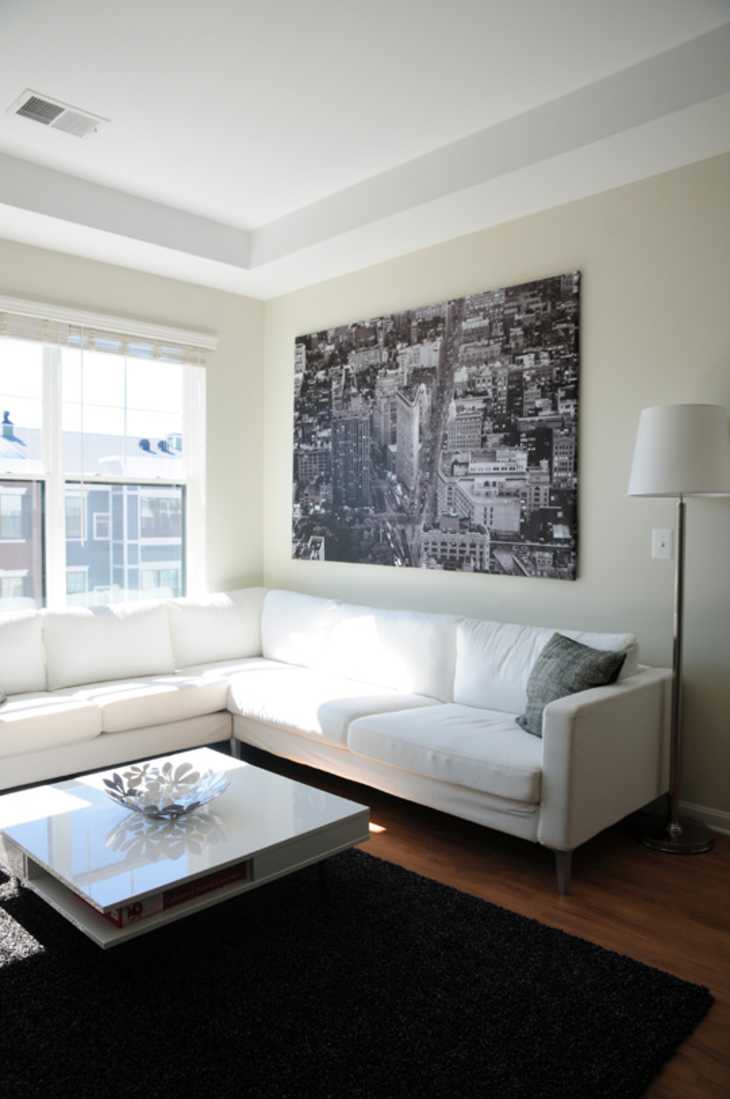
A large blank wall is not a design problem. It is a design opportunity. The large blank wall ideas that fill the space without looking cluttered all follow the same logic: use fewer, larger pieces, size them to the furniture beneath them, and keep the spacing deliberate. The fear of a blank wall usually leads people to buy a dozen small things, and that is what makes a wall look cluttered.
This guide gives you eight ideas, including layouts for a TV wall and for a very tall wall. You will also get seven rules that prevent clutter, a list of what not to hang, and an FAQ with exact sizes and heights.
Large Blank Wall Ideas That Fill the Space Without Looking Cluttered: Quick Answer
- One oversized statement art piece
- A gallery wall with breathing room
- A large wall mirror
- The balanced TV wall
- A triptych (three-piece wall)
- A floor-to-ceiling curtain wall
- The tall wall solution
- A sculptural wall with 3D elements
Idea 1: The Oversized Statement Art Piece
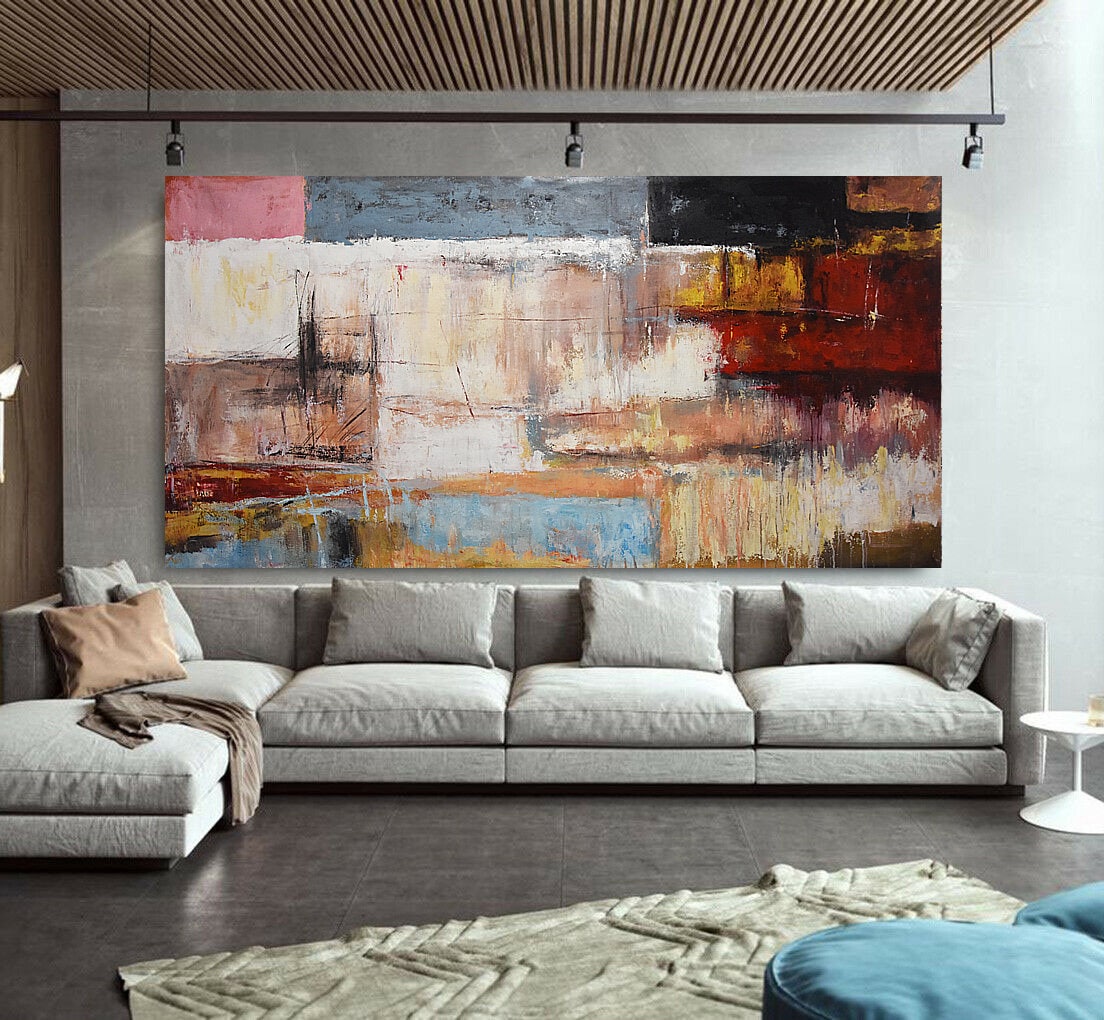 What it is
One very large piece, about 60 to 75 percent of the width of the furniture beneath it, in place of many small ones.
One big piece reads calm, and many small pieces read chaotic. On a very large wall, a bold single focal point gives the eye somewhere to land. Pair it with a sofa, console or bench so the art has a width to be measured against.
- Measure the furniture below, and make the art about two-thirds to three-quarters of its width.
- Hang it 6 to 12 inches above the furniture.
- If you are choosing between two sizes, take the bigger one.
Idea 2: The Gallery Wall With Breathing Room
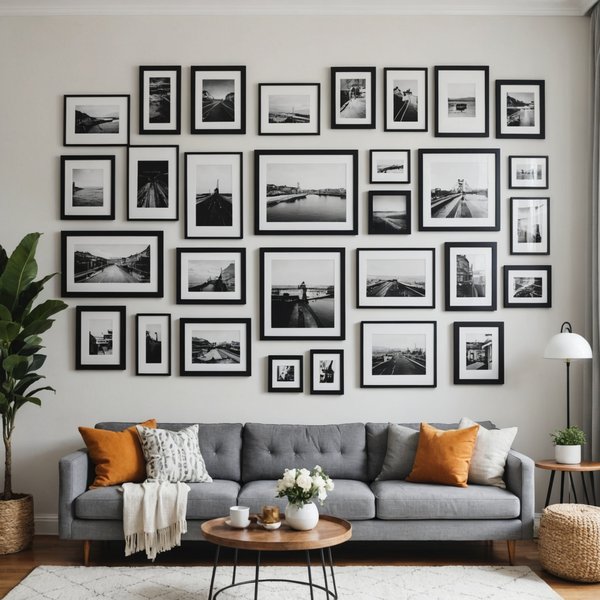 What it is
A set of 5 to 7 frames arranged with even gaps of 2 to 3 inches between them.
Why it worksThe spacing is what prevents clutter. Frames that are evenly spaced read as one composition, while frames at random distances read as a pile.
- Choose 5 to 7 frames in the same palette and similar frame colors.
- Keep every gap at 2 to 3 inches.
- Treat the whole group as one shape and center it over the furniture.
Idea 3: The Large Wall Mirror
 What it is
One mirror that is at least two-thirds the width of the furniture below it.
Why it worksA mirror reflects light and makes the room feel bigger, and it fills the wall without the busyness of art. Hang it across from a window if you can, so it reflects the daylight.
- Choose a mirror at least two-thirds the width of the furniture beneath it.
- Center it over the furniture, 6 to 12 inches above.
- Hang it with anchors rated for its weight.
Idea 4: The Wall With a TV (The Balanced Layout)
 What it is
A way to style the wall around a TV without competing with it.
Why it worksA TV is a dark, rectangular focal point. Tall or busy decor beside it pulls the eye away from the screen and makes the wall feel crowded. Low, wide pieces frame the TV instead.
- Keep decor low and wide, not tall and busy.
- Use a solid, calm color palette next to the screen.
- Limit the supporting items to a console, two lamps and one shelf.
Idea 5: The Triptych (Three-Piece Wall)
 What it is
Three large panels hung in a row or a column, usually as one image split in three or as a matching set.
Why it worksIt fills a wide wall in one coordinated move. Because the three pieces share a size, a palette and a gap, the group reads as one statement, not three separate items.
- Use three pieces of the same size, with the same frame.
- Keep the gaps between them at 2 to 3 inches.
- Center the whole group on the wall or on the furniture below.
Idea 6: The Floor-to-Ceiling Curtain Wall
 What it is
Full-height curtains hung across a blank wall, with or without a window behind them.
Why it worksFabric adds softness and height without a single frame, and it absorbs echo in a large room. It is one of the easiest fixes for a wall with no good place for art.
- Hang the rod near the ceiling, and let the curtains just skim the floor.
- Choose panels with fullness of about two to two and a half times the rod width.
- Pick a fabric in a color close to the wall for a calm look.
Idea 7: The Tall Wall (High Ceiling Solution)
 What it is
A solution for a wall that is tall rather than wide, such as one with a high or vaulted ceiling.
Why it worksOn a tall wall, wide art leaves a lot of bare space above it. Vertical pieces draw the eye up and fill the height instead.
- Stack art vertically in a column, with 2 to 3 inches between pieces.
- Or choose one very tall piece instead of several small ones.
- Start the lowest piece 6 to 12 inches above the furniture and build upward.
Idea 8: The Sculptural Wall (3D Elements)
Woven wall hangings, wooden slats or textured panels that add dimension to the wall.
Why it worksTexture and depth give the wall interest without flat art or visual noise. A single sculptural piece also works well in a room that already has a lot of framed art.
- Use one large sculptural element, not several small ones.
- Keep the palette to the room's existing colors.
- Size it to the furniture below, the same as you would art.
Wall Decor Rules That Prevent Clutter
- One anchor piece per wall. Everything else supports it.
- Hang at eye level. The center of the art sits 57 to 60 inches from the floor.
- Leave a gap above furniture. Aim for about 6 to 12 inches between the furniture and the art.
- Stick to 2 or 3 colors. Repeat them across the wall.
- Use odd numbers of small items. One large item and a few small ones.
- If in doubt, go bigger, not smaller. Undersized art is the most common mistake.
- Remove one piece before you think it is done. It is almost always the right edit.
What NOT to Put on a Large Blank Wall
- Too many small frames. They create visual noise and make the wall look busy.
- Mismatched colors. Pieces from different palettes make a wall look random.
- Decor that is smaller than the furniture below. Small art looks lost over a big sofa.
- Busy patterns next to a TV. They fight with the screen.
- Too many 3D objects. One sculptural piece adds interest, but five add clutter.
Large Blank Wall FAQ
How do I decorate an extremely large wall?
Use one oversized statement piece or a coordinated set such as a triptych, sized to the furniture beneath it. On a very tall wall, stack art vertically or use one very tall piece. Add a console or bench below to anchor the wall, and limit the palette to two or three colors.
How do I make a blank wall more interesting?
Add scale and texture: oversized art, a large mirror, a sculptural piece such as a woven hanging, or a gallery wall with even gaps of 2 to 3 inches. One strong focal piece usually works better than many small ones.
What are good ideas for decorating an empty wall?
Good options include an oversized art piece, a gallery wall, a large mirror, a triptych, floor-to-ceiling curtains and sculptural elements like woven hangings or wood slats.
What is the best large wall decor for a living room?
Oversized art or a large mirror above the sofa, sized to about two-thirds to three-quarters of the sofa's width. On a TV wall, keep decor low and wide so it does not compete with the screen.
How do I fill a large wall without cluttering it?
Use one anchor piece plus two to four supporting items, such as a console, a lamp, a plant or a shelf. Stay within two or three colors, keep gaps even, and remove one piece before you think you are done.
What size art should go on a large wall?
Art over furniture should be about two-thirds to three-quarters of the furniture's width. If you are unsure, go bigger, because undersized art is the most common mistake on a large wall.
How high should I hang art on a large wall?
The standard gallery guideline is to hang art with its center 57 to 60 inches from the floor. When art hangs above furniture, leave roughly 6 to 12 inches between the furniture and the bottom of the art.
How do I decorate a large wall with a TV?
Keep decor low and wide instead of tall and busy. A low console, two lamps and one long shelf below the TV work well. Avoid busy patterns next to the screen.
What can I use instead of art on a large wall?
Large mirrors, full-height curtains, woven wall hangings, wooden slats, textured panels and shelves can all fill a wall without art.
A Simple Takeaway
Choose one anchor piece and size it to the furniture below. Add two to four supporting items, keep the gaps even and the palette small, and take one piece away before you stop. A large wall looks finished when it has one clear focal point and room to breathe around it.