
8 Small Laundry Room Ideas That Make a Tight Space Feel Organized
Don't start with the prettiest basket. Start with the gap above your machines and the floor in front of them, and let the planner tell you what fits.

In a small laundry room the limit is rarely the number of baskets. It is the few inches between the top of the machines and the first shelf, the floor you need to open the door, and a dryer vent you must not block. Most lists of small laundry room ideas show a pretty wall of bins and leave you to guess whether the shelves clear the lid or whether a cart fits beside the dryer.
This guide gives you eight ideas, a planner that turns four measurements into a shelf height, a shelf count and a clearance check, a diagram of the gaps that matter, a simple left-to-right flow rule, and four tests you can run before you buy.
Small Laundry Room Ideas: Quick Answer
Take four measurements: ceiling height, the height of the machine tops, the width of the wall the machines sit on, and the clear floor in front of them. Then use this ladder:
- Room for 2 or more shelves above the machines: idea 1 (wall shelves) or idea 2 (a freestanding unit that straddles them).
- Side-by-side front-loaders and no flat surface to fold on: idea 4, a counter or fold-down shelf over them.
- 6 or more spare inches beside or between the machines: idea 3, a slim cart.
- Stacked pair, low ceiling or tiny floor: ideas 5, 6 and 7 use the door, walls and floor baskets.
- Cannot drill: ideas 2, 3, 5 and 7, plus a tension rod or freestanding rack from idea 6.
- Floor width is the problem, and your models allow it: idea 8, stacking.
All eight ideas: 1 wall shelves above the machines, 2 freestanding over-machine unit, 3 slim rolling cart, 4 folding counter, 5 back of the door and side walls, 6 drying rod or fold-down rack, 7 labeled sorting baskets, 8 stack the pair.
The numbers to remember: about 16 inches above front-load tops (20 above top-loaders) for the lowest shelf, about 36 inches of clear floor in front, and never block the dryer vent or the lint filter.
Free Laundry Room Planner: What Fits Your Space?
Measure in inches. For the machine height, measure from the floor to the top of the machines, including any pedestals. For a stacked pair, measure to the top of the dryer.
Small laundry room planner
The Numbers and the Flow Rule
- Machine size: full-size washers and dryers are commonly about 27 inches wide, with front-loaders often around 38 to 39 inches tall. Check your own.
- Lowest shelf: about 16 inches above front-load tops, so you can pour and set down a basket, and about 20 inches above top-load machines so the lid opens fully.
- Shelf spacing: about 14 inches suits most detergent bottles and folded stacks.
- Ceiling gap: leave about 2 inches under the ceiling so a unit or board can be tilted into place.
- Reach zone: daily items fit best between about 24 and 60 inches from the floor, with light spares above.
- Floor in front: about 36 inches is a comfortable guideline, 30 to 35 is tight, and under about 24 a front-load door will not open comfortably.
- Behind and beside: many manuals call for about 1 inch at the sides and several inches behind for hoses and the vent. Follow yours.
The flow rule: work left to right, or right to left, but never both
A tight laundry room feels organized when the clothes only move one way. Put the sorting baskets on the side where you load, the washer and dryer in the middle, and the folding surface, the hanging rod and the "to put away" basket at the dry end. If everything is stored in the same order you use it, you stop walking back and forth in a space that is only a few feet wide.
Idea 1: Wall Shelves Above the Machines
Needs studs
What it looks like: Two or three wide shelves mounted above the machines, holding baskets, detergent and a few folded stacks.
Why it works: The wall above the machines is the biggest unused surface in most laundry rooms, and a shelf there takes no floor at all.
Idea 2: Freestanding Over-Machine Unit
No drill
What it looks like: A shelf unit whose legs stand on either side of the machines, with shelves above them.
Why it works: You get wall-shelf storage with no holes, and the unit stays put through spin cycles because it rests on the floor, not on the machines.
Idea 3: Slim Rolling Cart
No drill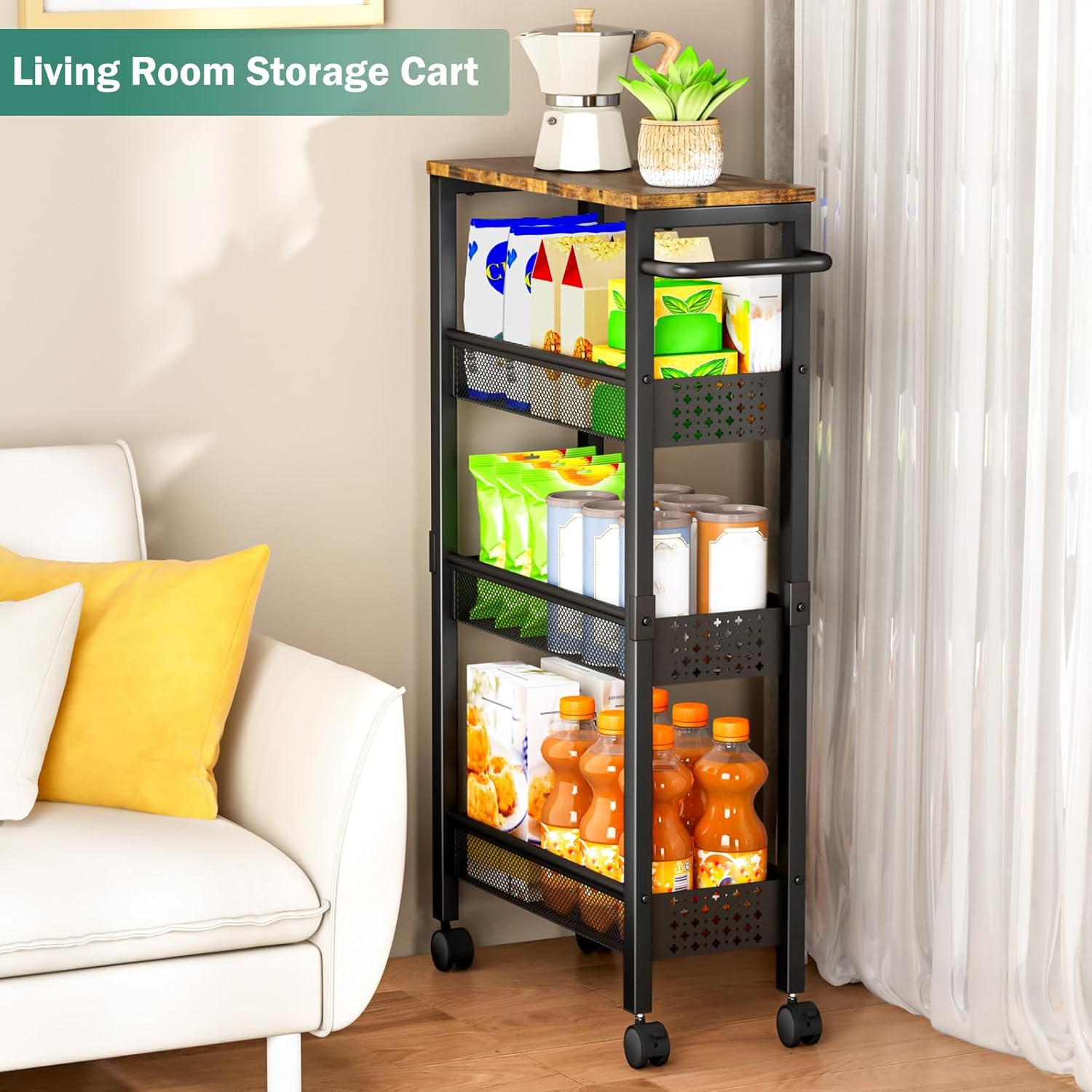
What it looks like: A narrow cart, commonly about 6 to 9 inches wide, that rolls into a gap beside or between the machines.
Why it works: The space beside a washer or dryer fits nothing else, and a cart turns it into three tiers of storage that you can roll out to reach the machine sides.
Idea 4: Folding Counter
Needs studs, or a loose board
What it looks like: A flat surface over side-by-side front-loaders, either a board that sits above the tops or a wall-mounted fold-down shelf.
Why it works: The tops of the machines are the right height for folding, but they are rarely flat, clear or big enough. A counter turns them into one continuous work surface.
Idea 5: Back of the Door and Side Walls
No drill
What it looks like: An over-the-door organizer, a row of hooks or a slim rail on the door and on the side wall.
Why it works: The door and the wall beside the machines are flat and always empty. They hold the small, easy-to-lose things that clutter a shelf: the lint roller, stain remover, hangers and a bag for lost socks.
Idea 6: Drying Rod or Fold-Down Rack
Needs studs, or freestanding
What it looks like: A rod across the wall, a wall-mounted rack that folds flat, or a freestanding or tension option for renters.
Why it works: Hanging space is what turns a laundry room from a place you wash clothes into a place you finish them. A fold-down rack takes almost no room when it is closed.
Idea 7: Labeled Sorting Baskets
No drill
What it looks like: Two or three slim baskets or bins, labeled for lights, darks and delicates, lined up on the floor or on the lowest shelf.
Why it works: Sorting is the step that scatters laundry across a small floor. A basket per load type puts the sorting where you load, and labels stop it drifting back to a pile.
Idea 8: Stack the Pair
Appliance change
What it looks like: The dryer sits on top of a front-load washer with a stacking kit, leaving a column of floor beside the stack.
Why it works: Stacking frees about 27 inches of floor width, which is often the difference between a laundry closet with a cart and one with nothing.
Pick in 30 Seconds: Which Idea Fits Your Laundry Room?
Find your situation in the left column and read across.
| Your situation | Best ideas | Key check |
|---|---|---|
| Ceiling 8 feet or higher, side-by-side machines | 1 or 2, plus 4 | Lowest shelf from the planner |
| Low ceiling, or a stacked pair | 5, 6, 7, 3 | Little or no height above the machines |
| Renter who cannot drill | 2, 3, 5, 7, plus a freestanding rack | Your lease and anti-tip straps |
| Owner or permission to drill | 1, 4, 6 | Studs, and what is behind the wall |
| 6 or more spare inches beside the machines | 3 | Keep hoses and valves reachable |
| Side-by-side front-loaders, nowhere to fold | 4 | Maker allows it, vents stay clear |
| Top-load machines | 1 or 2 (20-inch gap), 3, 5 | Lid opens fully, no counter on top |
| Under about 30 inches of clear floor in front | 5, 6, 7, keep the floor clear | Door swing and basket size |
| Floor width is the problem | 8 | Stackable models, ceiling height, reach |
| You hang-dry daily | 6 | Drop of at least 30 inches for shirts |
| Several people, many loads a week | 7, 2, 3 | One basket per load type |
| Kids or pets in the house | 1 (high), 2 (anchored), 5 | Detergent and cleaners out of reach |
| Laundry in a closet, gas dryer | 5, 7, 3 | Do not enclose the dryer or block its air |
Mistakes That Make a Small Laundry Room Fail
- A shelf too close to the machine top. You cannot pour detergent or open a top-load lid. Leave the gap from the planner.
- Blocking the dryer vent. A shelf, basket or cart pushed against the exhaust traps heat and lint. Keep the path clear.
- Shelves not in studs. A full detergent bottle is heavy, and wet laundry is heavier. Anchor into studs or use rated hardware.
- Forgetting the door swing. A front-load door needs room to open fully with a basket in your hands.
- A cart wedged in tight. It blocks hoses and the shut-off valves. You need to reach them in an emergency.
- Storing aerosols or solvents near the dryer. Heat and lint are a bad mix. Keep them away.
- A counter that walks. A loose board over vibrating machines slides. Test it with a spin cycle.
- Baskets with no system. Without labels, sorting baskets turn into one pile. Label them.
- A dark corner. A dim laundry room makes stains hard to see and the room feel smaller. Add light you can plug in.
- Buying before measuring. A unit that is an inch too wide to straddle the machines goes back. Measure the full pair.
Test Before You Buy: Four Home Checks
These cost almost nothing and prevent most returns.
- The door-swing and tape test. Tape the footprint of the cart, basket or unit on the floor. Open the washer and dryer doors fully, then stand in the doorway with a loaded basket. If the tape sits where the door swings or where you stand, move it.
- The week-of-laundry count. For one week, count the loads you wash and note the types (lights, darks, towels, delicates). That number sets how many baskets you need and how much shelf you really use. Most people overbuy for the loads they do not have.
- The reach test. Mark 24 inches and 60 inches on the wall with painter's tape. Everything you touch daily goes between the marks, and everything above is a light spare. If a daily item lands above the tape, the shelf is in the wrong place.
- The spin-cycle test. Run a normal load with anything you plan to rest on the machines, such as a cart or a board, in place. Watch for walking, rattling or anything that touches the vent or the lid. Fix it before you load it.
Safety Limits
- Never block the dryer exhaust, the vent duct or the air intake, and clean the lint filter every load. Lint buildup is a common cause of dryer fires.
- Keep aerosols, solvents, oily rags and strong cleaners away from the dryer and its heat.
- Gas dryers need combustion air and proper venting. Check the manual before enclosing one in a closet or building around it.
- Do not mix bleach with ammonia or other cleaners. Store detergent, pods and cleaners out of children's reach, locked if possible.
- Anchor shelves into studs or rated anchors, and check for pipes and wiring first. Anchor tall freestanding units to the wall if the maker provides a strap.
- Keep water shut-off valves, hoses and the dryer vent reachable, and check hoses for wear and leaks.
- Use only outlets and devices rated for the room, and do not run extension cords across the floor or behind the machines.
- Check the weight rating on every shelf, rod, rack and fold-down surface, and stay well under it.
- Renters: check your lease before drilling or using adhesive, and photograph the walls first.
Small Laundry Room FAQ
How do you organize a small laundry room?
Follow the sequence of dirty, wash, dry, fold and put away. Use the vertical space above the machines for shelves, keep sorting baskets on the floor or a slim cart, use the door and side walls for hooks and small items, and keep enough clear floor in front to open the door and load. Measure first, because the gap above the machines and the floor in front decide what fits.
How much space do you need in front of a washer and dryer?
A common guideline is about 36 inches of clear floor so you can open the door and load with a basket. Around 30 to 35 inches is tight, and under about 24 inches a front-load door will not open comfortably. This is a guideline, so check your manual and any local requirements.
How high should shelves be above a washer and dryer?
Keep the lowest shelf about 16 inches above front-load machines and about 20 inches above top-load machines so the lid opens fully. Space more shelves about 14 inches apart, leave about 2 inches under the ceiling, and keep daily items between roughly 24 and 60 inches from the floor.
Can you put a counter over a washer and dryer?
Often over side-by-side front-loaders with flat tops, about 1 to 2 inches above them, if the maker allows it and nothing blocks vents, controls or a detergent drawer. It does not work over top-loaders because the lids need to open. Test a loose counter with a spin cycle, or use a wall-mounted fold-down surface.
What can renters do in a small laundry room without drilling?
A freestanding shelf unit, a slim rolling cart, an over-the-door organizer, hooks tested for the room, a tension rod or freestanding rack, and labeled sorting baskets. Check your lease before using adhesive, and keep everything clear of the dryer vent.
Is it safe to store things or hang clothes above a dryer?
Shelves above a dryer are common, but keep them clear of the exhaust and the top surface, never cover the vent or air intake, and clean the lint filter every load. Keep aerosols, solvents, oily rags and strong cleaners away. Gas dryers need combustion air, so check the manual before enclosing one.
Should you stack a washer and dryer in a small laundry room?
Stacking frees about 27 inches of floor width but not floor depth. It needs compatible front-load models and the maker's stacking kit, and the stack commonly stands about 74 to 77 inches tall, so check your ceiling and your reach. You also lose the flat top for folding.
How much space do you need behind and beside a washer and dryer?
Many manuals call for about 1 inch at each side and several inches behind, often around 4 to 6, for hoses and the dryer vent. Requirements vary by model, so follow your manual and do not push the machines flush against the wall.
A Simple Takeaway
Do not start with the prettiest basket. Measure the ceiling, the machine tops, the wall and the floor in front, and let the planner choose the shelf height and the idea. Keep the vent clear, keep a gap above the machines, keep the floor open for the door, and let the clothes move one way across the room. A tight laundry room feels organized when every item sits where you use it.