
9 Kitchen Counter Organization Ideas for Small Kitchens With No Pantry
Practical ways to clear your counters, store food without a pantry and keep a tiny kitchen working.

When a kitchen has no pantry, the countertop quietly becomes the pantry, the appliance shelf and the mail drop. That is why so many small kitchens feel crowded even when they are clean. These kitchen counter organization ideas for small kitchens with no pantry help you keep the counter for cooking while still storing the food and tools you need nearby.
Below are nine ideas, with measurements and examples you can copy, a quick chart of what belongs on the counter and what does not, and an FAQ that answers the most common questions. You do not need a renovation. Most of these changes cost little and take an afternoon.
Kitchen Counter Organization Ideas for Small Kitchens With No Pantry: Quick Answer
- Clear the counter and keep daily-use items only
- Set up simple counter zones
- Add risers and tiered shelves
- Build a small "counter pantry" tray
- Use the wall: rails, hooks and magnetic strips
- Corral tools in crocks and holders
- Move spices and oils away from heat and light
- Create a faux pantry nearby
- Add working counter space
The one rule: the counter is for work. Anything you do not use daily moves somewhere else.
Idea 1: Clear the Counter and Keep Only Daily-Use Items
What it looks like: Appliances, mail, fruit, bottles and bags fill every free inch, so there is nowhere left to chop or set a hot pan.
Why it hurts a small kitchen: In a small kitchen, every item on the counter takes space away from the one job the counter exists to do: preparing food. Too many objects also make the room look smaller and busier.
If you only do one thing from this list, do this one. Every other idea works better once the counter is empty.
Idea 2: Set Up Simple Counter Zones
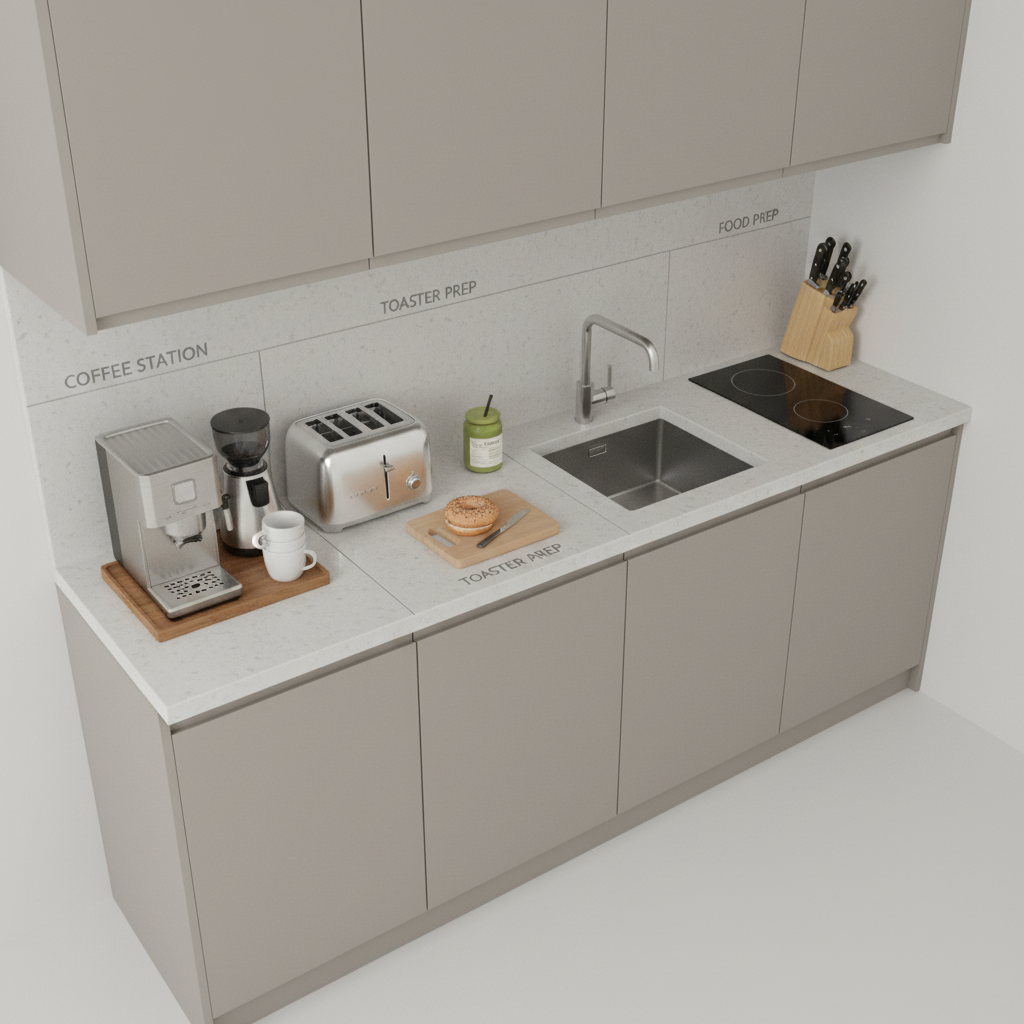
What it looks like: Items live wherever there was room when you unpacked groceries.
Why it hurts a small kitchen: When things are scattered, you carry them back and forth and end up leaving them out. Zones tell every item where it belongs.
Put things where you use them. Spatulas and oil go near the stove, the cutting board near the sink, and mugs near the kettle.
Idea 3: Add Risers and Tiered Shelves
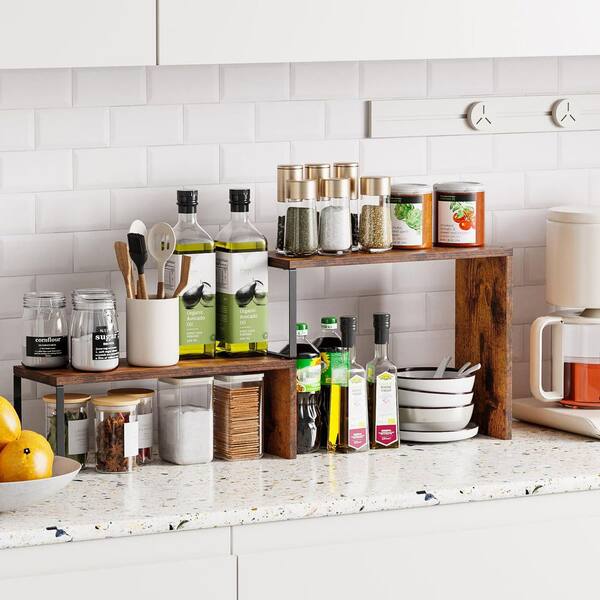
What it looks like: Items spread flat across the counter, each taking its own footprint.
Why it hurts a small kitchen: Flat storage uses up work surface. Vertical storage keeps the same items but uses a fraction of the footprint.
Keep the items on risers to things you reach for often. Anything tall or heavy is safer on a low shelf.
Idea 4: Build a Small Counter Pantry Tray

What it looks like: Boxes and bags of flour, sugar, rice and pasta stand loose across the counter.
Why it hurts a small kitchen: Packaging is bulky and mismatched, and it takes more space than the food inside needs.
Keep this tray small. It is a convenience for what you use often, not a replacement for a real pantry.
Idea 5: Use the Wall
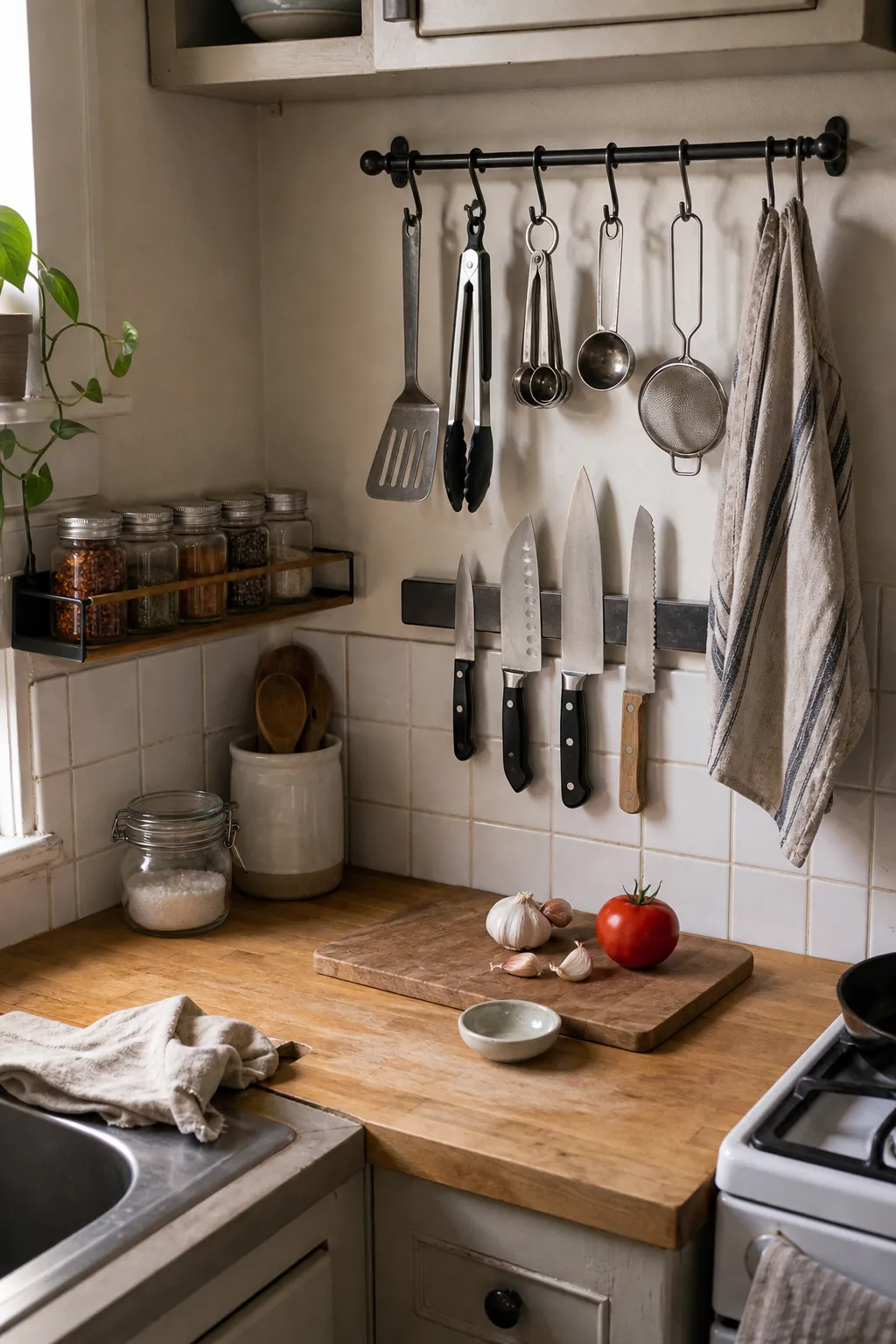
What it looks like: Knives in a bulky block, pots stacked in a cabinet and tools in a crowded drawer.
Why it hurts a small kitchen: Bulky holders take up valuable counter space. Walls and backsplashes are usually the most underused surface in a small kitchen.
Keep knives out of reach of children, and choose a strong magnet and a secure mounting method.
Idea 6: Corral Tools in Crocks and Holders

What it looks like: Utensils lying across the counter and cutting boards flat on top of each other.
Why it hurts a small kitchen: Loose tools sprawl and are hard to wipe around. Flat boards take over a large area.
If a tool has not left the crock in a month, move it to a drawer.
Idea 7: Move Spices and Oils Away From Heat and Light

What it looks like: A row of spice jars and oil bottles beside the stove or on a sunny windowsill.
Why it hurts a small kitchen: Heat, light and moisture can reduce the flavor and freshness of spices and oils over time. The spot beside the stove is convenient but is also the worst place to keep them.
Wipe up splatters quickly. Oil residue near the stove collects dust and makes surfaces harder to clean.
Idea 8: Create a Faux Pantry Nearby
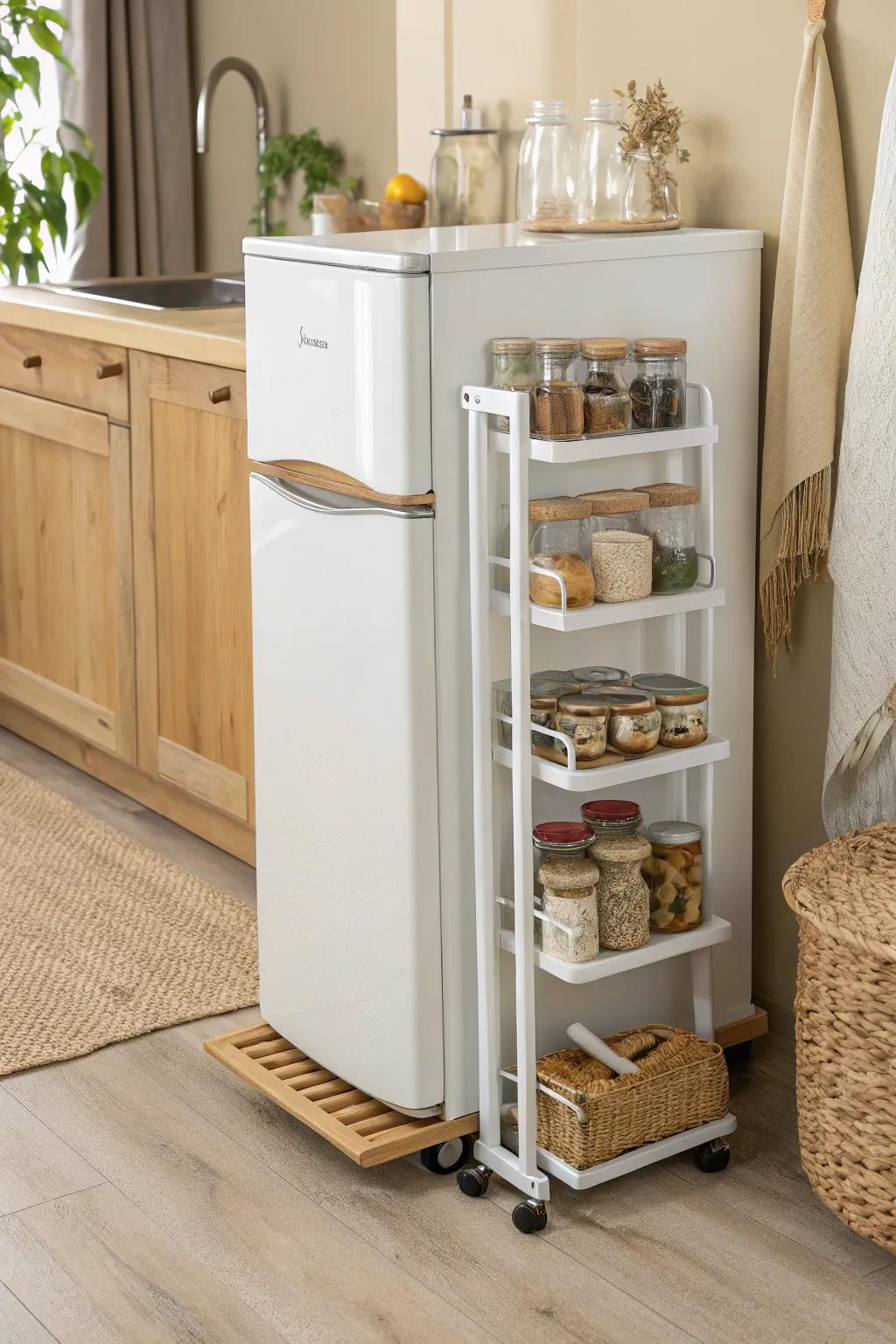
What it looks like: Groceries piled onto the counter because there is no other place for them.
Why it hurts a small kitchen: Without a pantry, food ends up on the counter. The solution is to give it a home so it does not.
Place any stand-in pantry away from the stove, dishwasher vent and sunny windows, since heat and humidity shorten the life of dry food.
Idea 9: Add Working Counter Space
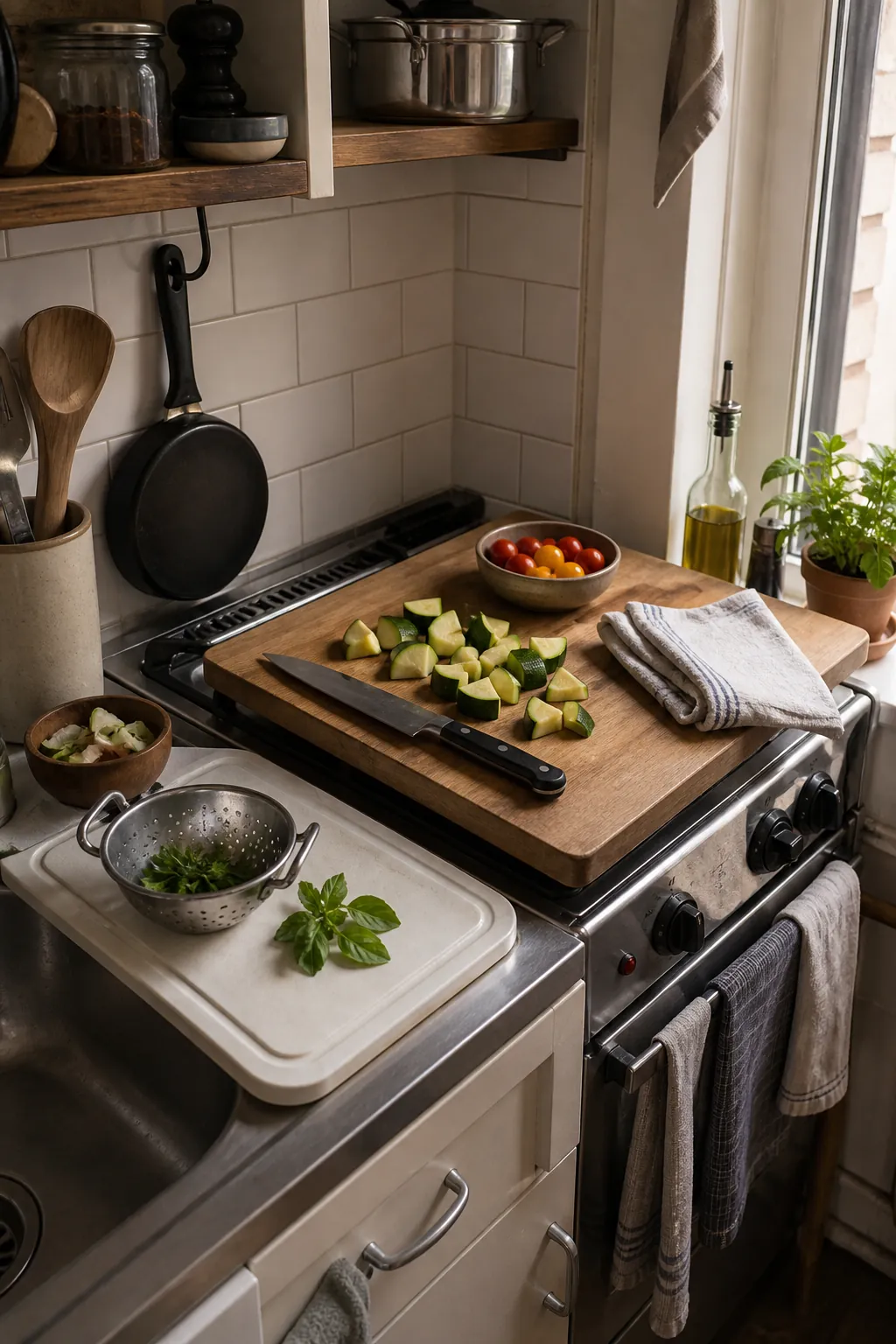
What it looks like: A tiny counter that cannot fit a cutting board and a bowl at the same time.
Why it hurts a small kitchen: Even a perfectly organized counter can be too short. Sometimes the answer is more surface, not more storage.
Counter Keep-or-Move Chart (Quick Reference)
Use this chart to decide what stays on your counter and where everything else goes.
| Item | On the counter? | Better home |
|---|---|---|
| Coffee maker or kettle (used daily) | Yes | Drink zone, at the end of the run |
| Toaster (used often) | Yes, if daily | Cabinet if used less than weekly |
| Stand mixer, blender, food processor | No, unless used daily | Low cabinet or cart |
| Flour, sugar, rice, pasta | A small tray only | Airtight canisters, backups in a cabinet |
| Spices | No | Drawer insert or cabinet shelf away from heat |
| Cooking oils | One or two on a tray | Cabinet, in dark bottles |
| Knives | No | Wall strip or drawer block |
| Utensils | One crock | Wall rail or drawer |
| Cutting boards | Upright holder | Narrow slot or wall hook |
| Mail, keys, bags | No | Entryway or drawer |
The 3 Rules That Keep Counters Clear
- Daily use only. If you do not use it every day, it does not live on the counter.
- Go vertical. Use walls, risers and upright holders before you give up counter footprint.
- Give food a home. A cabinet, cart or bookcase takes the pantry's job so the counter does not have to.
Kitchen Counter Organization FAQ
How do you organize kitchen counters in a small kitchen with no pantry?
Clear the counter and put back only daily-use items. Set up zones, go vertical with risers, wall rails and hooks, and move food storage into a dedicated cabinet, a slim cart or a freestanding bookcase or armoire that acts as a pantry.
What should you keep on your kitchen counters?
Only what you use every day: a coffee maker or kettle, a utensil crock, a cutting board, and a small tray of everyday staples. Store rarely used appliances and packaged food in cabinets, drawers or a freestanding pantry stand-in.
Where do you store food in a kitchen with no pantry?
Dedicate one or two cabinets to dry food and add a slim cart, bookcase or armoire if you need more room. Decant staples into airtight containers, keep potatoes and onions in separate ventilated baskets in a cool, dark spot, and store backups elsewhere if you can.
How do you make a pantry in a kitchen that doesn't have one?
Use a freestanding piece such as a narrow bookcase, cabinet or armoire near the kitchen, or dedicate a full cabinet to food. Add baskets, labeled bins and shelf risers so everything is visible at a glance.
Where should you keep spices and cooking oils in a small kitchen?
Away from the stove, sunny windows and other heat sources, because heat, light and moisture reduce flavor and freshness. A drawer insert or a nearby cabinet shelf works well, and dark bottles help protect oils.
How do you add counter space to a small kitchen?
Use an over-the-sink cutting board, a foldable or drop-leaf workstation, or a rolling cart you can push against the counter. Clearing the counter of items you do not use daily also gives you more usable space than any add-on.
How do you stop kitchen counters from looking cluttered?
Limit what lives on the counter, group the items that stay on trays, use matching containers and clear the counter at the end of each day. Fewer items with defined spots look tidier than many items spread around.
Are countertop canisters a good idea in a small kitchen?
For staples you use several times a week, yes, as long as they are airtight, matching and kept together on a tray. They are a bad idea if they take over your only prep space. Store bulk and rarely used ingredients elsewhere.
A Simple Takeaway
A small kitchen without a pantry does not need more counter. It needs fewer things competing for it. Keep only daily-use items out, build upward, and give your food a real home nearby. Do that and the counter goes back to being a place to cook.