
7 Room Divider Ideas for Studios That Don't Block Natural Light
Placement rules, openness math and a chooser by window position, so your divider adds privacy and keeps the daylight.
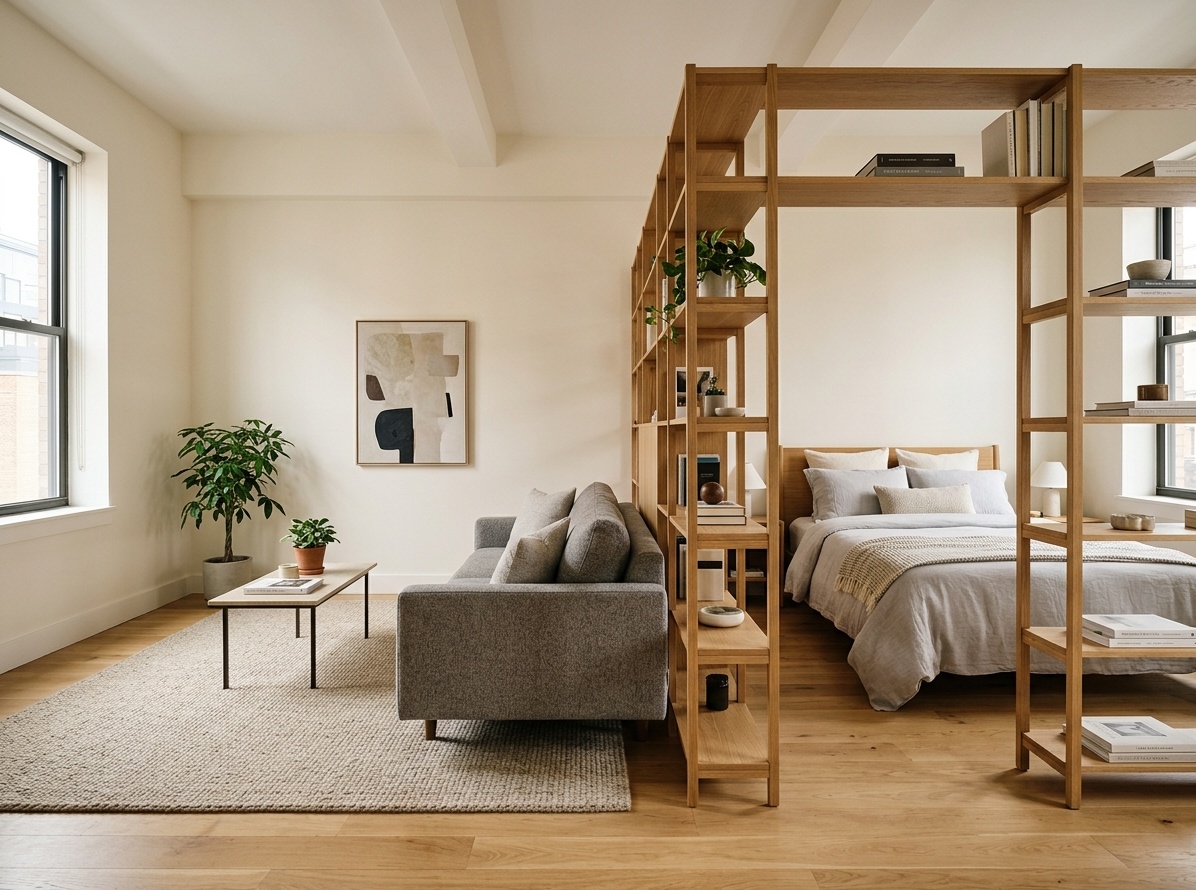
Most dividers fail a studio for one reason: they go up between the window and the rest of the room. Light is the thing a studio has least of, so a solid divider can leave half the room in shadow. The goal is a divider that does its job, which is privacy or a boundary, and still lets daylight through.
This guide gives seven ideas, the placement rule that matters most, simple openness math and a chooser by window position.
Light-Friendly Room Dividers: Quick Answer
- Open shelving
- Reeded or frosted glass
- Sheer ceiling-track curtain
- Open-weave or slatted folding screen
- Low furniture as a divider
- Vertical slat divider
- Zero-block zoning: rugs, light and paint
The one rule: run the divider perpendicular to the window, and choose an open or translucent design at least about 50 percent open.
The Placement Rule That Matters More Than the Divider
Run the divider perpendicular to the window wall, so daylight travels along both sides of it. A divider parallel to the window sits in the light's path and shades everything behind it. Keep it a few inches clear of the window so curtains and handles still work, and keep tall pieces on the side of the room away from the glass.
Open Shelving

Why it works: Light passes through the gaps, and the shelves add storage you would otherwise need a wall for.
Reeded or Frosted Glass
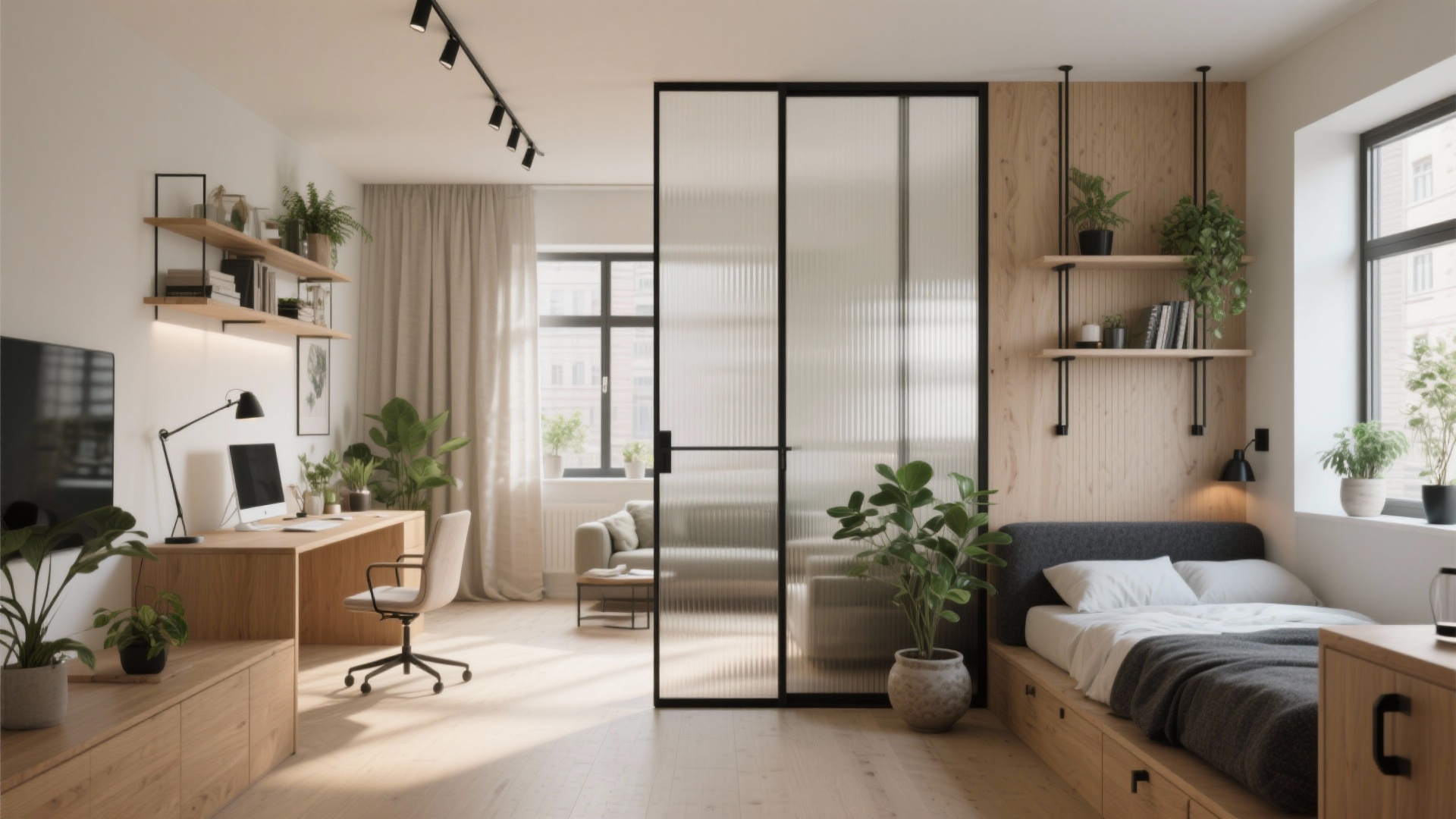
Why it works: Glass passes daylight, and reeded or frosted types blur shapes, so you get privacy without a shadow.
A Sheer Ceiling-Track Curtain

Why it works: Sheer fabric softens light instead of blocking it, and a curtain disappears when you open it.
An Open-Weave or Slatted Folding Screen
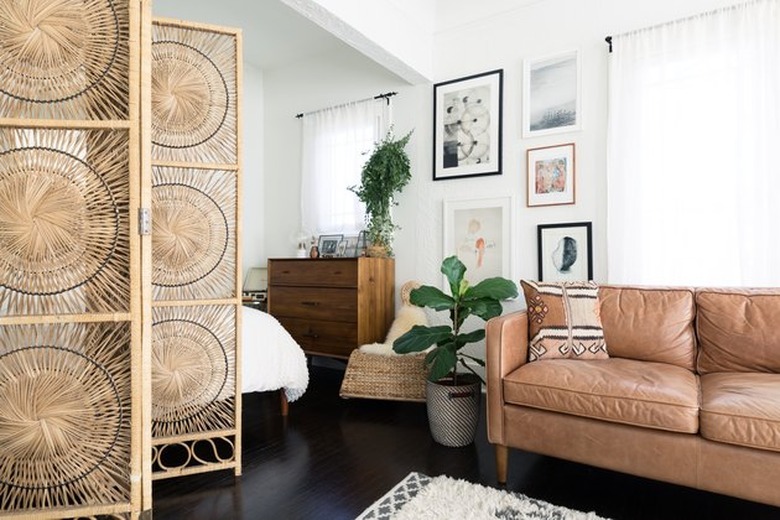
Why it works: Rattan, cane and slatted screens break up the view but let light pass. They need no installation.
Low Furniture as a Divider

Why it works: Anything under about 42 inches tall marks a zone while light and sightlines stay open above it.
A Vertical Slat Divider

Why it works: Slats give a feeling of a wall with openings, and you can choose the exact amount of light that passes.
Zero-Block Zoning: Rugs, Light and Paint
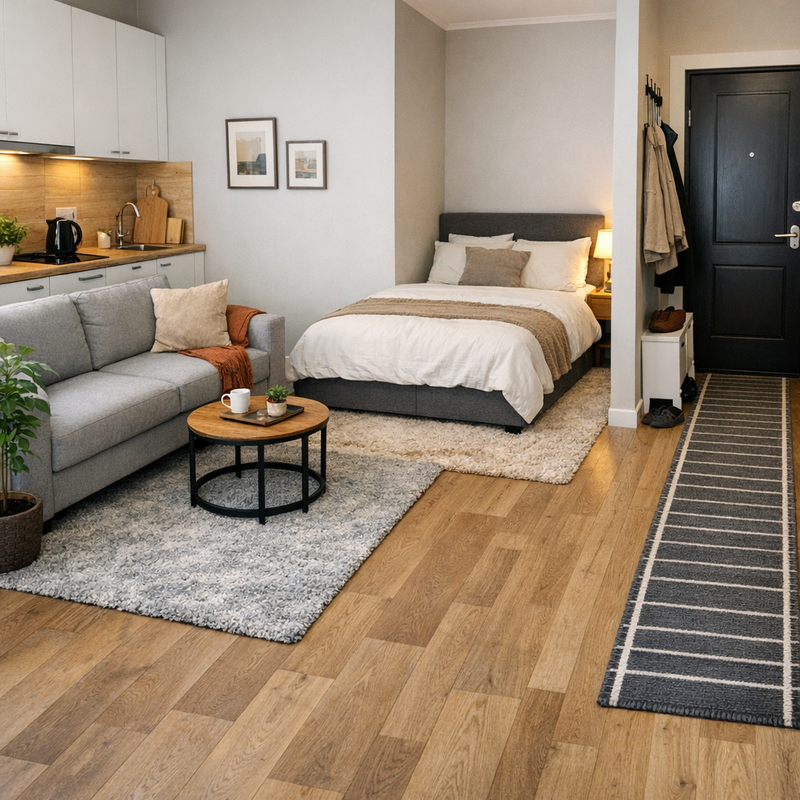
Why it works: Nothing stands between you and the window, so no light is lost.
Which Divider Should You Choose?
| Your situation | Best choice | Why |
|---|---|---|
| Bed needs real privacy | Reeded glass or sheer plus lined double track | Blocks view, passes day light |
| Renter, no drilling | Open-weave screen, anchored shelf | No installation |
| Single window on a short wall | Low furniture or zero-block zoning | Keeps the light path clear |
| Window on the long wall | Divider perpendicular to the window | Light passes on both sides |
| Need storage too | Open shelving | Divider and storage in one |
| Low budget | Screen, rugs, lamps | Uses simple items |
A Simple Light Test Before You Commit
Before you buy, tape a sheet of cardboard or a bedsheet at the planned height and position. Check the room at about 10 am, 2 pm and 5 pm, and note where shadows fall. If a zone goes dark, rotate the divider, lower it or choose a more open type.
Studio Room Divider FAQ
How do you divide a studio apartment without blocking natural light?
Use open or translucent dividers such as shelving, reeded glass, a sheer curtain, a slatted screen or low furniture, and place them perpendicular to the window.
Which room divider lets in the most light?
Rugs, lighting and paint let in all of it. Among physical dividers, clear or reeded glass and low dividers under 42 inches pass the most, then open shelving and slat dividers at least 50 percent open.
Do glass partitions give privacy in a studio?
Clear glass gives none. Reeded, fluted or frosted glass blurs shapes. Add a curtain on the sleeping side for full privacy at night.
What is the best light-friendly room divider for renters?
A freestanding open-weave screen, an anchored open bookcase or a sheer curtain on a tension rod.
Where should a room divider go relative to a window?
Perpendicular to the window wall, a few inches clear of the glass, so daylight passes along both sides.
How tall should a divider be if I want to keep light?
30 to 42 inches keeps light and sightlines open. For privacy, 60 to 72 inches with an open design works.
Do sheer curtains give enough privacy in a studio at night?
Not always, as silhouettes show when the lights are on. Use a double track with a lined layer for the night.
How can I keep a studio bright after adding a divider?
Use light colors and matte finishes, a mirror opposite the window and lamps in the zone behind the divider, and keep tall furniture off the window wall.
A Simple Takeaway
Place the divider perpendicular to the window, choose an open or translucent design, and test it with cardboard before you buy. You get privacy and keep the daylight.