
7 Mudroom Ideas for Small Homes Without a Dedicated Room
Hook, bench and shoe-storage sizes by household, plus a no-drill kit for renters.

A mudroom is really four jobs: hang the coats, store the shoes, drop the keys and contain the wet. A small home has no room for it, but it does have an entry wall, a closet or a corner, and those are enough. The trick is giving each job a few square feet instead of a whole room.
Below are seven ideas, a sizing table by household, and the measurements for each.
Small-Home Mudroom Ideas: Quick Answer
- A hook wall with a shelf above
- A shoe bench with cubbies
- Convert the front closet
- A slim tilt-out shoe cabinet
- A drop zone for keys and mail
- A washable mat and boot tray
- A no-drill kit for renters
The one rule: give every person a hook and a cubby, and keep about 36 inches of clear path.
Size It by Household First
Most small mudrooms fail because they are sized for one person. Use these planning numbers: two hooks per person plus two for guests, spaced 7 inches apart, and a cubby of about 16 inches per person.
| Household | Hooks | Hook rail width (7 in spacing) | Bench width (16 in per person) |
|---|---|---|---|
| 1 person | 4 | 28 in | 16 in |
| 2 people | 6 | 42 in | 32 in |
| 3 people | 8 | 56 in | 48 in |
| 4 people | 10 | 70 in | 64 in |
A Hook Wall With a Shelf Above

Why it works: Hooks use wall, not floor, and a row of hooks is the fastest way to stop coats landing on chairs.
A Shoe Bench With Cubbies

Why it works: A bench gives you a place to sit while you put on shoes, and cubbies keep the pairs off the floor.
Convert the Front Closet

Why it works: A closet is already an enclosed space, so it hides the mess with a door. Removing the door or adding hooks inside gives you a mudroom in about 2 to 3 feet of width.
A Slim Tilt-Out Shoe Cabinet

Why it works: A tilt-out cabinet can be only 7 to 9 inches deep, so it fits in tight entries and hides the shoes behind doors.
A Drop Zone for Keys and Mail
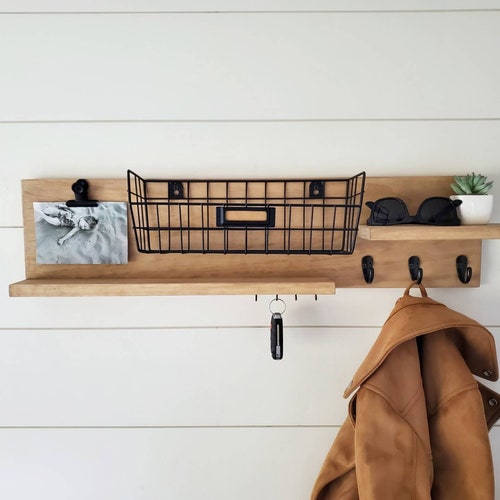
Why it works: Keys, wallets and mail are what actually clutter an entry. A single spot for each stops the pile.
A Washable Mat and Boot Tray
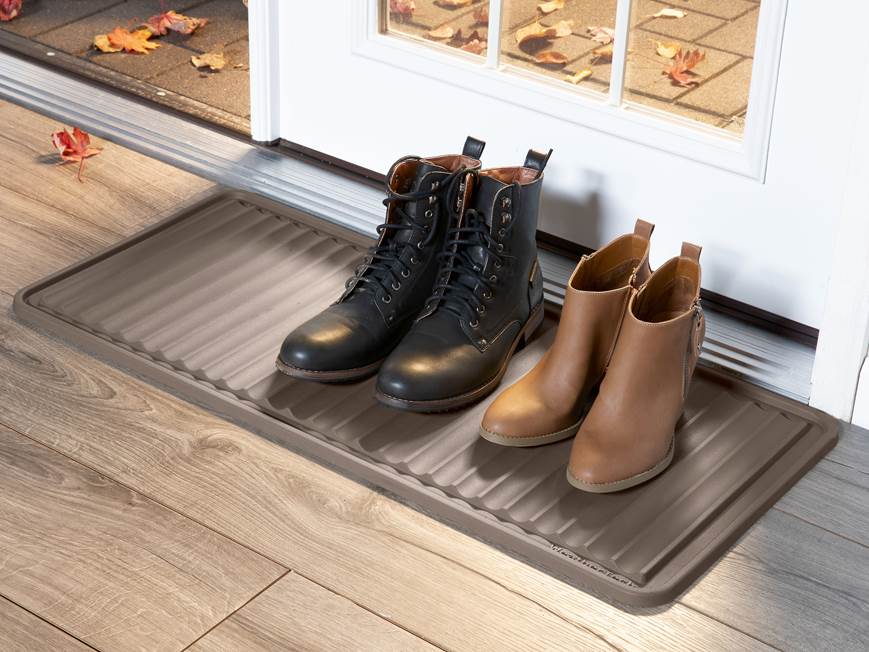
Why it works: Wet shoes are the reason a mudroom exists. A tray and a mat contain water and dirt in one area.
A No-Drill Kit for Renters
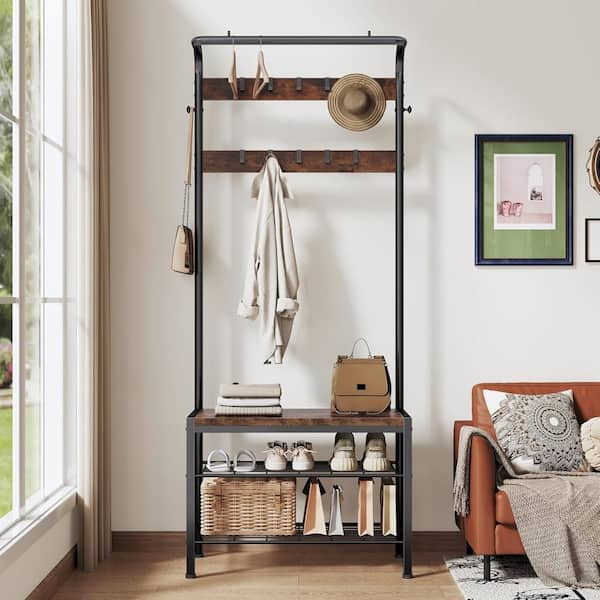
Why it works: Renters can create the same zone with freestanding pieces and take it with them.
Which Setup Should You Choose?
| Your situation | Best choice | Why |
|---|---|---|
| Renter | Freestanding rack, bench, over-door hooks | No drilling |
| Has a front closet | Convert the closet | Hides the mess |
| Hallway under 40 in wide | Hook wall and slim cabinet | Shallow depth |
| Family of 4 | Bench with hooks above, 70 in rail | One slot per person |
| Wet climate | Boot tray and washable mat | Contains moisture |
Small Mudroom FAQ
How do you create a mudroom in a small home without a mudroom?
Turn an entry wall, front closet or corner into a zone with hooks, a bench or shoe storage, a drop spot and a washable mat with a boot tray. You need about 14 to 16 inches of depth plus a 36 inch clear path.
How much space do you need for a mudroom entry zone?
A 14-inch bench with coats above takes about 14 to 16 inches of depth, plus 36 inches of clear path. A wall 4 to 6 feet wide serves a family of 2 to 3.
How many hooks do you need in a small mudroom?
Two per person plus two for guests, spaced 6 to 8 inches apart. A household of 3 needs about 8 hooks on a rail about 56 inches wide.
How high should coat hooks be?
About 60 inches for adults and 40 to 48 inches for children, with a shelf 8 to 12 inches above the top hooks.
What is the best shoe storage for a small entry?
A bench with cubbies or a slim tilt-out cabinet, which can be 7 to 9 inches deep. Keep only current-season shoes at the entry.
How do you set up a mudroom in a rental without drilling?
Use a freestanding coat rack or bench, over-door hooks, a boot tray and a washable runner. Use adhesive hooks only for light items.
What flooring works best in a small mudroom zone?
A washable, low-profile mat or runner with a non-slip backing, and a waterproof boot tray.
How do you keep a small mudroom from getting cluttered?
One hook and one cubby per person, current-season shoes only, a tray for keys and mail and a quick weekly reset.
A Simple Takeaway
You do not need a mudroom, only four small jobs done in the right place: hooks, a seat with shoe storage, a drop spot and something to catch the wet. Size it for your household, keep a 36-inch path and the entry stays under control.