
8 Narrow Hallway Decor Ideas That Make a Dark Corridor Feel Wider
A depth budget by hallway width, light and paint specifics, and runner and sconce sizes, so every decision fits a tight space.
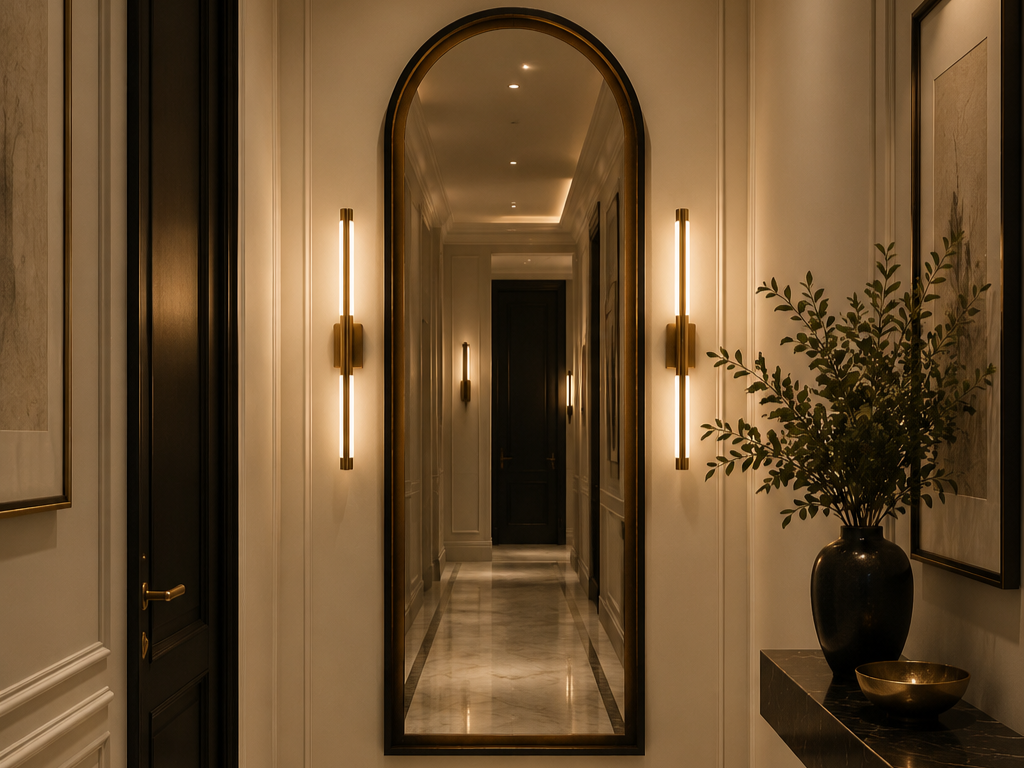
A narrow hallway has two problems that feed each other: it has little light, and it has no spare width. Most decor advice solves one and worsens the other, for example by adding a console that eats the path or a dark color that swallows what light there is.
These eight ideas work within both limits. First, measure your hallway and use the depth budget below, since width decides which decor is possible.
Narrow Hallway Decor Ideas: Quick Answer
- A large mirror opposite a light source
- Light, reflective paint with a matching ceiling
- Layered lighting with slim sconces
- A narrow, low-pile runner
- Flush frames in a single line
- Slim storage, only if the hallway is wide enough
- Borrowed light from nearby rooms
- A lit focal point at the end
The one rule: keep wall decor shallow, since width is the hallway's scarcest resource, and bring in as much light as you can.
The Depth Budget: What Your Hallway Width Allows
Many residential hallways are around 36 inches wide, and codes often set a minimum near that, so check your local rules. Every inch that sticks out of the wall comes out of the path. Measure the width at the narrowest point, then use this table.
| Hallway width | Wall depth budget | Safe choices |
|---|---|---|
| 30 to 34 in | About 0 to 1.5 in | Flush mirrors, flat frames, paint, slim plug-in sconces under 3 in |
| 35 to 40 in | Up to about 4 in | Picture ledges, sconces, frames with a shallow depth |
| 41 to 48 in | Up to about 6 to 8 in | Narrow shelf, deeper frames |
| 48 in and wider | 10 to 12 in | Console or shoe cabinet |
A Large Mirror Opposite a Light Source

Why it works: A mirror doubles what the hallway already has, so place it where it reflects light, not a dark door.
Light, Reflective Paint With a Matching Ceiling
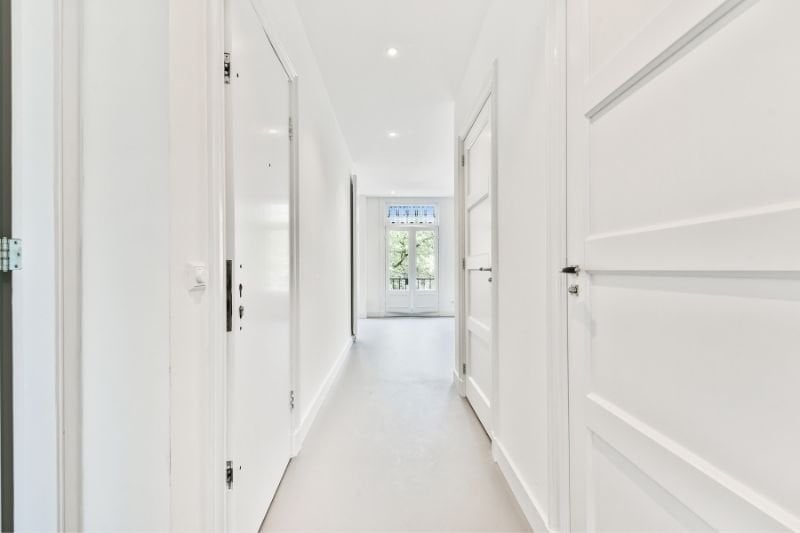
Why it works: Light surfaces bounce what light there is, and a ceiling and trim in the same color blur the edges.
Layered Lighting With Slim Sconces
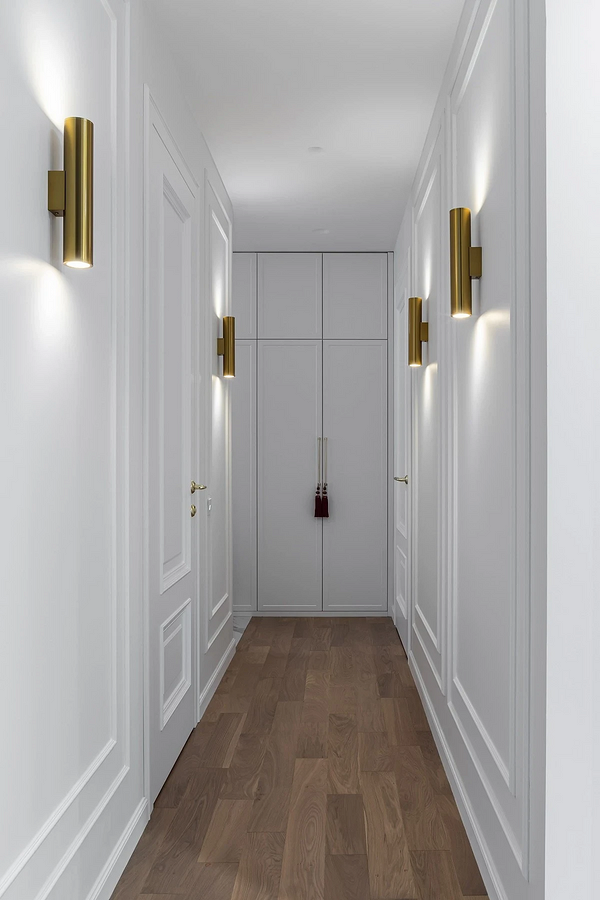
Why it works: A single ceiling light leaves dark patches along the walls. Sconces light the walls themselves, which makes the hallway feel wider.
A Narrow, Low-Pile Runner

Why it works: A runner adds color and warmth, and the bare floor on each side keeps the hallway reading as wide.
Flush Frames in a Single Line

Why it works: One tidy line of art draws the eye along the hallway and adds personality, while flat frames take almost no width.
Slim Storage, Only if the Hallway Is Wide Enough
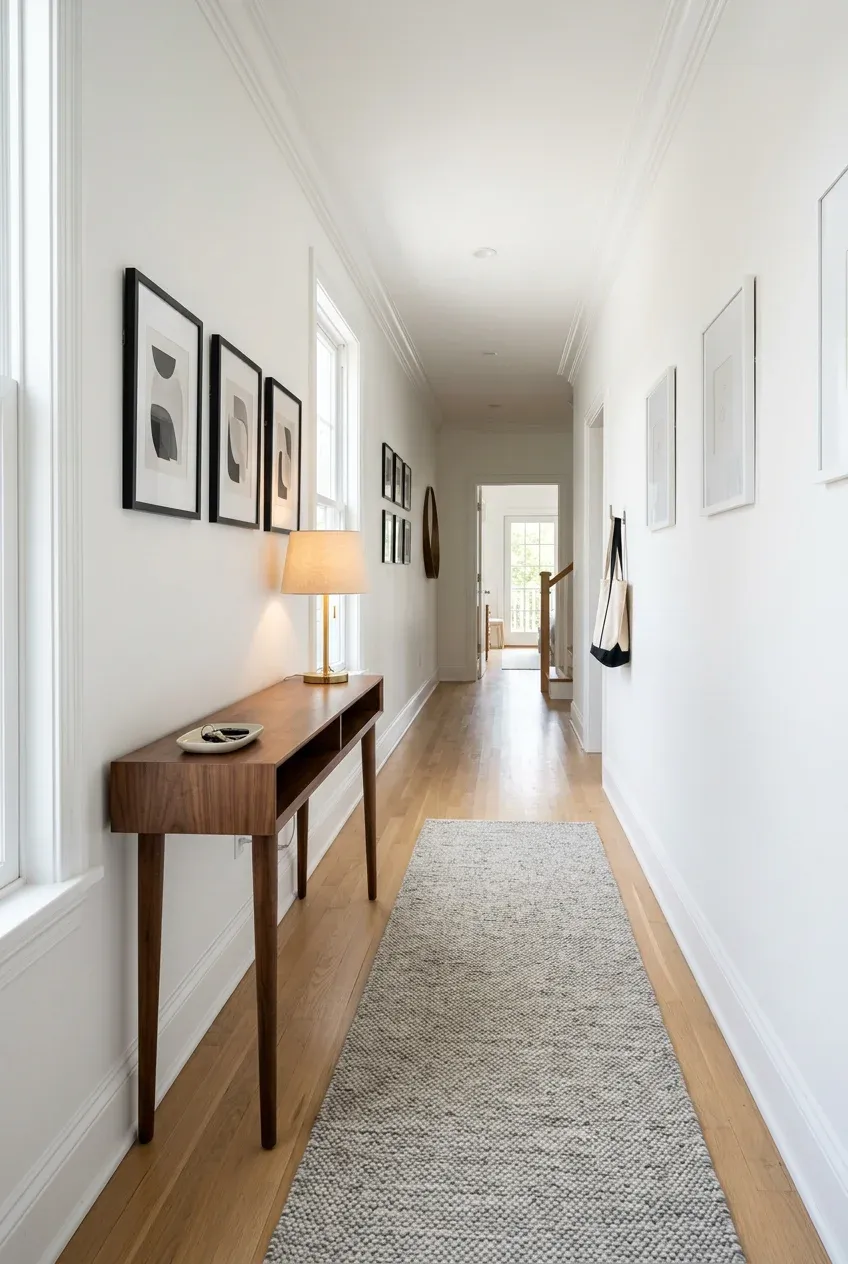
Why it works: A hallway needs a drop spot for keys and shoes, but only a wide hallway can take furniture.
Borrow Light From Nearby Rooms
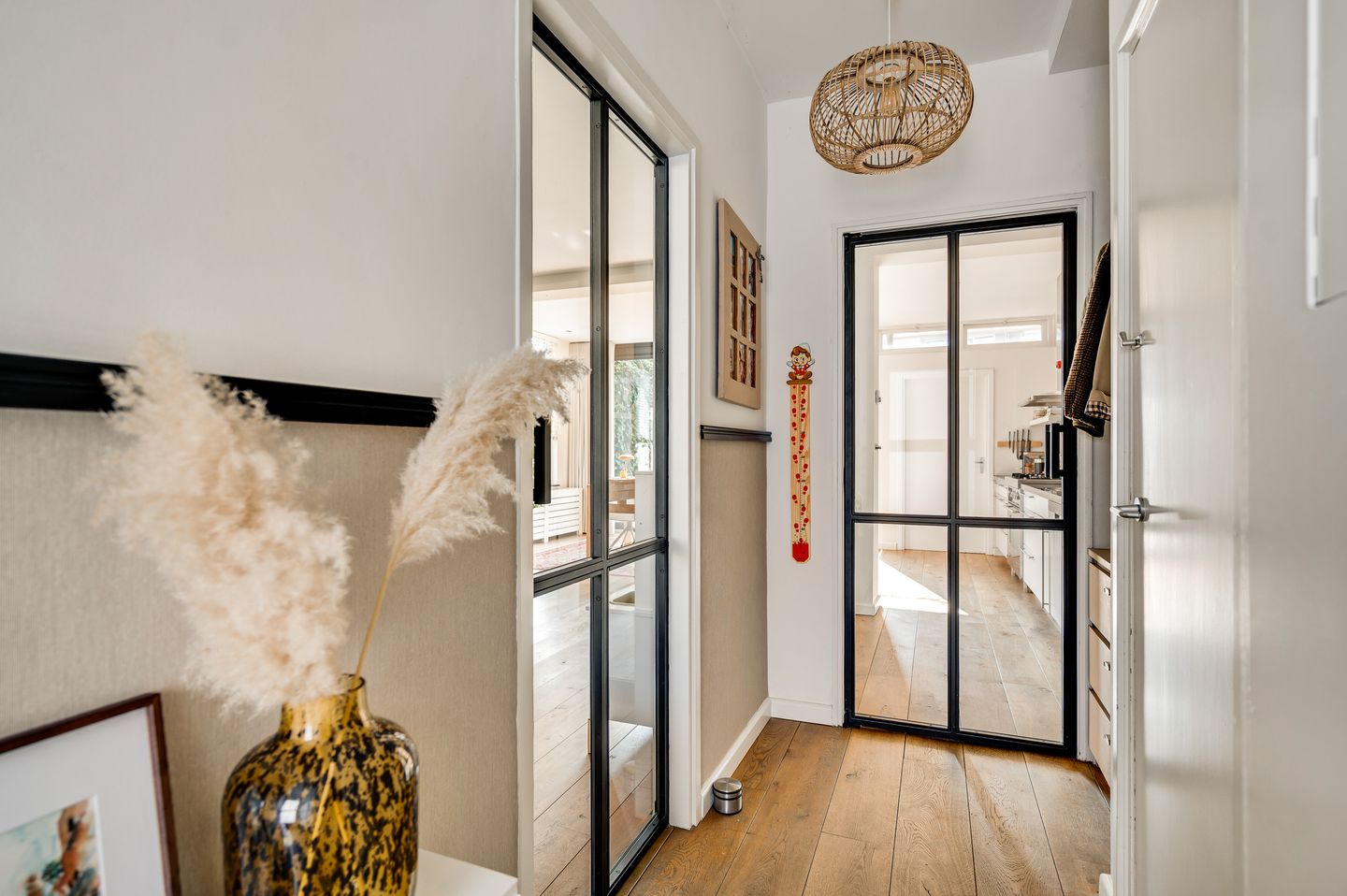
Why it works: A dark hallway usually has bright rooms around it. Letting their light in is free.
Give the Far End a Lit Focal Point

Why it works: A bright spot at the end pulls the eye forward, so the hallway feels like a place to walk to and not a tunnel.
Narrow Hallway FAQ
How do you make a narrow hallway look wider?
Use light, reflective paint, a large mirror opposite a light source, layered lighting, a slim runner and flush wall decor, and keep everything clear of the walking path.
How do you brighten a dark hallway with no windows?
Add sconces or a bright ceiling fixture with warm bulbs, paint the walls and ceiling light, add a mirror and borrow light from nearby rooms with open or glass-panel doors.
What color is best for a narrow dark hallway?
A light, warm neutral with an LRV of about 60 or more, in eggshell or satin, with the ceiling and trim in the same color.
Where should you put a mirror in a narrow hallway?
Where it reflects a light source such as a window or a sconce, not a dark door. A tall mirror about 60 to 72 inches high works well, and it should be secured to studs.
Can you put a console table in a narrow hallway?
Only in a hallway about 48 inches or wider. In narrower halls, use hooks, a mirror and a slim ledge.
What size runner is best for a narrow hallway?
Leave about 3 to 6 inches of bare floor on each side, so about 24 to 30 inches wide for a 36 inch hallway, in low pile with a non-slip pad.
How far apart should hallway sconces be?
About 6 to 8 feet apart with the center at about 60 to 66 inches high, using slim fixtures.
What should you avoid in a narrow hallway?
Deep shelves, bulky furniture, dark walls with poor lighting, thick rugs, floor clutter and anything that blocks the path or exits.
A Simple Takeaway
Measure the width first, keep wall decor within its depth budget and bring in as much light as you can with paint, sconces and a mirror. A hallway that is bright and clear feels wider even when the walls have not moved.