
8 Renter-Friendly Headboard Ideas That Need No Drilling
Removable, deposit-safe headboards with exact sizes, weight limits and wall-protection tips for apartments and rentals.

You do not need to drill into your walls to get a bedroom that looks finished. The best renter-friendly headboard ideas lean, clip to the bed frame, hang from removable hooks or stand on their own, so the wall comes out exactly as you found it. Pick the right one for your wall and your bed, and you can add height, color and texture behind your pillows in an afternoon.
Below are eight no-drill headboard ideas, the sizes and weight limits that matter for each, a chart to match an idea to your situation, and a short checklist for protecting your security deposit. Measure your mattress width before you start.
Renter-Friendly Headboard Ideas That Need No Drilling: Quick Answer
- Lean a large wood panel or framed art behind the bed
- Attach a freestanding headboard to the bed frame
- Hang a tapestry, rug or quilt with removable hooks
- Use a tension-rod curtain headboard in an alcove
- Stand a folding screen behind the bed
- Apply peel-and-stick wallpaper in a headboard shape
- Use a low freestanding bookcase
- Make a padded fabric panel
The one rule: the headboard should be at least as wide as your mattress (60 inches for a queen), and anything stuck to a wall must stay well under the adhesive's weight rating.
Headboard Size Basics
Every idea below works better when the headboard is sized to the bed. Start with these standard mattress widths.
- Twin: 38 inches wide
- Full: 54 inches wide
- Queen: 60 inches wide
- King: 76 inches wide
Idea 1: Lean a Large Wood Panel or Framed Art Behind the Bed

What it looks like: A wide wood panel, slatted board or oversized framed artwork stands on the floor behind the bed and leans against the wall.
Why it works: There is no contact beyond resting on the wall, so nothing can damage it. It also gives you a real headboard shape and a place to add color or texture for very little effort.
Idea 2: Attach a Freestanding Headboard to the Bed Frame
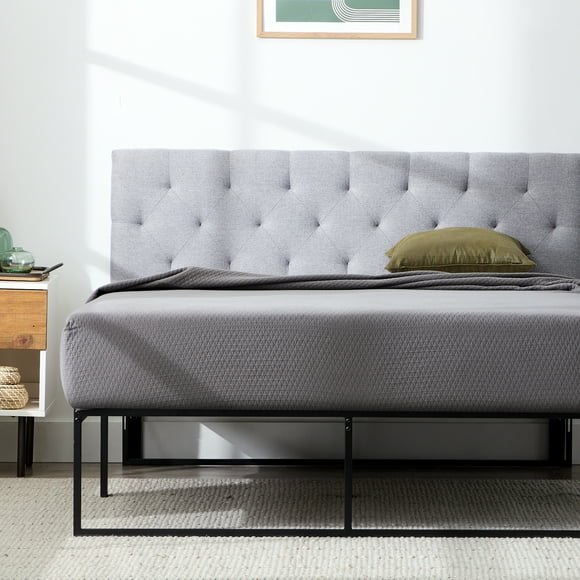
What it looks like: A regular headboard that bolts to the bed frame, or stands on its own legs, with nothing fixed to the wall.
Why it works: It is the sturdiest no-drill option and looks identical to a standard headboard. The weight sits on the floor and the frame, not on your wall.
Idea 3: Hang a Tapestry, Rug or Quilt With Removable Hooks

What it looks like: A tapestry, woven blanket, quilt or lightweight rug hangs from a wooden dowel or rod above the bed, supported by removable adhesive hooks.
Why it works: It is one of the cheapest ways to add a big, soft focal point, and you can swap it for a new look any time.
Idea 4: Use a Tension-Rod Curtain Headboard in an Alcove

What it looks like: A heavy-duty tension rod spans the alcove or corner behind the bed, with a curtain panel or two hanging behind the pillows.
Why it works: The rod holds itself in place through pressure between two walls, so no screws or adhesive are needed. Curtains soften the wall and add color, and they are easy to wash.
Idea 5: Stand a Folding Screen Behind the Bed
What it looks like: A three or four-panel folding screen stands behind the bed, partly unfolded in a gentle zigzag so it stays upright.
Why it works: A screen gives you a wide, tall backdrop in wood, rattan, fabric or caned panels, and it folds flat when you move.
Idea 6: Apply Peel-and-Stick Wallpaper in a Headboard Shape
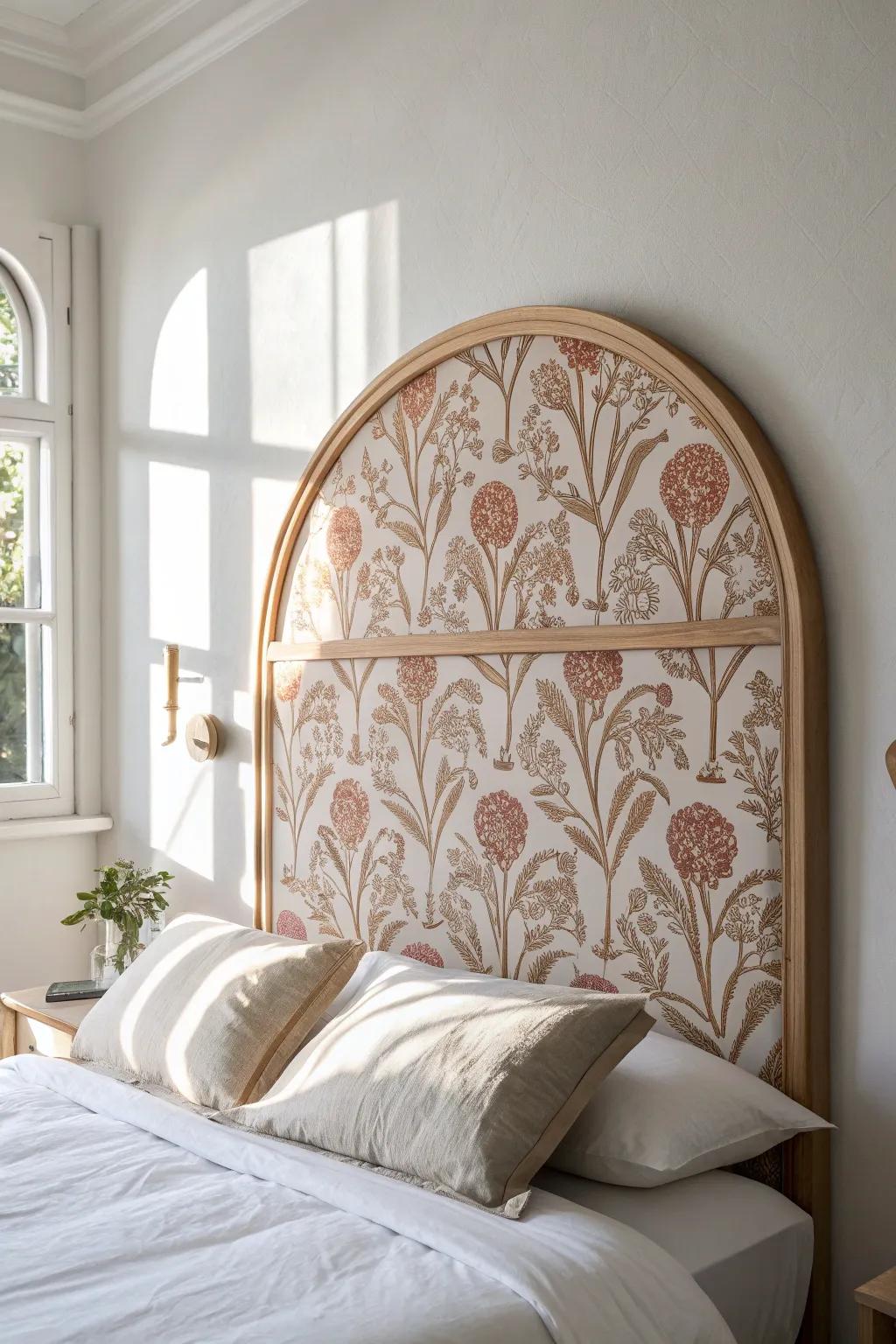
What it looks like: A panel of removable wallpaper or a large wall decal is cut into a rectangle, arch or curved shape and stuck behind the bed.
Why it works: It gives a bold, built-in look with no hardware, and the pattern defines the sleeping area.
Idea 7: Use a Low Freestanding Bookcase as a Headboard

What it looks like: A low, wide open bookcase sits behind the bed, with shelves on the back side of the headboard area for books, a lamp and a few decor pieces.
Why it works: It adds storage and a nightstand surface without taking up floor space, which is useful in small rentals.
Idea 8: Make a Padded Fabric Panel
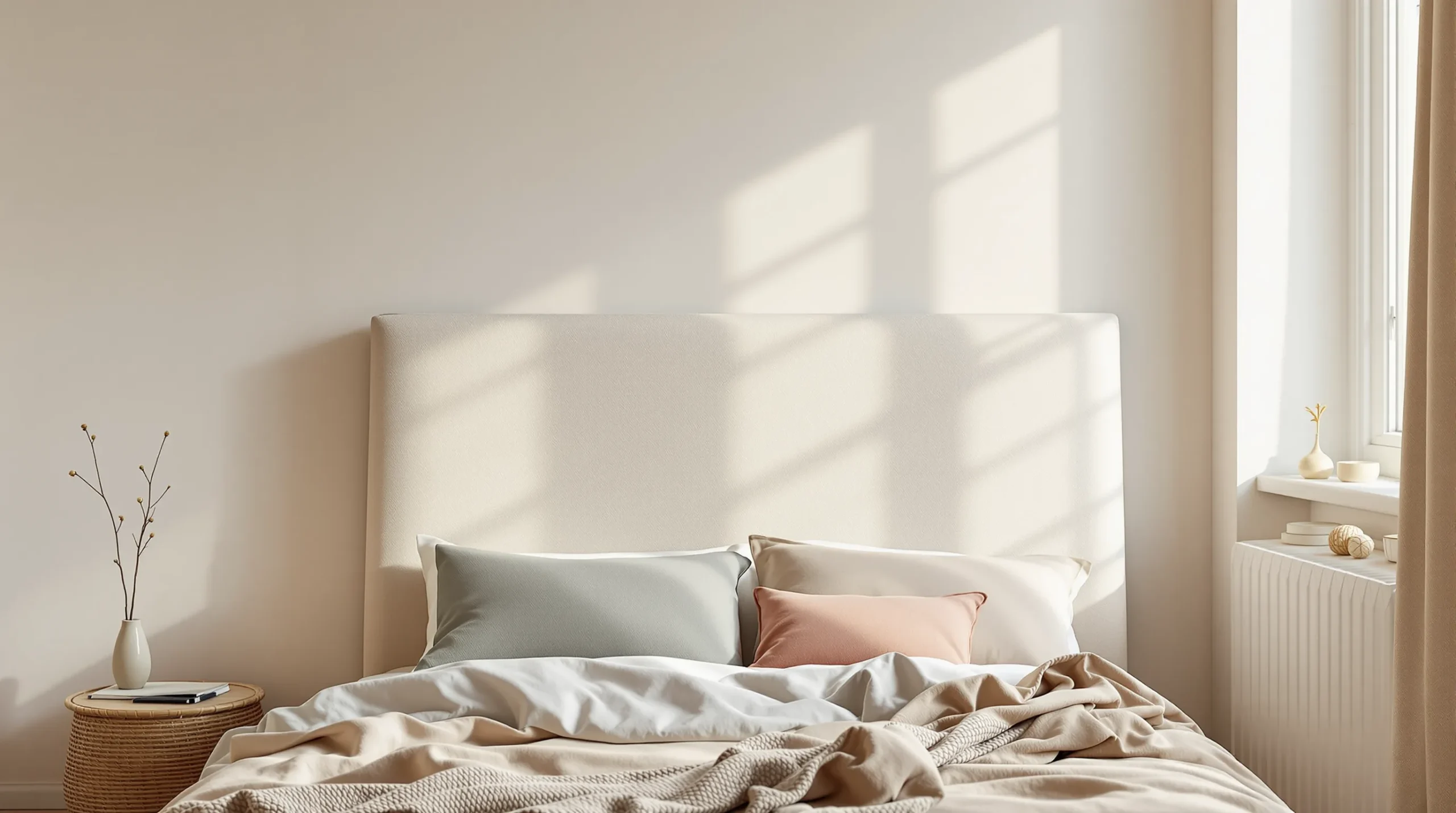
What it looks like: A board wrapped in foam batting and fabric, leaned behind the bed or attached to the bed frame with brackets.
Why it works: It gives you the soft, upholstered look of a designer headboard in any color or pattern, for much less, and with no wall contact.
How to Protect Your Security Deposit
No-drill does not always mean no-risk. These steps keep your wall, and your deposit, safe.
- Photograph the walls first. Take dated photos before you start, so you have a record of the condition.
- Read your lease. Some leases restrict adhesives, wallpaper or paint, even removable ones.
- Test a hidden spot. Try any adhesive hook or wallpaper behind a piece of furniture for a few days.
- Stay under the weight rating. Follow the package limits, and leave a safety margin.
- Remove adhesive slowly. Pull strips parallel to the wall, and use gentle warmth on stubborn wallpaper.
- Use felt pads. Add them to every edge that touches the wall or floor.
Which No-Drill Headboard Fits Your Situation?
Use this table to match your wall and bed to the right idea.
| Your situation | Best ideas | Watch out |
|---|---|---|
| Textured walls | 1, 2, 5, 7, 8 | Adhesive holds poorly |
| Smooth, cured painted walls | 3, 6 plus all freestanding ideas | Test a hidden patch first |
| Alcove or two facing walls | 4 | Rod weight rating |
| Frame with headboard bolt holes | 2, 8 | Check hole spacing |
| Platform bed without bolt holes | 1, 5, 8 | Use felt pads, push the bed tight |
| Tightest budget | 3, 4, 6 | Lightweight materials only |
The 4 Rules for Any No-Drill Headboard
- Know your wall. Textured, wallpapered or freshly painted walls change which idea is safe.
- Match the width. The headboard should be at least as wide as the mattress.
- Respect weight ratings. Stay well under the limit on every adhesive hook or rod.
- Test and photograph first. A hidden-spot test and dated photos protect your deposit.
Renter-Friendly Headboard FAQ
What is the easiest no-drill headboard for a renter?
A large panel, framed artwork or folding screen leaned behind the bed. It needs no tools or adhesive. If your frame has bolt holes, a freestanding headboard that attaches to the frame is the sturdiest choice.
Can you hang a headboard with Command strips?
Only a lightweight one, such as a tapestry, quilt or thin padded panel, and only if the total weight stays well under the package rating. Adhesive holds best on smooth, clean, cured painted walls and poorly on textured walls or wallpaper.
How do you keep a leaning headboard from sliding or tipping?
Push the bed frame snugly against the base, add felt or rubber pads to the bottom edge, and choose a low, stable panel. Avoid heavy leaning pieces in a child's room.
Does peel-and-stick wallpaper damage rental walls?
It can. It usually comes off smooth, well-cured painted walls cleanly, but it can pull paint from flat, cheap or recently painted walls. Test a hidden patch, wait several weeks after any new paint, and peel slowly at a low angle.
How tall and wide should a headboard be?
At least as wide as the mattress: about 38 inches for a twin, 54 for a full, 60 for a queen and 76 for a king. Most headboards rise roughly 20 to 30 inches above the top of the mattress.
Can you attach a headboard to the bed frame instead of the wall?
Yes. Many frames have bolt holes or brackets, and universal brackets and extension legs exist for frames without them. Check the hole spacing before buying.
What is the cheapest no-drill headboard idea?
A tapestry, quilt or curtain hung from a rod with removable hooks is typically the lowest-cost option, followed by peel-and-stick wallpaper cut to a headboard shape.
Do I need my landlord's permission to add a headboard?
A freestanding or frame-attached headboard that does not touch the wall usually needs none. Check your lease before using adhesive hooks, peel-and-stick wallpaper or paint, since some leases restrict them.
A Simple Takeaway
Match the idea to your wall and your bed, make the headboard at least as wide as the mattress, and stay under every weight rating. A leaning panel, a frame-attached headboard or a hung tapestry can transform a rental bedroom without a single hole, and everything comes down in minutes when you move out.