
7 Small Pantry Organization Ideas That Fit More Without New Shelving
Use the shelves you already have more efficiently, with simple tools, measurements and habits that make a small pantry hold more.

Most small pantries do not have a space problem. They have an efficiency problem. Wasted air above short items, deep shelves where food disappears, and half-empty boxes take up more room than the food inside them. These small pantry organization ideas that fit more without new shelving show you how to hold more food, find it faster and keep it fresh, using only the shelves you already have.
Below are seven ideas with measurements and examples you can copy, a quick-reference chart that matches each problem with its fix, and an FAQ that answers the most common questions. Most of these changes need only containers, bins and a few inexpensive accessories, and you can finish them in one afternoon.
Small Pantry Organization Ideas That Fit More Without New Shelving: Quick Answer
- Empty, edit and set up zones
- Decant into stackable square containers
- Use shelf risers to fill wasted height
- Add turntables for corners and deep shelves
- Group items in bins with handles
- Use the back of the door and under-shelf space
- Label, rotate and reset regularly
The one rule: use the empty air above and behind your food before you buy another shelf.
Idea 1: Empty, Edit and Set Up Zones
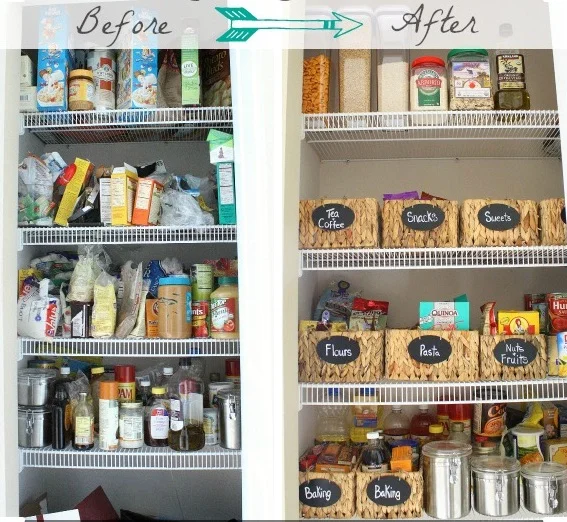
What it looks like: Duplicate boxes, expired cans, half-used bags and items nobody eats, all pushed in wherever they fit.
Why it wastes space: You cannot fit more into a pantry that is already full of things you do not need. Clutter also hides what you have, which leads to buying duplicates.
This step alone often frees up an entire shelf. Do it first, because every other idea depends on knowing exactly what you need to store.
Idea 2: Decant Into Stackable Square Containers

What it looks like: Torn bags, tilted boxes and open cereal bags taking up odd amounts of space.
Why it wastes space: Packaging is designed for shipping and display, not for efficient storage. Boxes and bags leave gaps, collapse and spill, and no two are the same size.
Keep the cooking instructions and expiry date. Cut them out of the original package and tape them to the container, or write the date on the label. Not everything needs to be decanted, so leave items in their packaging when it is already compact, such as cans and jars.
Idea 3: Use Shelf Risers to Fill Wasted Height

What it looks like: A shelf with several inches of empty air above short items like cans and spice jars.
Why it wastes space: If your shelves are spaced for tall items, anything shorter leaves empty height above it. That air is usable storage you are not using.
Risers are accessories, not new shelving. They are inexpensive, require no installation and can be moved when your needs change.
Idea 4: Add Turntables for Corners and Deep Shelves
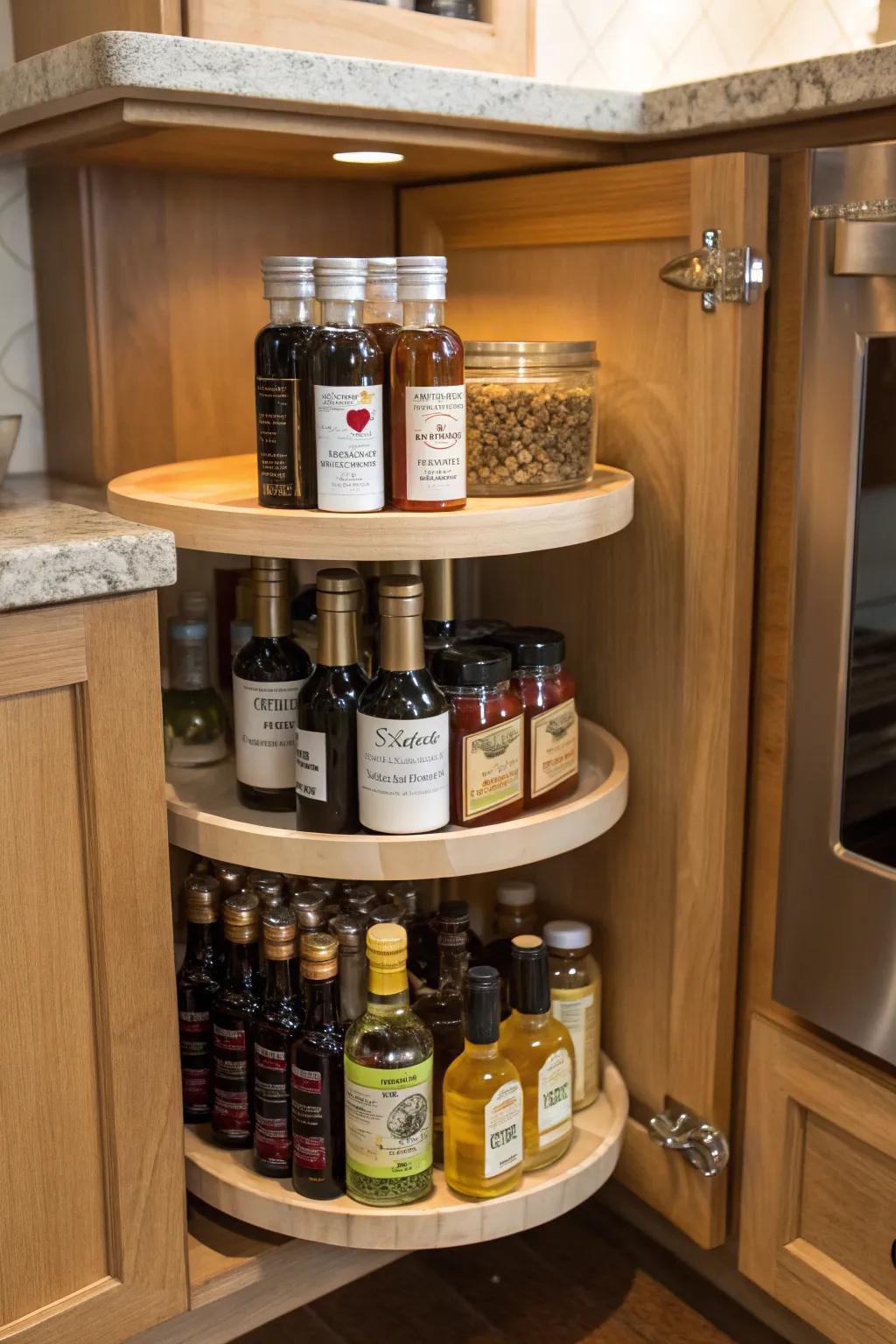
What it looks like: Jars, bottles and sauces pushed to the back of a deep shelf where you cannot see or reach them.
Why it wastes space: Deep shelves swallow items. You stop using what you cannot see, and the unused food expires.
Keep tall or heavy items in the center so the turntable stays balanced. Use a raised-edge style to stop bottles sliding off when you spin it.
Idea 5: Group Items in Bins With Handles

What it looks like: Small items such as snack bars, seasoning packets, tea bags and baking mixes scattered loose across the shelf.
Why it wastes space: Small items fall over, slide back and leave gaps. Searching for them wastes time, and loose items are easily lost behind larger ones.
For deep shelves, one long bin is better than several loose rows. It turns a deep shelf into a drawer.
Idea 6: Use the Back of the Door and Under-Shelf Space
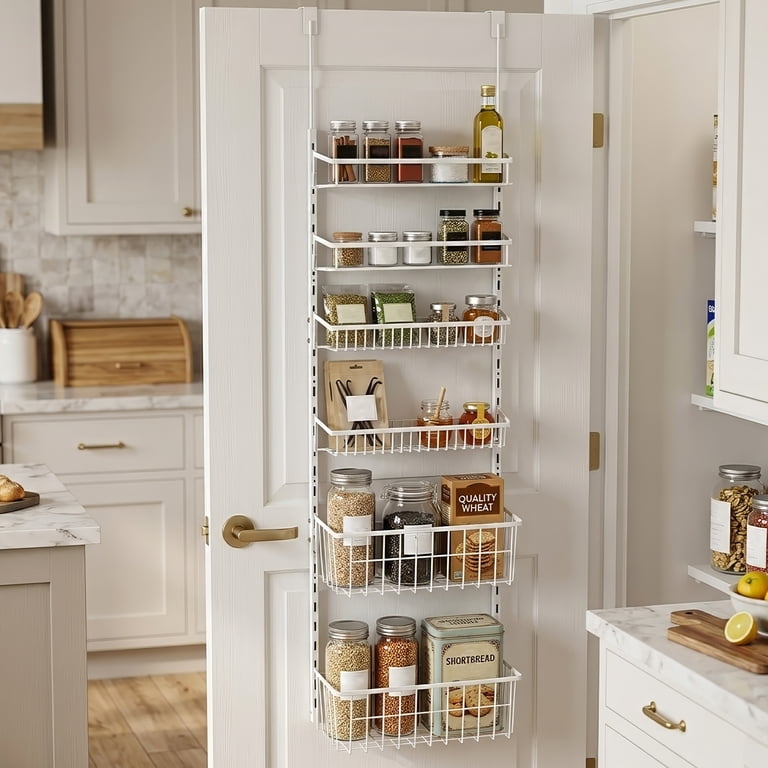
What it looks like: A blank door and empty space under each shelf.
Why it wastes space: The back of the door and the space under shelves are often the largest unused areas in a small pantry.
Keep heavier items on the shelves. Doors and clip-on baskets work best with light items that are used often.
Idea 7: Label, Rotate and Reset Regularly

What it looks like: A pantry that looks great on day one and slowly returns to chaos, with new groceries pushed in front of older ones.
Why it wastes space: Without a system, food gets lost and expires, which wastes both space and money. A pantry only stays organized if the system is simple enough to maintain.
Store the pantry in a cool, dry place away from the stove, dishwasher and sunny windows. Heat and humidity shorten the shelf life of dry food. Whole-grain flours and nuts spoil sooner than refined products because of their natural oils, so keep them cool or refrigerated.
Pantry Problem and Fix Chart (Quick Reference)
Use this chart to match what is wasting space in your pantry with the simplest fix.
| Problem | Best fix | Typical measurement |
|---|---|---|
| Empty air above short items | Tiered riser or stackable shelf | Leave 1 to 2 inches of headroom |
| Items lost at the back of deep shelves | Bins with handles or a turntable | Bin 1 inch shallower than the shelf |
| Bulky bags and boxes | Square airtight containers | Match container height to shelf clearance |
| Cans scattered or stacked | Tiered riser or can dispenser | One or two rows, labels facing out |
| Jars, oils and sauces in corners | Turntable | 10 to 12 inches for most shelves |
| Small packets and snacks | Labeled bins | Group by category |
| Wasted door and under-shelf space | Over-door rack, clip-on baskets | Check door clearance first |
| Expired and forgotten food | First in, first out and regular resets | Check every few months |
The 3 Rules for a Small Pantry
- Edit first. Store only what you use and eat.
- Use height and depth. Fill the empty air above and the empty space behind your food.
- Keep it simple. Labels and one routine keep the system working.
Small Pantry Organization FAQ
How do you fit more in a small pantry without adding shelves?
Empty and edit the pantry, decant staples into stackable square containers, add shelf risers to use the empty air above items, place turntables in corners and deep shelves, hang storage on the back of the door, and group items in bins so nothing gets lost at the back.
How do you organize a small pantry step by step?
Take everything out, throw away expired items, wipe the shelves and sort the rest into categories. Decide where each category lives, put heavy and most-used items at an easy height, add containers, risers and bins, and label everything.
What is the best way to organize a pantry with deep shelves?
Use bins or trays with handles so you can pull a whole group forward, and add turntables for jars and bottles. Keep tall items at the back and shorter items in front, and avoid stacking multiple rows of loose items.
Is it worth decanting food into containers?
For staples you use often, yes. Square or rectangular airtight containers waste less space than bags and boxes, stack neatly and show how much is left. Keep the expiry date and cooking instructions with the container.
How do you organize canned goods in a small pantry?
Use a tiered riser or can dispenser so every label is visible, keep older cans in front so they are used first, and group them by type such as tomatoes, beans, soups and vegetables.
How should you arrange items in a pantry?
Group items by category, keep the most-used items between waist and shoulder height, put heavy items on the lowest shelf and light or rarely used items on the highest.
How often should you clean out a pantry?
Check expiry dates and reset every few months, and do a full clean-out once or twice a year. Wipe the shelves, discard anything expired, stale or showing signs of pests, and donate unopened food you will not use.
How do you keep food fresh in a pantry?
Store food in a cool, dry place away from the stove, dishwasher and sunny windows. Keep opened dry goods in airtight containers, use older items first, and keep whole-grain flours and nuts cool or refrigerated.
A Simple Takeaway
A small pantry usually has room to spare. It is hidden in the air above your cans, the depth behind your jars and the back of the door. Edit what you keep, use containers and risers to fill the empty space, and keep a simple routine. You will fit more and find it faster, without installing a single shelf.