7 Self-Cleaning Litter Box Placement Ideas for Small Homes
Your cat picks the spot, you pick the room. Find a place that is quiet, reachable, ventilated and close to an outlet.
In a small home the litter box is the piece of furniture nobody wants to look at, and a self-cleaning one is bigger, louder and needs power. Most placement lists tell you to "put it somewhere quiet" and stop there, which is hard when the quiet room is also the bathroom with one shared door. The better question is which trade-off you can live with: noise, airflow, access or visibility.
This guide starts with how a cat judges a spot, then gives you a spot finder, a clearance calculator, seven placements with five-dot ratings and a two-week plan for moving the box without upsetting your cat. For the rest of the cat-friendly home, see our pet-friendly decor guide and our catio guide.
Read this first
Always follow your unit's manual for clearances, minimum cat size and damp or enclosed locations. A sudden change in litter box habits, such as going outside the box, straining or crying while urinating, can mean a health problem. A cat straining to urinate with little or no urine can be an emergency, so call a vet right away.
Sponsored Content
Sponsored Content
How a Cat Judges a Spot
Cats are not picky because they are difficult. They are picking a place where they feel safe for a vulnerable moment. Five things matter most, and every placement below is rated on them.
Quiet: little foot traffic, and no machine noise near the box. A self-cleaning cycle adds its own noise.
Cat access: reachable at all hours, with no closed doors and no stairs for a kitten or an older cat.
Airflow: a ventilated spot, not a sealed cupboard, so odor and humidity do not build up.
Power and cord: an outlet within reach of the supplied cord, with the cord out of the way and out of chewing range.
Out of the way: not in your main path, and not beside food, water or the cat's bed.
Leave room around the box, keep the cord short and tidy, and let the cat see who is coming.
Free Spot Finder: Which Placement Fits Your Home?
Four answers rank the seven placements for your home. It is a starting point built on our own ratings, so read the placement cards before you decide.
Litter box spot finder
Free Clearance Calculator: Will It Fit?
Measure in inches. For the cat's length, measure from the nose to the base of the tail. For the box, use the outside size from the manual, with the lid or dome open for height.
Litter box clearance calculator
The 1.5 times length guide, the 18, 6 and 4 inch clearances and the 4 inch step guide are rules of thumb, not standards. Use 0 for a space you have not measured yet.
Sponsored Content
The Seven Placements
Ratings run from 1 to 5 dots, where 5 is best. They are our own judgment for a typical small home, not test results, and your home can score differently.
1
Bathroom Corner
Quiet, but damp
Quiet●●●○○
Cat access●●●●○
Airflow●●●●○
Power and cord●●○○○
Out of the way●●●●○
The catchSplashes, steam and a door that gets shut. Bathroom outlets sit near water, and the cord can end up in the wrong place.
The fixKeep the box well away from the tub, shower and sink. Prop the door open or ask about a cat flap, and run the fan. Use an outlet that suits a bathroom, and if you are not sure, ask a qualified electrician.
ClearanceCheck the manual for any limit on damp rooms, and keep the cord off the floor where people step.
2
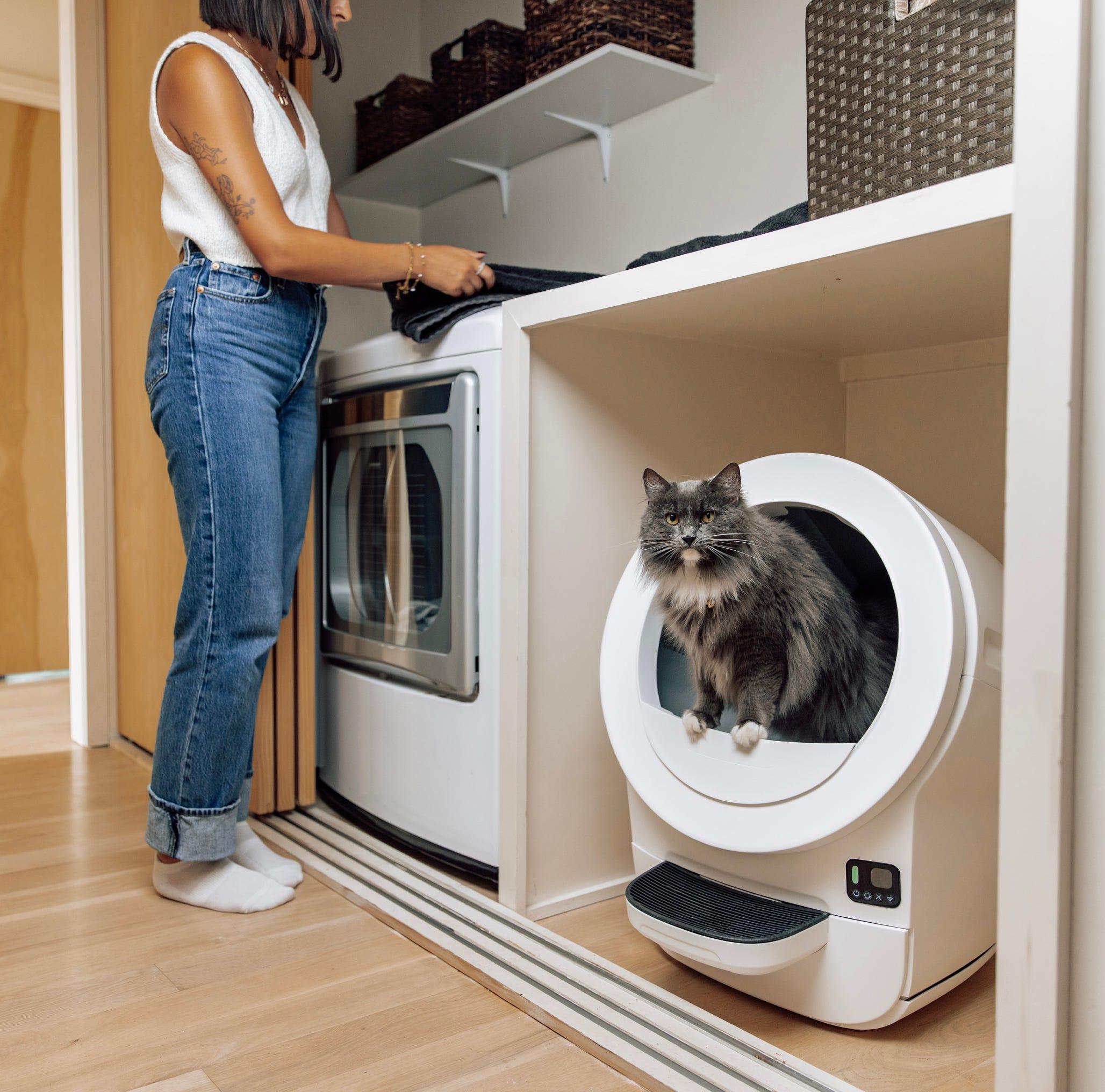
Laundry Nook
Power is easy, noise is not
Quiet●●○○○
Cat access●●●○○
Airflow●●●○○
Power and cord●●●●○
Out of the way●●●●○
The catchSpin cycles and the dryer's thump startle cats, and the heat and lint from a dryer are not good beside a litter box.
The fixPut the box at the far end, away from the dryer exhaust and heat. Run a spin cycle with your ear at cat height before you commit, and keep detergent, pods and cleaners out of the cat's reach.
ClearanceKeep the box out of the washer's door swing and out of the laundry basket route.
3
Hall Closet With the Door Open
Hidden, but stuffy
Quiet●●●●○
Cat access●●○○○
Airflow●●○○○
Power and cord●●○○○
Out of the way●●●●●
The catchClosets rarely have outlets or airflow, and a door that swings shut locks the cat out. A cord run under the door gets pinched.
The fixEmpty the closet, take the door off or fix it open, and only use it if an outlet is already inside. Never run the cord through a door gap. Ask your landlord before removing a door or fitting a cat flap.
ClearanceCheck shelves above, because a lid or dome needs headroom to open.
4
Screened Living-Area Corner
Easy access, visible
Quiet●●●○○
Cat access●●●●●
Airflow●●●●●
Power and cord●●●○○
Out of the way●●○○○
The catchIt is in view, odor drifts into the room, and a cycle can run while you watch TV.
The fixUse a low screen or a pet-safe plant a hand's width back from the box, leaving the front open and every sensor and lid clear. Keep it away from a speaker and the cat's bed. Check any plant against a pet-safe list.
ClearanceKeep the screen at least 6 inches from the box so it does not block airflow.
5
Cabinet Enclosure
Tidy, if it breathes
Quiet●●●●○
Cat access●●●○○
Airflow●●○○○
Power and cord●●●○○
Out of the way●●●●●
The catchHeat, trapped odor and blocked sensors. Some manuals say not to enclose the unit at all, and the lid needs space to open.
The fixChoose an enclosure sized for your box, with ventilation on at least two sides, a protected hole for the cord and an open or swing-both-ways entry. Measure the lid-open height first and use the calculator.
ClearanceDo not use a cabinet that makes the cat jump or squeeze in, or one that closes completely.
6
Hallway or Under-Stairs Alcove
Space you already lose
Quiet●●○○○
Cat access●●●●○
Airflow●●●●○
Power and cord●●●○○
Out of the way●●●○○
The catchFoot traffic, low headroom for a lid, and a box that people trip over in the dark.
The fixPick the deepest part of the alcove, use a night light, and check the headroom against the lid-open height. Keep storage out of the cat's route.
ClearanceDo not put a box where a door swings against it or where an elderly person walks at night.
7
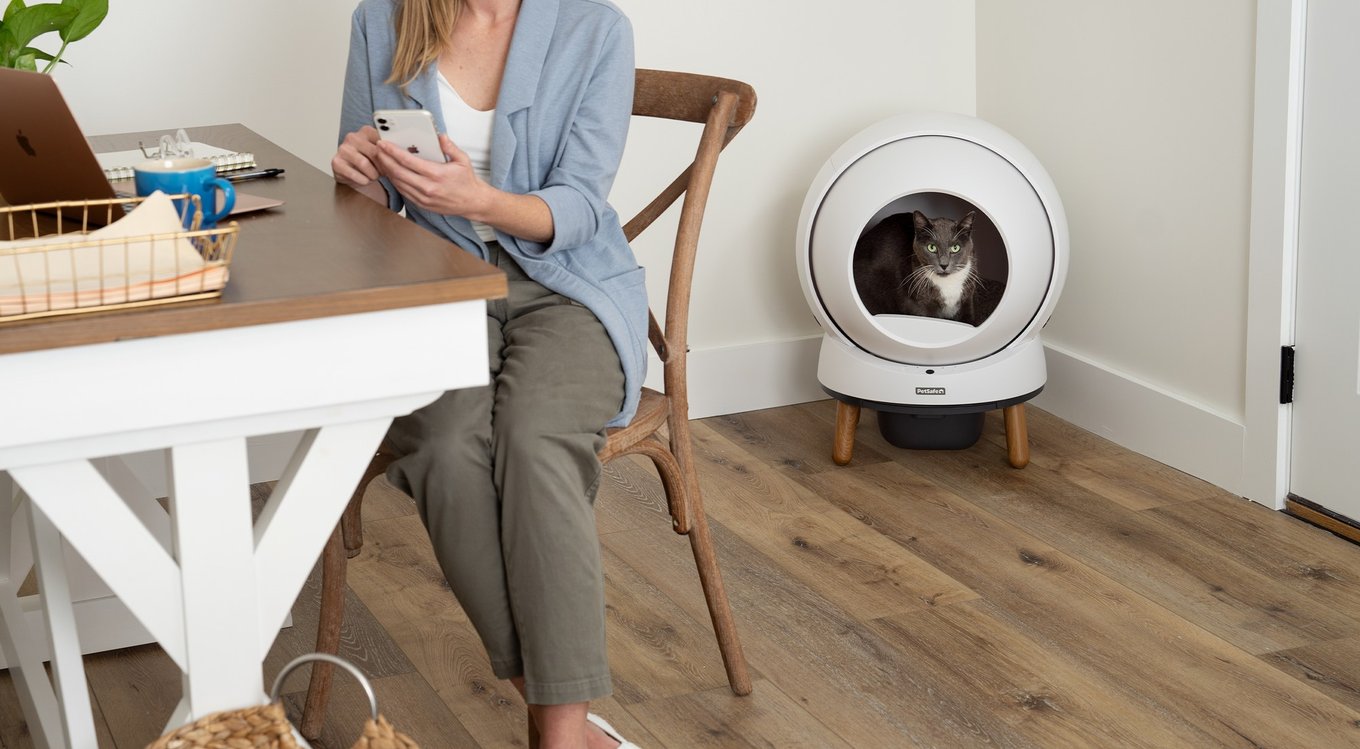
Spare Room or Office Corner
The calmest option
Quiet●●●●●
Cat access●●●○○
Airflow●●●●○
Power and cord●●●●○
Out of the way●●●●○
The catchThe cat has to travel there, and a shut door ends the plan. It is also the room you might want back.
The fixKeep the door open or fit a latch that holds it open, keep the box away from the desk and chair legs, and add a second box elsewhere if the room is far from where the cat lives.
ClearanceKeep food, water and the cat's bed out of the room.
Pick in 30 Seconds
Your situation
Start with
Check first
Studio, no spare room
4, 6
Noise at your sleeping area
One bedroom with a hallway
6, 4
Foot traffic and lid headroom
Spare room or office
7
Door stays open
Skittish or noise-shy cat
7, 3, 5
Noise at cat height
Kitten or senior cat
4, 6, 7
No stairs, low entry step
Light sleeper in the home
7, 2 (far from the bedroom)
Cycle noise at night
Renter
4, 6, 7
No removed doors or new holes without permission
Only the bathroom or laundry is free
1, 2
Wet areas, spin noise, door open
Wants it hidden
5, 3
Airflow, sensors and the manual
More than one cat
Two spots from different rows
A second box in another place
No outlet near any option
Ask an electrician
No long extension cords
Sponsored Content
The Two-Week Move Plan
A new box in a new place is two changes at once, so give the cat time. This is a common approach, so follow the manufacturer's guidance for introducing the unit.
Days 1 to 3: set it up, switched off. Put the unit in the new spot with its automatic cycle off or disabled, filled as the manual says, and leave the old box where it is.
Days 4 to 7: watch and make it a normal box. If your cat uses the new box, keep it that way. If not, leave the old box in place and try a different spot.
Days 8 to 10: turn on the cycle. Start when your cat is not nearby. Watch from a distance for startle or avoidance.
Days 11 to 14: remove the old box gradually. Move it a little at a time, and keep a second box available if your cat has any hesitation.
Afterwards: keep watching. Look for going outside the box, scratching at the walls or skipping meals, and ask your vet if it continues.
Mistakes That Make Cats Refuse
Next to food or water. Many cats do not want to eat where they go.
Beside the washer, dryer or a vent. A sudden bang or blast of air ends the box's trust.
A door that closes. A cat locked out has one option.
An unventilated cupboard. It traps odor and heat, and some units do not allow it.
Blocked sensors or lid. A box that cannot open or sense properly fails.
Cord in the walkway. It is a trip hazard and a chewing risk.
Removing the old box the same day. It leaves a cat with no known option.
A dark, cornered spot. A cat that cannot see who is coming may avoid it.
One box for several cats. A machine counts as one box.
Ignoring a sudden change. A habit change can be a health sign, so ask your vet.
Four Tests Before You Commit
All four cost nothing.
The cat-height listen test. Put your ear at cat height in the proposed spot while the cycle runs, or run a loud appliance nearby. If it makes you wince, a sensitive cat will too.
The traffic tally. For one day, mark every time a person or pet walks past the spot. A busy count means a less comfortable spot.
The cardboard footprint. Cut a cardboard box to the unit's size and set it there with the clearances taped out. Open every door and drawer nearby and walk past with a laundry basket.
The sit-and-sniff test. Sit near the spot for a few minutes in the evening. If air is stale, the spot has poor airflow.
Safety Limits
Before you plug in, place or move anything
Follow the manual for minimum cat weight and age, clearances and where the unit may be used. Small or young cats may not trigger sensors reliably, so supervise at first and keep moving parts clear.
Unplug the unit before cleaning or reaching into it, and keep fingers, paws and tails away from moving parts.
Keep the box away from water, and use an outlet suited to its location. Do not use long extension cords or run cords under rugs, and keep cords out of chewing reach. If there is no suitable outlet, ask a qualified electrician.
Keep the unit away from radiators, dryer exhaust and other heat, and do not block its vents.
Clean with products the manufacturer allows, ventilate and keep cleaners out of the cat's and children's reach.
Wash your hands after handling litter and waste. If anyone is pregnant or has a weakened immune system, ask a doctor about handling litter.
Dispose of waste as local rules require. Do not flush litter or waste unless your product and your area allow it.
Keep children away from moving parts and hatches, and do not let them play in the box.
Check any plant used as a screen against a trusted pet-safe list such as the ASPCA.
A cat that strains to urinate, cries or produces little or no urine needs a vet right away.
Renters: get permission before removing a door, fitting a cat flap or drilling, and photograph the area first.
Litter Box Placement FAQ
Where is the best place to put a self-cleaning litter box in a small home?
Usually a quiet, low-traffic spot the cat can reach at any time, away from food and water, with good airflow and an outlet within reach of the cord. In a small home that is often a spare room or office corner, a hallway alcove or a screened corner of the living area.
How much space does a self-cleaning litter box need around it?
It varies by model, so follow the manual first. As a rule of thumb, leave about 18 inches in front, about 6 inches on each side, about 4 inches behind and enough height for the lid or dome to open with a few inches to spare. The calculator applies those numbers to your measurements.
Can you put a self-cleaning litter box in the bathroom?
Often yes, with care. Keep it well away from the tub, shower and sink, use an outlet suited to a bathroom, and keep the door open or give the cat another way in. If you are unsure about the outlet, ask a qualified electrician and check the manual.
Should a litter box be near the cat's food and water?
Usually not. Many cats prefer to eat and use the box in separate places, so keep the box away from the bowls. In a tiny home, add as much distance and as many visual breaks as you can.
Can you hide a self-cleaning litter box in a cabinet or closet?
Sometimes. Leave room for the lid to open, keep sensors and moving parts clear, allow airflow on at least two sides, protect the cord and make sure the cat can always get in. Some manuals say not to enclose the unit, so check yours.
Is the noise of a self-cleaning litter box a problem for cats?
It can be. Some cats are startled by the motor or moving drum. Place the box away from where your cat sleeps and eats, test the sound at cat height and introduce it gradually. If your cat avoids it, move it and ask your vet if the problem continues.
How many litter boxes do I need in a small home?
A common guideline is one per cat plus one extra, in different spots. A self-cleaning unit counts as one box, so keep a second box available in a multi-cat home.
Does a self-cleaning litter box need an outlet, and can I use an extension cord?
Most need mains power through the supplied adapter. Place the box where the cord reaches an outlet without crossing a walkway, avoid long extension cords, never run a cord under a rug and keep it out of chewing range. If there is no outlet nearby, ask a qualified electrician.
A Simple Takeaway
Start with the cat, not the cupboard. Pick a quiet, reachable, ventilated spot away from food, make sure the cord reaches an outlet safely and measure the clearances. Move the box slowly, keep a second box available and ask your vet about any sudden change. A self-cleaning box works when your cat accepts the place you chose.