
9 Rental Bathroom Updates That Hide Ugly Tile Without Replacing It
Don't start with the prettiest cover-up. Start with what your lease allows, and let the planner sort the nine ideas from fully removable to permanent.
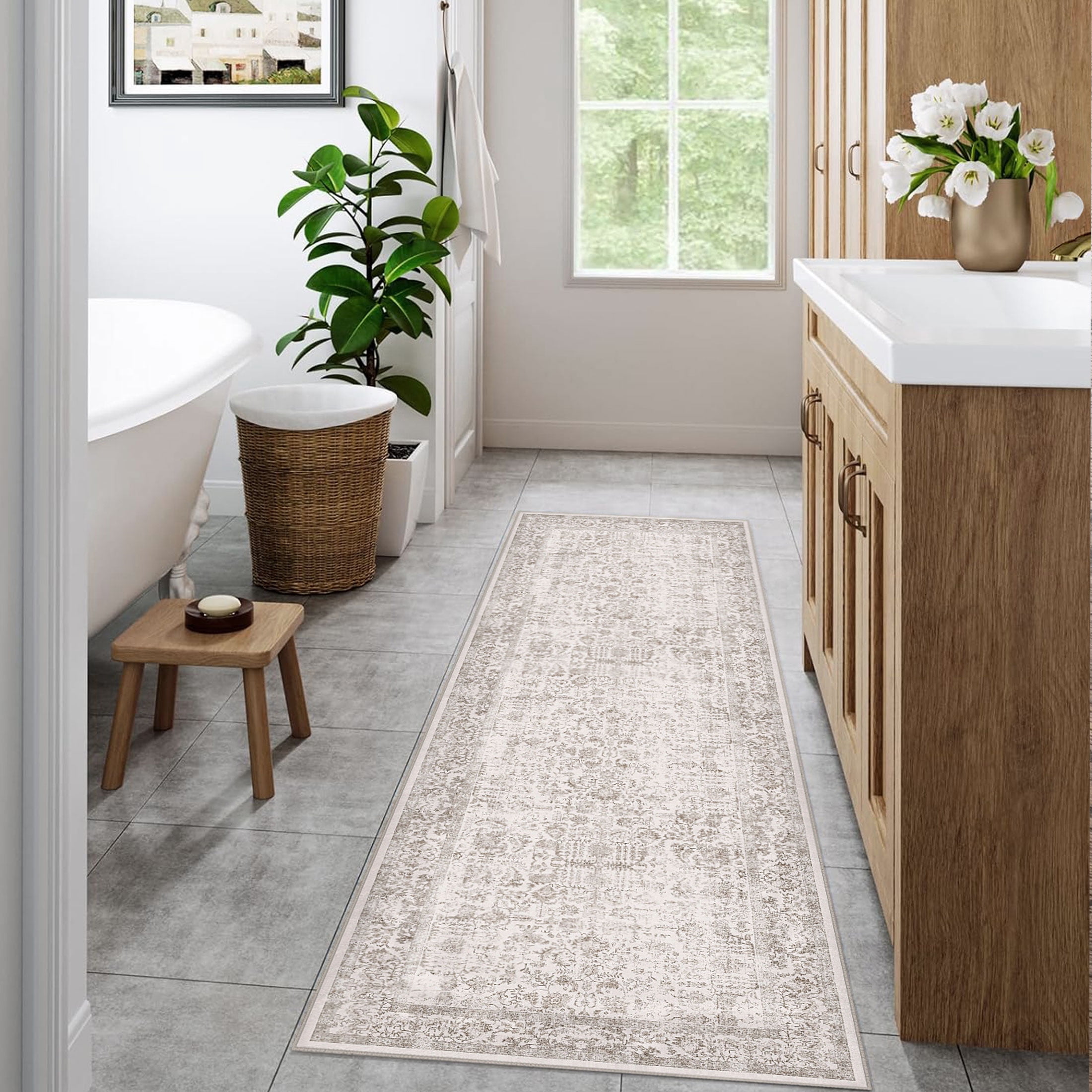
You cannot rip out the tile in a rental, and most lists of ways to hide ugly bathroom tile ignore that. They show a painted floor or a full wall of decals and leave you to find out later what your lease says. The useful question is not "which cover-up looks best?" but "which cover-up can I undo?"
This guide gives you nine ideas sorted into three reversibility tiers, a planner that turns your measurements into a tile count and a shortlist, an undertone matcher for dated tile colors, and four tests you can run before you buy.
Hiding Ugly Bathroom Tile in a Rental: Quick Answer
Sort by what you may do, then by what is ugly:
- No permission, ugly floor: ideas 1 and 3.
- No permission, ugly walls: ideas 5, 8 and 9.
- Adhesive allowed after a test, ugly floor: idea 2, after filling the grout lines.
- Adhesive allowed after a test, ugly walls: idea 4.
- Tile is fine but the grout looks dirty: idea 6.
- Written permission and a long stay: idea 7.
- Cracked, loose or damp: do not cover it. Tell your landlord first.
All nine ideas: 1 washable rug or runner, 2 peel and stick floor tile, 3 loose-lay or grip-backed floor covering, 4 tile decals or peel and stick wall tile, 5 leaning mirror or panel, 6 grout pen or paint, 7 tile paint, 8 undertone palette and warm light, 9 swap small fixtures and keep the originals.
The numbers to remember: grout lines wider than about 1/8 inch show through thin vinyl, bulbs of about 2700K with a CRI of 90 or higher flatter dated tile, and anything that sticks or paints needs a test and written permission.
Free Tile Cover-Up Planner: What to Buy and What to Try
Measure in feet and inches as labeled. For the grout gap, hold a ruler or a drill bit across the widest grout line on the floor. For wall area, multiply the width by the height of the wall you want to cover and subtract windows and fixtures.
Rental tile cover-up planner
The Numbers and the Reversibility Ladder
- Waste: buy about 10 percent extra tile for a straight layout. The planner uses this.
- Grout gap: thin vinyl copies what lies beneath it. Lines wider than about 1/8 inch should be filled and smoothed, and lines wider than about 1/4 inch usually need an underlayment or a different idea.
- Light: about 2700K is warm white, and a CRI of 90 or higher shows colors more truthfully. Cool, low-CRI bulbs make dated tile look flat or sickly.
- Permission: anything that sticks, paints or fills grout needs a test on a hidden spot and written permission.
Idea 1: Washable Rug or Runner
Tier A · removable, no adhesive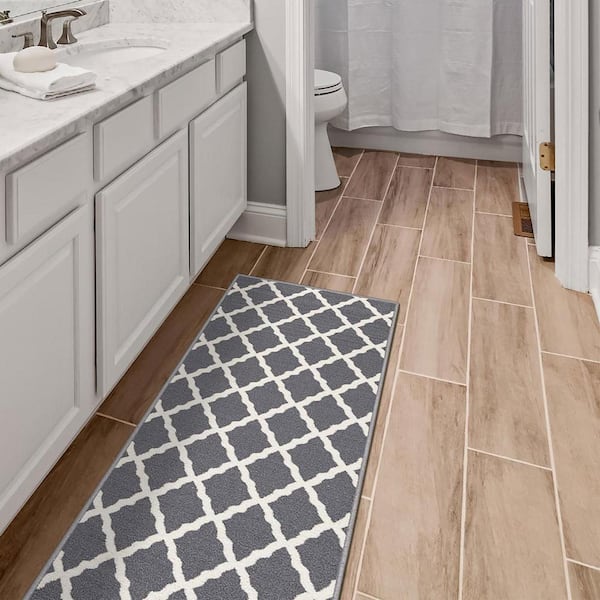
What it looks like: A large, washable rug or runner that covers the worst part of the floor, usually the stretch between the vanity, toilet and tub.
Why it works: It hides the tile with no tools and no risk, and you can take it with you. Because it is soft and plain, it also draws the eye away from the pattern beneath.
Idea 2: Peel and Stick Floor Tile
Tier B · adhesive, test and get permission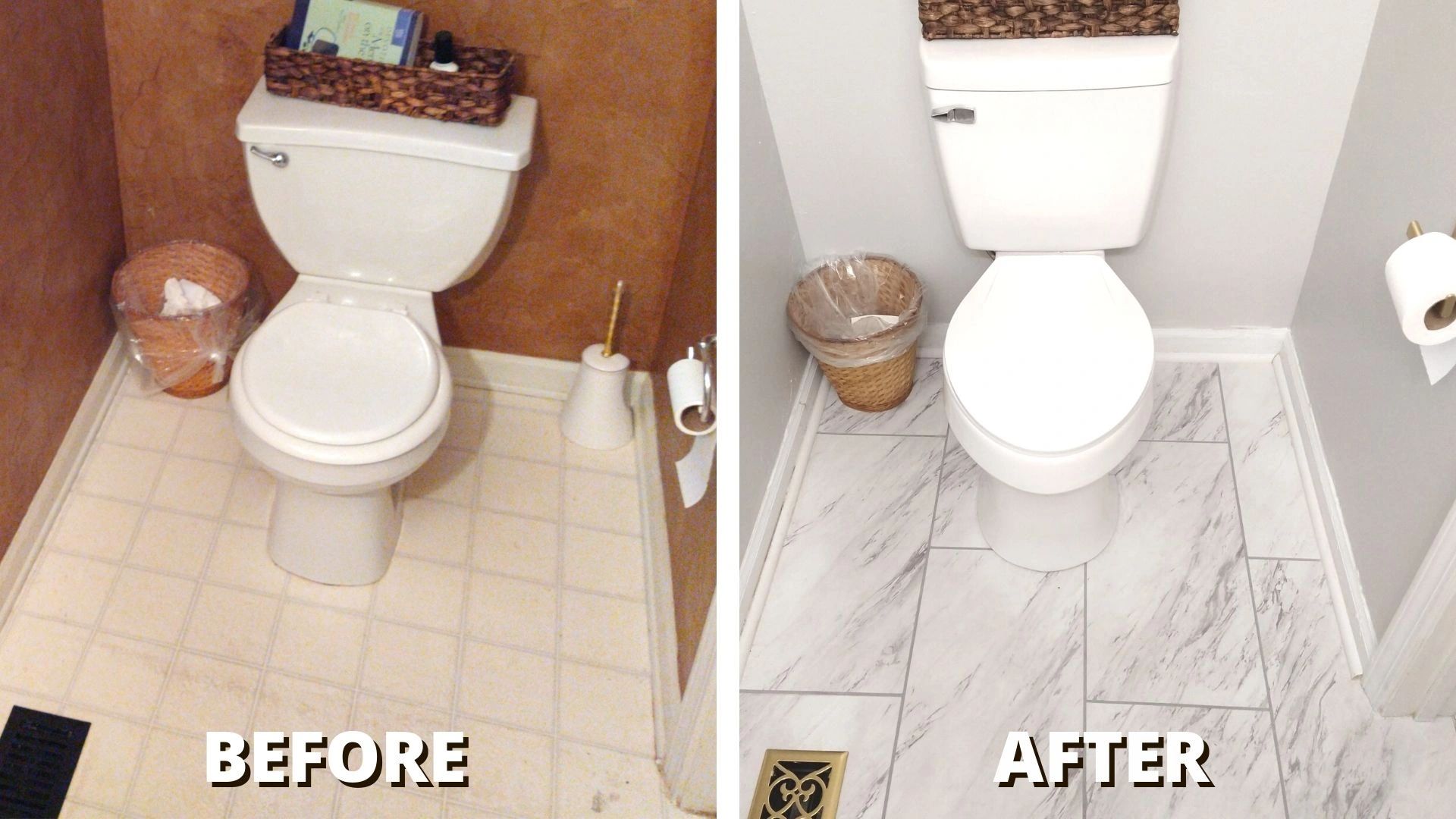
What it looks like: Thin vinyl tile laid right over the existing bathroom floor tile.
Why it works: It replaces the whole look of the floor in a weekend, for much less than a retile.
Idea 3: Loose-Lay or Grip-Backed Floor Covering
Tier A · removable, no adhesive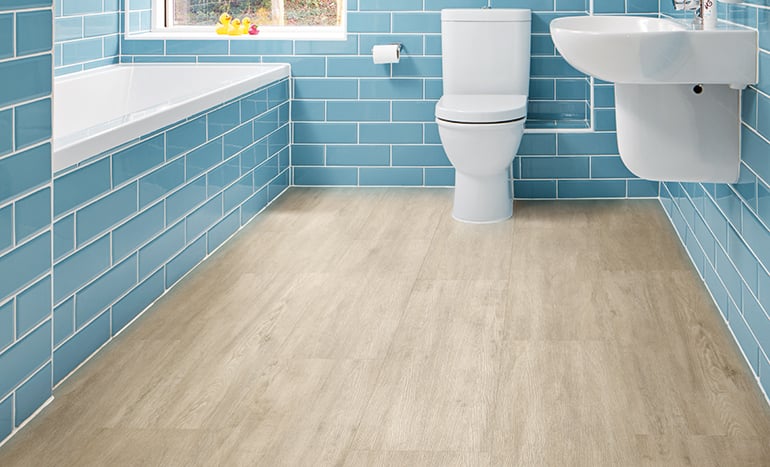
What it looks like: A vinyl floor covering that is held in place by friction or a grip backing instead of glue, cut to fit the room.
Why it works: It gives you a whole new floor surface without adhesive, so it can come up when you leave. It is the nearest thing to idea 2 that a strict lease allows.
Idea 4: Tile Decals or Peel and Stick Wall Tile
Tier B · adhesive, test and get permission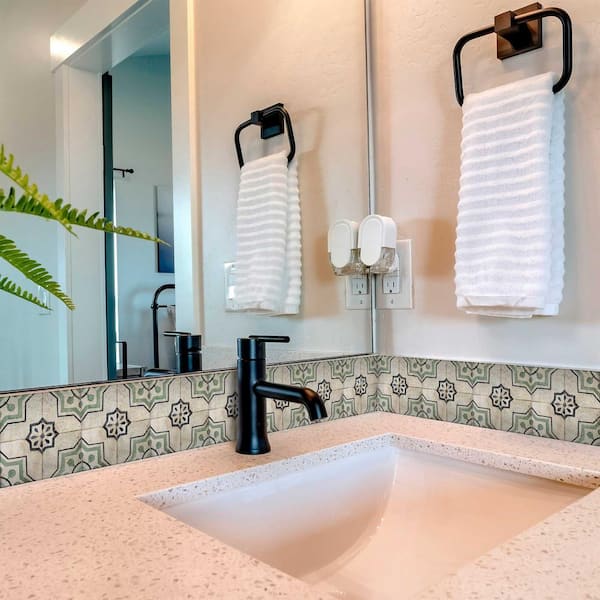
What it looks like: Thin vinyl decals sized to your tile, or thicker peel and stick wall tiles, stuck over the existing wall tile.
Why it works: If the decal matches your tile size, the grout lines become part of the new pattern, so the wall looks retiled without any demolition.
Idea 5: Leaning Mirror or Panel
Tier A · removable, no adhesive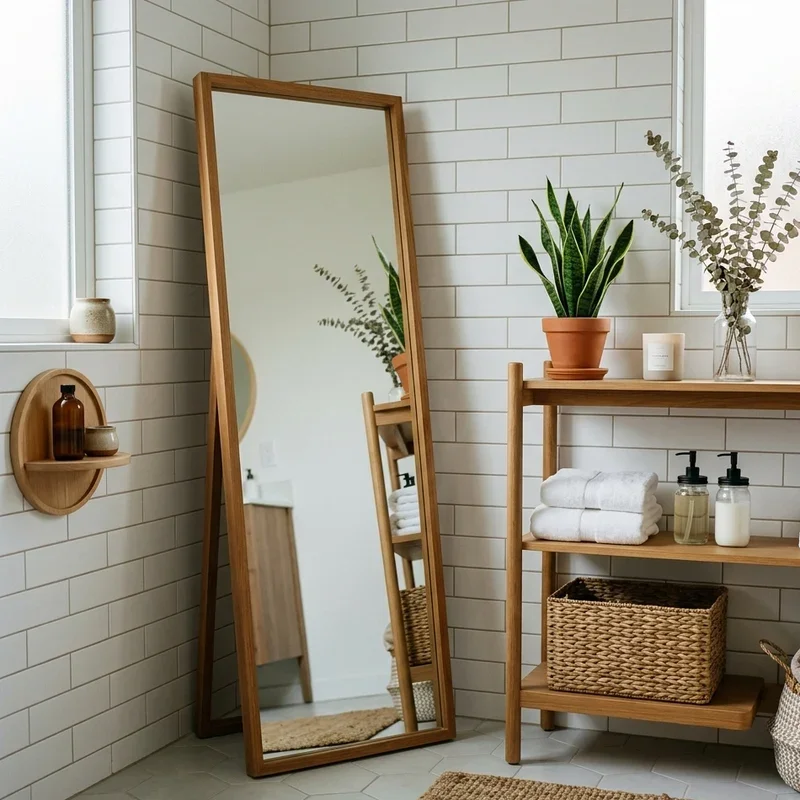
What it looks like: A tall mirror, a large framed print or a slim panel stands against the worst stretch of wall tile.
Why it works: It covers the ugliest section directly, adds light if it is a mirror, and has nothing to repair when it leaves.
Idea 6: Grout Pen or Paint
Tier B · marks the grout, test and get permission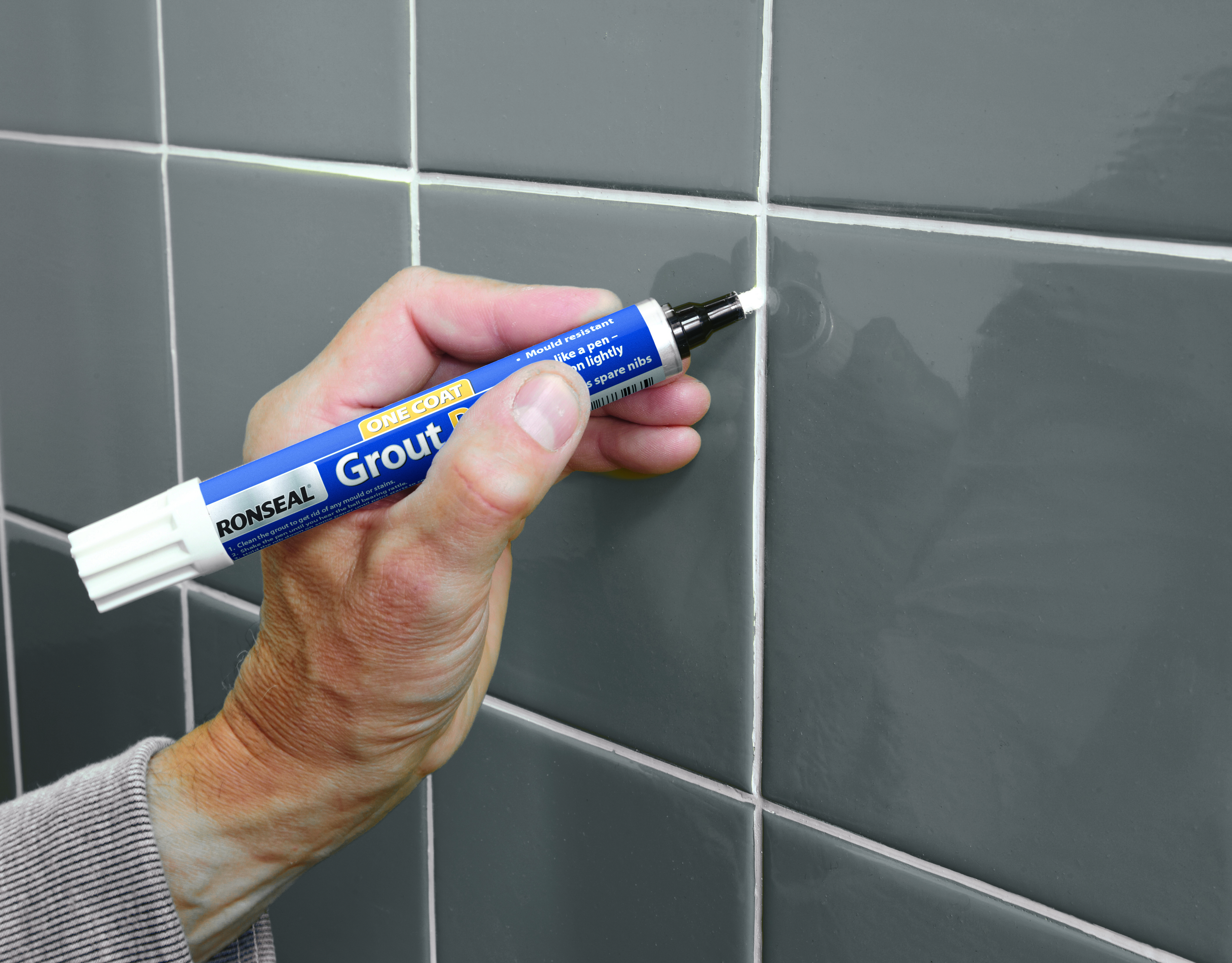
What it looks like: A pen or small tube of grout paint used to even out stained or uneven grout lines.
Why it works: Dirty or patchy grout can make decent tile look worse. Even, clean grout makes the whole surface look cared for, and it is the cheapest change in this guide.
Idea 7: Tile Paint
Tier C · not removable, written permission only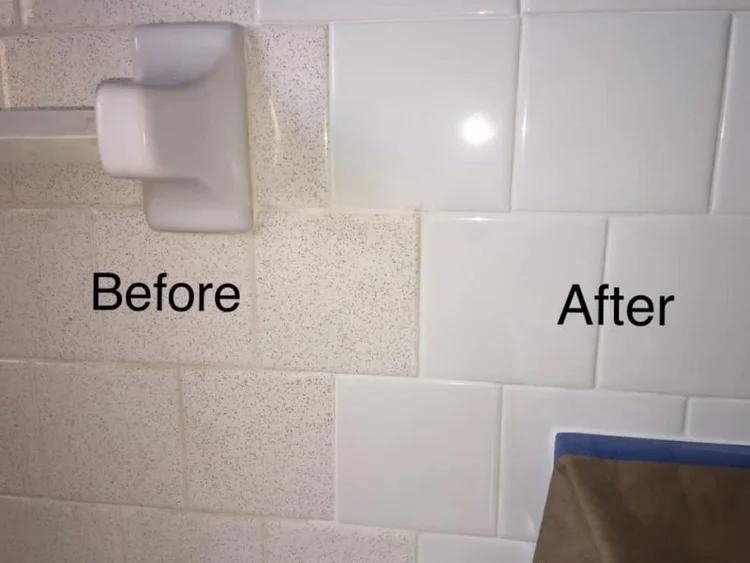
What it looks like: Wall or floor tile coated with a tile-specific paint or epoxy kit in a new color.
Why it works: It changes the color completely and keeps the grid, so it is the strongest change here for the least money. It is also the one you cannot undo.
Idea 8: Undertone Palette and Warm Light
Tier A · removable, no adhesive
What it looks like: Towels, curtain, bath mat and bulbs chosen to sit comfortably next to the tile instead of fighting it.
Why it works: Ugly tile usually looks ugly because of clashing undertones and harsh light. Matching the undertone and switching to warmer, truer light changes how the tile reads without touching it.
| Tile color | Lean toward | Avoid |
|---|---|---|
| Pink or rose | Warm white, cream, deep green or olive accents | Cool gray, which can turn it sickly |
| Mint or seafoam green | Warm white, sand, natural wood, black accents | Yellow-greens that deepen the tint |
| Yellow or butter | Crisp white, soft blue-gray, navy accents | Orange or brown towels |
| Beige, almond or tan | Cream, soft white, greenery, black or brass accents | Stark cool white, which makes it look dingy |
| Cool gray | Cool white, soft blue-green, chrome accents | Heavy warm browns |
| Busy mosaic or pattern | Solid plain towels and curtain in one calm color | Any second pattern |
Idea 9: Swap Small Fixtures and Keep the Originals
Tier A · removable, no adhesive
What it looks like: A new towel bar, toilet paper holder, switch plate, toilet seat, shower head or bulb, put in using the original mounting points.
Why it works: New hardware gives the eye something fresh to land on, so the tile stops being the first thing you see. It is also fully reversible if you keep the originals.
Pick in 30 Seconds: Which Idea Fits Your Rental?
Find your situation in the left column and read across.
| Your situation | Best ideas | Key check |
|---|---|---|
| Strict lease, nothing can stick or paint | 1, 3, 5, 8, 9 | Photograph first, keep originals |
| Landlord says maybe | Ask in writing for 2, 4, 6 | Hidden-spot test, steam test |
| Written permission, staying 2+ years | 2, 4, 7 | Prep and cure time |
| Ugly floor, flat tile, narrow grout | 2, 1, 3 | Fill grout lines before tile |
| Ugly floor, deep or uneven grout | 1, 3 | Thin tile will show the lines |
| Ugly wall tile, glossy and smooth | 4, 5, 8 | Match decal size to your tile |
| Dirty or stained grout only | Deep clean, then 6 | Crumbling grout is a repair |
| Pink, green or yellow dated tile | 8, plus 1 or 5 | Undertone test under your bulbs |
| Tight budget | 1, 8, 9, 6 | Keep receipts, keep originals |
| Short lease | 1, 8, 9 | Everything comes with you |
| Cracked, loose or damp tile | None yet | Tell your landlord in writing |
Mistakes That Cost You Your Deposit
- Using adhesive before asking. Stuck-on products are the usual cause of damage claims. Ask in writing first.
- Covering damage. A rug or tile over a cracked or damp area hides a problem that gets worse and may be blamed on you.
- Skipping the grout fill. Thin tile copies every line beneath it, and the result looks cheaper than the old floor.
- No photos. Without dated before photos, you cannot show the condition you started with.
- Throwing away the originals. Keep every swapped fixture and its screws until you move out.
- A rug with no grip. A sliding bath mat on wet tile is a fall risk.
- Trapping water. A mat or loose-lay floor that never dries grows mildew and can stain the tile below.
- Cool, cheap bulbs. Harsh blue light makes dated tile look worse. Use warm bulbs with high CRI.
- Fighting the undertone. A stark cool white next to beige tile makes the tile look dirty.
- Painting the tub or shower floor. Wear and water are hard on paint there, and the result is permanent.
Test Before You Commit: Four Renter Checks
These cost almost nothing and protect your deposit.
- The undertone test. Hold a sheet of plain white paper against the tile under the bathroom lights at night, and again in daylight. Note the tint the tile adds to the paper (pink, green, yellow, gray or warm beige). Use that tint with the matcher table.
- The raking-light and gap check. Darken the room and hold a flashlight low across the floor. Every raised edge and deep grout line casts a shadow, and anything you can see will show through thin vinyl. Measure the widest grout line with a ruler or a drill bit and enter it in the planner.
- The steam and removal test. Stick one sample decal or piece of tile in a hidden spot, such as behind the door or under the vanity. Run a hot shower for 10 minutes with the door shut and leave it for 48 hours. Then peel it slowly at a low angle. If it sags, lifts, or leaves residue or finish on the tile, do not use that product.
- The tape-and-walk test. Tape the outline of the rug or floor covering on the floor, and walk the room barefoot as you would on a normal morning. Check that the door swings freely and nothing bunches or catches, and that you can reach the toilet and tub without stepping on an edge.
Safety Limits
- Do not cover cracked, loose or crumbling tile, soft spots, or a musty smell. They can mean a leak. Tell your landlord in writing and take photos first.
- Rugs and mats need a non-slip backing made for bathrooms, and a wet floor is slippery. Dry the floor and wash the mat often.
- Paint, epoxy and some adhesives give off fumes. Ventilate, wear the protection the maker states, and keep children and pets out until it is cured.
- In a home built before 1978, old paint may contain lead. Do not sand or scrape it until it has been tested.
- Secure leaning mirrors and panels with an anti-tip strap or anchor, and keep them away from children, pets and the tub.
- Do not touch wiring or plumbing connections. Swap only screw-on parts and cover plates, and use only fixtures and bulbs rated for bathrooms and the fixture's wattage.
- Keep plugged-in appliances away from water. Use only outlets and devices rated for bathrooms.
- Renters: get written permission for anything that sticks, paints or marks, photograph everything first, and keep the originals.
Hiding Ugly Bathroom Tile FAQ
How do you hide ugly bathroom tile in a rental without losing your deposit?
Start with options that need no adhesive: a washable rug, a loose-lay or grip-backed floor covering, a leaning mirror, a better palette and warm bulbs. Get written permission before using anything that sticks, paints or changes the tile, photograph the room first, and keep original fixtures you swap. What counts as normal wear and tear varies by location, so check your lease and local rules.
Can you put peel and stick tile over bathroom floor tile?
Often yes, if the tile is flat, clean, dry and well bonded, the grout lines are filled and smoothed, and the product is rated for bathrooms and floors. Thin tile shows what is beneath it, and removal can be hard, so get permission first.
Will tile decals stick to bathroom wall tile?
Often, on smooth, clean, dry, glossy tile. Steam, soap film and texture reduce grip. Clean with isopropyl alcohol, press firmly, follow the cure time, and run a steam test on a sample first. Keep them out of direct spray unless the product is rated for it.
Can you paint bathroom tile in a rental?
Only with written permission, because tile paint and epoxy kits are not removable. They also need ventilation, careful prep and cure time, and wet-area durability varies by product.
What is the cheapest way to hide ugly bathroom tile?
Usually a washable rug or runner for the floor, plus a calmer palette, warm bulbs and swapped small fixtures. They cost little, need no adhesive and come with you when you move.
How do you make dated tile look better without covering it?
Deep-clean the grout, then match the tile's undertone. Use warm bulbs of about 2700K with a CRI of 90 or higher, plain towels and a curtain in colors that sit comfortably beside the tile, and keep everything else simple.
Do grout pens and grout paint work?
They can brighten stained or uneven grout, but they are not fully removable and wear faster in wet areas. Clean first, test a hidden spot and check your lease. If grout is crumbling or missing, tell your landlord.
What should you do about cracked or loose bathroom tile?
Do not cover it. Cracked or loose tile, crumbling grout, a soft spot or a musty smell can mean water is getting behind the tile. Tell your landlord in writing, take photos, and wait for the repair before adding any cover-up.
A Simple Takeaway
Do not start with the prettiest cover-up. Start with the lease, then work from the most reversible idea to the least. Photograph the room, run the undertone and gap checks, test anything sticky in a hidden spot, and never cover damage. A rental bathroom looks better when everything you add can leave with you.