
8 Open Shelving Styling Ideas for Kitchens That Don't Look Cluttered
Simple, tested styling rules, exact measurements and upkeep habits that keep open kitchen shelves beautiful and calm.

Open shelves can make a kitchen feel airy, personal and well designed, or they can turn into the messiest wall in the house. The difference is rarely the shelf itself. It comes down to how you style it. These open shelving styling ideas for kitchens that don't look cluttered focus on editing, color, grouping and spacing, so your shelves look intentional instead of crowded.
Below you will find eight practical ideas, the exact measurements that make them work, a quick-reference shelf size chart and answers to the most common questions. Whether you have one floating shelf or a full wall of them, you can apply every idea in a single afternoon.
Open Shelving Styling Ideas for Kitchens That Don't Look Cluttered: Quick Answer
- Edit first and keep only what you use
- Limit the palette to two or three colors
- Group items by function
- Stack, layer and vary height in odd numbers
- Leave one third of every shelf empty
- Hide the ugly items in baskets and canisters
- Choose the right shelf depth, spacing and lighting
- Build a simple upkeep routine
The one rule: if a shelf looks busy, remove items until the eye has somewhere to rest.
Idea 1: Edit Before You Style

What it looks like: Shelves full of everything that did not fit in the cabinets: mismatched mugs, promotional glasses, spice jars, appliance boxes and loose utensils.
Why it looks cluttered: Open shelves show everything. A cabinet hides a messy stack, but a shelf displays it. The more different items you show, the more the eye has to process, and that busy feeling is what we read as clutter.
This one step does more than any decor purchase. If you only do one thing from this guide, do this one.
Idea 2: Stick to a Tight Color Palette
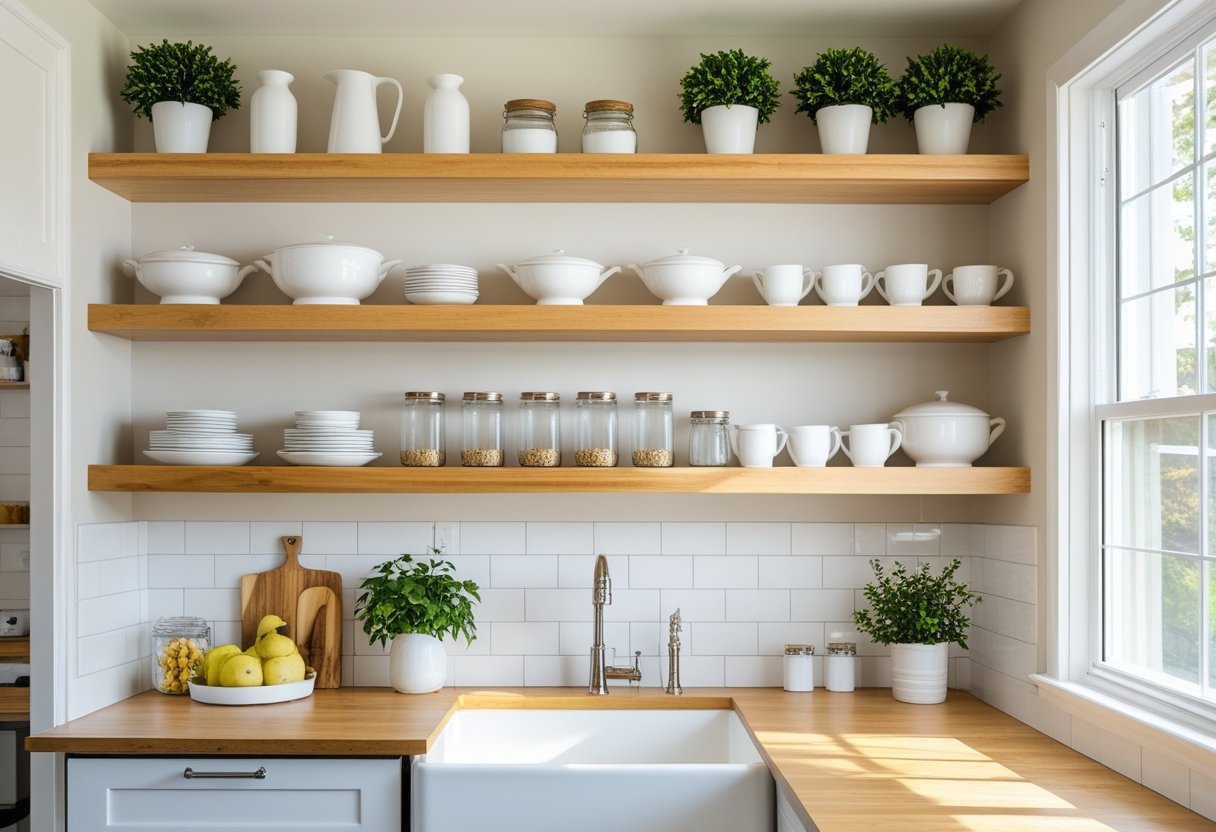
What it looks like: A rainbow of mugs, patterned bowls, bright plastic containers and colorful packaging all competing on the same shelf.
Why it looks cluttered: Many colors and patterns create visual noise. Even a small number of items can look crowded if none of them relate to each other.
If you love color, keep the base neutral and let one colorful piece act as the focal point on each shelf. One bold item looks styled. Five bold items look scattered.
Idea 3: Group Items by Function

What it looks like: Plates next to a vase, a mug beside a cookbook, a bowl beside a jar of pasta, all scattered with no pattern.
Why it looks cluttered: Mixed categories feel random. Grouping creates visual blocks, and blocks are easier to read than scattered single objects.
Grouping also makes the kitchen work better. You reach for the right thing without searching, and putting items away becomes automatic.
Idea 4: Stack, Layer and Vary Height
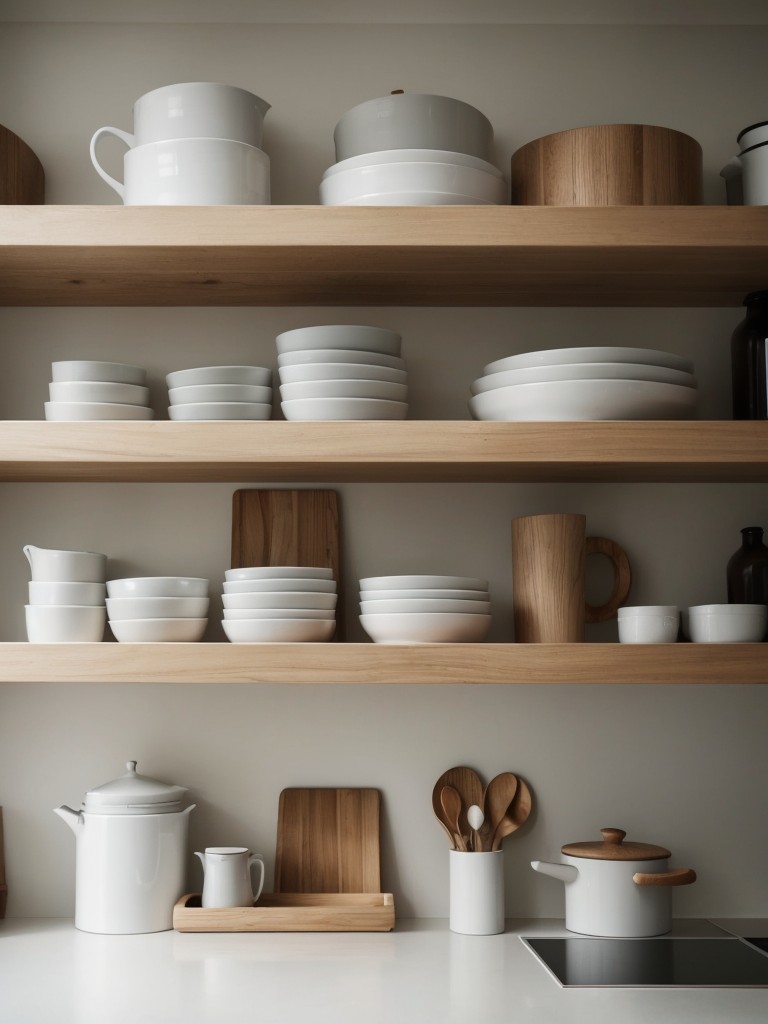
What it looks like: Everything is the same height and lined up in a single flat row, or the opposite, a pile of random items with no structure.
Why it looks cluttered: A flat row feels stiff and unstyled, and a random pile feels messy. The goal is controlled variety.
Stack no more than five or six plates at a time. Taller stacks look unstable, are harder to grab and put more weight on a single point of the shelf.
Idea 5: Leave Breathing Room

What it looks like: Every inch of every shelf is filled, edge to edge, with no gaps between groups.
Why it looks cluttered: Empty space is what makes the items you do show look deliberate. Without it, even beautiful pieces blur together.
If you are unsure whether a shelf is overstyled, remove one item. If the shelf looks better, you had too much.
Idea 6: Hide the Visual Noise

What it looks like: Boxes of pasta, bags of snacks, loud product labels and loose small items sit directly on the shelf.
Why it looks cluttered: Packaging is designed to shout. On open shelves, a dozen competing logos and colors look like noise.
Label canisters with a small, simple tag or label so the system stays easy for everyone in the household to follow.
Idea 7: Get the Shelf Size, Spacing and Lighting Right

What it looks like: Shelves too shallow for the plates, spaced too tightly for tall items, or installed so low that small appliances do not fit beneath them.
Why it looks cluttered: When shelves do not suit what sits on them, items overhang, crowd the shelf above or get pushed into awkward arrangements.
Keep open shelves out of the direct cooking zone. Grease and steam settle fastest near the cooktop. If you are installing shelves near a range, follow the clearance guidance in your cooktop and range hood manuals.
Idea 8: Keep Them Clean and Reset Often
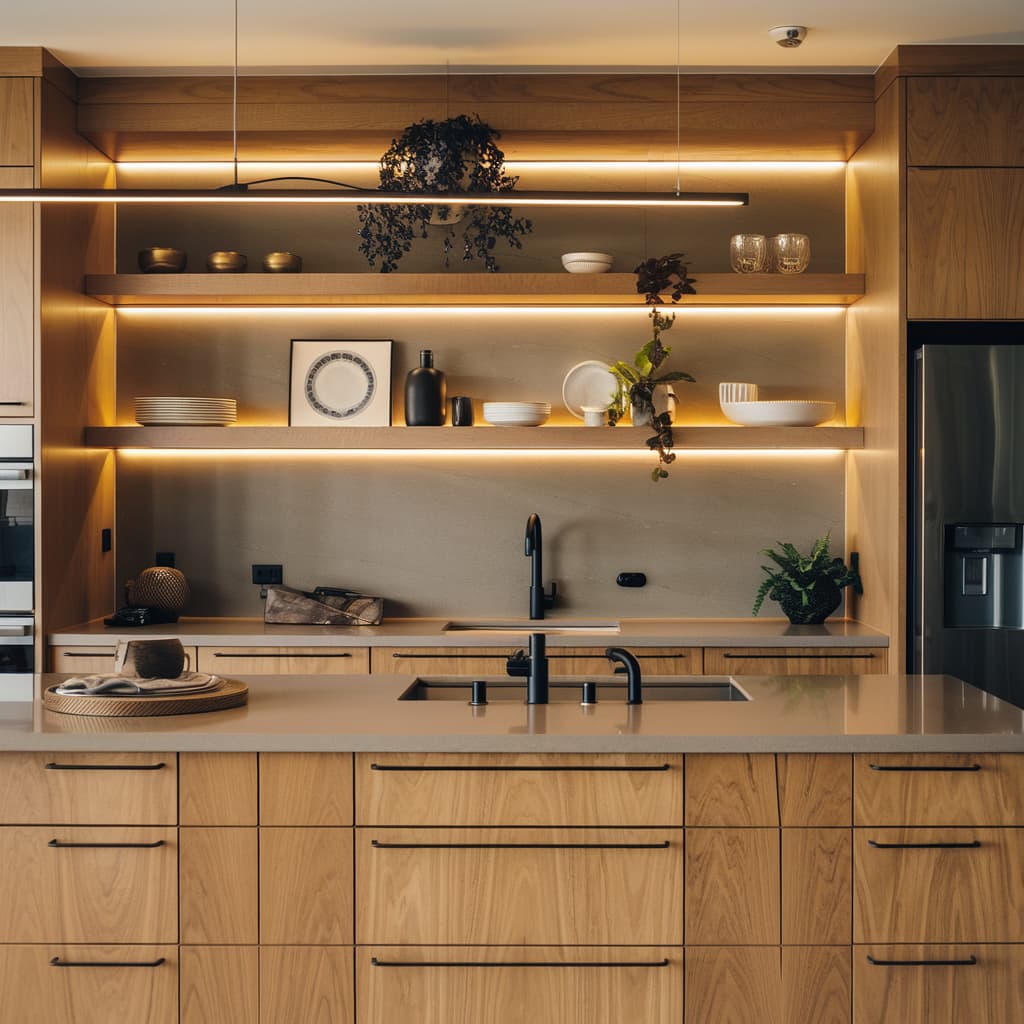
What it looks like: Shelves styled perfectly on day one, then slowly overtaken by extra mugs, dust and leftover bits of daily life.
Why it looks cluttered: Open shelves are never finished. They reflect how you live, so a few small changes over weeks add up to a cluttered look.
Display only things you use, and the shelves will clean themselves. Items that sit untouched for months are the ones that gather dust and grease, so move them to a closed cabinet.
Open Kitchen Shelf Size Chart (Quick Reference)
Use these common design guidelines as a starting point, then adjust for your own dishes and space.
| Measurement | Recommended range | Why it works |
|---|---|---|
| Shelf depth | 10 to 12 inches (8 inches minimum for mugs and decor) | Fits standard dinner plates and bowls without overhang |
| Space between shelves | 12 to 16 inches | Room for stacks, mugs and tall items without crowding |
| Lowest shelf above counter | At least 15 to 18 inches | Clears small appliances and keeps the counter usable |
| Items per shelf | About two thirds full | Leaves visual breathing room |
| Group size | Odd numbers (3 or 5) | Looks balanced and natural |
| Plate stack height | 4 to 6 plates | Stable and easy to grab |
| Colors or materials | 2 to 3 total | Keeps the display cohesive |
The 3 Rules That Keep Open Shelves Tidy
- Edit first. Display only what you use and love.
- Limit the palette. Two or three colors or materials, repeated.
- Leave one third empty. Breathing room makes everything look intentional.
Open Kitchen Shelving FAQ
How do you style open shelves in a kitchen without making them look messy?
Edit first, then style. Keep only everyday items, limit the palette to two or three colors, group items by function, stack plates and bowls neatly, and leave about one third of each shelf empty. Hide packaging in baskets or lidded containers.
What should you put on open kitchen shelves?
Everyday dishes and glasses, a few cutting boards, simple canisters, and one or two decorative pieces such as a small plant or framed print. Avoid greasy items, mismatched packaging and rarely used gadgets.
How many items should you put on an open shelf?
Fill about two thirds of the shelf and leave one third empty. Style in odd-numbered groups, usually three or five, rather than a single even row.
How far apart should open kitchen shelves be?
Twelve to sixteen inches works for most dishes and glasses. Allow more for tall items. Hang the lowest shelf at least 15 to 18 inches above the counter so small appliances still fit.
How deep should open kitchen shelves be?
Ten to twelve inches fits standard dinner plates and bowls comfortably. Eight inches suits mugs, glasses and decor but is tight for larger plates.
Do open shelves in a kitchen get greasy and dusty?
Yes, over time, especially near the stove. Keep shelves out of the direct cooking zone, display only items you use often so they get washed regularly, and wipe the shelves on a schedule.
What colors work best for styling open kitchen shelves?
A limited palette: one base color for dishes (usually white or a soft neutral), one natural material such as wood, and one accent color. Three colors or materials in total keeps it calm.
Are open shelves a good idea in a kitchen?
They can be, if you keep them edited and clean. They make a kitchen feel lighter and keep everyday dishes within reach, but they offer less hidden storage and need more upkeep than cabinets. Many kitchens mix open shelves with closed cabinets.
A Simple Takeaway
Open shelves do not look cluttered because of how many things are on them. They look cluttered when nothing is edited, grouped or given space. Remove what you do not use, repeat a few colors, group by function and leave room to breathe. Do those four things and your shelves will look styled, not crowded.