
7 Decorating Mistakes That Make a Room Feel Cold and Unwelcoming
The lighting, color, texture and layout mistakes behind a cold room, and the simple fixes that warm it up.

A room can have beautiful furniture and still feel like a waiting room. The decorating mistakes that make a room feel cold and unwelcoming are rarely expensive ones. They are small choices: the wrong bulb, no rug, a bare window, a sofa pushed against a wall. Fix them and the same room starts to feel like home.
This guide covers seven mistakes in the order they usually matter, with a specific fix for each. You will also get a bulb temperature guide, a plan for warming up a room in a weekend, a quick-fix table and an FAQ.
Decorating Mistakes That Make a Room Feel Cold and Unwelcoming: Quick Answer
- Relying on one overhead light and cool bulbs
- Using only cool, pale colors
- Leaving hard floors bare or the rug too small
- Leaving the windows bare
- Using too many hard, flat surfaces
- Leaving the walls and surfaces bare
- Pushing furniture against the walls
Mistake 1: Relying on One Overhead Light (and Cool Bulbs)
 What it looks like
One bright ceiling fixture, usually with a bluish-white bulb, and nothing else.
Why it feels coldA single overhead source flattens the room and casts harsh shadows. Cool light strips the warmth from wood, fabric and skin tones, which is why a room can feel clinical even when the decor is lovely.
- Switch to warm white bulbs, about 2700K to 3000K.
- Add at least two lamps at different heights, such as a table lamp and a floor lamp.
- Put the ceiling light on a dimmer, and use it last.
Mistake 2: Using Only Cool, Pale Colors
 What it looks like
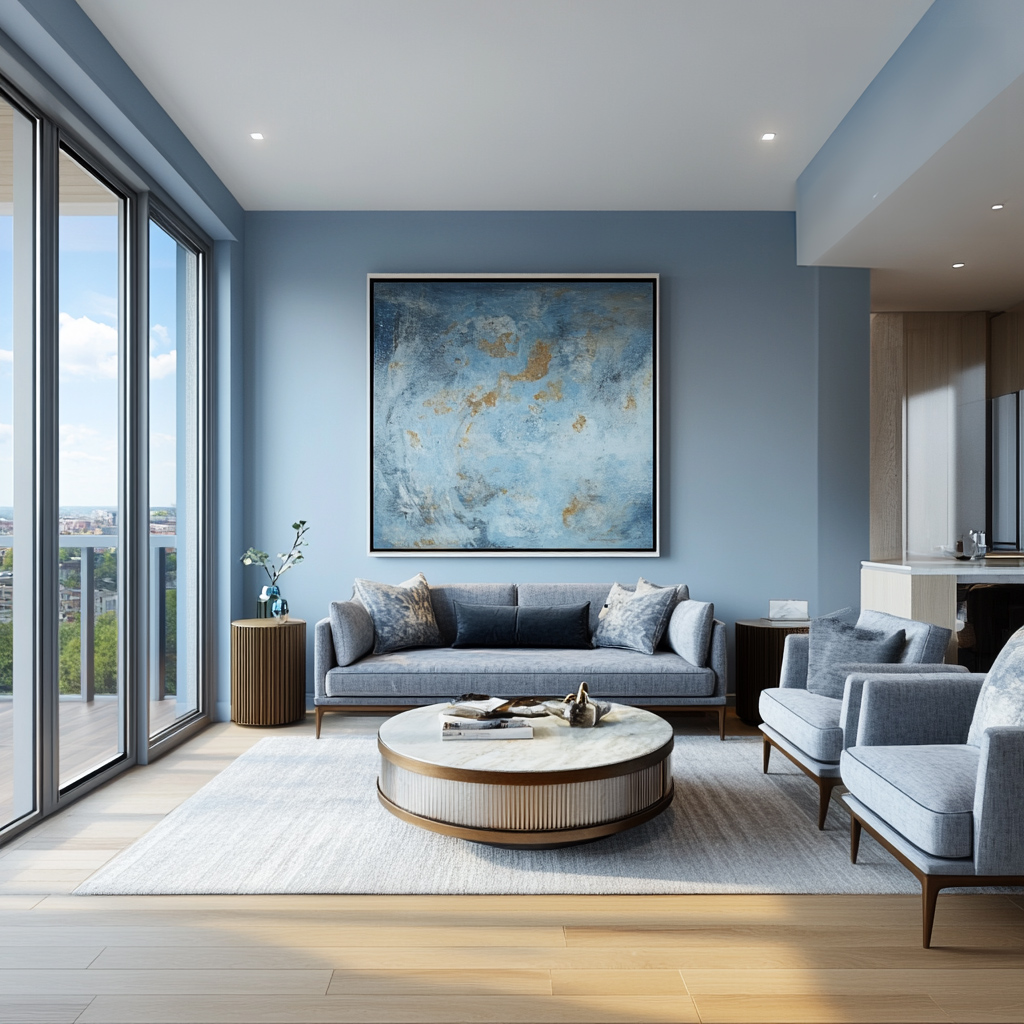
Icy whites, cool greys and pale blues on the walls, sofa and rug, with nothing warm to balance them.
Why it feels coldCool undertones look crisp and clean, but a whole room of them reads as stark, especially where daylight is limited. North-facing rooms get cooler light, so cool paint can look even harsher there.
- Keep the cool colors you love, and balance them with warm neutrals such as cream and oatmeal.
- Add wood tones and one warm accent, such as rust or camel.
- Test paint samples on the wall and look at them in the morning and evening before you commit.
Mistake 3: Leaving Hard Floors Bare or the Rug Too Small
 What it looks like
Tile, hardwood or concrete with no rug, or a small rug floating in the middle of the seating area.
Why it feels coldHard floors look and feel cool and bounce sound around. A small rug does not fix it, because the furniture still sits on bare floor and the group feels disconnected.
- Choose a rug large enough that at least the front legs of the sofa and chairs sit on it.
- For most living rooms, that means an 8x10.
- Leave about 8 to 18 inches of bare floor around the edges.
Mistake 4: Leaving the Windows Bare
 What it looks like
No curtains, or thin blinds on their own.
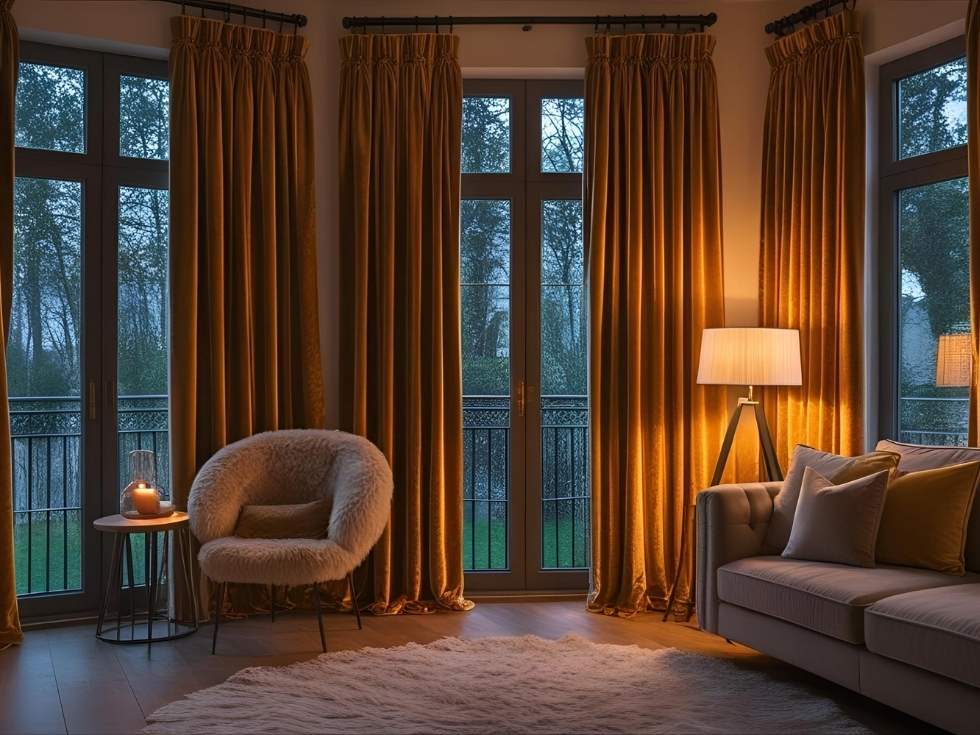
Why it feels coldBare glass looks hard and reflective, and at night it can leave a room feeling exposed. Curtains add softness and texture, and they also reduce echo.
- Hang curtains over the window, ideally layered over sheers.
- Mount the rod a few inches above the frame, or closer to the ceiling.
- Let the rod extend about 8 to 12 inches past each side, so the curtains frame the window.
Mistake 5: Using Too Many Hard, Flat Surfaces
 What it looks like
Boxy furniture, glass, metal and smooth finishes, with no soft textiles.
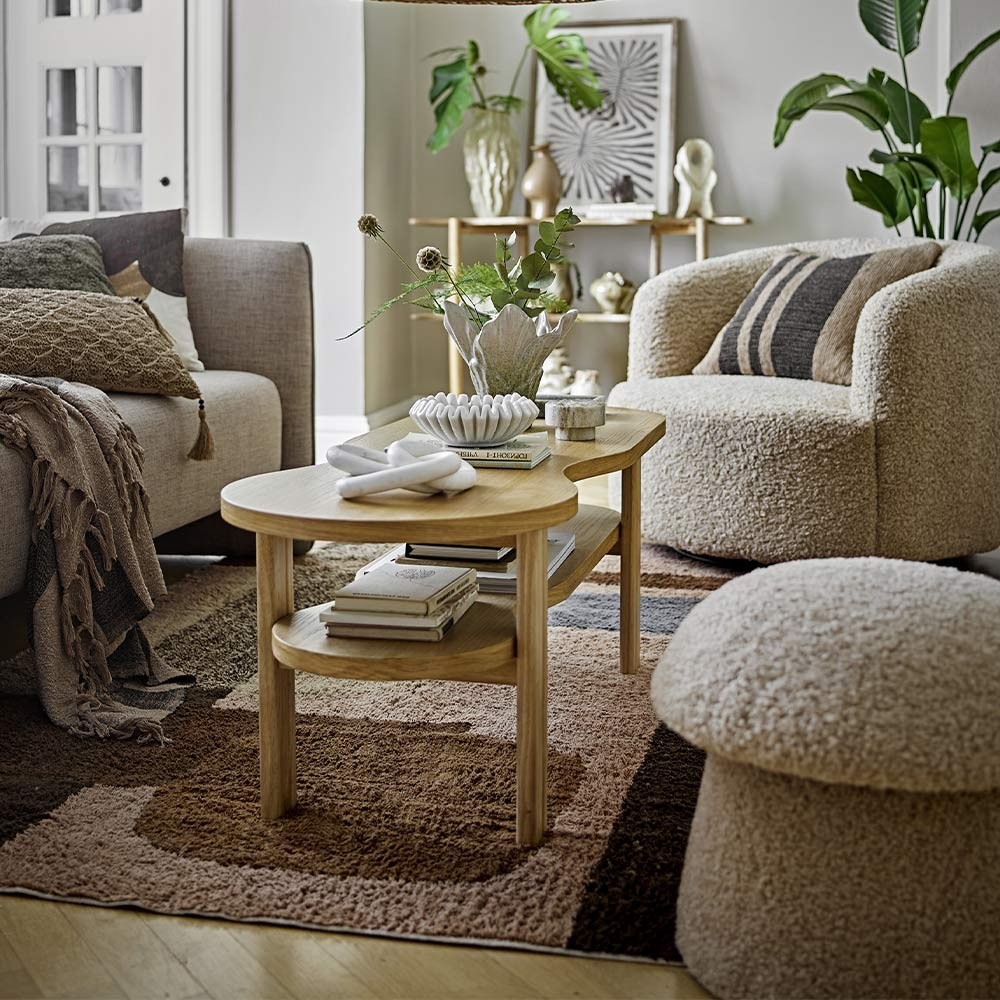
Why it feels coldHard surfaces reflect light and sound, and a room with only straight lines feels sterile. Soft shapes and fabrics are what make it feel approachable.
- Layer at least three textures, such as knit, linen, wool, velvet and wood.
- Add a throw and textured pillows to the sofa.
- Bring in at least one curved piece, such as a round table or a rounded chair.
Mistake 6: Leaving the Walls and Surfaces Bare
 What it looks like
Blank walls and cleared-off surfaces, with nothing personal in sight.
Why it feels coldEmpty walls and totally clear surfaces make a room feel like a showroom. Nothing says someone lives there, which is the opposite of welcoming.
- Hang art that is 60 to 75 percent of the width of the furniture below it.
- Add a plant and a few personal objects, such as books or a framed photo.
- Stop before it gets cluttered. Leave breathing room around each group.
Mistake 7: Pushing Furniture Against the Walls
 What it looks like
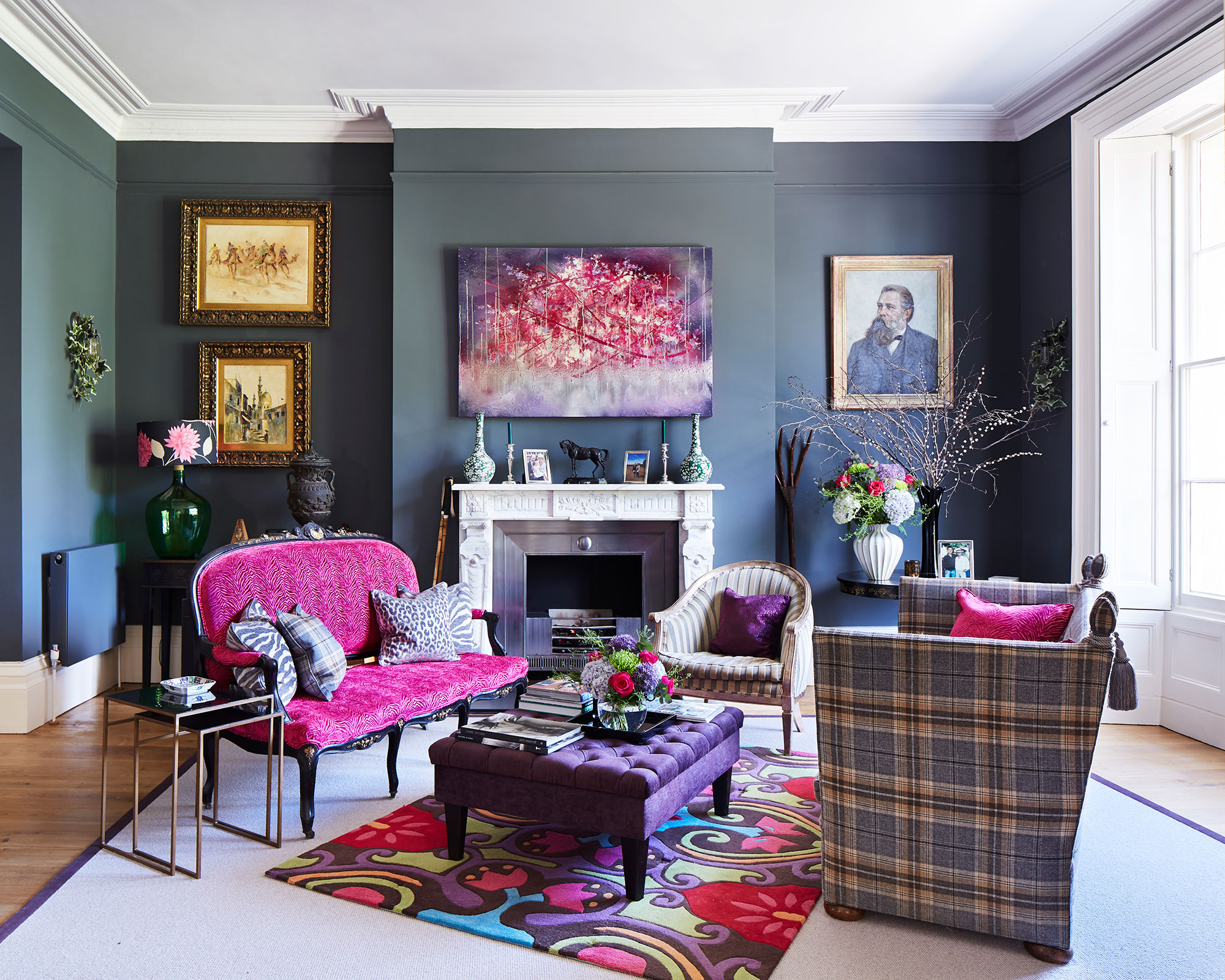
The sofa and chairs lined up around the edges with a big empty space in the middle, or too little seating for the room.
Why it feels coldWhen seating is too far apart to talk across, the room feels like a waiting room. People sit, but they do not gather.
- Pull the seating into a group, with seats about 8 feet apart or less.
- Float the sofa away from the wall, and angle the chairs toward it.
- Keep the coffee table 14 to 18 inches from the sofa.
How to Warm Up a Room in a Weekend
You do not need to fix everything at once. Work from the fastest, cheapest change to the biggest.
- Five minutes: swap the bulbs. Warm white, about 2700K to 3000K, in every lamp and fixture.
- Thirty minutes: add a throw and two textured pillows. Choose different textures.
- One hour: rearrange the seating. Pull it into a conversation group.
- Half a day: hang the curtains and the art. Both change how the room feels at night.
- One weekend: add the rug, and the paint if you need it. These are the biggest changes.
Cold Room Quick-Fix Table
| Mistake | Why it feels cold | Quick fix |
|---|---|---|
| One overhead light | Flat, harsh, clinical light | Warm bulbs, two lamps, a dimmer |
| Only cool colors | Stark, icy palette | Warm neutrals, wood and one warm accent |
| Bare floors, small rug | Hard surface, disconnected furniture | 8x10 rug with front legs on it |
| Bare windows | Exposed, reflective glass | Layered curtains hung high and wide |
| Hard, flat surfaces | Sterile, echoing | Three textures and a curved piece |
| Bare walls and surfaces | Looks like a showroom | Sized art, a plant, personal objects |
| Furniture on the walls | Too far apart to talk | A conversation group about 8 feet or less across |
Cold Room FAQ
Why does my room feel cold even when the heating is on?
Often it is the design: cool-toned lighting and paint, hard bare surfaces, bare windows and a lack of soft textures make a room feel cold. Real drafts and poor insulation can also make a room physically cold, so check windows and doors as well.
How do I make a cold room feel warm and cozy?
Switch to warm white bulbs and layer lamps, add warm neutrals and wood tones, use a rug large enough for the seating, hang curtains, add at least three textures, personalize the walls and surfaces, and pull the furniture into a conversation group.
What colors make a room feel cold?
Icy blues, cool greys and stark or blue-toned whites make a room feel cold, especially in rooms with little sunlight. You can keep them, but balance them with warm neutrals, wood and one warm accent.
What color light bulbs make a room feel warm?
Warm white bulbs at about 2700K to 3000K feel cozy in living rooms and bedrooms. Bulbs at 4000K and above look cooler and more clinical, so save them for task areas such as a workspace.
Do rugs make a room feel warmer?
Yes. A rug adds texture and softness, absorbs echo and warms a hard floor. Choose one large enough that at least the front legs of the sofa and chairs sit on it.
Do curtains make a room feel warmer?
Yes. Curtains add softness and texture, make glass feel less exposed at night and reduce echo. Hang the rod a few inches above the window frame and let it extend past each side, and layer curtains over sheers for the best effect.
Why does my minimalist room feel cold?
Minimalism feels cold when it lacks texture and personal touches. Keep the clean lines but add natural materials, a throw, a textured pillow, a plant and one or two personal objects.
How do I make a big empty room feel cozy?
Divide it into zones with rugs, group the seating closer together instead of lining it up along the walls, layer lamps at different heights, and use larger art and curtains to give the walls and windows weight.
How do I make a white room feel warmer?
Use warm white bulbs, add wood tones and natural textiles, bring in a warm accent such as rust or camel, and choose a paint with a warm undertone if you repaint. A plant and a few personal objects help as well.
A Simple Takeaway
Start with the light: warm bulbs and more than one lamp. Then add a rug that is big enough, curtains, a few textures and something personal on the walls, and pull the seating together. A room feels welcoming when it looks lived in, and most of the fixes take less than a day.