
7 Stair Landing Decor Ideas That Turn Dead Space Into a Feature
Most landing guides show pretty photos. This one shows exactly what your landing can safely hold, with a measurement rule and a quick calculator.

A stair landing is the most overlooked spot in most homes. It is a pause between floors, and it sits right in your sightline every time you climb the stairs. These stair landing decor ideas that turn dead space into a feature help you use that space without blocking the path, because a landing is also part of your exit route and has to stay safe first and stylish second.
Most articles on this topic stop at photos. This guide gives you a decision tool: the 36-inch rule. Measure your landing, subtract 36 inches, and you know the deepest piece of furniture it can safely hold. Then pick from seven ideas matched to your landing size.
Stair Landing Decor Ideas That Turn Dead Space Into a Feature: Quick Answer
- Build a gallery wall that works from three viewpoints
- Add a picture ledge for layered, changeable decor
- Place a slim console with a lamp
- Create a window-seat style bench (deeper landings)
- Add greenery on a stable stand or ledge
- Use a mirror to bounce light into a dark landing
- Build a reading corner (large landings only)
The one rule: maximum furniture depth = landing depth minus 36 inches. If the answer is under 5 inches, decorate the walls only.
The 36-Inch Rule: How Much Can Your Landing Hold?
Many model building codes require a stair landing to be at least as wide as the stairs and at least 36 inches in the direction of travel. A landing is also part of your emergency exit path, so it has to stay clear. That gives you a simple formula:
How to measure: Measure the clear floor from the edge of the last step to the opposite wall, along the direction you walk. On a turning (L-shaped) landing, measure along the walking route and leave the corner turning area completely clear. Check your local building code, since requirements vary.
Landing Furniture Calculator
Idea 1: A Gallery Wall That Works From Three Viewpoints
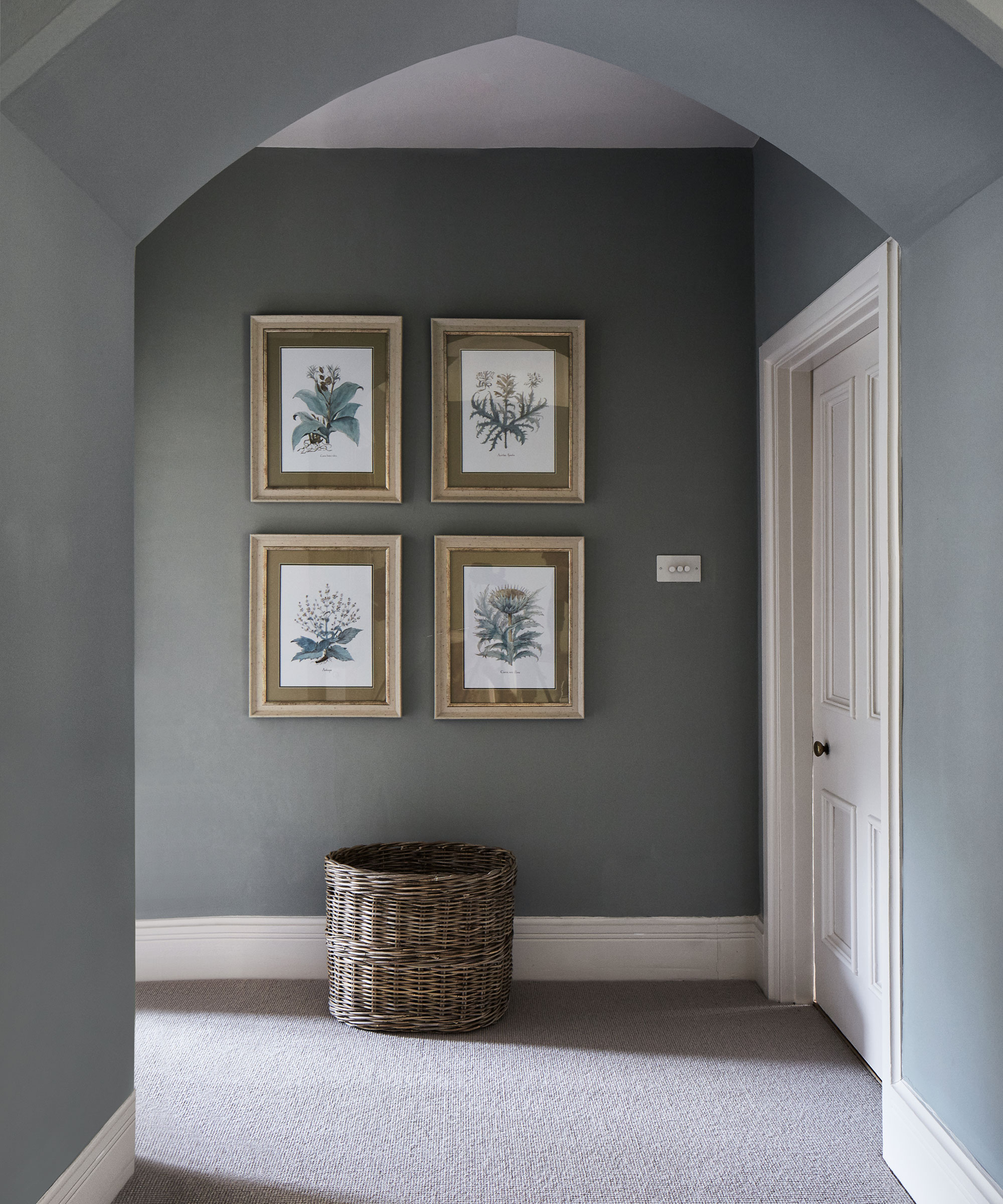
What it looks like: A group of frames on the landing wall, often the first thing you see when you climb the stairs.
Why it works here: The landing wall is seen from the bottom of the stairs, the top of the stairs and the landing itself. That makes it one of the few walls in a home that gets looked at from three angles.
Use lightweight frames and picture hooks rated for their weight. Keep frame depth shallow so nothing sticks out into the walking path.
Idea 2: A Picture Ledge for Layered, Changeable Decor
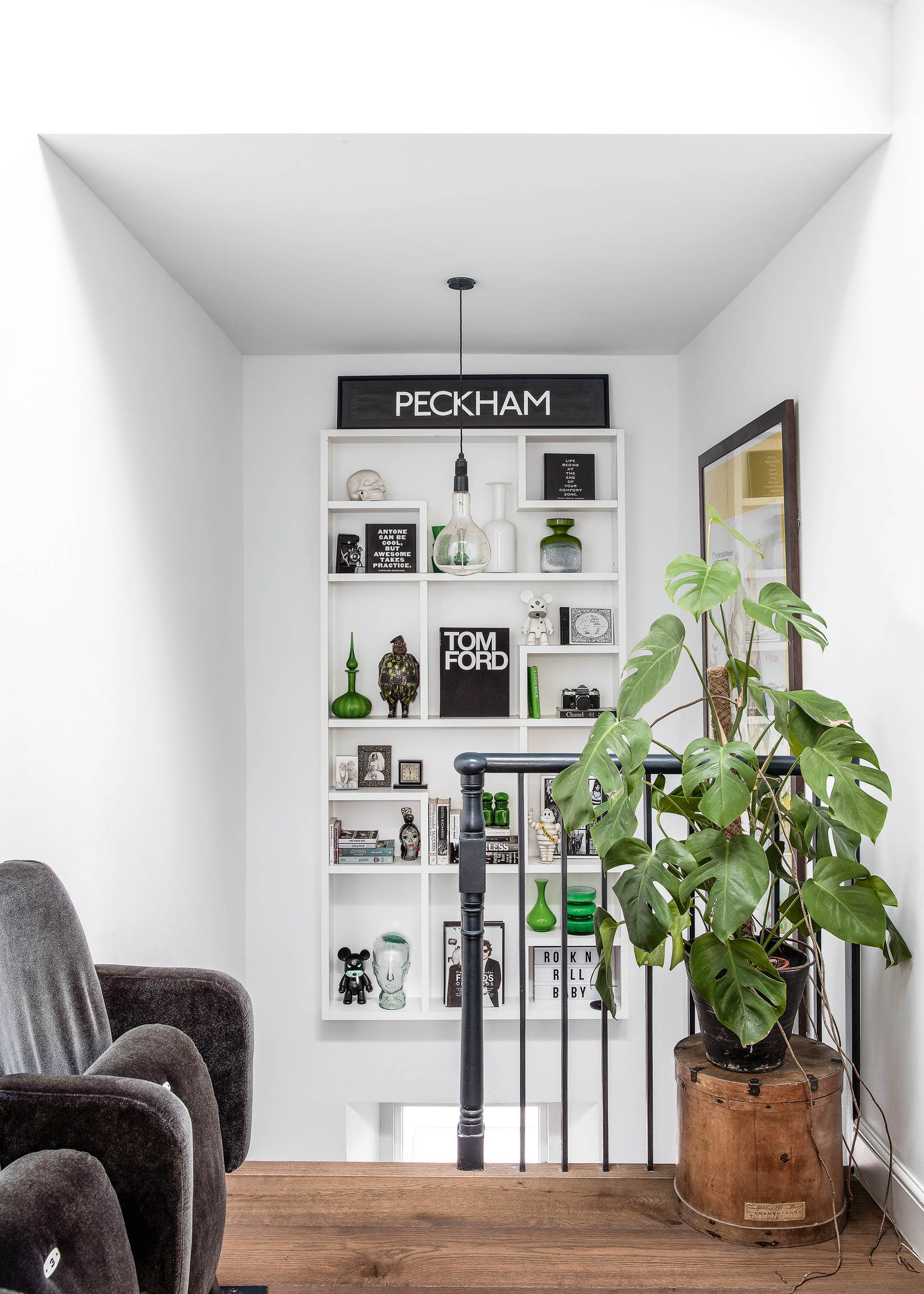
What it looks like: A shallow shelf along the wall that holds framed art, small objects and a lamp or candle-style light.
Why it works here: A ledge adds depth and personality while sticking out only a few inches, which makes it ideal for narrow landings where floor furniture is not an option.
Skip loose breakables on busy landings, especially where children or pets pass by often.
Idea 3: A Slim Console and Lamp

What it looks like: A narrow table against the wall with a lamp, a tray and a small plant or bowl.
Why it works here: A console makes a landing feel like a destination, and a lamp gives you a welcoming glow at night.
Make sure a console on a landing is never close to the top step, and keep its corners rounded or softened where people pass.
Idea 4: A Window-Seat Style Bench
What it looks like: A bench with a cushion under a landing window, with a few pillows.
Why it works here: A bench turns a pass-through into a place to pause, and it can hold shoe storage or baskets underneath.
Do not place a bench where it blocks a window you may need to open, or where it narrows a turn.
Idea 5: Greenery on a Stable Stand or Ledge
What it looks like: A tall plant in the corner or a trailing plant on a ledge.
Why it works here: A plant softens hard stair lines and adds height without using much floor space.
Several common houseplants are toxic to pets. Check the ASPCA plant list before you buy if you have cats or dogs.
Idea 6: Mirror and Layered Lighting

What it looks like: A mirror on the landing wall with a sconce on one side.
Why it works here: Many landings have little natural light. A mirror bounces light into the space, and a sconce makes the stairs safer and warmer at night.
Anchor heavy mirrors into studs or with wall anchors rated for their weight, and use two hanging points for stability.
Idea 7: A Reading Corner (Large Landings Only)

What it looks like: An armchair, a small side table and a floor or wall light, tucked into a landing corner.
Why it works here: On a wide landing, a reading corner uses a space most people leave empty.
If you must squeeze to get past, the landing is too small for a chair. Choose a bench or wall decor instead.
Landing Decision Chart (Quick Reference)
Match your landing depth to the best ideas. The middle column is the deepest piece of furniture that keeps a 36-inch clear walkway.
| Landing depth | Max furniture depth | Best ideas |
|---|---|---|
| 36 to 40 in | 0 to 4 in | Gallery wall, thin picture ledge, sconce |
| 41 to 48 in | 5 to 12 in | Slim console, deeper picture ledge, mirror |
| 49 to 54 in | 13 to 18 in | Bench, plant stand, console with lamp |
| 55 to 65 in | 19 to 29 in | Deep bench, narrow bookcase, small cabinet |
| 66 in and up | 30 in and up | Reading chair with side table and light |
Landing Safety Checklist
- Keep at least 36 inches of clear floor, and check your local code.
- Never place anything at the top step or in the turning area.
- Secure tall furniture and heavy mirrors to the wall.
- Use only a low-profile rug with a non-slip pad, or skip it.
- Keep cords tucked against the wall and out of walking paths.
- Light the steps clearly and add a night light.
- Do not use open flames on a landing.
Stair Landing Decor FAQ
What can you put on a stair landing?
It depends on the landing depth. Subtract 36 inches from the depth and that is the deepest furniture you can add. Narrow landings suit wall decor only, deeper landings can hold a slim console or bench, and large landings can fit a reading chair.
Can you put furniture on a stair landing?
Yes, if you keep the walking path clear. Many model building codes require a landing to be at least 36 inches in the direction of travel, so leave at least 36 inches of clear floor and never block the turning area or the top step. Check your local code.
How do you decorate a small stair landing?
Use the walls: a gallery wall, shallow picture ledge, sconce and mirror add style without taking floor space. Keep anything that sticks out to a few inches and leave the floor clear.
How do you decorate a stair landing with no window?
Add layered light and a mirror. Use warm wall or plug-in sconces, place a mirror where it catches light from a nearby room or lamp, choose bulbs around 2700K to 3000K and add a night light.
What size art should go on a stair landing wall?
One large piece or a group covering about two thirds of the wall width. Center it around 57 to 60 inches from the floor, then check it from the bottom of the stairs, the top and the landing.
Can you put a rug on a stair landing?
Yes, but only a low-profile rug secured with a non-slip pad or tape, since a loose or curled rug is a trip hazard. If you are unsure, skip the rug.
What plants grow on a stair landing?
Low-light tolerant plants such as snake plants, ZZ plants and pothos work on many landings, but check your light first. Several are toxic to pets, so check the ASPCA list. Use a stable planter outside the walking path.
How do you light a stair landing?
Use soft, glare-free light that shows each step edge. Wall sconces, plug-in sconces or a low lamp on a ledge work well, with warm bulbs around 2700K to 3000K and a motion-activated night light.
A Simple Takeaway
A landing becomes a feature when the decor matches the space. Measure the depth, subtract 36 inches, and choose from the ideas that fit. Use the walls when the landing is tight, add light so it feels welcoming, and keep the walking path clear so it stays safe.