
8 Cat-Safe Herb Garden Ideas for Kitchen Windowsills
Which herbs are safe, how to group them by watering, and how to keep cats from digging or tipping the pots.
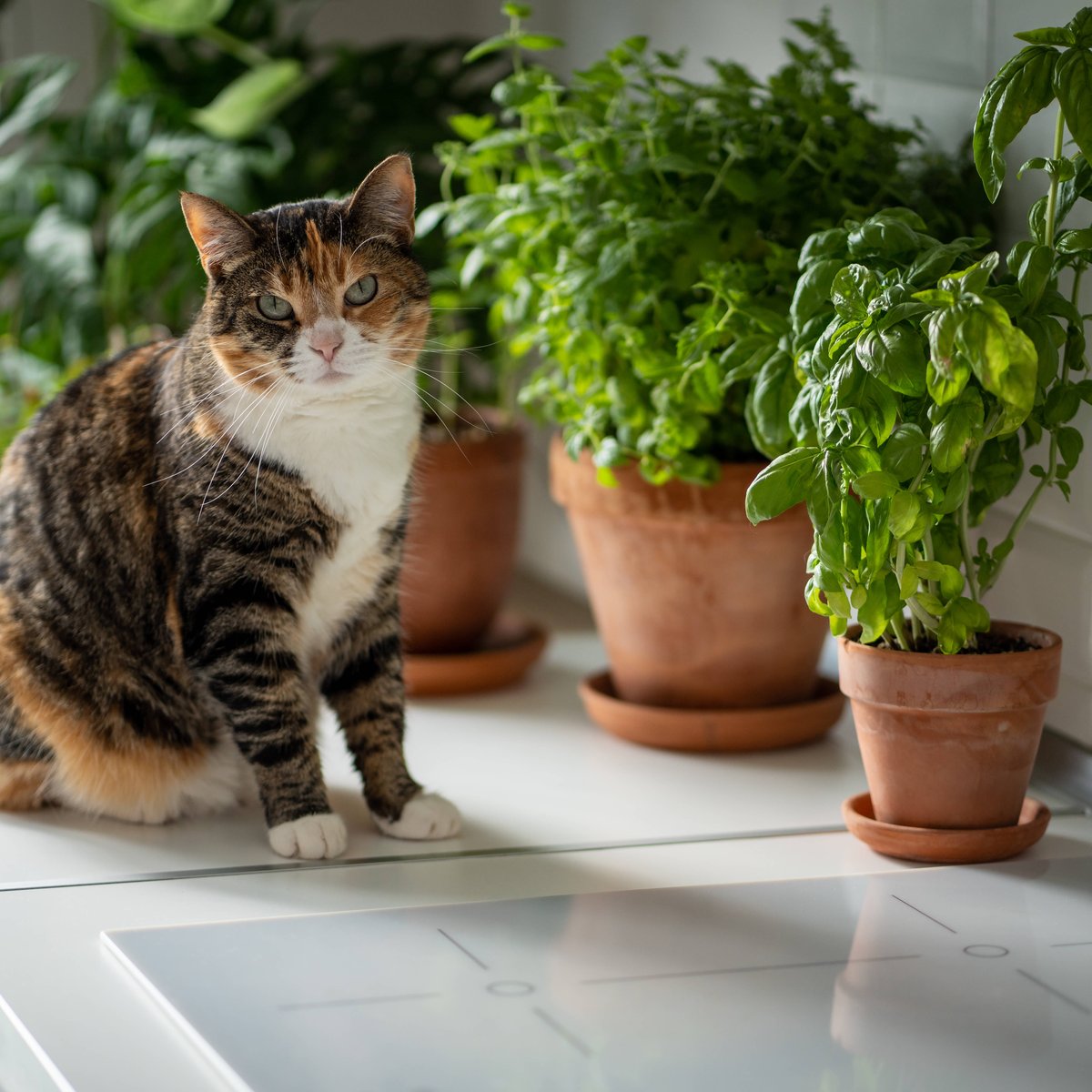
Many popular kitchen herbs are not safe for cats, and the ones that are can still end up dug up, nibbled to stumps or knocked off the sill. A good cat-safe herb garden solves both problems: it picks the right plants, then arranges them so a curious cat cannot ruin them.
Start with the safe and avoid lists, then pick one of the eight plans. For other cat-friendly setups, see our cat grass planter guide and our cat water fountain placement guide.
Safe to Plant
Skip in a Cat Home
The Classic Six-Pack
The idea: Six 4-inch pots, grouped by thirst. Rosemary, thyme and sage prefer to dry out between waterings, while basil, cilantro and dill like steadier moisture.
Size: Six pots with saucers need about 30 to 36 inches of sill. Water each side separately, and the herbs live longer.
Dry and Wet Troughs

The idea: Two narrow troughs, one for the dry herbs and one for the moist ones, are heavier and harder to tip than single pots.
Size: Choose troughs about 1 inch narrower than the sill depth, with drainage holes and a tray under each. Use two separate troughs and water each one to its group's needs.
Decoy and Guard
The idea: Cats nibble whatever is closest, so put the plants you want them to chew first. A decoy pot of cat grass at the cat's end takes the attention.
Size: About 24 to 30 inches of sill for five pots.

The Stair-Step Stand

The idea: A tiered stand holds more pots on a shallow sill, using height instead of depth.
Size: Choose a stand with a base about as wide as the sill, and check the weight rating. Wet pots are heavy, so keep the heaviest on the bottom tier. In a cat home, pick a lower, wider version than a tall narrow tower.
Self-Watering Pots
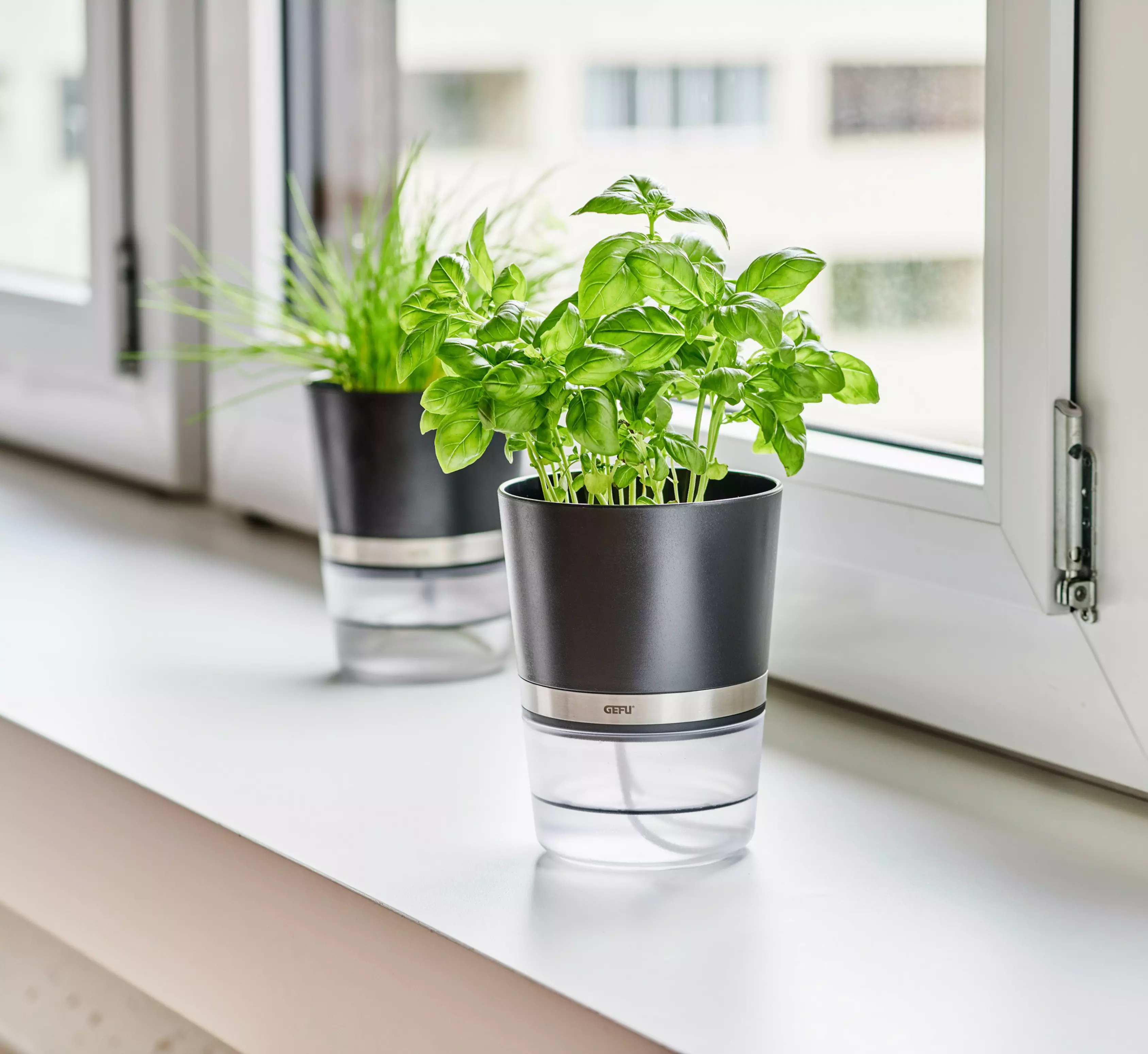
The idea: A water reservoir feeds the soil through a wick, so the thirsty herbs, basil, cilantro and dill, stay evenly moist.
Size: Use them only for the moist group. Rosemary, thyme and sage can rot in constantly wet soil.
The Grow-Light Strip
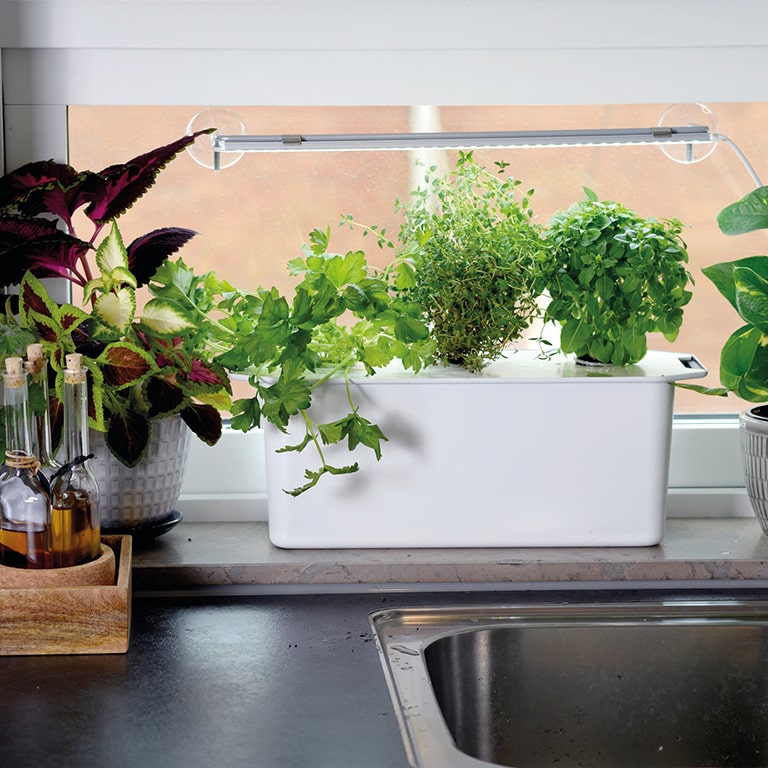
The idea: Most culinary herbs want about 6 hours or more of bright light. A dim kitchen can use an LED grow light instead.
Size: Run it about 12 to 16 hours a day on a timer, a few inches above the plants. Mount it so the cord is out of reach, and let the cord make a drip loop before the outlet.
Pebble Top Layer
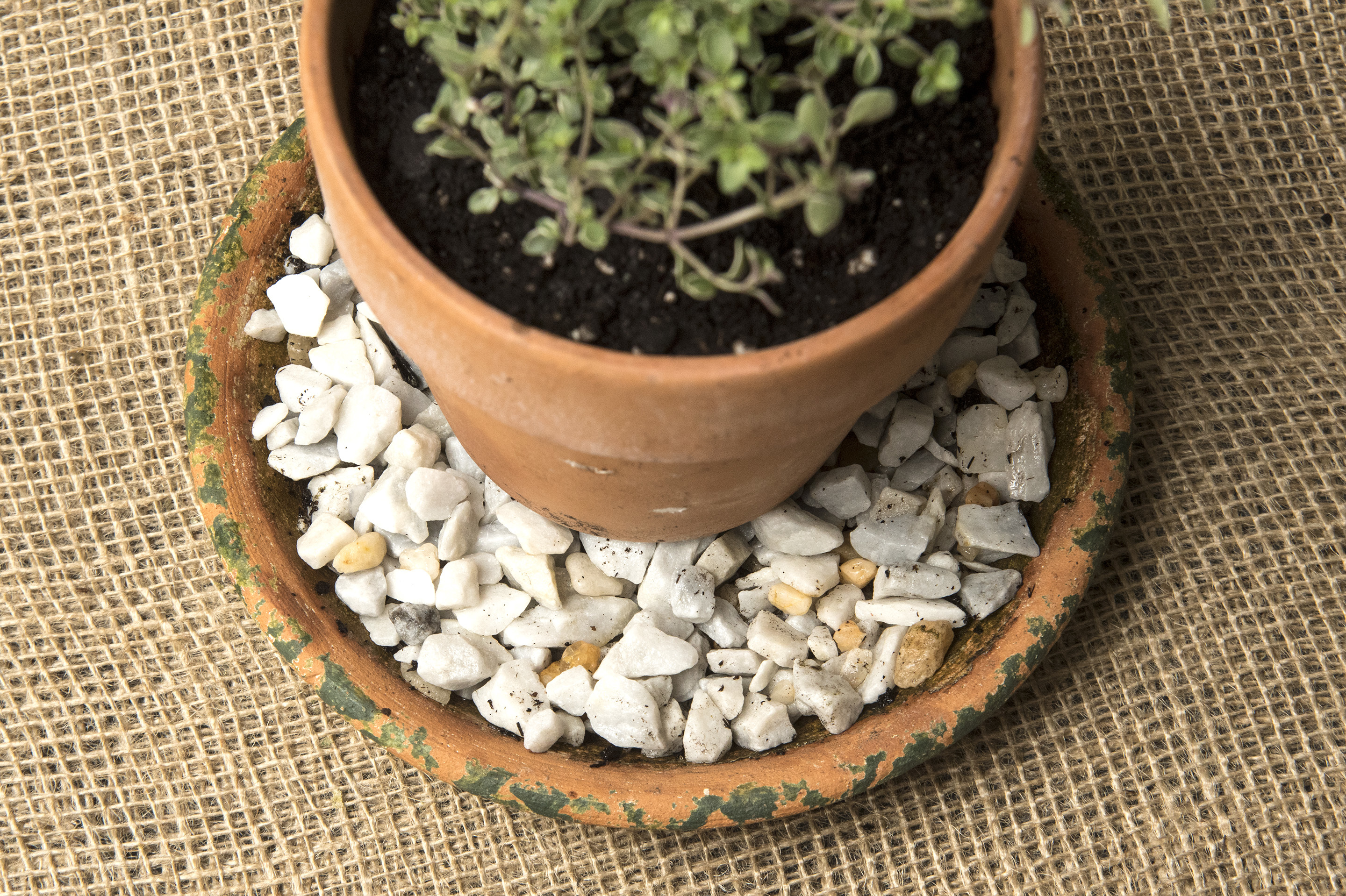
The idea: A layer of smooth pebbles over the soil makes digging unrewarding, and it keeps leaves cleaner when you water.
Size: Use pebbles about 1/2 to 1 inch across, so they are too large to swallow. Cover the soil, and leave a small gap around the stem.
The No-Sill Rail

The idea: If your window has no sill, or a narrow one, use a rail or a shelf beside the window.
Size: Anchor into studs or use rated anchors, and keep the loads light. Place it away from the stove, where heat and grease harm plants.
The Cat-Safe Herb Passport
| Herb | Light | Water | Group |
|---|---|---|---|
| Basil | Warm, bright, 6+ hours | Evenly moist | Wet |
| Cilantro | Bright, cooler | Evenly moist | Wet |
| Dill | Bright, 6+ hours | Evenly moist | Wet |
| Rosemary | Full sun | Let dry between waterings | Dry |
| Thyme | Full sun | Let dry between waterings | Dry |
| Sage | Full sun | Let dry between waterings | Dry |
| Lemon balm | Bright to part shade | Evenly moist | Wet |
Cat-Safe Herb Garden FAQ
Which herbs are safe for cats?
Basil, rosemary, thyme, sage, cilantro and dill, plus lemon balm, are listed as non-toxic by the ASPCA. Treat them as nibbles in small amounts.
Which herbs are toxic to cats?
Avoid oregano, mint, chives, garlic, onions, leeks and lavender. Sources disagree about parsley and tarragon, so skip them. Check the ASPCA list for any plant.
Is basil safe for cats?
Yes. Sweet basil is listed as non-toxic, though large amounts can upset a stomach.
Is mint safe for cats?
Garden mint is generally listed as toxic and can cause stomach upset. Catnip and catmint are different plants in the same family, and cats that eat a lot of catnip can sometimes vomit or become overstimulated, so use it in moderation.
How do I stop my cat digging in herb pots?
Top-dress with smooth pebbles, offer a decoy cat grass pot, use trays and avoid sprays or essential oils.
Can I grow herbs on a kitchen windowsill if I have a cat?
Yes, if every plant is non-toxic, the pots are stable and the sill is clear of heat, splashes and sharp tools.
What if my cat eats a toxic herb?
Remove the plant and call your vet or an animal poison control line right away, such as the ASPCA at 1-888-426-4435 (a fee may apply). Do not wait for symptoms.
How much light do windowsill herbs need?
About 6 hours or more of bright light. In dim kitchens use an LED grow light for roughly 12 to 16 hours a day.
A Simple Takeaway
Plant only herbs on the safe list, group them by how much water they need, and give your cat a decoy plant and a pebble top layer. You get fresh herbs, and your cat gets a safe windowsill.