
8 Pet-Friendly Decor Ideas That Hide Fur, Scratches, and Stains
Don't start with the "pet-friendly" label. Start with your pets, your fabrics and your floors, and let the planner rank the fixes that matter most.
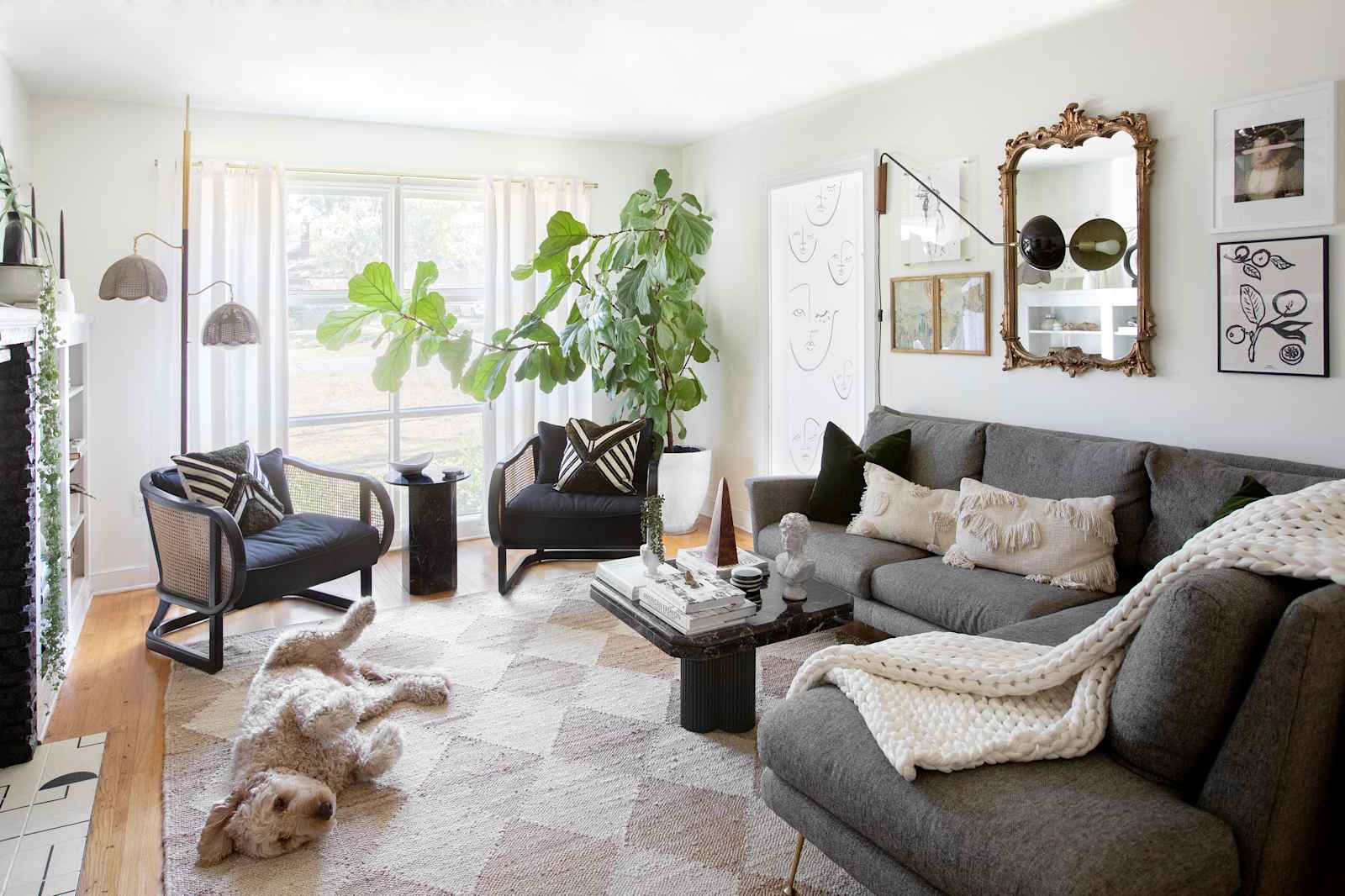
A pet-friendly home does not have to look like a pet store. Most of what makes a room look tired is the same few things: fur that shows against the fabric, scratches on the floor and furniture, and stains that never quite come out. Most lists of pet-friendly decor ideas show a cute photo and leave you to guess which fix suits your pets. A cat that scratches the sofa and a dog that sheds on dark floors need different answers.
This guide gives you eight ideas sorted by the problem they solve, a planner that ranks them for your household and sets the numbers, a diagram of the zones where pets do the most damage, and four tests you can run before you spend anything. If you plan to protect your walls, see our board and batten guide, and for a tougher floor see our peel and stick floor tile guide.
Pet-Friendly Decor That Hides the Mess: Quick Answer
Match the fix to the problem, then to your home:
- Fur shows everywhere: ideas 1, 2 and 8. Choose a fabric tone close to the coat, in a textured weave.
- Scratched furniture or doors: idea 4 first, then 5.
- Scratched floors: idea 6, plus nail trims and runners.
- Stains and accidents: ideas 2, 3 and 7, plus an enzymatic cleaner.
- Muddy dog at the door: idea 8.
- Renter: ideas 1, 2, 3, 4, 6 (runners), 7 and 8 need no permanent change. Idea 5 needs written permission to paint.
- Kids or very curious pets: skip anything small, stringy or battery-powered, and read the safety section.
All eight ideas: 1 fabric matched to the coat, 2 washable covers in rotation, 3 a washable low-pile or flat-weave rug, 4 a scratch zone beside the target, 5 wipeable lower walls, 6 floors that hide scratches, 7 a pet station with lidded storage, 8 an entry wipe-down station.
The numbers to remember: two cover sets per washable piece, one scratcher per cat plus one extra, and a wipeable wall zone about as high as your dog's shoulder plus a few inches.
Free Pet-Proof Planner: What Should You Fix First?
Answer from your own home. The planner ranks the eight ideas and gives you counts and sizes. For the dog's shoulder height, measure from the floor to the top of the shoulder while the dog stands. Enter 0 if you have no dogs.
Pet-proof planner
The Numbers and the Damage Zones
- Cover sets: two sets per washable piece, so one is always clean while the other is in the wash.
- Scratchers: a common guideline is one per cat plus one extra, with at least one tall enough for a full stretch, about 30 inches or more, and sturdy enough not to wobble.
- Placement: put the scratcher beside what the cat already scratches, near where they sleep or by the entrance to the room, not in a back corner.
- Wipeable wall zone: about as high as the tallest dog's shoulder plus roughly 6 inches, with a 24-inch minimum. With cats only, about 36 inches is a practical height.
- Fabric tone: pick a shade within a step or two of the coat, in a textured or heathered weave.
- Vacuum rhythm: a common guideline is a weekly pass for light shedders, two or three quick passes a week for moderate shedders and a quick daily pass for heavy shedders.
Idea 1: Fabric Matched to the Coat
Fur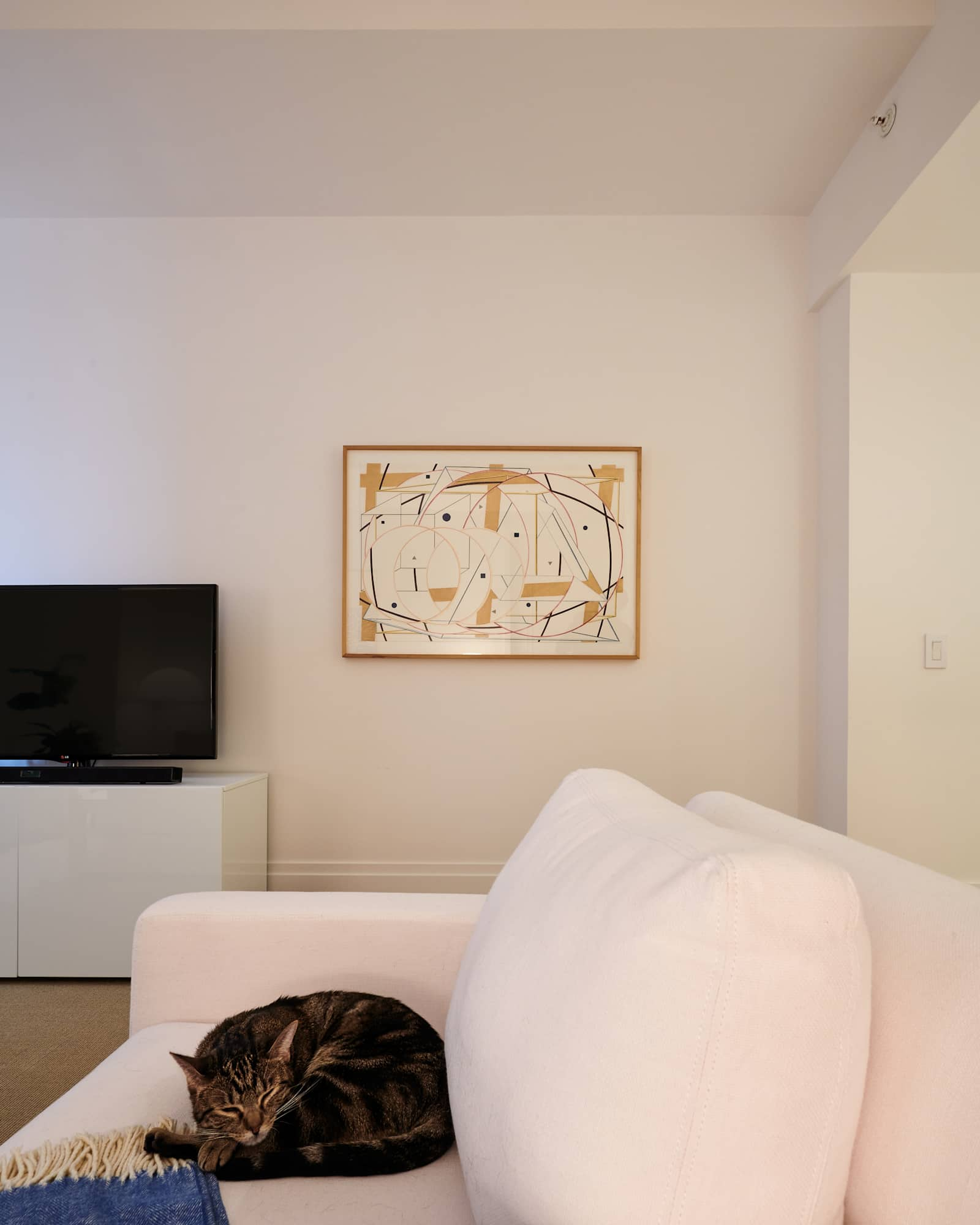
What it looks like: A sofa, chair or bed in a textured, heathered fabric whose tone sits close to your pet's coat.
Why it works: Fur is only visible when it contrasts with the fabric. A flecked, mid-tone weave hides the rest and lets you vacuum a little less often.
Idea 2: Washable Covers in Rotation
FurStains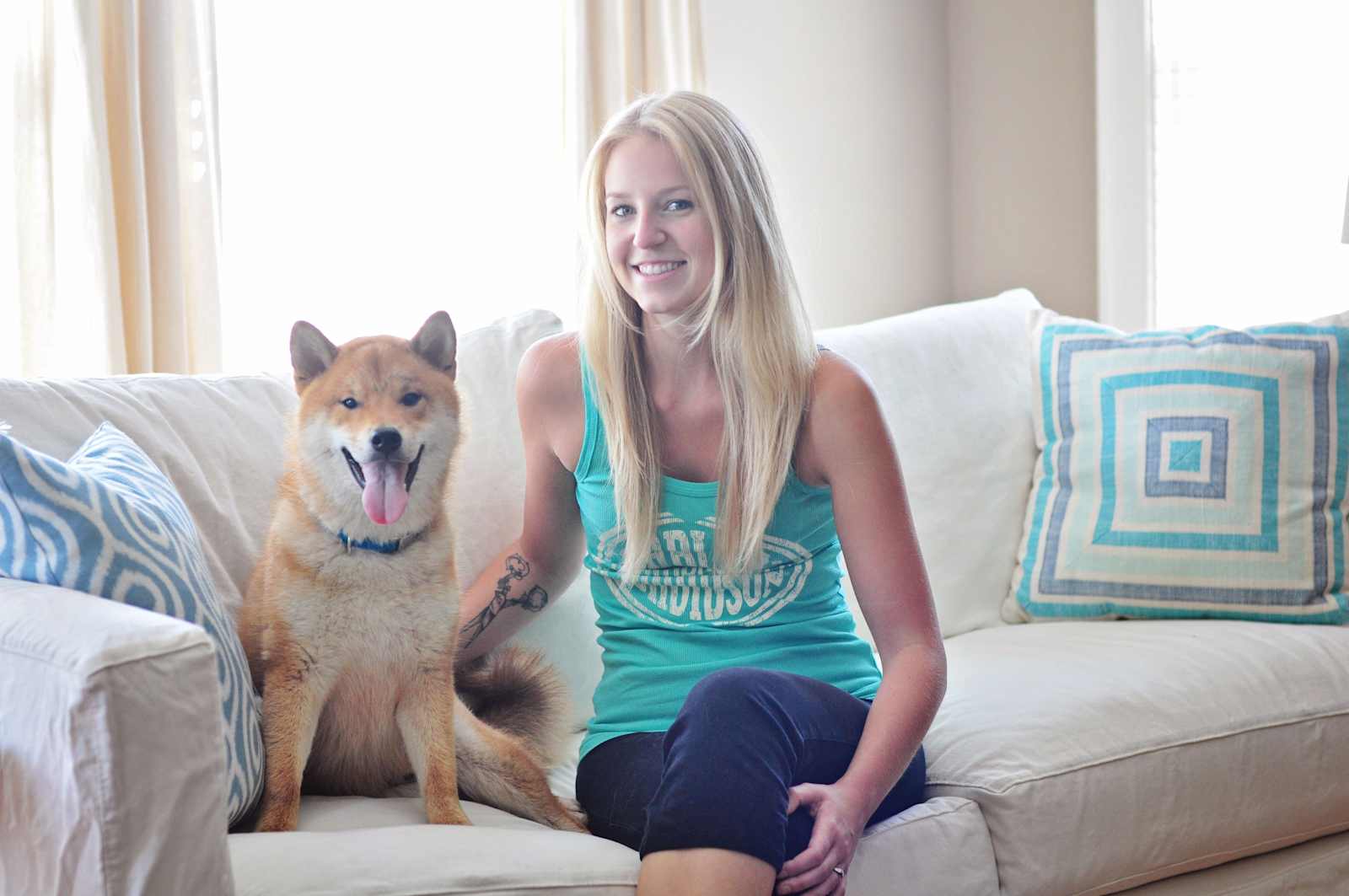
What it looks like: A fitted slipcover or a large washable throw on each pet-favorite piece, with a spare set ready to swap.
Why it works: The cover takes the hair, drool and accidents, and goes in the wash. Two sets mean a stain never leaves the sofa exposed.
Idea 3: Washable Low-Pile or Flat-Weave Rug
StainsFur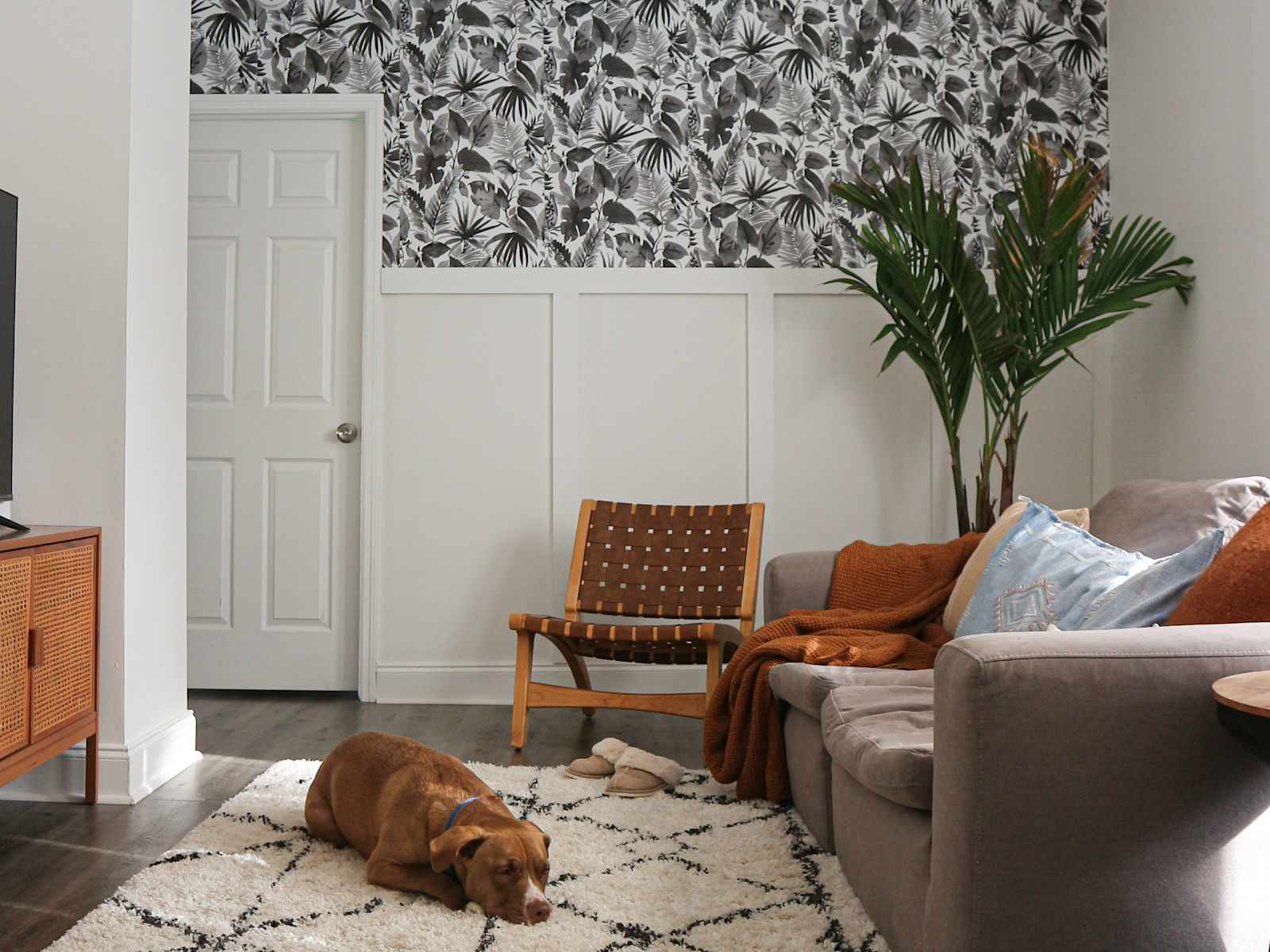
What it looks like: A rug with a low pile or flat weave, in a mottled or patterned design, under the seating area.
Why it works: A busy pattern hides spots and hair, and a low pile does not trap them. Washable rugs turn an accident into a laundry job.
Idea 4: A Scratch Zone Beside the Target
Scratches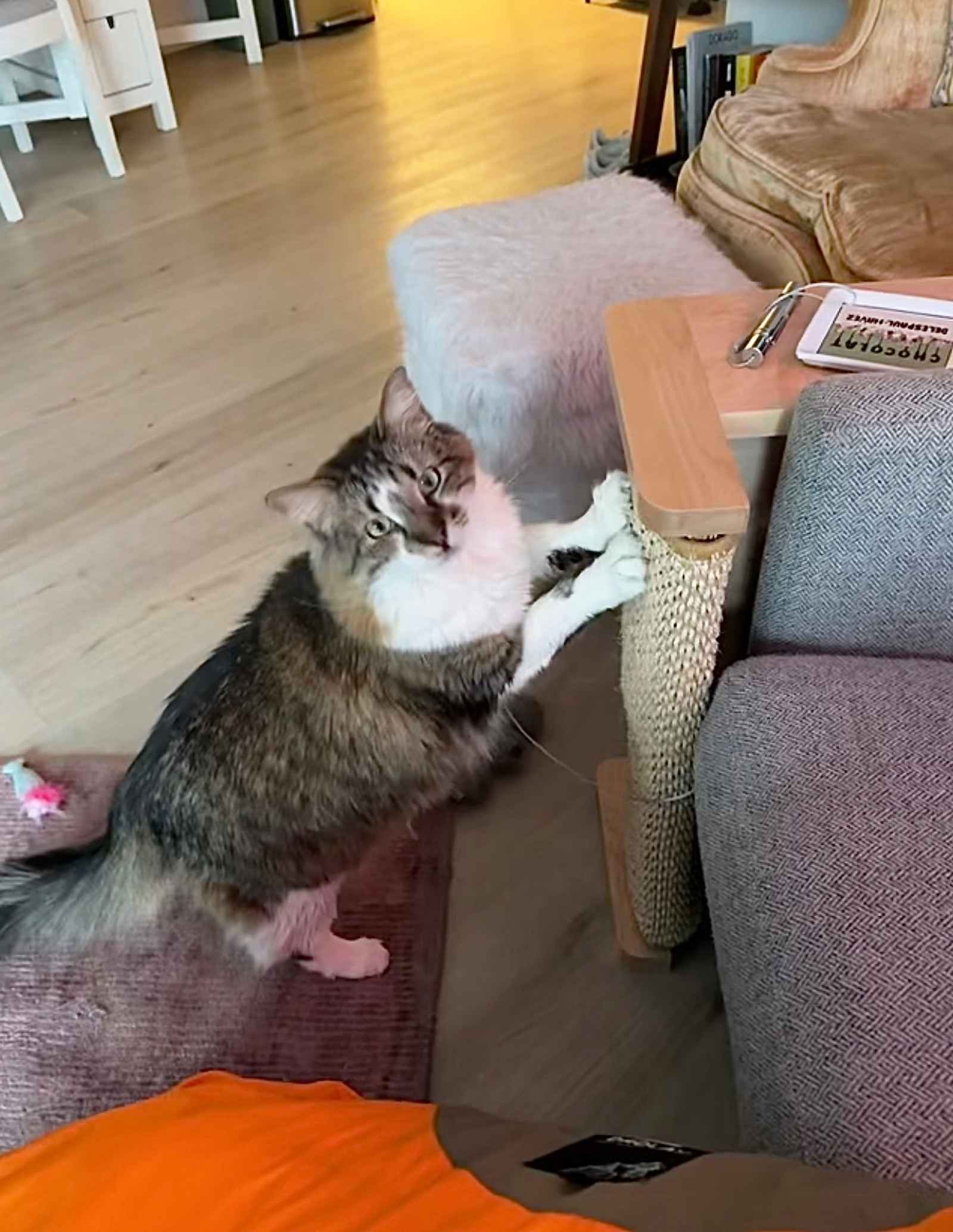
What it looks like: A tall, sturdy scratching post, placed right beside the sofa arm or door the cat already scratches, with a clear guard on the original target for a few weeks.
Why it works: Cats scratch to stretch, mark and sharpen. A better spot in the right place beats trying to forbid it, and a guard makes the old target less appealing.
Idea 5: Wipeable Lower Walls
ScratchesStains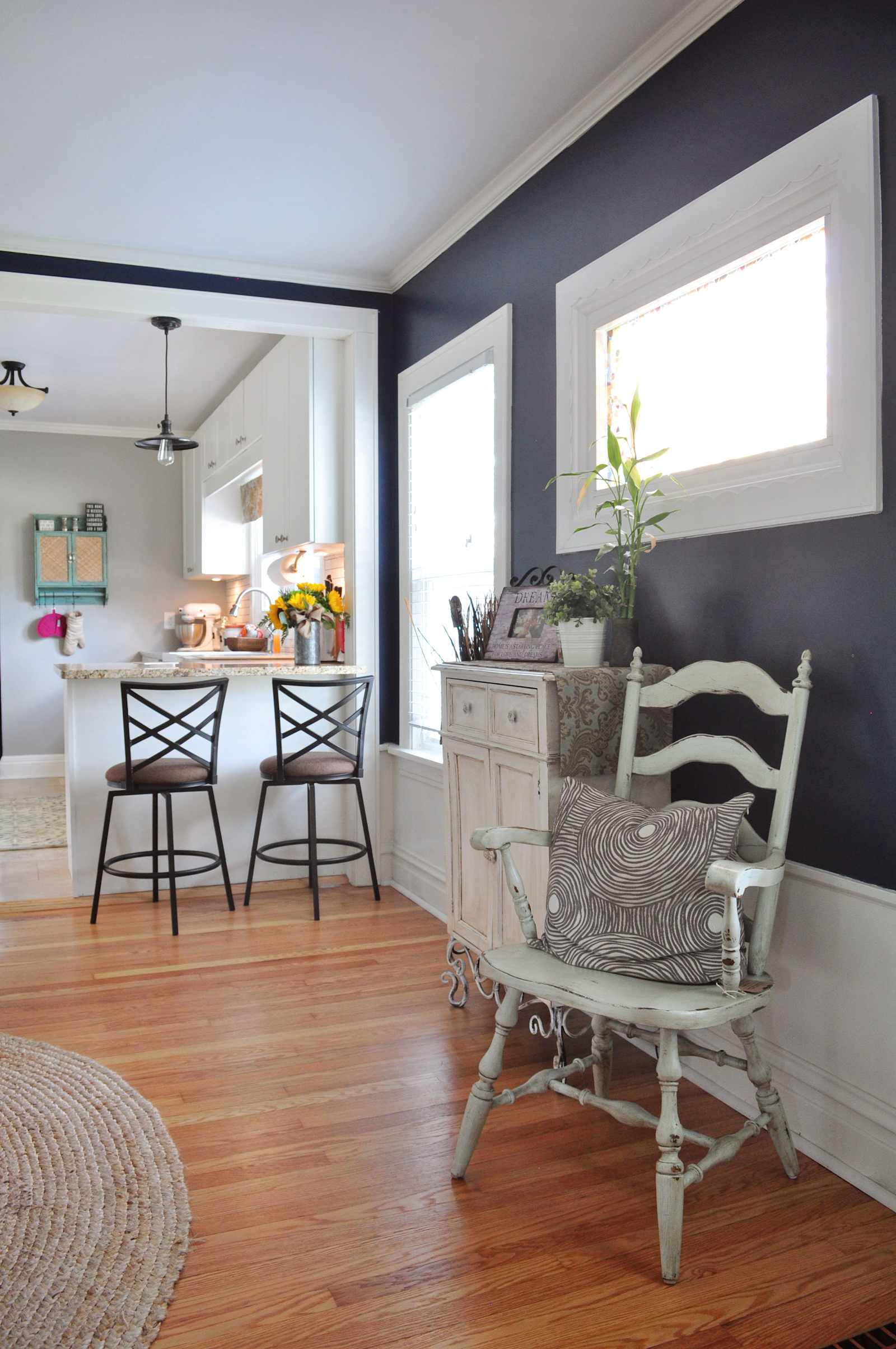
What it looks like: A scrubbable satin or semi-gloss paint, or wainscot panels, on the lower wall where pets rub, shake and splash.
Why it works: Flat paint absorbs dirt and burnishes when you scrub it. A harder finish wipes clean, and a defined line looks like a design choice.
Idea 6: Floors That Hide Scratches
Scratches
What it looks like: A mid-tone, matte floor with some grain or texture, with runners along the paths pets run.
Why it works: Dark glossy floors show every scratch and every light hair. Texture and mid-tone color scatter the light and hide marks.
Idea 7: A Pet Station With Lidded Storage
Stains
What it looks like: A single corner with a washable mat, bowls on a tray, a lidded basket for toys and a hook for leashes.
Why it works: Spills, kibble and toys stay in one wipeable zone, and a lid hides the clutter, so the rest of the room stays calm.
Idea 8: An Entry Wipe-Down Station
FurStains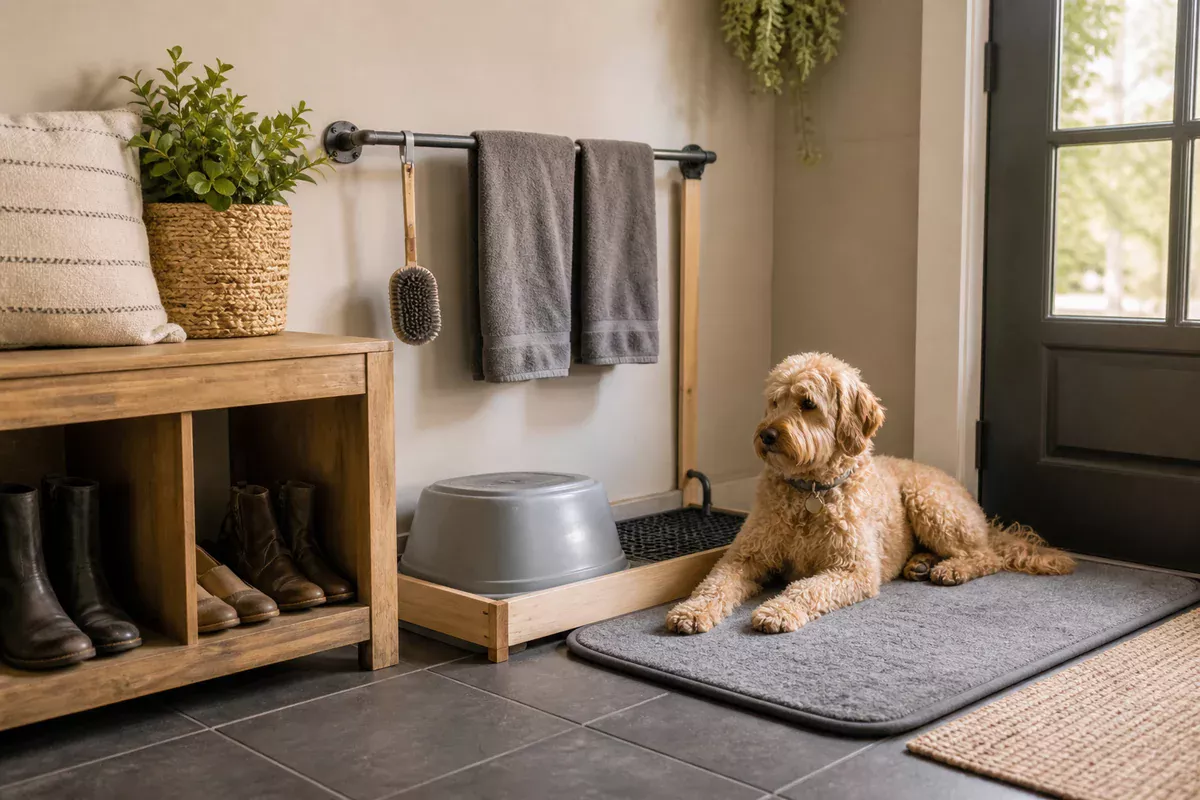
What it looks like: A washable mat and a stack of towels or a paw-cleaning cup by the door, with a hook for the leash and a basket for wipes.
Why it works: Most mud, pollen and fur come in through one door. Catching it there saves cleaning every room.
Pick in 30 Seconds: Which Ideas Fit Your Home?
Find your situation in the left column and read across.
| Your situation | Best ideas | Key check |
|---|---|---|
| Heavy shedding | 1, 2, 8 | Coat-matched, textured fabric |
| Cat scratches the sofa | 4, 2 | Tall, sturdy post right beside it |
| Dog scratches doors or walls | 5, 4 (guards), 6 | Wall zone and nail trims |
| Scratched hard floors | 6, 3 | Wear layer, runners |
| Puppy, senior or sick pet | 2, 3, 7 | Liner under covers, enzymatic cleaner |
| Muddy dog at the door | 8, 3, 5 | Washable mat, scrubbable paint |
| Light-colored pet, dark furniture | 1, 2 | Swap tone or add covers |
| Dark-colored pet, light furniture | 1, 2 | Mid-tone heathered weave |
| Renter | 1, 2, 3, 4, 6 (runners), 7, 8 | Written permission to paint |
| Small children as well | 2, 3, 7 | No strings, small parts or batteries |
| Several pets | 2, 3, 4, 7 | More cover sets and scratchers |
| Tight budget | 2 (throws), 4, 8 | Start with the problem that annoys you most |
Match the Color to the Coat
This is a design guideline, not a rule. Always hold a swatch beside the real fur in your own light.
| Pet coat | Lean toward | Avoid |
|---|---|---|
| White, cream or light gray | Oatmeal, stone, warm gray or light heathers | Black or deep navy solids |
| Golden, tan or brown | Tan, taupe, greige or mid-tone heathers | Very dark solids, which show light hair, and bright white |
| Black or dark brown | Charcoal, espresso, deep green or navy, in a texture | Light or white solids |
| Mixed, brindle or more than one pet | Mid-tone flecked or heathered weaves | Any pure solid in either extreme |
Mistakes That Make It Worse
- Choosing a loop or bouclé weave. Claws snag and hair clings. Pick a tight, flat weave.
- Dark floors with light fur. They show every strand. Go mid-tone and matte.
- Putting the scratcher in a back corner. Cats ignore it. Put it beside the target.
- Using an ammonia cleaner on urine. Ammonia can smell like urine to a pet and invites a repeat. Use an enzymatic cleaner made for pet accidents, and test a hidden spot first.
- Mixing cleaners. Never mix bleach with ammonia or other cleaners, and keep pets away from wet floors.
- Buying one cover set. The day you wash it, the sofa is bare. Buy two.
- Forgetting the walls. Flat paint and scuffed corners age a room faster than any fur.
- Skipping nail trims. Long nails scratch floors and furniture far more. Trim on a regular schedule.
- Trusting a label. "Pet-friendly" is a marketing phrase, not a standard. Read the care and wear details.
- Styling with unsafe plants or small objects. A pretty vase of lilies can be dangerous to a cat. Check before you place anything.
Test Before You Buy: Four Home Checks
These cost almost nothing and show what your home really needs.
- The lint-roller swatch test. Ask for a fabric swatch, rub your pet's hair into it and roll a lint roller over it. If hair clumps into the weave or stays after rolling, choose a different fabric. Hold it against the coat to check the color.
- The claw test. Gently drag a clean fingernail across the swatch. If it pulls a loop or leaves a visible mark, a cat's claws will do worse. Choose a flatter, tighter weave.
- The spill and soak test. Put a small amount of water on a hidden spot of a rug or cover, then blot it. See how long it takes to soak in and whether it leaves a ring. Check the care label before trying anything stronger.
- The sunlight and rake test. Look at your floor with a flashlight held low to the surface, and in the angled light of the afternoon. Existing scratches show up first, and they tell you how much more a darker or glossier floor would show.
Safety Limits
- Many plants and flowers are toxic to pets, and lilies are especially dangerous to cats. Check a pet-safe plant list from a trusted source such as the ASPCA before you bring in any plant, and call your vet or an animal poison hotline if a pet eats something unsafe. Check current contact details in advance.
- Essential oils, diffusers, strongly scented candles and some cleaners can irritate or poison animals. Check labels, keep them out of reach and ventilate.
- Never mix cleaning products, and keep pets off wet floors and out of freshly painted rooms until fully dry and cured.
- Cords, ribbons, string and tassels can be chewed or swallowed, and a swallowed string can be an emergency. Choose items without dangling pieces, and cover or tuck cords.
- Coin and button batteries in candles and remotes are dangerous if swallowed. Keep spares and small items out of reach.
- Anchor tall scratching posts, shelves and cat trees so they cannot tip, and place them away from windows and cords.
- Do not use a heating pad or heated bed that is not made for pets, and check cords for chew marks.
- Choose unbreakable, stable decor in pet areas, and avoid low glass items.
- Renters: check your lease before painting or fixing anything to a wall, and photograph the room first.
Pet-Friendly Decor FAQ
What fabric hides pet hair best?
Color and texture matter more than the fabric name. Choose a tone close to your pet's coat in a textured or heathered weave, since flecks hide hair of several colors. Tightly woven fabrics also let hair brush off more easily than loop weaves. No fabric is hair-proof, so check the maker's care information.
What sofa fabric resists cat scratches?
Tightly woven fabrics usually snag less than loop, bouclé or loose weaves. No fabric is scratch-proof, and leather can be marked too. The most reliable fix is a sturdy scratching post placed right next to the piece the cat targets.
Do washable slipcovers work with pets?
Often yes, especially with two sets so one is always clean. Check the care label for the wash temperature, and consider a waterproof liner under the cover if accidents are likely.
What flooring hides pet scratches?
Mid-tone, matte and lightly textured floors usually hide scratches better than dark glossy ones. Wear resistance varies by product, so check the wear rating and the warranty for pets. Trimmed nails and runners help on any floor.
What kind of rug is best for a home with pets?
A low-pile or flat-weave rug in a mottled or patterned design is usually easiest to keep clean. Machine-washable rugs make accidents simpler, and a non-slip pad stops sliding. Avoid shag and loop piles that catch claws.
How do you protect walls from dogs and cats?
Use scrubbable satin or semi-gloss paint on the lower wall, about as high as your dog's shoulder plus a few inches, or add wainscot or board and batten painted the same way. A kick plate or clear wall protector helps at corners and doorways.
Which common decor items are unsafe for pets?
Many plants and flowers, especially lilies for cats, plus essential oils, strongly scented candles, some cleaners, cords, ribbons and coin or button batteries. Check a pet-safe plant list from a trusted source such as the ASPCA and ask your vet if you are unsure.
How do you stop a cat from scratching the sofa?
Put a sturdy post beside the spot the cat already scratches, tall enough for a full stretch, and make the sofa less appealing with a clear guard or double-sided tape. Reward use of the post. If scratching is sudden or intense, ask your vet or a qualified behaviorist.
A Simple Takeaway
Do not start with the "pet-friendly" label. Match the fix to the problem: color and texture for fur, a scratcher beside the target for scratches, and washable layers for stains. Keep two cover sets, protect the lower wall, choose a matte mid-tone floor and keep everything you place safe for the pets that live there. A pet-friendly home looks calm when the mess has somewhere to go.