
8 Small Bathroom Storage Ideas That Work Without Cabinets
Don't start with the prettiest basket. Start with your ceiling height and the clearance around your toilet, and let the planner tell you what fits.
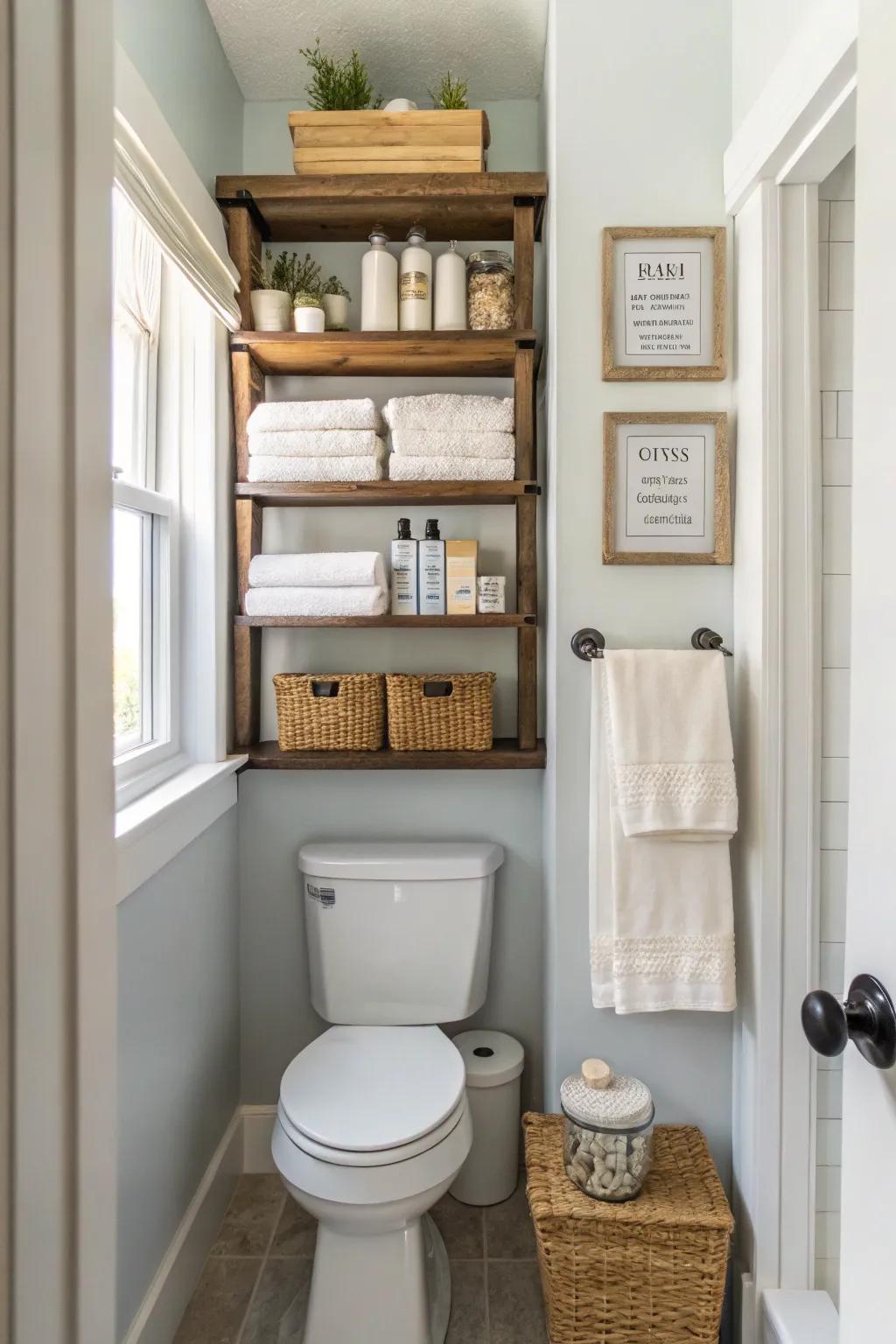
Most small bathrooms do not lack storage ideas. They lack floor, and a cabinet takes floor. The good news is that the walls, the door, the corner and the space above the toilet are usually empty. Most lists of small bathroom storage ideas show pretty shelves and leave you to guess whether any of them fit around a toilet that needs its own clear space.
This guide gives you eight ideas, a planner that turns three measurements into shelf height, shelf count and a floor-space check, a diagram of the clearance zones to keep free, and four tests you can run at home before you buy.
Small Bathroom Storage Without Cabinets: Quick Answer
Take three measurements: ceiling height, the height of the top of your toilet tank, and the distance from the toilet centerline to the nearest side wall or fixture. Then use this ladder:
- Room for 3 or more shelves above the tank: a freestanding over-toilet unit (idea 1) gives the most storage for the least floor.
- Room for one or two shelves: a wall shelf (idea 4) or a pole shelf in a corner (idea 2).
- No room above the tank: use the door, the shower and the walls: ideas 3, 5 and 7.
- At least 6 spare inches of floor beside the toilet: a slim cart (idea 6) fits.
- Cannot drill: ideas 1, 2, 3, 5, 6 and 8.
All eight ideas: 1 freestanding over-toilet unit, 2 tension pole corner shelf, 3 over-door organizer, 4 wall-mounted shelf or ledge, 5 shower caddy, 6 slim rolling cart, 7 wall rail with hooks and baskets, 8 toilet-tank tray and floor basket.
The numbers to remember: keep the lowest shelf at least 8 inches above the tank, keep floor storage outside the typical 15-inch side and 21-inch front toilet clearances, and keep daily items between about 24 and 60 inches from the floor.
Free Bathroom Storage Planner: What Fits Your Bathroom?
Measure in inches. For the tank, measure from the floor to the top of the tank lid. For the side measurement, measure from the center of the toilet to the nearest side wall, tub or vanity.
Small bathroom storage planner
The Numbers Behind the Planner
- Toilet side clearance: many building codes require at least 15 inches from the toilet centerline to a side wall or fixture. Some planning guidelines suggest a little more.
- Toilet front clearance: many codes require at least 21 inches of clear floor in front of the toilet. Check your local rules, because they vary.
- Shelf above the tank: keep the lowest shelf at least 8 inches above the tank top, so you can reach the flush control and lift the lid. This is a practical guideline, so check your tank.
- Ceiling gap: leave about 2 inches under the ceiling so a tall unit can be tilted into place.
- Reach zone: daily items fit best between about 24 and 60 inches from the floor.
Idea 1: Freestanding Over-Toilet Unit
What it looks like: A shelf unit whose legs straddle the toilet, with two to four shelves above the tank.
Why it works: It turns dead space into shelf area without touching the wall or the floor in front of the toilet, so renters can use it and nothing needs drilling.
Idea 2: Tension Pole Corner Shelf
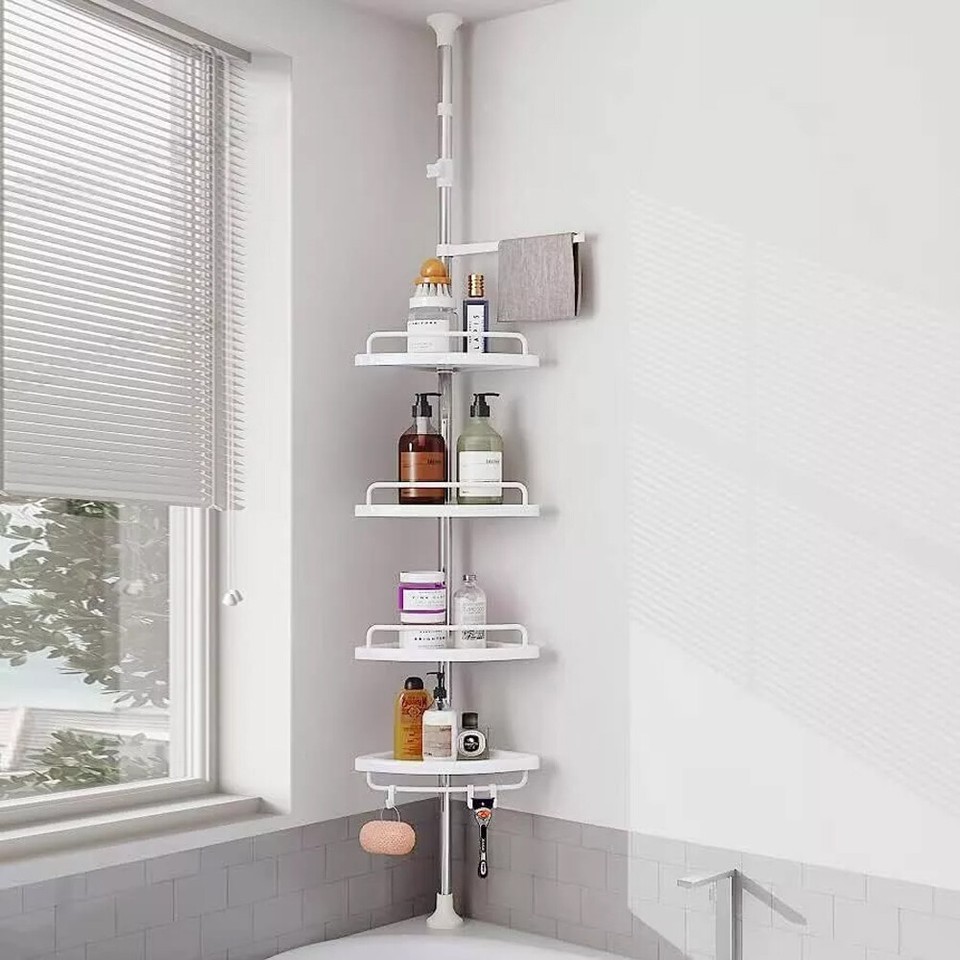
What it looks like: A pole that wedges between floor and ceiling in a corner, with three or four shelves clipped to it.
Why it works: A corner is the most wasted spot in a small bathroom. A pole shelf uses it for storage and needs no drilling.
Idea 3: Over-Door Organizer

What it looks like: Hooks or a pocket organizer that hang over the top of the bathroom door.
Why it works: The back of the door is flat, empty and always there. It holds towels, robes, hair tools and cleaning supplies with no drilling.
Idea 4: Wall-Mounted Shelf or Ledge

What it looks like: One or two narrow shelves above the toilet, over the door or on any empty wall.
Why it works: It adds storage at any height you choose and takes no floor. It is also the best fit when the ceiling is too low for a freestanding unit.
Idea 5: Shower Caddy

What it looks like: A caddy that hangs from the shower pipe, a corner tension pole with shelves, or a caddy that hooks over the shower door or rail.
Why it works: The shower is where most toiletries live, and a caddy gets them off the tub edge and out of the walkway.
Idea 6: Slim Rolling Cart

What it looks like: A narrow cart, often about 6 to 10 inches wide, that rolls into a gap between the toilet, tub or vanity and the wall.
Why it works: It turns a gap that fits nothing else into three tiers of storage, and you can roll it out to clean.
Idea 7: Wall Rail With Hooks and Baskets

What it looks like: A horizontal rail on the wall with S-hooks that hold towels, hanging baskets, a small bin or a cup.
Why it works: A rail is flexible. You can add or move hooks as your needs change, and one rail can hold more than a row of fixed hooks.
Idea 8: Toilet-Tank Tray and Floor Basket

What it looks like: A narrow tray on the tank for spare items, and a basket in a corner or on the floor for rolled towels and toilet paper.
Why it works: It is the cheapest option, takes no tools and adds a small amount of storage where you need it.
Pick in 30 Seconds: Which Idea Fits Your Bathroom?
Find your situation in the left column and read across.
| Your situation | Best ideas | Key check |
|---|---|---|
| Room for 3 or more shelves above the tank | 1, 4 | Toilet width and 8 inches above the tank |
| Room for one or two shelves | 4, 2 | Studs or pole range |
| Low ceiling or no room above the tank | 3, 5, 7 | Door thickness and shower pipe |
| Renter who cannot drill | 1, 2, 3, 5, 6, 8 | Your lease and weight ratings |
| Owner or permission to drill | 4, 7, plus any | Studs and what is behind the wall |
| Spare floor gap of 6 inches or more | 6, 2 | Outside the toilet clearance zone |
| No floor to spare | 3, 4, 5, 7 | All of these use walls or doors |
| Shared bathroom with several people | 7, 5, 3 | One hook or rail space per person |
| Steamy bathroom with no window | 1, 2, 4, 6 | Rust-resistant materials, no adhesive |
| Kids in the house | 4 (high), 1 (anchored), 3 | Lock cleaners and medicines away |
| Want a tidy look | 1, 8, 7 | Matching baskets and rolled towels |
What Goes Where: A Reach-Zone Rule
Where you put things matters as much as what you buy. Use these zones as a guideline.
- Daily zone, about 24 to 60 inches: hand towel, toilet paper, toothbrush holder, hair tools, the products you reach for every day.
- Backup zone, above about 60 inches: spare toilet paper, spare towels and other items you reach for weekly or less.
- Low zone, below about 24 inches: heavy items and large bottles, plus a basket for cleaning supplies. Keep cleaners out of children's reach.
- Not in the bathroom: medicines and anything that hates humidity or heat. Many labels say to keep them in a cool, dry place.
Mistakes That Make Bathroom Storage Fail
- Breaking toilet clearance. A floor basket or cart inside the clearance zone makes the toilet awkward to use and can fail an inspection.
- A shelf too close to the tank. Keep the lowest shelf at least 8 inches above the tank, so the flush control and lid stay usable.
- Blocking the water shut-off valve. You need to reach it in an emergency, so keep it clear.
- Using adhesive in a steamy room. Steam softens many adhesives. Test first or choose a mounted option.
- Hanging more than the rating. Wet towels and full bottles weigh more than they look.
- Skipping the anti-tip strap. Tall units can tip, especially around children.
- Cheap metal. Plain steel rusts in a bathroom. Choose stainless, coated or plastic.
- A door that will not close. Check this before you load an over-door organizer.
- Open shelves with no plan. Without matching baskets and rolled towels, open storage looks cluttered.
- Towels that never dry. A pile of damp towels invites mildew. Give daily towels a hook and airflow.
Test Before You Buy: Four Home Checks
These cost almost nothing and prevent most returns.
- The tape-and-sit test. Tape the footprint of the cart, basket or unit on the floor. Sit on the toilet, stand up and turn around. If you bump anything, or the tape sits inside the clearance zone, move it.
- The steam test. Hang a hook or caddy with a bathroom-rated adhesive, or tape a sample, then run a hot shower for 10 minutes with the door shut. Leave it overnight with a normal load. Anything that sags or peels should not go on your wall.
- The load test. Load a shelf, hook or pole gradually with the real items, then leave it for 24 hours. Keep it well under the weight rating.
- The daily-routine test. Brush your teeth, shower and dry off with the new setup for two days. If you have to reach past something or move it every time, relocate it.
Safety Limits
- Keep the toilet clearance zone clear, and keep access to the water shut-off valve.
- Anchor tall units to the wall if the maker provides a strap and your lease allows it, especially around children.
- Do not store plugged-in hair dryers, razors or heaters near the sink, tub or toilet. Use only outlets and devices rated for bathrooms, and ask an electrician if you are unsure.
- Store cleaning products and medicines out of children's reach, locked if possible, and follow the label storage instructions.
- Hang items from studs or rated anchors, and check for pipes and wiring first. Drilling tile needs the right bit.
- Stay well under every weight rating, and remember that wet towels and full bottles are heavy.
- Keep towels and baskets away from heaters, and let damp items dry to avoid mildew.
- Renters: check your lease before drilling or using adhesive, and photograph the walls first.
Small Bathroom Storage FAQ
How do you add storage to a small bathroom without cabinets?
Use vertical and unused spaces: a freestanding unit over the toilet, a pole shelf in a corner, an over-door organizer, wall shelves or a hook rail, a shower caddy, a slim cart and baskets. The right mix depends on your ceiling height, toilet clearance and whether you can drill.
How much space do you need around a toilet?
Many codes require at least 15 inches from the toilet centerline to a side wall or fixture and at least 21 inches of clear floor in front. Requirements vary, so check your local code, and keep floor storage outside these zones.
How high above the toilet should a shelf be?
Keep the lowest shelf at least 8 inches above the top of the tank, so you can reach the flush control and lift the lid. Measure your own tank. Keep daily items between about 24 and 60 inches from the floor.
What bathroom storage works for renters without drilling?
A freestanding over-toilet unit, a tension pole shelf, an over-door organizer, a shower caddy, a slim cart, a tank tray and floor baskets. Check your lease before using adhesive, which often struggles in steam.
Will adhesive hooks stay up in a bathroom?
They can, but steam is hard on adhesive. Choose a bathroom-rated product, clean and dry the surface, follow the curing times, stay well under the weight rating and run the steam test first.
Are tension pole shelves sturdy?
They are sturdy enough for light bathroom items when installed correctly. Check that the pole's range covers your ceiling, keep heavy items low and stay under the shelf ratings. Textured ceilings can reduce grip.
Where should you keep towels in a small bathroom?
Hang the towel you use on a hook or rail so it can dry, and keep spares rolled in a basket, on a shelf or on an over-door hook. A damp towel in a pile invites mildew.
Is it okay to store medicine in the bathroom?
It is usually better not to, because heat and humidity can affect some medicines and many labels say to keep them cool and dry. Keep medicines and cleaners out of children's reach, locked if possible.
A Simple Takeaway
Do not start with the prettiest basket. Measure the ceiling, the tank and the space beside the toilet, and let those three numbers pick the idea. Keep the lowest shelf 8 inches above the tank, keep floor storage outside the toilet clearance, keep daily items within easy reach, and run the steam test before you trust adhesive. A small bathroom holds a surprising amount when you use the walls and the door.