
9 Amazon Home Finds Under $25 That Look Like They Cost Triple
Don't start with the price. Start with the listing, and let the checker tell you whether to order one and test it or skip it.

Cheap decor looks cheap for a handful of repeatable reasons: shiny plastic, a vague material, an item that is too small, and too many unrelated things in one spot. Fix those and an inexpensive piece can look chosen. Most lists of Amazon home finds under $25 show a pretty photo and a price, and leave you to find out in person whether the item matches it.
This guide gives you nine categories sorted by the role they play in a room, a free listing checker that scores risk before you buy, a diagram of the four tells that make budget items look expensive, a table to match your situation, and four checks to run inside the return window. For the styling that comes next, see our sideboard styling guide and our dining table centerpiece guide. This page is independent and is not affiliated with or endorsed by Amazon.
Amazon Home Finds Under $25: Quick Answer
Check the listing, not the price. Order one item first, test it, then buy more. Then match your situation:
- Total budget around $25 to $50: one hero piece (ideas 4 or 7) and one detail (ideas 2 or 9).
- Room feels flat: ideas 1, 3 and 8 add texture and warmth.
- Surfaces look cluttered: ideas 6 and 9 corral things.
- Renter: ideas 1, 2, 3, 4, 6, 7, 8 and 9 need no tools.
- Cabinets look dated: idea 5, new pulls, if the hole spacing matches.
- Kids or pets: choose unbreakable, soft and non-battery pieces (ideas 1, 6, 8).
- Listing has no dimensions, a vague material and only stock photos: skip it.
All nine categories: 1 textured pillow covers, 2 matte vase trio, 3 linen-look lamp shade, 4 oversized frame with a wide mat, 5 cabinet pulls, 6 lidded woven basket, 7 large faux branches, 8 waffle or linen-look throw, 9 a solid tray.
The numbers to remember: go for at least a 3-stage check (material, dimensions, returns), order one before you order four, and keep about 15 percent of your budget unspent until the first pieces pass the tests.
Free Listing Checker: Order One and Test, or Skip?
Open the listing you are thinking about and answer from what is on the page. You are scoring the listing, not the product, so if you cannot find the answer, choose the weaker option. The price is in US dollars.
Amazon listing checker
The Numbers and the Four Tells
- The score: six factors from the listing are summed: material (0 to 3), dimensions (0 to 2), customer photos (0 to 2), 3-star review content (-2 to 1), returns (-3 to 2) and finish (-1 to 1). The total is scaled to 0 to 100.
- Verdict bands: 70 or more means order one and test it. 45 to 69 means order one only if returns are confirmed. Under 45 means skip. If the item is not returnable, buy only if the score is 85 or more and you would keep it as it arrives.
- Per-item cap: total budget divided by the number of items. If the price is above it, one of the plans has to change.
- Price gap: if you enter a shop price, the checker shows the ratio. A gap of 3 or more is only a find if the listing also scores well.
- Unspent reserve: keep about 15 percent of the budget until the first pieces pass the tests, so a miss does not leave you with holes to fill.
Category 1: Textured Pillow Covers
Supporting
What it looks like: Covers in linen-look, boucle or waffle textures, in two or three tones of one color family, on a sofa or bed.
Why it works: Texture is the cheapest way to add depth to a room. Because you buy the cover, not the insert, you can keep good inserts you already own.
Category 2: Matte Vase Trio
Detail
What it looks like: Two or three vases in a matte, stone- or ceramic-look finish, in different heights and one color family.
Why it works: A trio reads as one object, and a matte surface hides the plastic look that gloss gives away. It is the fastest way to give a console or shelf a focal point.
Category 3: Linen-Look Lamp Shade
Supporting
What it looks like: A plain drum or empire shade in a linen-look fabric, swapped onto a lamp you already own.
Why it works: A dated or yellowed shade drags down a good lamp base. A clean fabric shade gives soft, even light and updates the whole piece for little money.
Category 4: Oversized Frame With a Wide Mat
Hero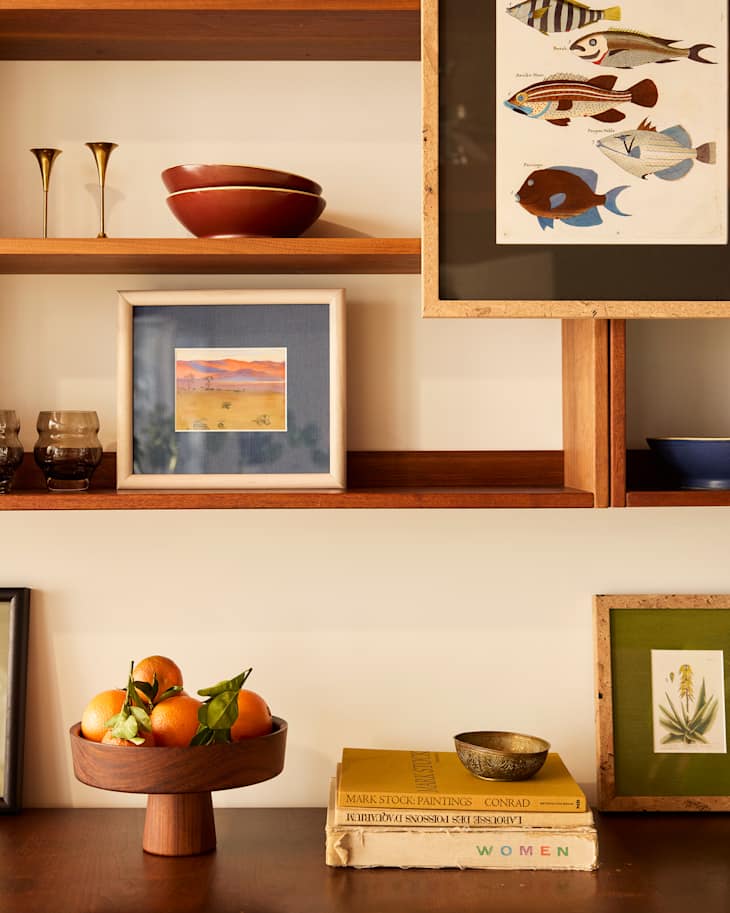
What it looks like: A large frame with a wide mat around a smaller print or photo, hung above a sofa, console or bed.
Why it works: A wide mat makes a small image look gallery-framed, and scale is the main tell of a high-end wall. It lets inexpensive prints or your own photos look intentional.
Category 5: Cabinet Pulls
Detail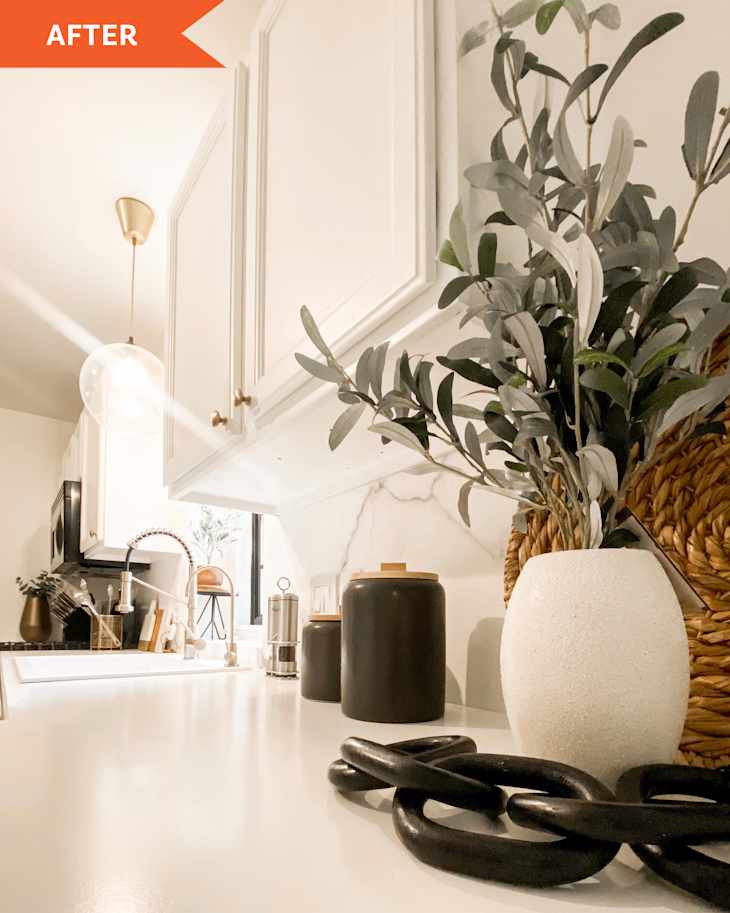
What it looks like: New pulls or knobs in a consistent finish, replacing old hardware on a kitchen, bathroom or dresser.
Why it works: Hardware is at hand height and seen every day, so a swap changes how the whole piece reads. It is a small purchase with a large effect.
Category 6: Lidded Woven Basket
Supporting
What it looks like: A basket with a lid or a lined interior, in a natural-look weave, on a shelf, console or floor.
Why it works: A lid hides visual clutter, and a natural weave adds warmth. One basket counts as one object, however much it holds.
Category 7: Large Faux Branches
Hero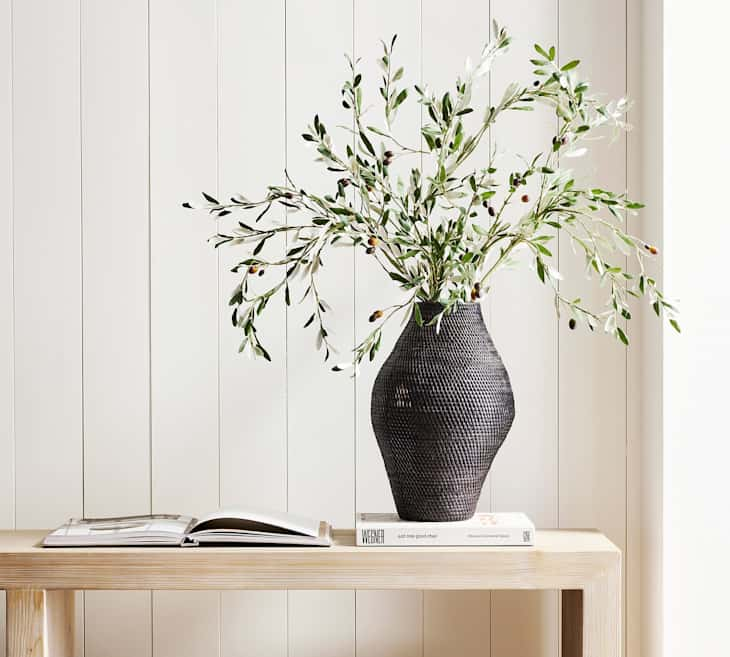
What it looks like: Three to five long faux branches in a large vase, with varied leaf sizes and bendable stems.
Why it works: Scale again. A few tall stems fill a corner or a console the way a floor plant would, with no watering, and branch shapes look more natural than small bunches.
Category 8: Waffle or Linen-Look Throw
Supporting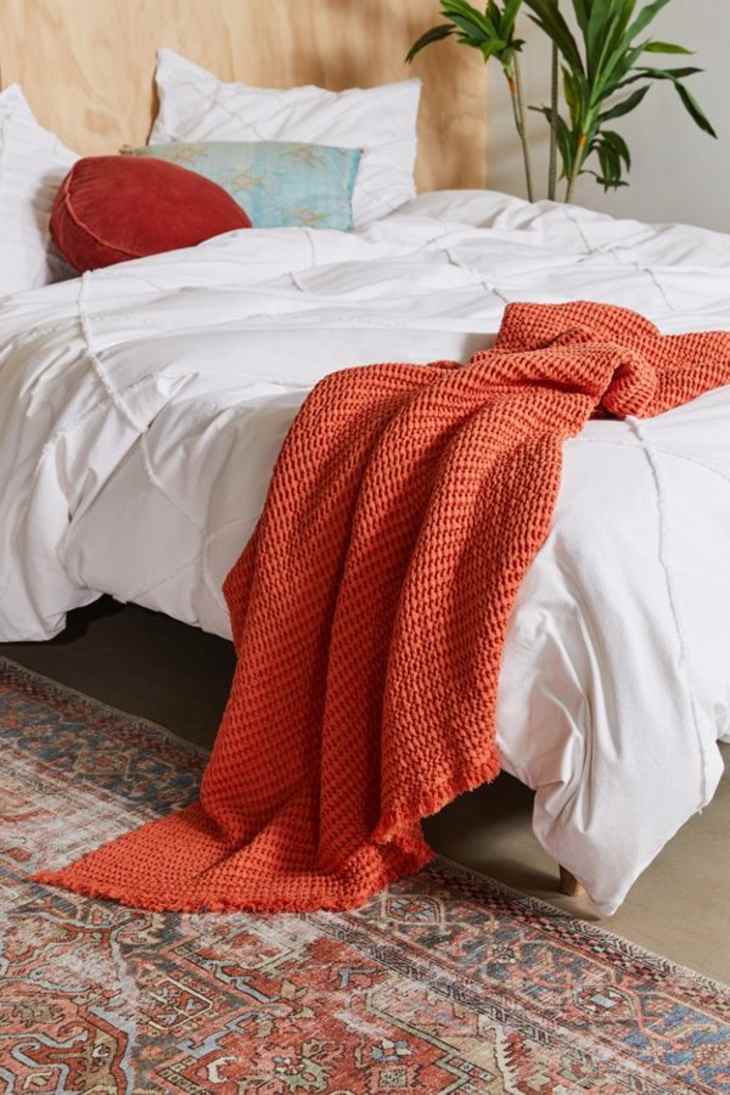
What it looks like: A cotton or cotton-blend throw with a waffle, knit or linen texture, draped over a sofa arm or the end of a bed.
Why it works: A relaxed, textured throw softens a room and shows a quality fabric. It is also one of the few items here that you use every day.
Category 9: A Solid Tray
Detail
What it looks like: A flat tray in wood, marble-look or metal with a lip, holding two or three objects on a coffee table, ottoman or counter.
Why it works: A tray draws a border around a group, so it reads as one composed object. It also lifts everything away in one move when you need the surface.
Pick in 30 Seconds: Which Finds Fit Your Room?
Find your situation in the left column and read across.
| Your situation | Best categories | Key check |
|---|---|---|
| About $25 to $50 total | One hero (4 or 7) plus one detail (2 or 9) | Order one, test, then add |
| Living room feels flat | 1, 8, 3 | Texture and warm bulbs |
| Console or shelf looks bare | 2, 7, 9 | Odd numbers, varied heights |
| Blank wall | 4 | Scale: two-thirds of the furniture |
| Dated kitchen or dresser | 5 | Hole spacing and screw length |
| Cluttered surfaces | 6, 9 | Lid, lip and one object count |
| Bedroom | 1, 8, 3 | One color family |
| Bathroom | 9, 6, 5 | Water-safe materials |
| Renter | 1, 2, 3, 4, 6, 7, 8, 9 | No tools, leaning frames |
| Kids or pets | 1, 6, 8 | Soft, unbreakable, no batteries |
| Dark room | 3, 4, 2 | Light colors, warm bulbs |
| Gift for someone who has everything | 2, 8, 9 | Returns and gift receipt |
How to Read a Listing in Two Minutes
- Photos: do the customer photos match the main photo in color, finish and size? Look for ordinary rooms, daylight and close-ups of seams.
- Material line: a named material is better than "composite." If it only says "plastic" or "resin," expect a lighter feel.
- Dimensions: stated in inches, ideally with a photo next to something you know, like a hand or a book.
- 3-star and 2-star reviews: they are usually the most specific. Repeated complaints about color, smell or size are worth more than a pile of 5-star comments.
- Review patterns: be careful when reviews are generic, arrive in a short burst or mention different products.
- Variations: reviews may be shared across sizes and colors, so a good review for one color may not apply to yours.
- Seller and returns: check who sells and ships the item and whether it is returnable, and note the deadline.
- Price: the price can change by seller, variation and day. Treat it as a guide, and check it again before you buy.
Mistakes That Waste a Small Budget
- Buying by price alone. A low price on a weak listing is usually a trap, not a find. Score the listing first.
- Buying four at once. If the first one disappoints, you have four to return. Order one, test it, then buy more.
- Buying small. A tiny vase, tiny frame or tiny stem looks like clutter. Go bigger and buy fewer.
- Shiny finishes. Gloss shows plastic. Choose matte, textured or natural.
- Mixing too many colors. Stay in one color family, with one metal finish.
- Not measuring. Hole spacing, lamp fitters, frame openings and shelf depth all decide whether an item fits.
- Not reading 3-star reviews. They hold the real problems.
- Missing the return deadline. Test items the day they arrive.
- Cheap electrical items from unknown sellers. For anything plugged in, choose products with a recognized safety listing. Saving a few dollars is not worth a fire risk.
- Styling everything at once. One strong hero beats nine small ones. Use our sideboard formulas to place what you buy.
Test Inside the Return Window: Four Checks
Do these the day an item arrives. They take about ten minutes each, and they are free.
- The arm's-length photo test. Place the item where it will live and compare it with the listing photos from arm's length, in daylight. If the color, size or finish is clearly different, request a return.
- The hand and edge test. Pick it up. Check the weight, the seams, the edges and any glue, burrs or loose parts. A piece that feels flimsy in your hand will look flimsy in the room.
- The evening-light test. Look at it again under your room's evening bulbs. Many colors and finishes change a lot after dark, and shiny surfaces show up more.
- The air-out and wash test. Leave it in a ventilated room for 24 hours. A strong chemical smell that does not fade, or a fabric that bleeds or sheds in the first wash, is a reason to return it.
Safety Limits
- For anything that plugs in, choose products with a recognized safety listing such as UL or ETL, use the adapter that comes with it, and do not exceed a lamp's stated bulb wattage.
- Keep lamp shades clear of the bulb, and use LED bulbs, which run cooler.
- LED candles and many small devices use coin or button batteries, which can be seriously dangerous if swallowed. Choose a secure battery compartment, store spares out of reach, and keep small items away from young children.
- Keep real candles away from shades, curtains, branches and dried stems, and never leave a flame unattended.
- Hang frames and mirrors on hardware rated for their weight, into studs or proper anchors, and check for pipes and wiring first. Do not hang heavy pieces over a bed or crib with adhesive strips.
- Check the Consumer Product Safety Commission recall list for anything you plan to use around children.
- Air out new items, and be cautious with strong smells, especially in bedrooms.
- Keep faux stems, small objects and loose parts away from pets and toddlers.
- Renters: check your lease before drilling or using adhesive, and photograph the walls first.
Amazon Home Finds FAQ
How can you tell if a cheap Amazon home item will look cheap in person?
Read the material, dimensions and finish, look for customer photos in ordinary rooms and read the 3-star reviews. Shiny plastic, vague materials, no stated size and only stock photos are warning signs. Order one first and test it inside the return window.
Are Amazon home finds under $25 worth buying?
Some are, especially small items where material and finish matter more than the brand, such as pillow covers, vases, trays, baskets and pulls. Large, heavily used or plugged-in items are riskier at a low price. Prices change, so check the listing on the day you buy.
How do you make cheap home decor look expensive?
Four things do most of the work: natural-looking materials and textures, matte finishes, larger scale than feels obvious, and restraint. Matching finishes across a room, such as one metal color, also makes inexpensive pieces look chosen.
How should you read reviews for home decor?
Read the 3-star and 2-star reviews first. Look for customer photos, comments about color in different light, size compared with the listing and repeated complaints about smell, seams or flimsiness. Be cautious when reviews are generic, arrive in a short window or are attached to different products.
Do Amazon prices change?
Yes, often and without notice, and sellers and variations can differ. Treat a price in an article as a guide, check the price and return terms before buying, and consider a price-history tool if you want to see how a price has moved.
What should you do if an item looks different from the photos?
Check the return terms, keep the packaging, photograph the item next to the listing photo and request a return or replacement inside the window. Do it promptly, since some items may not be returnable.
Are LED candles safe around children?
They avoid open flame, but many use button batteries, which can be seriously dangerous if swallowed. Choose a secure battery compartment, lock away spares and keep small items away from young children.
How big should decor be so it looks expensive?
Go larger than feels natural. A few big pieces look deliberate and many small ones look cluttered. Art should be about two-thirds of the furniture below it, and a lamp shade wide enough to hide the widest part of the base. These are design guidelines, not rules.
A Simple Takeaway
Do not start with the price. Score the listing, order one item, and test it the day it arrives. Choose matte over shiny, texture over flat, big over small and few over many, and keep one palette and one metal finish. A budget find looks expensive when everything about it looks chosen.