
8 Multi-Cat Litter Box Layouts for Small Homes
Eight floor plans, a box-count calculator and the one mistake that makes extra boxes useless.

Picture a one-bedroom apartment with three cats and one litter box in the bathroom. It looks tidy, and it quietly fails: the cat that gets there first guards it, the others hold out, and the accidents start behind the sofa. The problem is rarely the number of cats. It is how the boxes are laid out.
Below are eight layouts drawn as floor plans, each with its best use and its weak point. First, the numbers that decide how many boxes and how big. For other small-space ideas, see our cat grass planter guide and our cat water fountain placement guide.
Multi-Cat Litter Box Layouts: Quick Answer
- The Triangle: three zones, one box each
- The Closet Hideaway
- The Cabinet Camouflage
- The Bathroom Bay
- The Float Behind the Sofa
- The Under-Desk Alcove
- The Two-Level Split
- The Hallway Runway
The one rule: one box per cat plus one, each in a different spot, and never lined up side by side.
The Box Calculator
Use the guideline of one box per cat plus one. Then size the box to the cat: about 1.5 times the cat's length, measured from nose to the base of the tail.
| Cats | Boxes | Floor space with a 36x24 in mat each |
|---|---|---|
| 1 | 2 | 12 sq ft |
| 2 | 3 | 18 sq ft |
| 3 | 4 | 24 sq ft |
| 4 | 5 | 30 sq ft |
| Cat length (nose to tail base) | 14 in | 16 in | 18 in | 20 in |
|---|---|---|---|---|
| Minimum box length (x 1.5) | 21 in | 24 in | 27 in | 30 in |


The Triangle
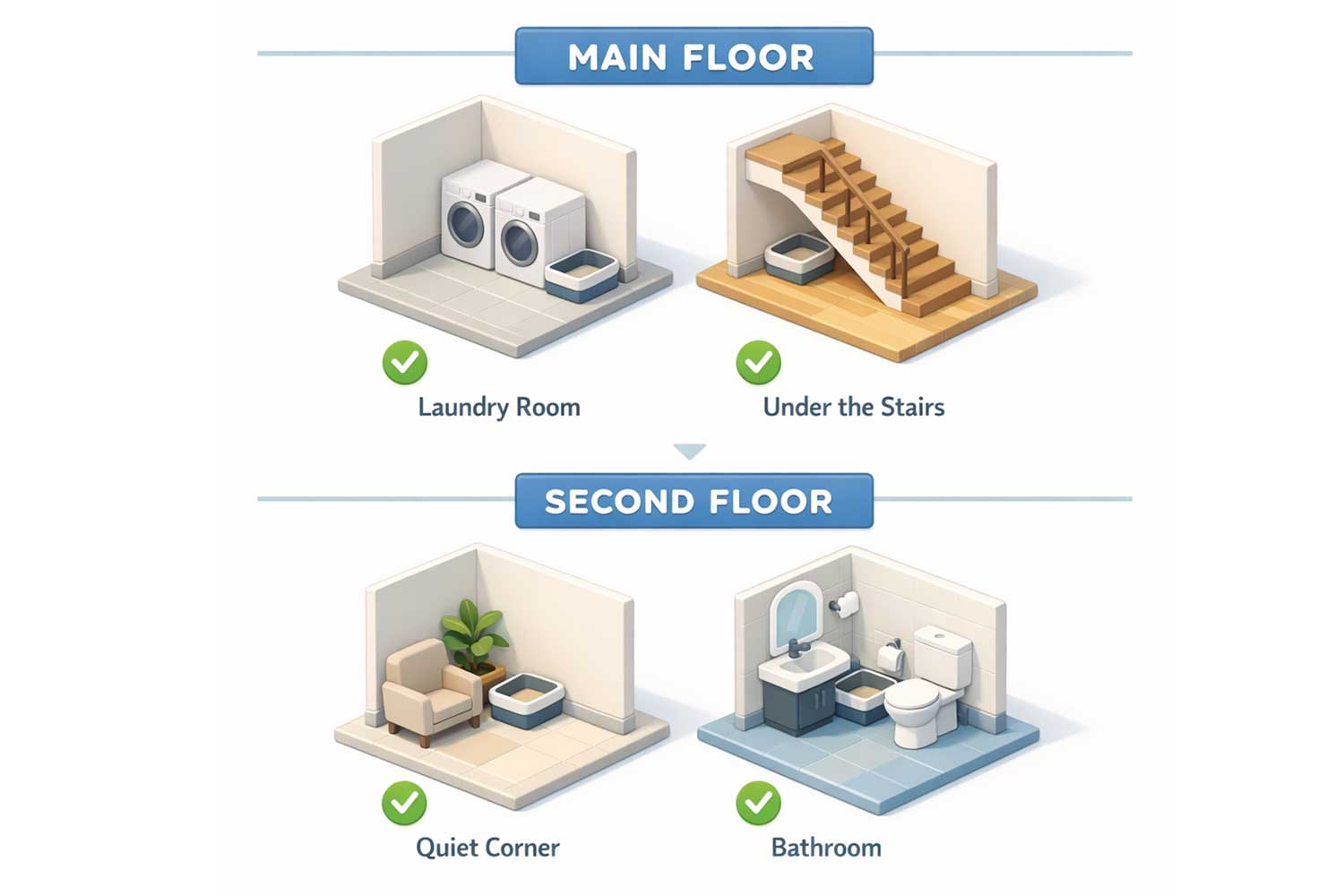
Setup: One box in each of three zones, such as the living area, the bedroom side and the bathroom. Keep them out of sight of each other.
Watch out: A box in a busy spot may go unused. Pick quiet corners, away from food, water and loud appliances.
Cat's-eye view: "Wherever I am, there is a box I do not have to fight for."
The Closet Hideaway
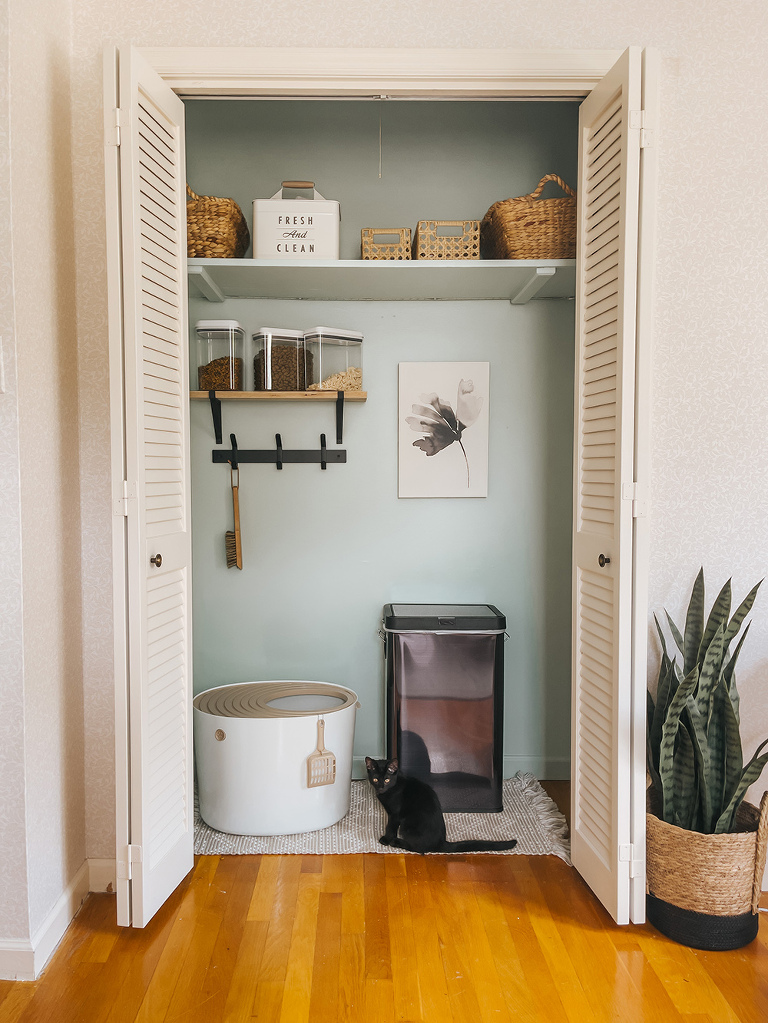
Setup: Put one box on the closet floor, with a full 24 to 30 inches of clear room, and prop the door open or fit a cat door. Keep the space ventilated and store no chemicals there.
Watch out: A door that swings shut cuts the cat off. Use a door stopper or a latch that holds it open.
Cat's-eye view: "Quiet, but is there a way out?"
The Cabinet Camouflage
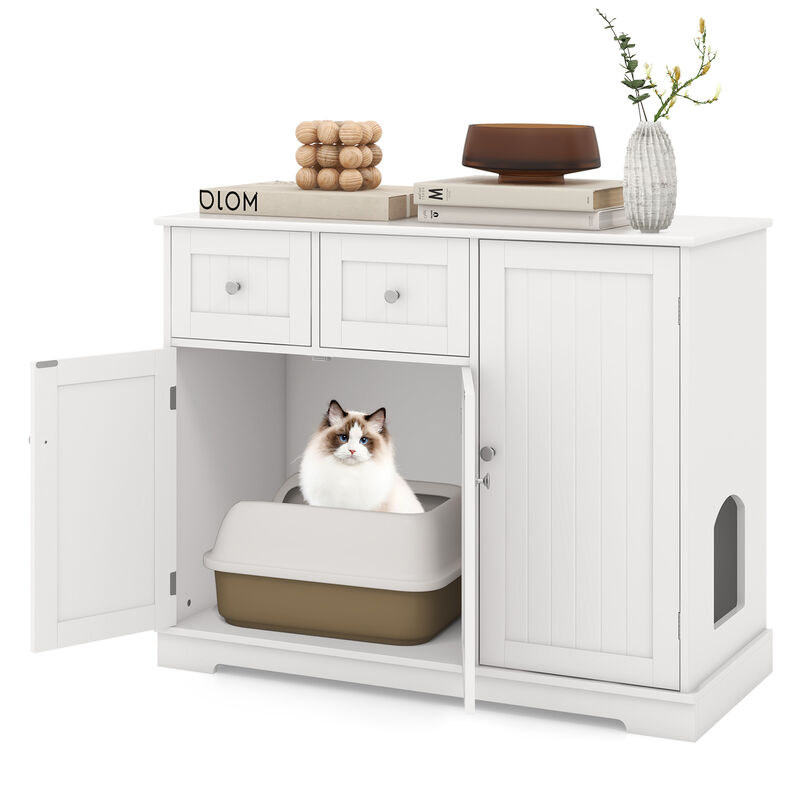
Setup: Use litter furniture with a cat entry about 8 to 10 inches wide, larger for big cats, and ventilation on more than one side. Make sure the interior fits a box of 1.5 times the cat's length.
Watch out: Hidden boxes get scooped less. Choose a design with a lid or door that makes daily scooping easy, and check that cats can turn around inside.
Cat's-eye view: "Is this a box or a cave with one door?"
The Bathroom Bay
Setup: Place the box away from the toilet and tub, on a mat, and hold the door open with a stopper. Tile floors are easy to clean.
Watch out: Humid, noisy rooms with a shut door often fail, and people use the bathroom too. Keep it as one of the boxes, not the only one.
Cat's-eye view: "Handy, unless someone is in the shower."

The Float Behind the Sofa
Setup: Pull the sofa about 24 to 30 inches off the wall and put a box in the gap, with both ends open so the cat can leave either way.
Watch out: A box wedged into a dead end feels like a trap. Do not block it with furniture, and keep it scoopable.
Cat's-eye view: "Private, with two exits."
The Under-Desk Alcove
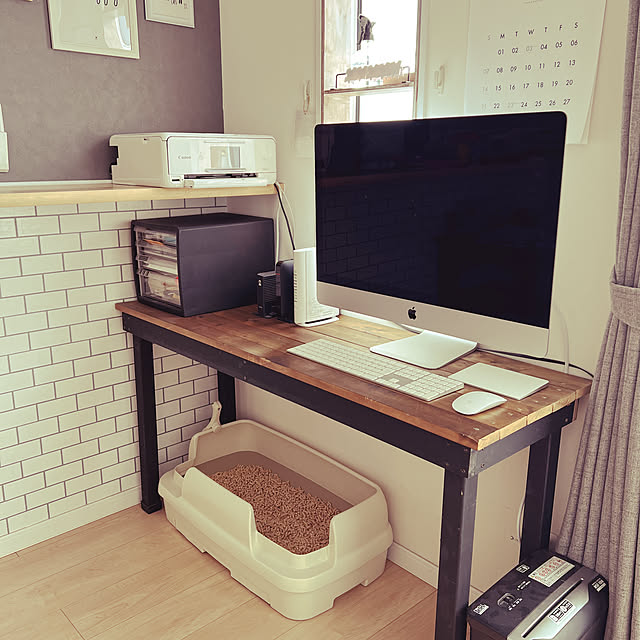
Setup: A box under a desk or console works if it has at least 6 to 8 inches of clearance above the box and room to turn around. Use a mat in front.
Watch out: Large cats may not fit, and a cat can be startled by someone at the desk. Treat it as one of several boxes.
Cat's-eye view: "Cozy, if I fit."
The Two-Level Split
Setup: Put at least one box on every level, so no cat has to climb or descend to reach one. For senior cats, choose a box with a low entry, roughly 3 to 4 inches.
Watch out: A loft with no box fails older cats first. Make sure there is a box on the level where they sleep.
Cat's-eye view: "No stairs between me and the box."

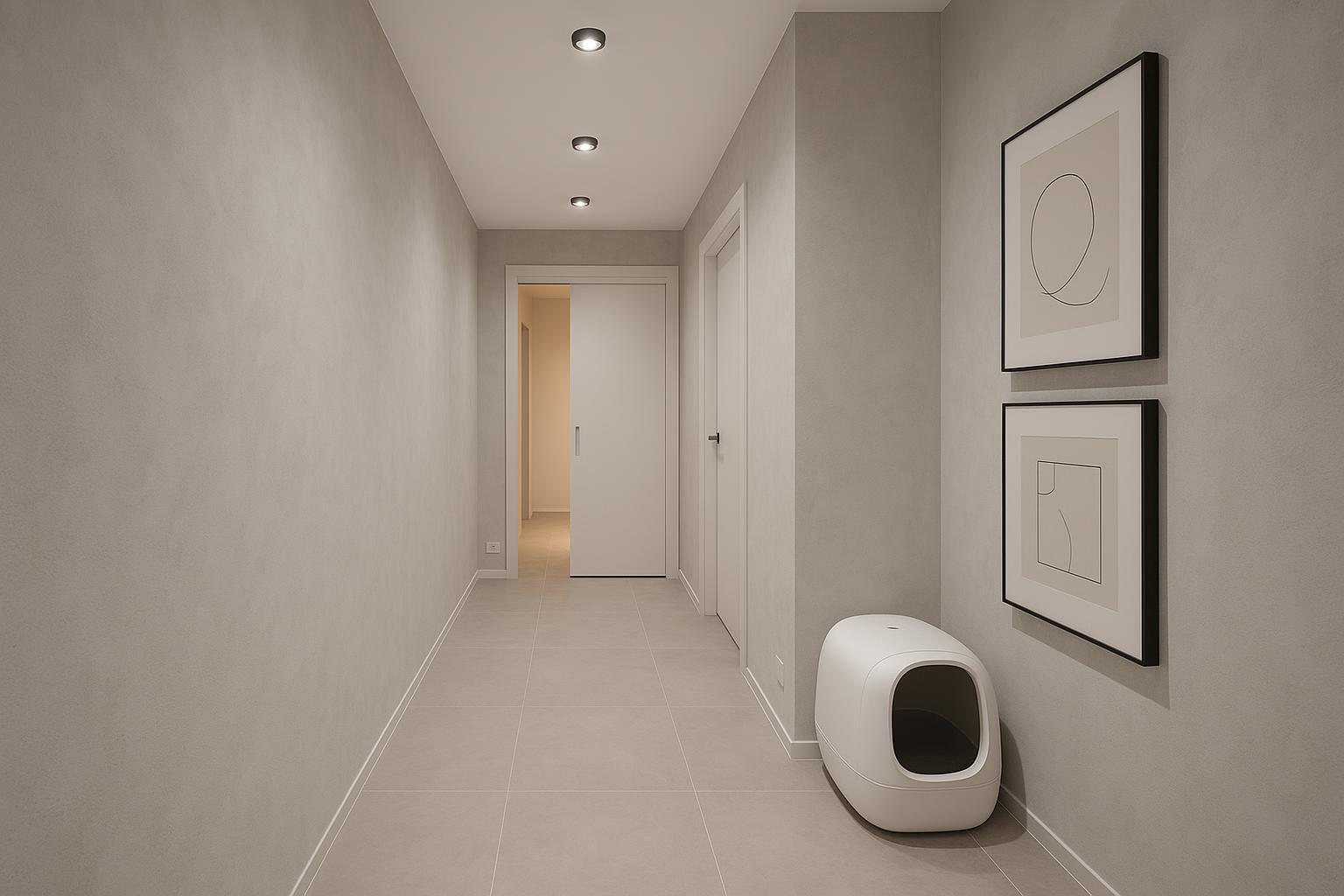
The Hallway Runway
Setup: Use a hall about 42 inches wide or more, with the box near one end, a mat in front and a clear view along its length. Keep it out of the main walking path.
Watch out: Narrow, busy hallways cause stress and trip hazards. If people pass within a few feet, move the box.
Cat's-eye view: "I can see anyone coming, and I can leave."
Pick a Layout by Home Size
| Your home | Cats | Try this combination |
|---|---|---|
| Studio | 2 | Closet Hideaway + Behind the Sofa + Bathroom Bay |
| 1 bedroom | 2 to 3 | The Triangle, with one cabinet |
| 2 bedrooms | 3 to 4 | The Triangle plus Hallway Runway or Under-Desk |
| Loft or 2 floors | Any | Two-Level Split, plus one more per extra cat |
| Senior cats | Any | Low-entry boxes close to where they rest |
Multi-Cat Litter Box FAQ
How many litter boxes do you need for multiple cats?
One per cat plus one extra, so two cats need three boxes and three cats need four.
How big should a litter box be?
About 1.5 times your cat's length from nose to the base of the tail: about 24 inches for a 16 inch cat and 27 inches for an 18 inch cat.
Can you put litter boxes next to each other?
It is better not to. Side-by-side boxes can work as one big box, so spread them across different spots, rooms or corners.
Where should litter boxes go in a small apartment?
In quiet, reachable spots away from food, water and loud appliances, spread across the home, with open sightlines and an exit.
How do you hide a litter box smell in a small space?
Scoop daily, keep 2 to 3 inches of litter, wash the box regularly and ventilate. Avoid heavy scents.
Is it okay to put a litter box in a closet?
Yes, if the door stays open or has a cat door, the space is ventilated and no chemicals are stored there.
Are covered or uncovered litter boxes better?
It depends on the cat. Offer at least one uncovered box and see which your cats choose.
How often should you scoop and clean litter boxes?
Scoop at least daily, and do a full change and wash every one to four weeks. Call your vet if a cat suddenly avoids the box.
A Simple Takeaway
Count one box per cat plus one, size each box to the cat and put them in different places with a clear way out. A small home can handle several cats when the boxes are spread out and easy to scoop.