
7 Black Accent Ideas That Add Contrast to a Light, Airy Room
Add sharp definition without losing the light, with a thin-black rule and a free checker that tests your room's balance.
A light, airy room is calm and open, but without contrast it can look washed out. A few black accents fix that fast. Black gives the eye a place to land, defines the shapes in the room and makes whites look cleaner. The trick is using it in a way that keeps the room light. These black accent ideas that add contrast to a light, airy room focus on balance, line weight and placement.
This guide is about black specifically. For help with the colors around it, see our guide to warm neutral color palettes, and for the materials that go with it, see texture mixing ideas for neutral rooms. Below you will find a free balance checker, the thin-black rule, seven ideas and a placement chart.
Black Accent Ideas That Add Contrast to a Light, Airy Room: Quick Answer
- Black picture frames
- Black curtain rods and window hardware
- Slim black metal furniture legs
- Black lamps, sconces and pendants
- Black accessories in small groups
- One bold black statement piece
- Black in textiles and patterns
The one rule: use thin black to draw lines, repeat black at three heights and keep it to about 10 percent of the room.
Black Balance Checker: Is Your Room Balanced?
Tick every place black already appears in your room. The checker looks at the total and at the height: low, eye level and high.
Low (below knee height)
Eye level (about knee to shoulder height)
High (above shoulder height)
The Thin-Black Rule
Two things decide whether black feels crisp or heavy: line weight and repetition.
Idea 1: Black Picture Frames

What it looks like: Thin black frames with white mats on a light wall.
Why it works: Frames are the easiest way to add thin black at eye level, and they are inexpensive and flexible.
Idea 2: Black Curtain Rods and Window Hardware
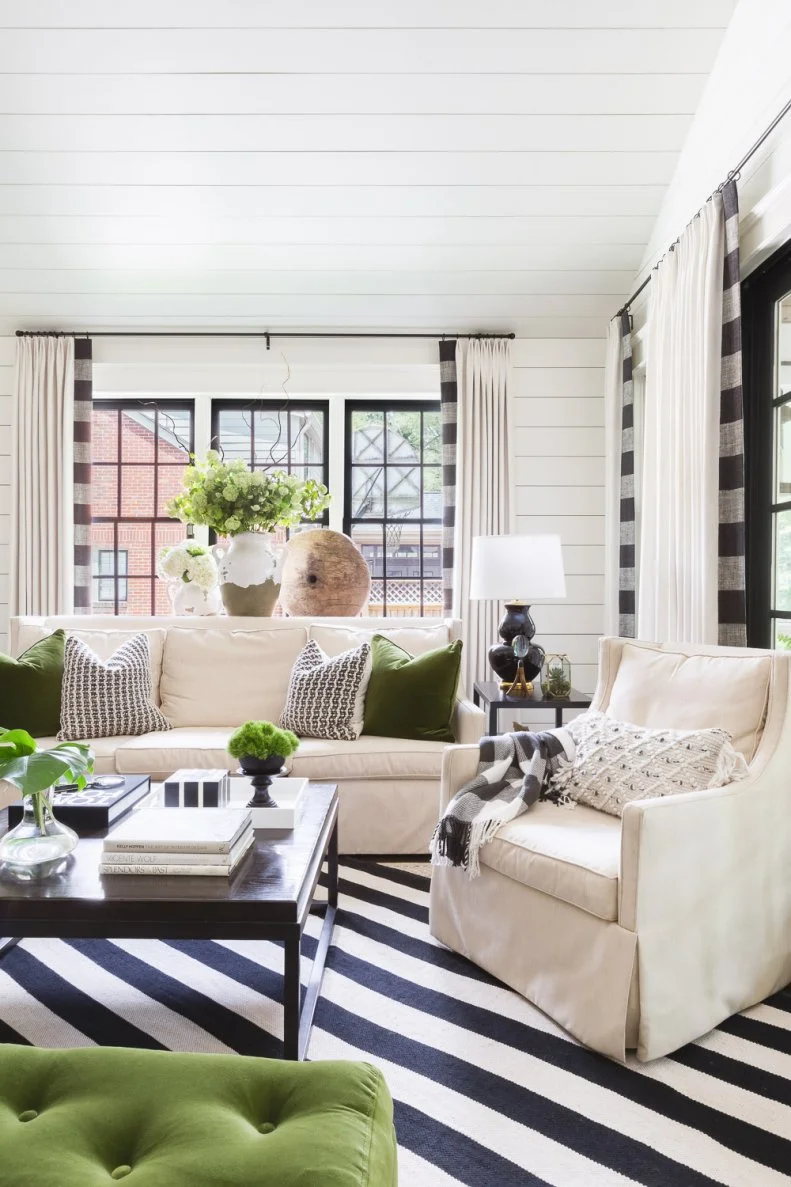
What it looks like: A matte black rod and brackets holding white or cream curtains.
Why it works: The rod is a thin black line that stays high in the room, which is exactly where many light rooms lack contrast.
This is one of the cheapest ways to add black, and it makes the curtains look more tailored.
Idea 3: Slim Black Metal Legs
What it looks like: A coffee table, side table or chair with thin black metal legs or an open black frame.
Why it works: Open black frames add contrast at floor level without blocking the view, so the room stays airy.
Idea 4: Black Lamps, Sconces and Pendants
What it looks like: A black lamp base, wall sconces or a pendant light.
Why it works: Lighting is both functional and visible, so black fixtures add contrast at eye level and above, and they stay balanced around the room.
A pair of matching sconces or lamps on either side of a sofa or bed adds symmetry and repeats black on both sides of the room.
Idea 5: Small Black Accessories in Groups
What it looks like: Black vases, trays, candle holders or bowls grouped on a table or shelf.
Why it works: Small pieces let you add black in measured doses, and they are easy to move or change.
Idea 6: One Bold Black Statement Piece
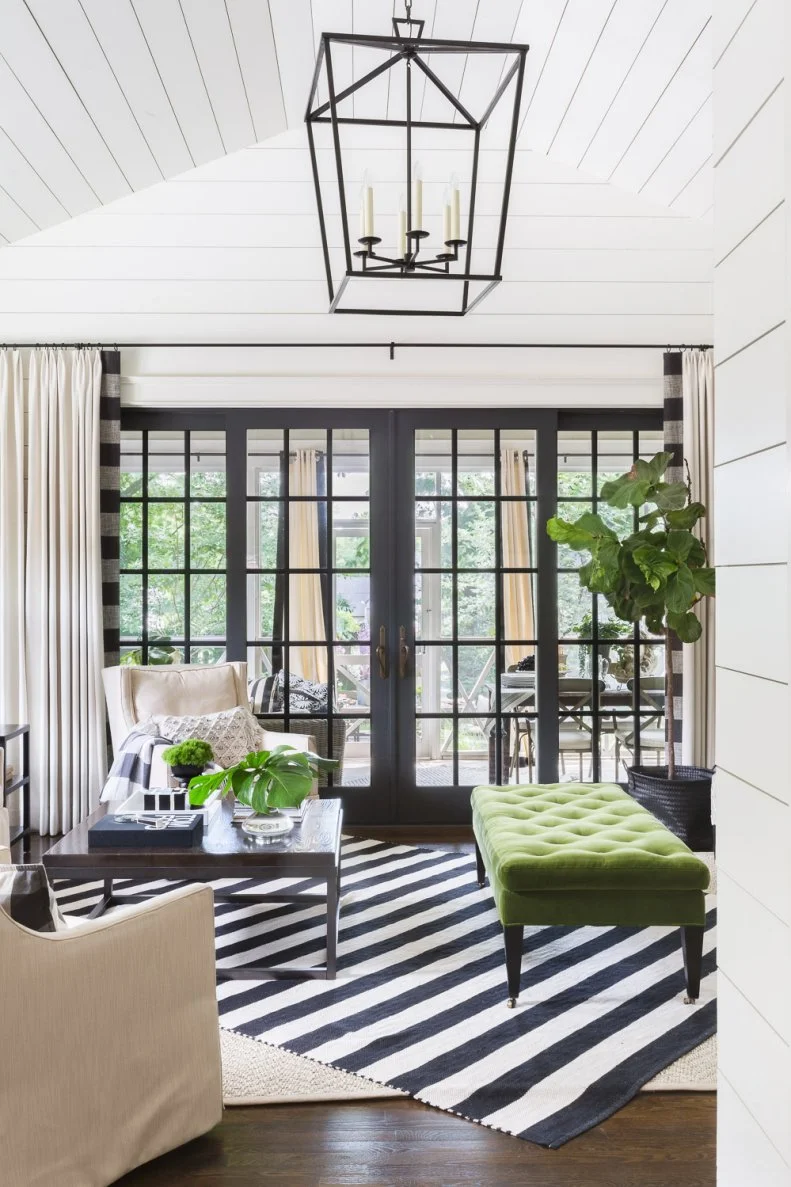
What it looks like: One larger black item, such as an accent chair, a mirror with a black frame, a bookshelf or an interior door.
Why it works: A single bold piece anchors the thin black elsewhere and gives the room a clear focal point.
If you already have a large black piece, avoid adding another large one. Balance it with thin black elsewhere.
Idea 7: Black in Textiles and Patterns
What it looks like: A rug with a thin black stripe, a pillow with a black pattern or a throw with black detail.
Why it works: Textiles bring black in softly and at a low level, which helps the three-height repetition.
Black fabrics show lint and pet hair, so choose washable options if you have pets or children.
Black Accent Placement Chart (Quick Reference)
| Accent | Height | Visual weight | Typical effort |
|---|---|---|---|
| Picture frames | Eye level | Light | Easy |
| Curtain rod and hardware | High | Light | Easy |
| Slim metal legs | Low | Light | Moderate |
| Lamps, sconces and pendants | Eye level and high | Light to medium | Easy to moderate |
| Small accessories | Eye level | Light | Easy |
| Statement chair, mirror or shelf | Eye level | Heavy | Moderate |
| Textiles and patterns | Low and eye level | Light to medium | Easy |
Choosing Your Black and Keeping It Clean
- Warm or cool black: Match the undertone of your whites. A soft, slightly warm black suits cream and beige, and a cooler true black suits crisp white and gray.
- Matte versus glossy: Matte black is softer and hides fingerprints, which suits an airy room. Glossy black shows dust and fingerprints more.
- Mixing finishes: Black pairs well with natural wood and one warm metal such as brass. Keep the sheen consistent across most pieces.
- Upkeep: Dust shows more on dark surfaces, so wipe them regularly with a soft cloth.
Black Accent FAQ
How much black should you use in a light, airy room?
About 10 percent as a loose guide, spread across several small and medium pieces rather than one large block. For most rooms, three to seven black items works well.
How do you add black to a white room without making it feel heavy?
Use thin black, such as slim frames, metal legs, curtain rods and line art, instead of large black blocks. Limit solid black to one statement piece and repeat black at different heights.
What is the best way to add black accents to a room?
Start with easy items such as picture frames, a curtain rod, lamp bases and small accessories, then add one larger piece. Repeat black at low, eye-level and high positions.
Does black make a room look smaller?
Small black accents do not, and thin black lines can make a room look more defined. Large dark blocks can feel heavy in a small, light room, so use them carefully.
Should black metal finishes match throughout a room?
They do not need to match exactly, but they should look related, with a similar sheen and undertone. Black pairs well with natural wood and one warm metal such as brass.
What colors go with black accents?
Almost any light color. It is especially striking with white, cream, light gray, beige and natural wood, and also pairs well with muted greens, soft blues and blush.
Is matte or glossy black better for accents?
Matte usually looks softer and hides fingerprints, which suits an airy room. Glossy reflects light and looks dressier but shows dust and fingerprints more. Keep most pieces at a similar sheen.
Do black accents work with warm wood tones?
Yes. Black and warm wood is a classic pairing, because the dark tone sharpens the grain. Choose a soft warm black for yellow or red-toned wood and keep the black moderate.
A Simple Takeaway
Black is the fastest way to give a light room definition. Use it thin, repeat it at three heights and keep it to roughly 10 percent. Start with frames and a curtain rod, add slim legs and lighting and finish with one bold piece if the room can carry it. The room stays airy, and every white looks cleaner.