
Neo Deco Arched Doorway Ideas for 2026
What Pinterest, Houzz, and the designers actually building these spaces say the trend really is, before a single mood board gets made
I'll be honest about how this one started. I didn't set out with a doorway idea, I set out trying to understand a word that kept showing up everywhere this year: Neo Deco. Before I let myself get excited about fan arches and brass inlay, I wanted to know where the term actually came from and what the people naming it meant by it. So that's where this starts, not with a Pinterest board, but with the source of the term itself.
Table of Contents
- What Neo Deco Actually Is
- Why the Arch Is Neo Deco's Natural Home
- Know Your Arch Shape First
- The Fan Arch: The Style's Signature Move
- Geometric Molding and Fluted Trim
- Brass and Chrome Inlay, Not Just Hardware
- The Palette: Jewel Tones, Smoked Mirror, Marble
- Where to Use This, Room by Room
- Mistakes That Tip It Into Costume
- Common Questions
What Neo Deco Actually Is

Neo Deco isn't a term I made up or borrowed loosely, it's the name Pinterest itself put on one of its named trends heading into 2026. Sydney Stanback, Pinterest's Global Head of Trends and Insights, describes it as a modern take on Art Deco that brings the elegance of the 1920s and 30s into today's homes through sleek finishes, bold geometric shapes, and gleaming chrome or brass.
That distinction matters for a doorway specifically, because it tells you Neo Deco isn't just "more Art Deco." It's Art Deco's geometry, applied with restraint, onto spaces that still need to function like a normal home.
Why the Arch Is Neo Deco's Natural Home

Arches and Art Deco have a genuinely old relationship, not a manufactured one for this trend cycle. Design coverage tracing the arch's history notes it's been a recurring motif in interiors for centuries, and that its most recent major resurgence in the early 2020s specifically echoed Art Deco's earlier embrace of curves over hard corners.
Put those two threads together, arches softening a space, and Neo Deco's geometric, metallic language, and a doorway becomes one of the clearest places to apply the trend. It's architectural, not just decorative, so it reads as a real design choice rather than a styling trick.
Know Your Arch Shape First
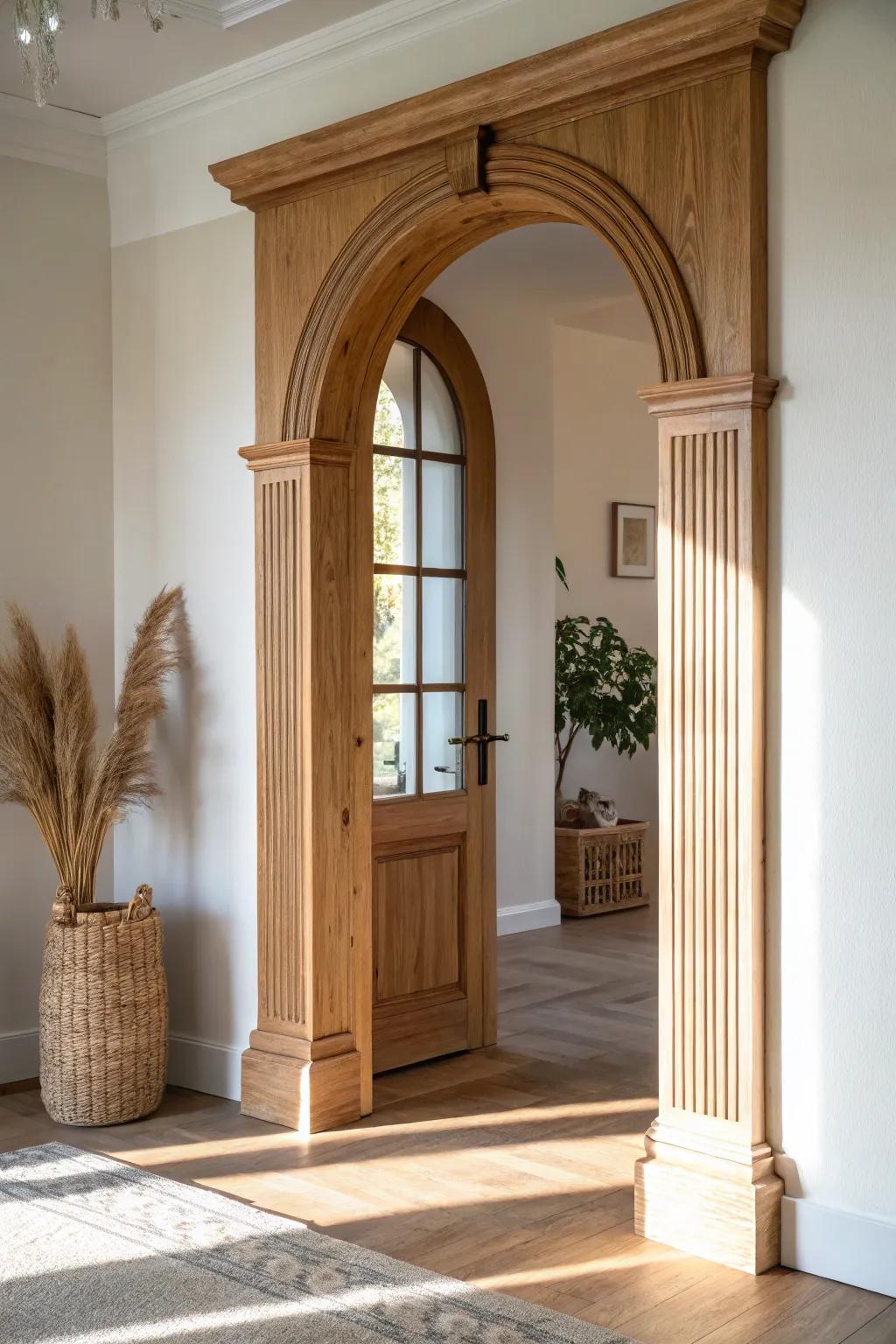
Before choosing any trim or color, it's worth knowing that "arched doorway" isn't one single shape, and the shape you pick changes how Deco the result feels.
- The Roman arch, a true semicircle at the top of the opening. Interior designer Emily Henderson has called it the most versatile of the arch styles, noting it works as well in a contemporary space as anywhere else.
- The Gothic arch, narrower and more pointed, formed by two curved segments that meet at a peak. It reads more dramatic and works best in a home that already leans traditional or architectural.
- The soft arch, wider and shallower than a true semicircle, with a gentler curve. It's the easiest of the three to retrofit into a standard doorway opening.
The Fan Arch: The Style's Signature Move
If there's one shape that shows up more than any other in how this trend gets described, it's the fan arch, called out by name in Pinterest's own trend language alongside chevrons as a defining Neo Deco motif.
- Add a fan-shaped transom or applied trim detail above a standard arched or even rectangular opening, radiating lines that echo a sunburst rather than sitting flat.
- Keep the fan detail to the header of the doorway only, letting the sides stay clean so the radiating pattern remains the single focal gesture.
- Consider an arched mirror set into or beside the doorway as a lower-effort way to bring the fan motif in without altering the opening itself, a styling move that's shown up repeatedly in current Neo Deco entryway roundups.
- It's the single most trend-specific detail on this list, directly named in the source reporting rather than adjacent to it
- Reads as intentional even in a small doorway, since the fan shape does the work, not the size of the installation
- Can be added to an existing rectangular or already-arched opening without structural changes
Geometric Molding and Fluted Trim

Trim is doing more work in this trend than in almost any other current style, and it's specifically called out as a defining feature rather than an optional finishing touch.
- Choose fluted casing, vertical reeded grooves running the length of the doorway's trim, over flat stock if you want the look to read as architectural rather than applied.
- Paint the molding the same color as the surrounding wall in a deep, moody shade, letting shadow rather than contrast do the work of highlighting its shape, a technique specifically noted in current Neo Deco styling guidance.
- Keep the molding detail to one plane, the header or the surround, not both at full intensity, so the doorway doesn't compete with itself.
Brass and Chrome Inlay, Not Just Hardware
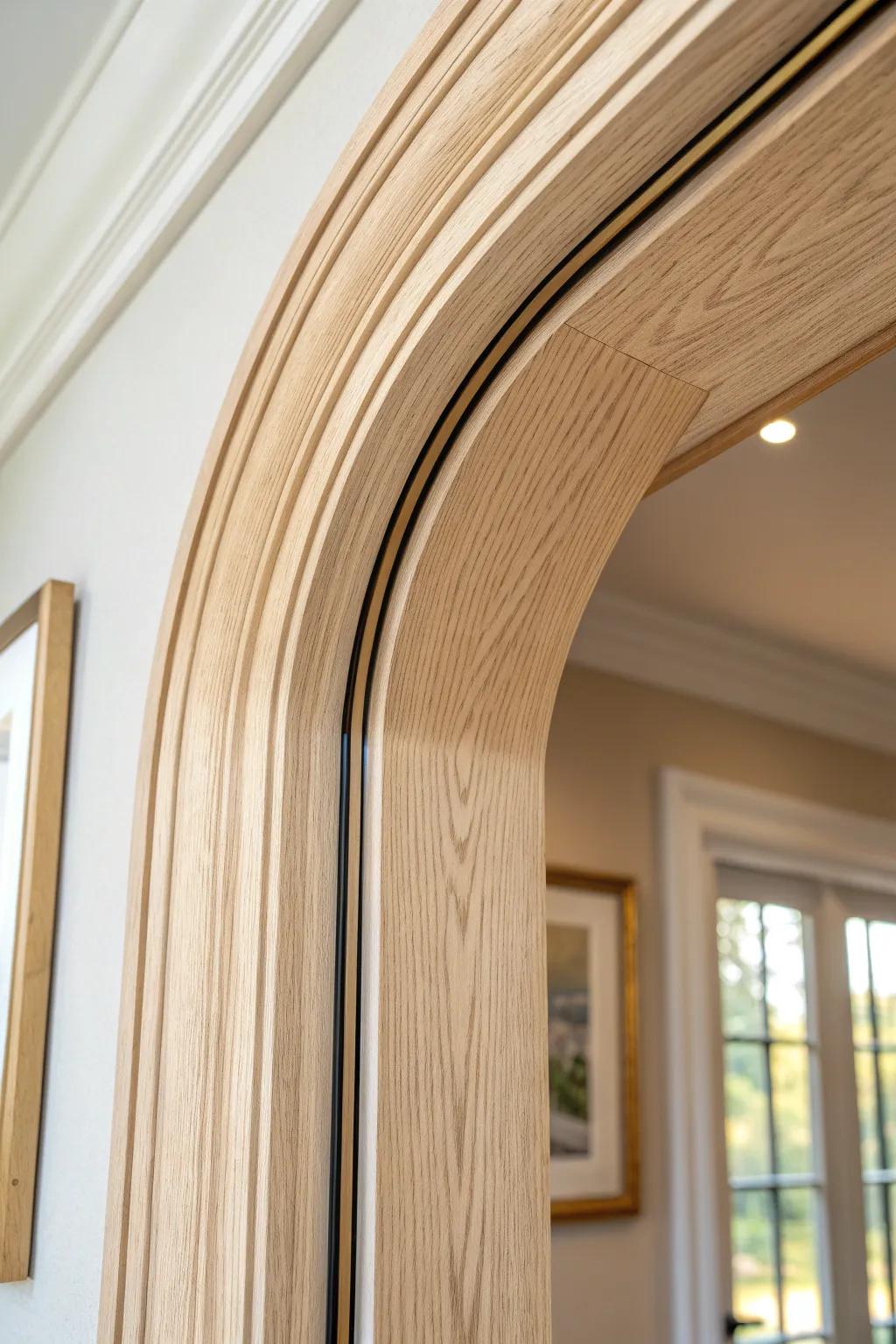
The metallic element in Neo Deco isn't limited to door handles and hinges, it's named specifically as part of the geometry itself, edging the bold shapes rather than sitting apart from them.
- Run a thin brass or chrome inlay strip along the inside edge of the arch itself, tracing the curve rather than sitting on the flat trim beside it.
- Pick one metal and stay with it through the doorway, the sconces nearby, and any adjacent hardware. Mixing brass and chrome within the same sightline works against the restrained, single-gesture principle the trend is built on.
- If a true inlay isn't feasible, a metallic paint pen or thin adhesive trim strip achieves a similar visual line at a fraction of the cost.
The Palette: Jewel Tones, Smoked Mirror, Marble
Color and material are where this trend stops being just a shape and starts reading as genuinely Deco, and the palette described in current trend coverage is specific enough to actually follow.
- Paint the doorway's reveal, the inside depth of the arch itself, in a deep jewel tone like burgundy or emerald, even if the surrounding wall stays neutral.
- Use a marble threshold strip at the base of the arch if the doorway sits between two different flooring materials, a small material change that reinforces the arch as a deliberate transition point.
- Reserve smoked mirror or velvet for just beside the doorway, a mirror panel or a drapery panel, rather than inside the opening itself, where it would compete with the trim detail.
Where to Use This, Room by Room
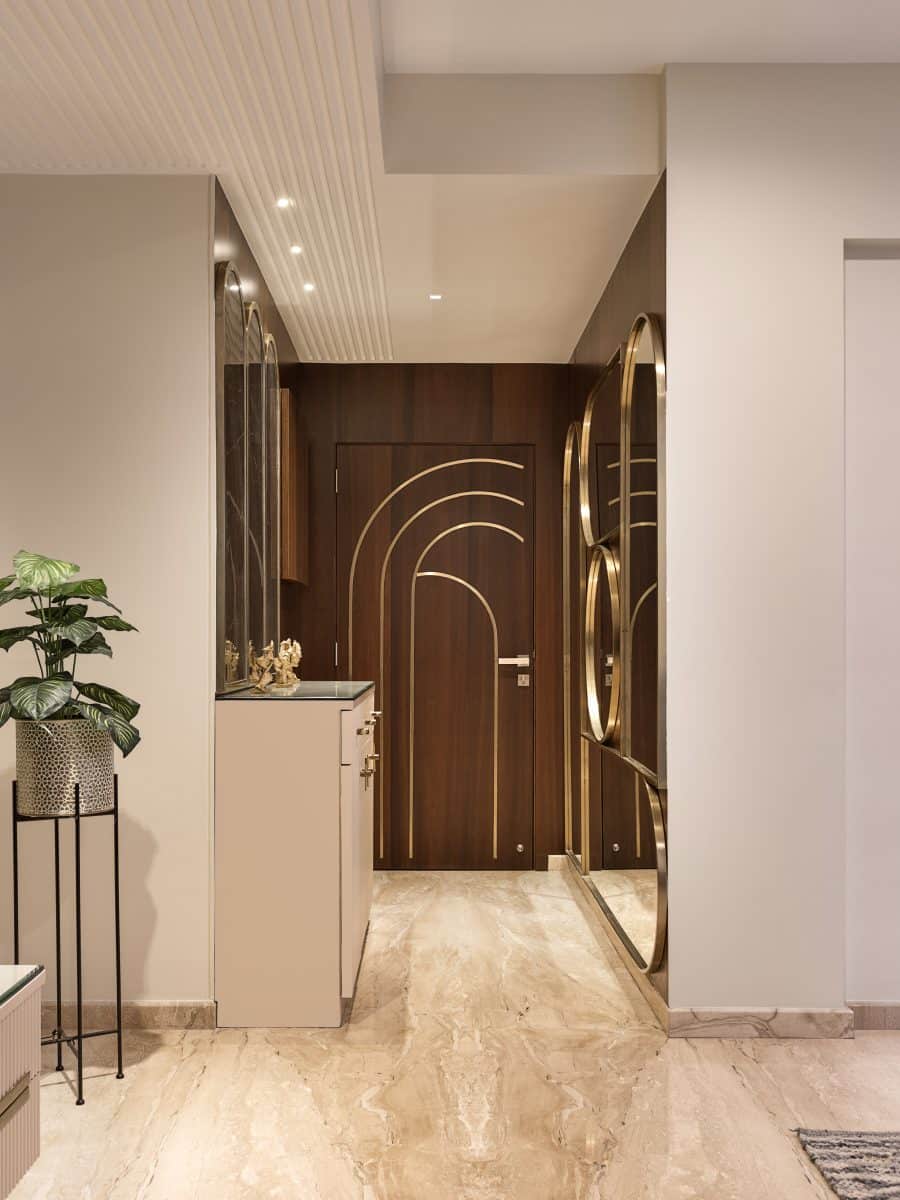
- Entryway: the highest-impact placement, since it sets the tone before a guest sees anything else. A Roman or fan-detailed arch paired with an arched mirror nearby is a combination that shows up repeatedly in current Neo Deco entry styling.
- Kitchen-to-dining pass-through: Houzz's 2026 reporting specifically calls out arched range hoods and curved openings as part of the broader return of softened kitchen architecture, making this a natural second location.
- Hallway-to-living-room threshold: a lower-stakes place to try fluted trim or a painted reveal without committing an entire entry to the look.
- Bedroom doorway: keep the metal and color detail more restrained here, current guidance on the broader style emphasizes restraint through repetition rather than applying every element in every room.
Mistakes That Tip It Into Costume
- Using both brass and chrome in the same doorway. The trend's own restraint principle works against mixing metals in one sightline.
- Adding fan detailing, fluted trim, and a jewel-tone reveal all in the same small opening. Current guidance frames Neo Deco as bold geometry balanced by clean surrounding surfaces, not maximalism.
- Choosing a Gothic arch for a otherwise casual, contemporary home. It's the most dramatic of the three shapes and can read as mismatched outside a more traditional or architectural setting.
- Skipping the palette entirely and relying on shape alone. Without the jewel tones, brass, or smoked mirror named in current coverage, an arch reads as generic rather than specifically Neo Deco.
Common Questions
Is Neo Deco a real named trend, or a blog invention? It's a real, specifically named 2026 trend from Pinterest's own trend reporting, defined publicly by the platform's Global Head of Trends and Insights.
Do I need a true arched opening to do this, or can I fake it? A fan-shaped trim detail or an arched mirror beside a standard rectangular doorway can bring in the motif without any structural change to the opening itself.
What's the single most trend-accurate detail if I can only do one thing? The fan arch shape, it's the detail named specifically and repeatedly in the trend's own source description, more so than color or metal choice alone.
Does this work outside an entryway, like a front door? Yes, arched front doors are their own well-documented 2026 trend, separate from but related to this one, and the same fan and geometric detailing principles apply there too.
Is this trend expected to be short-lived? Trend reporting frames it as a genuine resurgence tied to a broader shift away from minimalism, not a single-season microtrend, though no source can promise how long any interior trend lasts.
What surprised me most in researching this wasn't the look itself, it's easy to fall for a fan arch and brass inlay on sight, it was how consistently the same handful of details kept showing up across genuinely separate sources. That kind of agreement is rare in design trend coverage, and it's what convinced me this one is worth actually building, not just pinning.
If you only take one thing from this, let it be the fan shape and one metal, chosen once and repeated with restraint. Everything else in this piece is really just detail on top of that single decision.
— researched and written with sources checked twice before a single word went on the page
Shop the Story
- fluted arch doorway casing
- brass inlay trim strip
- arched wall mirror brass frame
- marble threshold strip
- smoked glass panel
- jewel tone interior paint