
Exposed Brick Arched Doorway Design Ideas
Real mudroom, kitchen, and patio projects, and the one structural question worth asking before you expose anything
There's a brick wall behind the drywall in our mudroom, I found out by accident, mid-renovation, when a contractor knocked on it and heard something other than stud and cavity. I didn't touch it that day. What I did instead was spend a week reading about exactly what I'd actually be dealing with if I opened that wall up into an arch, because "exposed brick" photographs beautifully and says nothing about what's actually holding the wall above it up.

Table of Contents
- Real Rooms Doing This Well
- Why Brick and an Arch Pair So Naturally
- The Structural Question to Ask First
- Raw Versus Painted Brick
- What to Pair It With
- Where This Works Best
- Mistakes to Avoid
- Common Questions
Real Rooms Doing This Well
Before getting into technique, it's worth seeing that this isn't a hypothetical idea, real, named projects have already built it in several different room types.
That range matters. This isn't one narrow look, it's a real technique that's been adapted to patios, mudrooms, kitchens, and pantries, in both raw and painted brick.
Why Brick and an Arch Pair So Naturally

Curved openings and raw materials tend to soften each other, and current design coverage names this pairing specifically rather than treating it as a coincidence.
- Lean into the contrast rather than smoothing it out, the roughness of brick against the softness of a curved opening is the actual appeal, not something to minimize.
- If your home doesn't already lean industrial or loft-style, use brick on just one arch rather than throughout, so it reads as a considered accent rather than a mismatched style choice.
- Keep the surrounding trim minimal. An exposed brick arch does the visual work on its own and doesn't need heavy molding competing with it.
The Structural Question to Ask First
This is the part I almost skipped in favor of getting straight to the pretty ideas, and it's exactly the part that matters most before anyone picks up a tool.
- Before removing any drywall, plaster, or lintel around a suspected brick arch, have a structural engineer or qualified builder confirm what's actually supporting the opening.
- Don't assume an arch is purely decorative just because it's hidden behind drywall, in many older homes it's the original structural opening, with modern material added around it later.
- If you're creating a brand new arched opening in a brick wall, rather than exposing an existing one, this is a load-bearing wall project by default and needs a permitted, engineered plan, not a weekend DIY approach.
Raw Versus Painted Brick

Once the structural question is settled, the next real decision is whether to leave the brick as found or finish it, and both approaches show up in real, documented projects.
- Leave brick raw and unfinished if it's in good condition and you want the maximum contrast against a curved opening, this is the choice behind the patio and mudroom examples above.
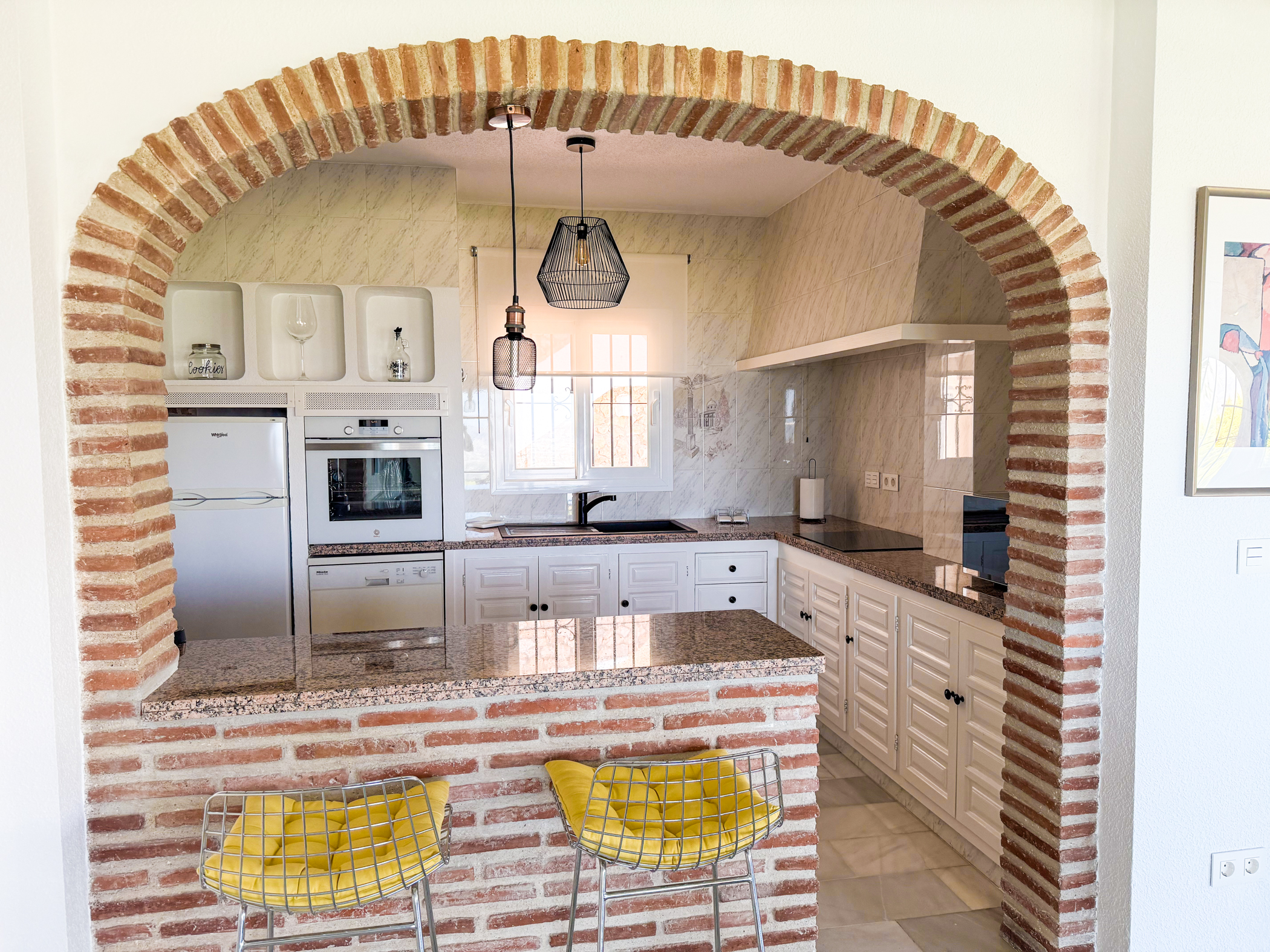
- Paint the brick, ivory or another light neutral, if you want the texture without the color variation of raw brick, a documented kitchen example uses exactly this approach behind an island.
- Consider a clear masonry sealer over raw brick in a doorway that sees regular contact or dust, it protects the surface without changing its color or texture.
- Both approaches are genuinely documented, so neither is a compromise, it's a real style choice either way
- Painted brick suits a brighter, more polished kitchen, while raw brick suits a mudroom or patio meant to feel a little rougher
- Sealing raw brick protects it without sacrificing the texture that makes it worth exposing in the first place
What to Pair It With

Brick is a strong material on its own, and the real projects that use it well tend to pair it with a small, specific set of finishes rather than layering in too much else.
- Choose brass or warm metal hardware nearby rather than cool-toned chrome, current real projects consistently pair the two.
- If the floor beneath the arch allows it, brick or brick-style pavers directly under the opening reinforce the material rather than introducing an unrelated flooring choice right at the threshold.
- Add wood paneling or trim on the non-brick side of the doorway if you want a warmer transition between a brick room and a more finished one.
Where This Works Best

- Mudroom entrance: the most consistently documented placement, often paired with brick flooring and brass-accented storage.
- Kitchen pantry doorway: a lower-traffic opening where raw texture reads as intentional rather than incomplete.
- Covered patio or outdoor-adjacent doorway: brick already suits an outdoor-facing material palette, making the transition feel continuous.
- Kitchen island backdrop: works especially well painted, based on the documented ivory-brick example, for a softer, more polished take on the material.
Mistakes to Avoid
- Cutting into or widening a brick arch without a structural assessment. This is the single most consequential mistake on this list, and it's avoidable with one professional consultation before work begins.
- Assuming exposed brick means no maintenance. Raw brick benefits from sealing, especially in a doorway that sees regular contact.
- Adding heavy trim or molding around the brick. The material's texture is the feature, competing detail nearby just distracts from it.
- Mixing cool-toned metals with raw or warm-toned brick. Documented real projects consistently lean brass and warm finishes instead.
Common Questions
Do I need a structural engineer just to look at an arch I'm not planning to change? No, simply removing drywall or plaster from the face of brick that's already fully supported and not being altered structurally is a much lower-risk project than cutting into the opening itself.
Is raw or painted brick more on-trend for 2026? Both appear in current real project documentation, raw brick suits a rougher, more industrial mudroom or patio, while painted brick suits a more polished kitchen setting.
What's the easiest room to try this in first? A mudroom or pantry doorway, both are lower-traffic, lower-visibility spaces compared to a main kitchen or living area, making them a lower-stakes place to start.
Can I add exposed brick to a doorway that doesn't currently have any brick at all? That typically means adding a brick veneer rather than exposing an existing structural material, which is a different, generally lower-risk project than exposing or altering a load-bearing brick arch.
What finish keeps raw brick from shedding dust indoors? A clear masonry sealer, applied after cleaning, is the documented standard approach for keeping raw interior brick low-maintenance.
That wall in our mudroom is still behind drywall, for now. Not because the idea didn't win me over, it did, completely, but because I'd rather wait for the structural engineer's answer than guess at what's actually holding it up. That's really the whole lesson here, the design part of this project was never the hard part.
If you've found brick behind a wall of your own, get the structural question answered before you fall in love with a finish. Everything else on this list is the easy part once that's settled.
— written with one wall in our mudroom still waiting on an engineer's answer
Shop the Story
- clear masonry brick sealer
- brass mudroom locker hardware
- brick herringbone floor paver
- oak arch trim panel
- ivory brick paint
- interior brick cleaning solution