
Arched Bathroom Doorway Design Inspiration
Why designers keep reaching for curves in the one room built almost entirely out of hard edges, and where the trend is genuinely headed in 2026
Of every room in the house, the bathroom is the one I least expected to find arch inspiration for. It's tile, glass, plumbing, right angles by necessity. But that's exactly the reason designers keep circling back to it when they talk about curves, and once I read why, I couldn't unsee it in every bathroom photo I looked at afterward.

Table of Contents
- Why Bathrooms Specifically Need This
- The Arched Shower Entrance
- Let the Doorway Follow the Room's Own Architecture
- Carry a Material Through the Curve
- Pairing the Arch With Beams and Pattern
- The Overuse Warning Worth Taking Seriously
- Where to Put This in Your Own Bathroom
- Common Questions
Why Bathrooms Specifically Need This

This is the part that reframed the whole idea for me, and it comes directly from a working designer, not a trend headline.
That's a more specific case than "arches are trending." It's a reason tied to what a bathroom actually is, tile, glass, hardware, all hard by nature, which is exactly why one soft gesture in that mix reads as deliberate rather than decorative.
The Arched Shower Entrance
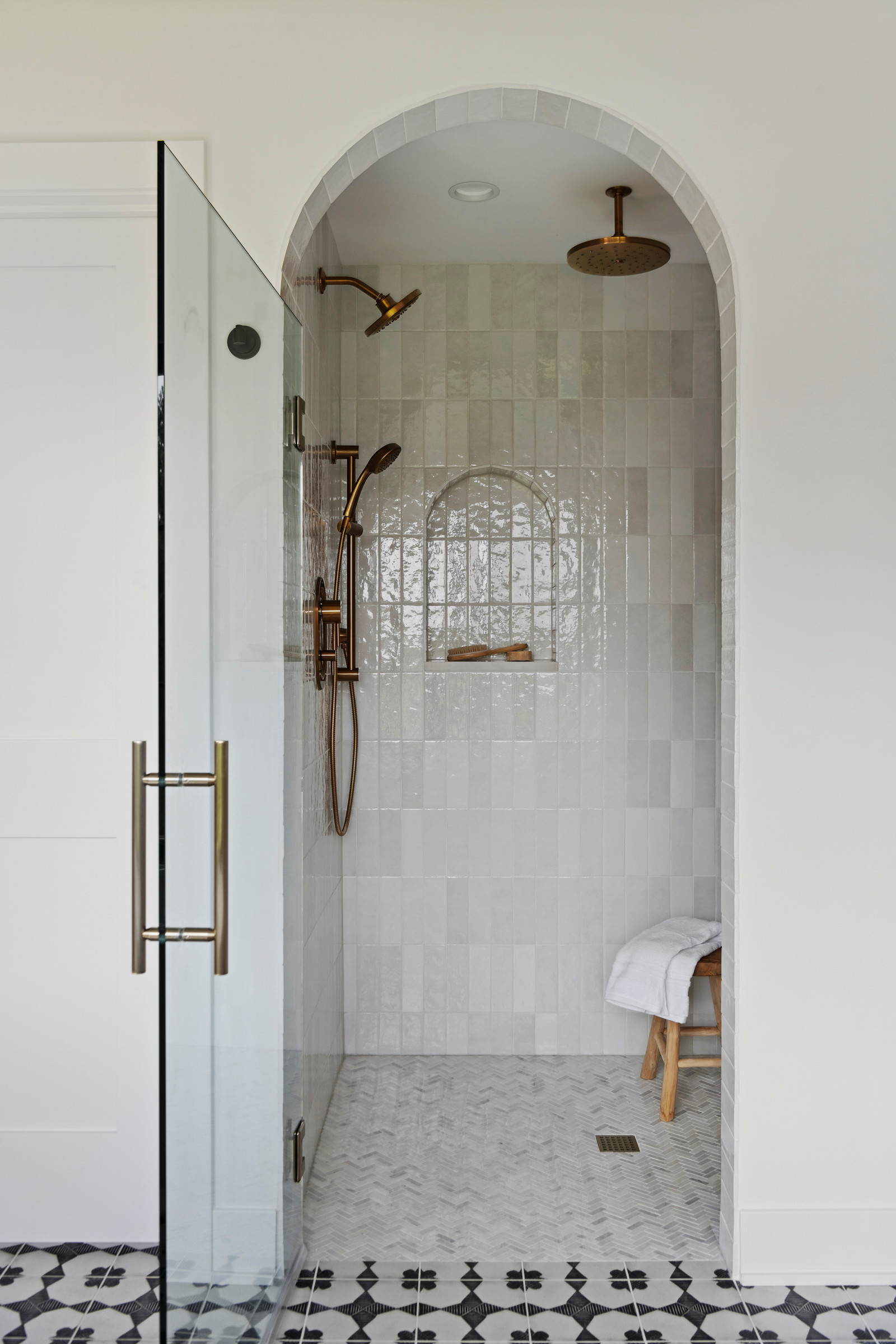
If there's one specific application of this trend that shows up most consistently in current bathroom design coverage, it's the shower entrance itself, not just the doorway into the room.
- Frame the shower opening itself as an arch, tiled to match the surrounding wall, rather than treating the shower as a flat glass rectangle inside an otherwise arched room.
- Carry your floor or wall tile pattern straight through the curve of the arch instead of stopping it at a flat header, so the arch reads as part of the tile design, not an afterthought cut into it.
- If you're not ready for a structural change, a doorless arched shower alcove, framed in tile alone with no door at all, is a lower-commitment way to try the shape.
Let the Doorway Follow the Room's Own Architecture

One of the more convincing examples I came across wasn't a bathroom built to look Deco or Mediterranean, it was a bathroom shaped by the actual roofline sitting above it.
- Look at your own ceiling line, a sloped attic wall, an existing header height, before defaulting to a standard semicircular arch.
- If your bathroom sits under a pitched roof or an angled ceiling, consider a triangular or asymmetrical arch shape that echoes that specific geometry instead of fighting it.
- Treat the doorway as a response to the room you actually have, not a shape copied wholesale from a photo of a completely different house.
Carry a Material Through the Curve
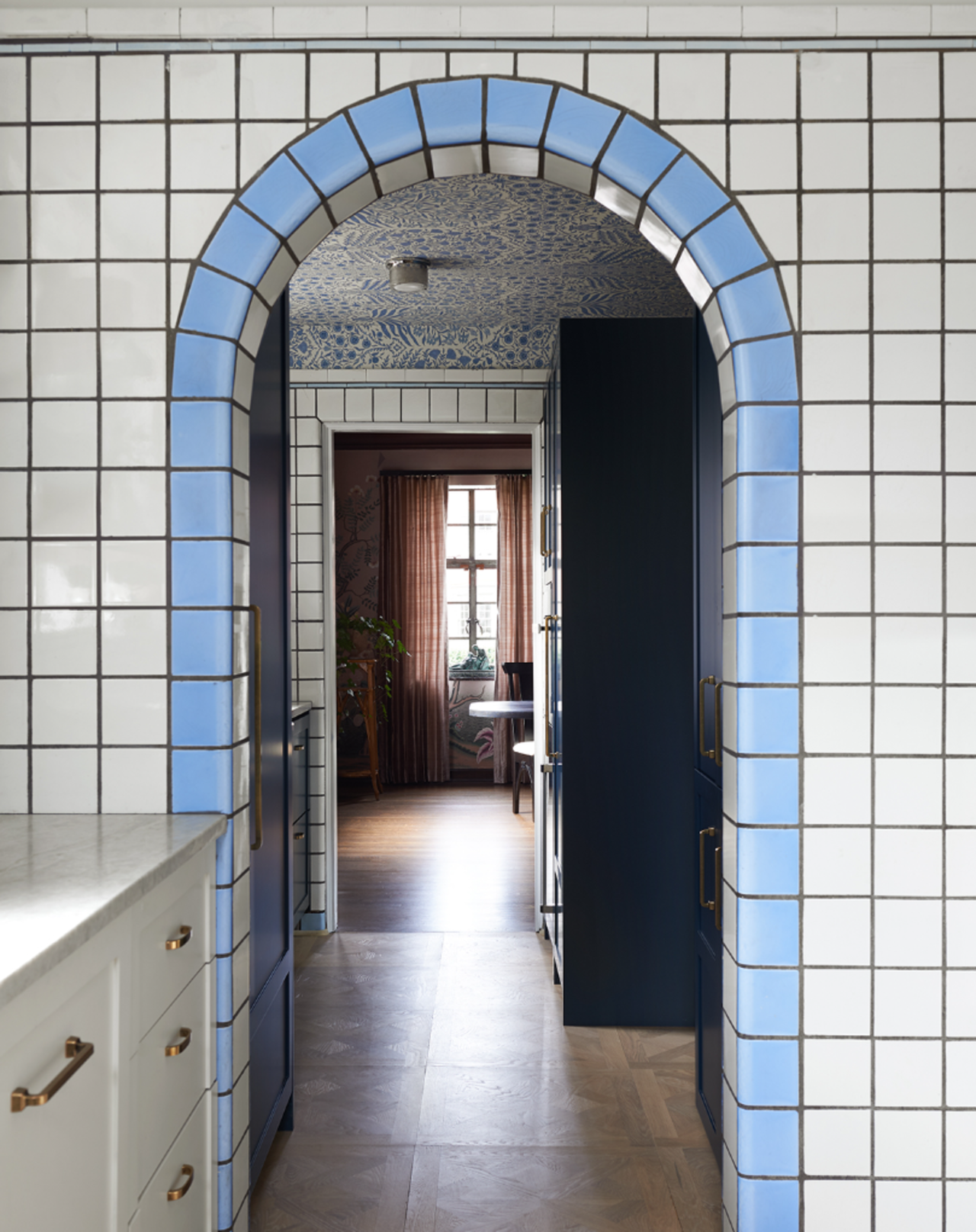
The detail that separates a genuinely well-designed arched doorway from one that feels bolted on is almost never the shape itself, it's what continues through it.
- Pick a color or material already present elsewhere in the bathroom, a tile tone, a cabinet finish, and carry it into the arch's trim or reveal instead of introducing something new.
- If you're tiling a shower or vanity wall, let that same tile wrap into the archway rather than treating the doorway as a separate, untiled frame.
- Resist choosing the doorway's finish before you've looked at what's already committed elsewhere in the room. Matching an existing material almost always reads more intentional than adding a new one.
Pairing the Arch With Beams and Pattern

Arches rarely do all the work alone in the bathrooms that actually photograph well, and current trend coverage points to a specific, repeatable pairing.
- The beams add horizontal structure that balances the arch's curve, keeping the room from feeling all soft edges
- Checkerboard tile is graphic enough to hold its own against an architectural feature as strong as an arch
- A documented, currently featured pairing rather than a guessed combination
The Overuse Warning Worth Taking Seriously
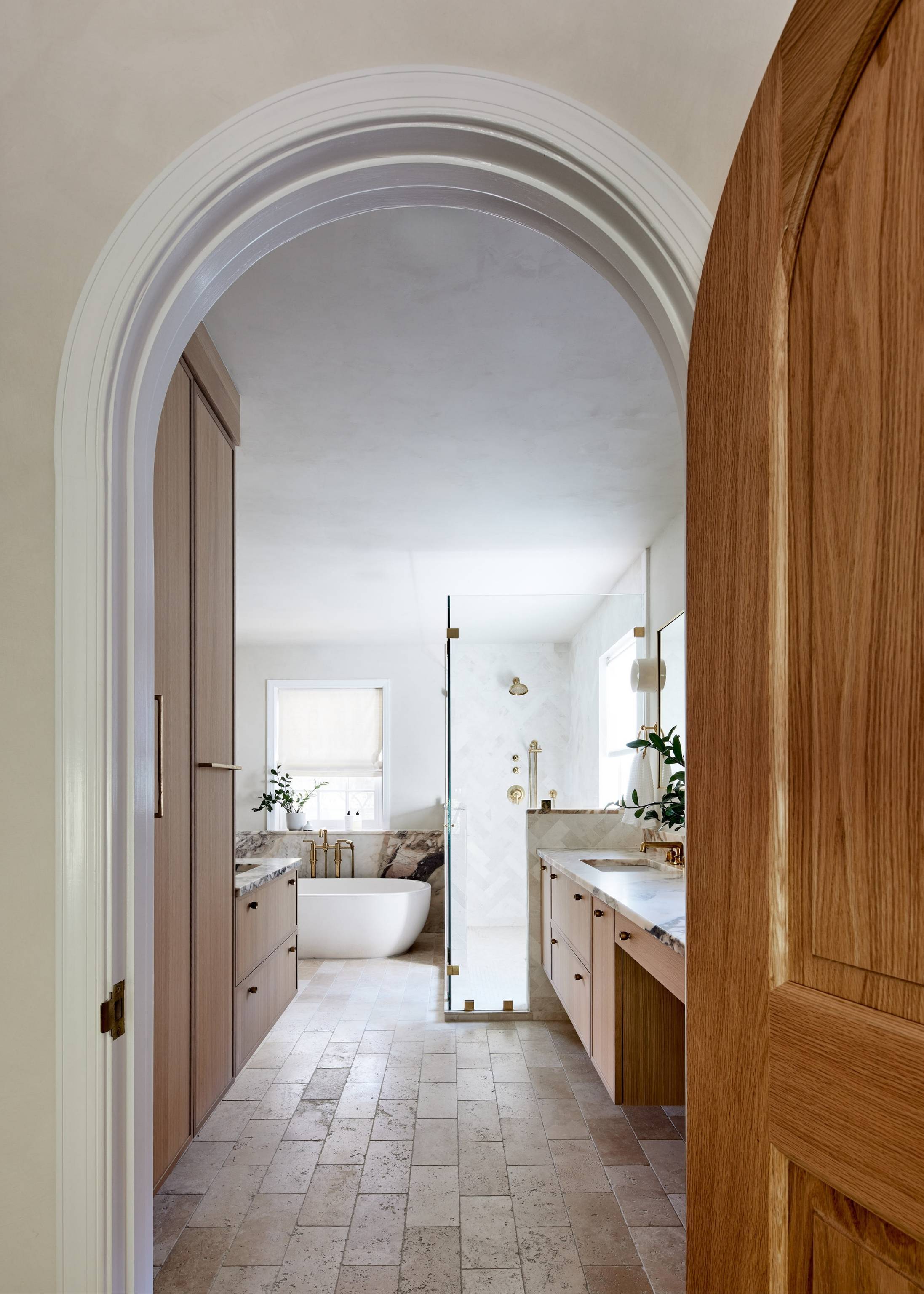
This is the part I almost left out, because it complicates a trend piece to admit the trend has a real downside. But current design coverage is specific and recent enough that leaving it out would make this article less accurate, not more polished.
- Choose one arch in the bathroom, the shower entrance or the doorway, not both, unless your home's existing architecture genuinely supports repeating the shape.
- Let the arch respond to something real in the room, a roofline, an existing material, a plumbing wall, rather than adding it purely because the shape is popular.
- If your home's overall style is firmly modern or minimalist, consider whether a single, restrained arch fits better than a fully arched, Mediterranean-leaning bathroom that sits at odds with every other room.
Where to Put This in Your Own Bathroom

- Shower entrance: the most consistently documented application, and the one with the clearest tile-continuity payoff.
- Main doorway into the bathroom: best reserved for homes where the shape already echoes something else nearby, a hallway arch, a roofline.
- Wall cabinet or niche front: a lower-commitment way to bring in the shape without touching the doorway or shower at all.
- Powder room doorway: a small, contained space where a single confident arch is unlikely to compete with anything else in the home.
Common Questions
Is an arched bathroom doorway actually still trending in 2026, or is it dated already? Current coverage says the shape itself isn't disappearing, but the way it's applied is under more scrutiny, an arch tied to real architecture is holding up, while arches added everywhere purely for decoration are the part being called out as overused.
Do I need to arch both the doorway and the shower to make this work? No, and current guidance actually leans the other way, one well-placed, architecturally justified arch tends to read better than repeating the shape at every opening in the room.
What's the single most well-documented place to start? The shower entrance, it's the specific application that shows up most consistently in current bathroom trend coverage, paired with tile that carries through the curve.
Does this trend suit a small bathroom or only larger primary baths? The documented examples lean toward primary bathrooms, but the underlying reasoning, softening a room built from hard surfaces, applies just as much to a small powder room as a large one.
What's the biggest mistake to avoid based on current design coverage? Adding an arch because it's popular rather than because it responds to something real in the room, that's the exact pattern current coverage flags as the reason some arches are already starting to feel dated.
What stuck with me most researching this wasn't a single photo, it was how consistently the strongest examples were the ones tied to something specific about that particular house, a roofline, an existing tile, a designer's actual reasoning. The bathrooms that just added an arch because everyone else was doing it are exactly the ones current coverage is warning will look dated first.
If you take one thing from this, let it be restraint. One arch, tied to something real in your own bathroom, will outlast a room full of them chosen for the trend alone.
— researched room by room, with the overuse warning left in on purpose
Shop the Story
- arched shower tile trim kit
- checkerboard bathroom floor tile
- wood ceiling beam accent
- arched bathroom mirror
- brass bathroom sconce
- arched wall niche shelf