7 Boho Arched Doorway Ideas That Finally Made Me Love My Hallway
For two years I walked through that curve without seeing it. Then I gave it a little attention, and the whole house changed
For the first two years in our home, the arched doorway between the hallway and the living room was just a way to get from one room to the next. I carried laundry through it. I carried coffee through it. I never once stopped to look at it.
Then one evening I stood in the hallway with the lights low, and I finally saw what had been there all along: a soft, hand-shaped curve in a house full of straight lines. It didn't need to be fixed. It needed to be noticed, and dressed with things that felt as gentle as the shape itself.
That is really what boho style does best. It doesn't fight architecture, it warms it up with texture, natural materials, and a little imperfection. Below are the seven changes that made the biggest difference, with the exact measurements, materials, and mistakes to avoid, so you can skip the trial and error I went through.
Table of Contents
- A Macramé Curtain That Softens the Curve
- Pampas Grass and Dried Stems Beside the Arch
- A Woven Rattan Piece Above the Arch
- Terracotta Limewash Inside the Curve
- Trailing Plants Near the Arch
- A Layered Jute Runner Underfoot
- Warm Sconces That Glow at Dusk
- Which Idea Fits Your Doorway
- Mistakes to Avoid
- Common Questions
A Macramé Curtain That Softens the Curve
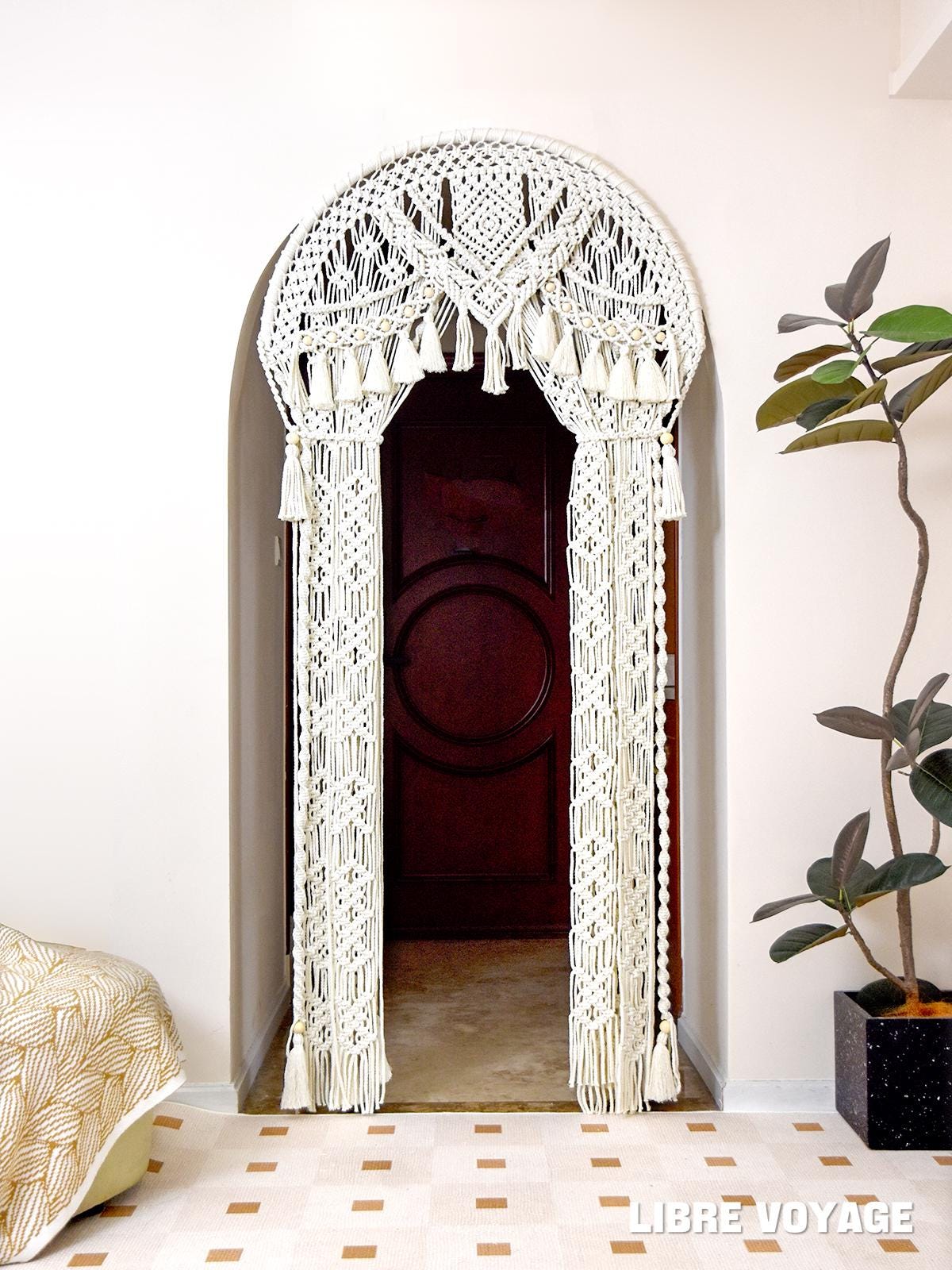
The first thing I hung was a cream cotton macramé panel, and the effect was immediate. The hard edge of the opening turned into something gentle, and the fringe moved a little every time someone walked through. It felt like the house was greeting you.
There are two good ways to hang it. You can mount a rod across the opening at the springline, which is the point where the straight sides end and the curve begins. This keeps the top of the arch fully visible above the fringe. Or you can mount a rod on the wall above the arch for a full-height panel. I prefer the springline method because it shows off the shape you are celebrating.
- Measure the width of the opening at the springline, and the distance from there to the floor. Buy a panel about the same width or slightly wider so it hangs full, not stretched.
- Choose an open, airy weave. Dense macramé blocks light and makes a hallway feel smaller.
- Mount the rod with anchors rated for the weight of the panel. Plaster and drywall both need proper anchors, not just screws.
- If the doorway is used constantly, add a simple cord tie-back on one side.
- Softens hard lines without permanent changes
- Adds movement and texture without using floor space
- Marks the transition between two rooms in a gentle way
Search terms: "macramé door curtain," "boho arch doorway curtain," "cotton fringe wall hanging"
Pampas Grass and Dried Stems Beside the Arch

A tall vase of pampas grass on one side of the arch was the easiest upgrade I made. The feathery plumes repeat the softness of the curve, and the doorway suddenly has a frame instead of just an opening.
Keep it on one side only. A single arrangement feels relaxed and natural, while one on each side can start to look formal, which is the opposite of boho.
- Choose a heavy ceramic or terracotta floor vase, and add a layer of pebbles or sand in the bottom for extra weight.
- Keep the stems at or slightly below the highest point of the arch so the two shapes work together.
- Stay with two or three natural tones, such as cream, wheat, and soft blush.
- Shake the stems outdoors before arranging to remove loose fluff, and keep the arrangement away from candles and heaters.
- Adds natural height in one step
- Lasts for months with no upkeep
- Echoes the curve of the arch with organic shapes
Search terms: "pampas grass large vase," "dried bunny tail grass," "terracotta floor vase"
A Woven Rattan Piece Above the Arch

There was an empty stretch of wall above our arch that bothered me for months. When I finally hung a large round woven piece right above the curve, it looked like the doorway had been wearing a crown all along. The round shape repeats the arch, which is why it feels so natural.
- Find the exact center of the arch with a tape measure, and mark it lightly with pencil rather than trusting your eye.
- Leave roughly 4 to 8 inches between the top of the arch and the bottom of the piece so neither competes for attention.
- Choose a piece with a diameter of roughly half the width of the opening or larger, so it reads clearly from across the room.
- Use a hook or anchor rated for the weight, and go into a stud where you can. Woven pieces are light, but a good anchor prevents surprises.
- Fills awkward blank space with warmth and texture
- Repeats the round shape of the arch
- Pairs well with every other idea in this article
Search terms: "round rattan wall decor," "woven wall hanging large," "seagrass wall basket"
Terracotta Limewash Inside the Curve

This was the boldest change, and the one I am proudest of. I painted only the inner curve of the arch (the depth of the doorway itself) in a warm terracotta limewash and left the walls a soft cream. When you look toward the next room, the warm color pulls your eye through, a bit like a low sunset.
Limewash has a soft, cloudy, slightly uneven look that suits boho style perfectly. Imperfection is the whole point, so it is very forgiving for beginners.
- Check the product instructions first. True limewash needs a porous surface, and painted drywall usually needs a recommended primer before you begin. Many brands also make limewash-style paints that go on like normal paint.
- Test a small patch and look at it in morning light and evening light before committing. Limewash dries lighter than it looks wet.
- Apply thin coats with a wide brush in loose, crisscross strokes, and let each coat dry fully before the next.
- Wear gloves and eye protection. True lime paint is alkaline and can irritate skin and eyes.
- Highlights the arch shape without adding clutter
- Uses a very small amount of paint
- Adds depth and warmth that flat paint cannot
Search terms: "terracotta limewash paint," "limewash effect paint," "wide limewash brush"
Trailing Plants Near the Arch

I mounted a slim wall shelf beside the arch and let a trailing plant spill down from it. After a few months, the vines reached toward the floor and the doorway looked like it had been quietly growing there for years. Nothing warms a house like something green and alive.
- For low light, pothos, philodendron, and heartleaf philodendron are forgiving and trail beautifully.
- If you have cats or dogs, note that pothos and philodendron are listed as toxic to pets by the ASPCA. Spider plant and Boston fern are generally listed as non-toxic choices.
- Place the plant at or above eye level so the vines can fall freely instead of being crushed against the floor.
- If the hallway has no natural light at all, use a small grow bulb or choose a good-quality faux plant.
- Adds living texture and movement to a still architectural feature
- Softens the corners on either side of the arch
- Grows more beautiful with time
Search terms: "floating wall shelf wood," "hanging planter macramé," "trailing pothos plant"
A Layered Jute Runner Underfoot

I used to ignore the floor under the arch completely. Then I laid a natural jute runner through the doorway with a smaller vintage-style rug on top, slightly offset. The threshold suddenly felt like an invitation, a soft path leading from one room to the next.
- Pick a low-profile flat-weave base such as jute or sisal, and make sure it clears any door that swings over it.
- Choose a runner that extends well beyond the arch on both sides so the doorway feels anchored.
- Place a smaller patterned or vintage-style rug on top, thin and flat, slightly off-center for a relaxed look.
- Put a non-slip pad underneath. Layered rugs on hard floors can slide, which is a real fall risk in a hallway.
- Grounds the doorway and defines the transition between rooms
- Adds texture and pattern at a reasonable cost
- Softens footsteps in a hallway
Search terms: "natural jute runner rug," "vintage style small rug," "non slip rug pad"
Warm Sconces That Glow at Dusk

The last thing I added was a pair of woven rattan sconces, one on each side of the arch, with soft warm bulbs. The first evening I switched them on, I just stood there. The curve glowed, the fringe caught the light, and the hallway I used to rush through became a place I lingered.
- Choose warm LED bulbs rated around 2700K or lower. LEDs run cool, which is much safer inside rattan or other natural-fiber shades. Always check the fixture's maximum wattage.
- Hang the sconces with the center of the light roughly 60 to 66 inches from the floor, evenly spaced on both sides of the arch.
- If you rent, use plug-in or rechargeable battery sconces that need no wiring, and cover the cords neatly.
- Add a dimmer or a dimmable bulb if you can, so the light can go soft in the evening.
- Turns the arch into a glowing focal point in the evening
- Adds soft, layered light to a dark hallway
- Works for renters and homeowners alike
Search terms: "plug in rattan wall sconce," "warm white LED bulb 2700K," "battery operated wall sconce"
Which Idea Fits Your Doorway
| Your situation | Start with this |
|---|---|
| Renting, cannot change walls | Macramé curtain or plug-in sconces |
| Dark, narrow hallway | Warm sconces and a low-profile runner |
| Blank wall above the arch | A large woven rattan piece |
| Homeowner wanting a bold change | Terracotta limewash on the inner curve |
| Pets in the house | Pet-safe plants and a heavy, stable vase |
Start with one idea, live with it for a week, then add the next. Each small step tends to make you want to take another.
Mistakes to Avoid

- Hiding the arch: a curtain or decor that covers the curve defeats the purpose of decorating it.
- Using a light vase for tall stems: it tips over the first time someone brushes past.
- Skipping the paint test patch: limewash looks different wet, dry, in daylight, and at night.
- Using cool white bulbs: they make a warm boho space feel cold and clinical.
- Ignoring door clearance: a thick rug can make the door drag or catch.
- Adding too much: if every idea goes in at once, the arch stops being the star.
Common Questions

What is the easiest boho idea for a beginner? A macramé curtain or a vase of dried stems. Both take minutes and can be swapped out whenever you want a change.
Can I decorate an arch if I rent? Yes. Rugs, freestanding plants, floor vases, plug-in sconces, and removable hooks all work without permanent changes. Check your lease before drilling or painting.
What colors work best for a boho arched doorway? Warm neutrals such as cream, sand, terracotta, and soft sage feel natural together.
How many ideas should I combine? Two or three is usually enough. Let the arch stay the star, and add more only if the space still feels open.
Do these ideas work for a wide arch or a narrow one? Yes. In a narrow arch, keep decor slim and light, such as a curtain and sconces. A wide arch can handle a floor vase, a plant shelf, and a larger wall piece.
Looking back, nothing about my doorway needed to be replaced or renovated. It only needed me to slow down long enough to notice it, and to give it a little care. That is the quiet lesson in almost every home project I have done.
If there is a doorway in your home you rush through every day without a second glance, try one small, soft change this weekend. It might become the place your whole house starts to feel like yours.
Shop the Story
- macramé door curtain
- pampas grass large vase
- round rattan wall decor
- terracotta limewash paint
- trailing pothos plant
- natural jute runner rug
- plug in rattan wall sconce
- hanging planter macramé
- vintage style small rug
- warm white LED bulb 2700K