
Curved Arch Headboard Wall Design
A real project that changed how a room sounded, not just how it looked, plus the painted, budget-friendly version and how to extend the arch to frame your nightstands
I expected to find a lot of photos and not much substance behind them, another bedroom trend that's really just a shape people like. What actually stopped me was a detail I hadn't considered at all, a real, described project where a curved headboard didn't just soften a room visually, it measurably softened how the room sounded. That's a different kind of argument than "it looks nice," and it's the one that convinced me this deserved real research.
Table of Contents
- A Real Project That Changed How a Room Sounded
- The Wall-to-Wall "Shelter" Headboard
- The Painted Alternative to Fabric
- Three Real Curved Styles, and Which Mood Each Suits
- Extending the Arch to Frame Your Nightstands
- Material Choices Making a Comeback
- Common Mistakes
- Common Questions
A Real Project That Changed How a Room Sounded
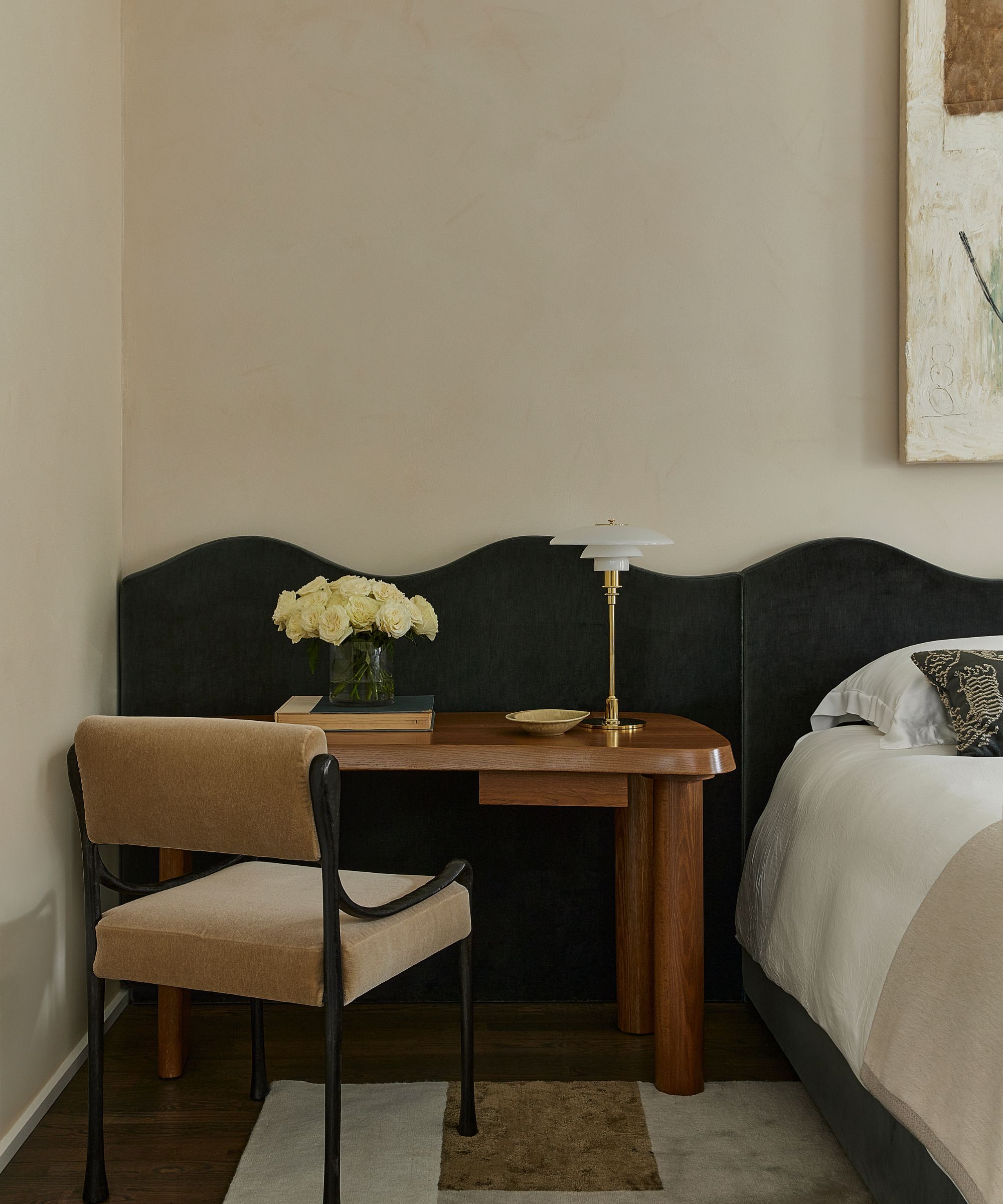
This is the detail that made me take the whole idea seriously, not just as decor but as something with a real, functional payoff.
A curved, upholstered, wall-spanning headboard isn't just a shape choice, in a bedroom specifically, it's a genuine sound-dampening surface, absorbing the kind of echo a flat, hard wall would otherwise bounce back. That's a real reason to choose fabric and curve together, beyond how the finished wall photographs.
The Wall-to-Wall "Shelter" Headboard
The project above isn't an isolated example, it's part of a specifically named, documented 2026 direction.
- Extend the upholstered or painted arch beyond the width of the bed frame itself, all the way to the wall's edges, rather than stopping at the mattress width.
- Choose a curved top edge specifically if your room already has a lot of straight, angular lines elsewhere, current guidance ties the curve directly to softening that kind of space.
- Think of this as a cocooning, enclosing gesture rather than a single decorative object behind the bed, the "shelter" name reflects how fully it's meant to wrap the sleeping area.
- A specifically named, documented 2026 direction, not an invented category
- Delivers a real acoustic benefit alongside the visual one, based on the real documented project above
- Scales to almost any bedroom size, since it's defined by proportion to the wall, not a fixed dimension
The Painted Alternative to Fabric
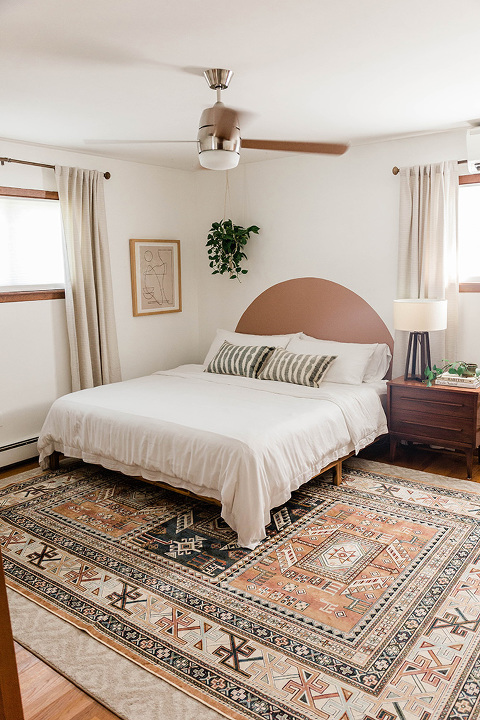
Not everyone wants to commit to upholstery, and there's a real, specifically documented alternative that costs a fraction as much.
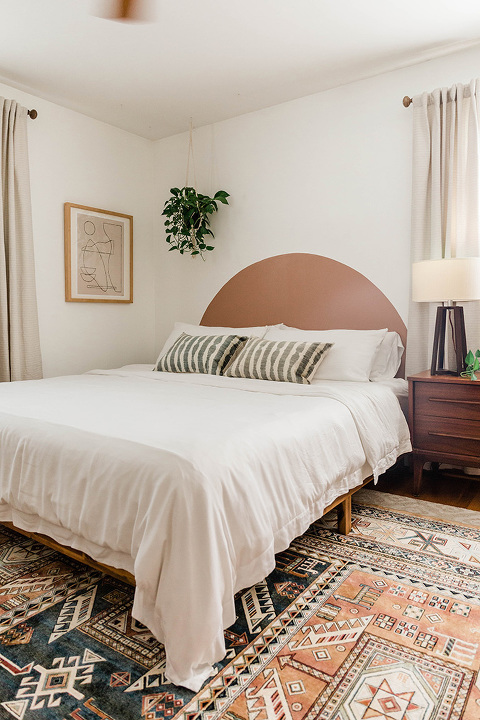
- Paint a curved arch shape directly on the wall behind the bed, following the same wall-to-wall proportions as an upholstered "shelter" headboard, if you want the look without the material cost.
- Choose this option specifically if you want an easy-to-clean surface, current guidance credits the paint approach with being wipeable in a way fabric simply isn't.
- Combine a painted arch with a smaller, separate upholstered panel at pillow height if you want some of the acoustic softening benefit alongside the paint's low cost and easy care.
Three Real Curved Styles, and Which Mood Each Suits
"Curved headboard" isn't one single look, and current documentation shows genuinely different moods coming from very similar shapes.


- Choose a gentle arch with soft patterned fabric if you want a classic, slightly nostalgic feeling refreshed for a current room.
- Choose a gentle curve with plain, soft fabric in a lighter tone if coastal calm is the mood you're after.
- Choose curved edges built into an integrated, architectural headboard detail if you want the mid-century influence current guidance associates with that specific combination.
Extending the Arch to Frame Your Nightstands
This is the idea that pushes a curved headboard from a bed feature into genuine architecture, and it's a real, documented design choice.
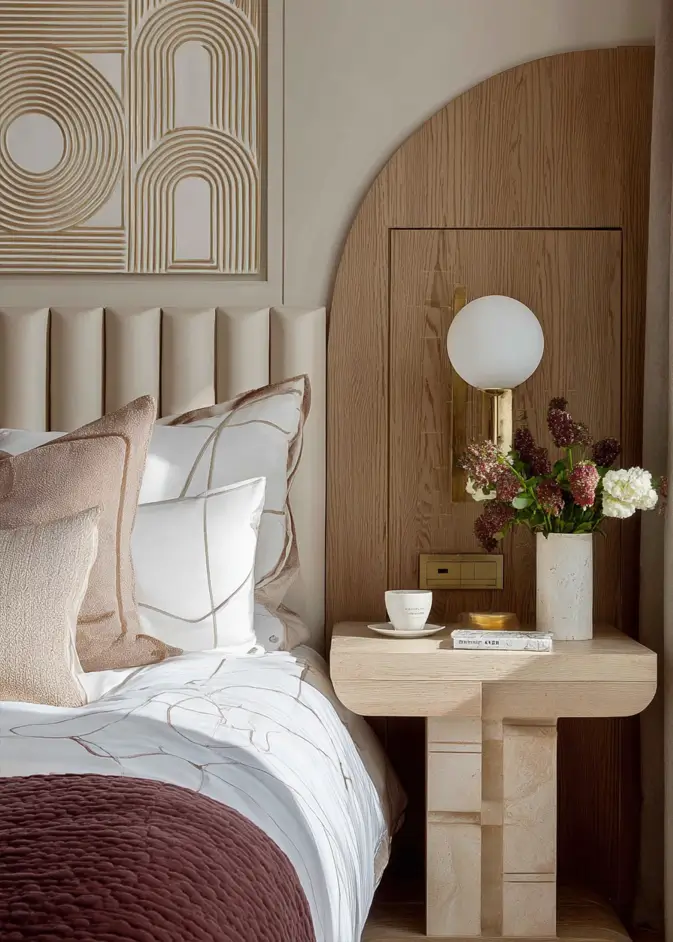
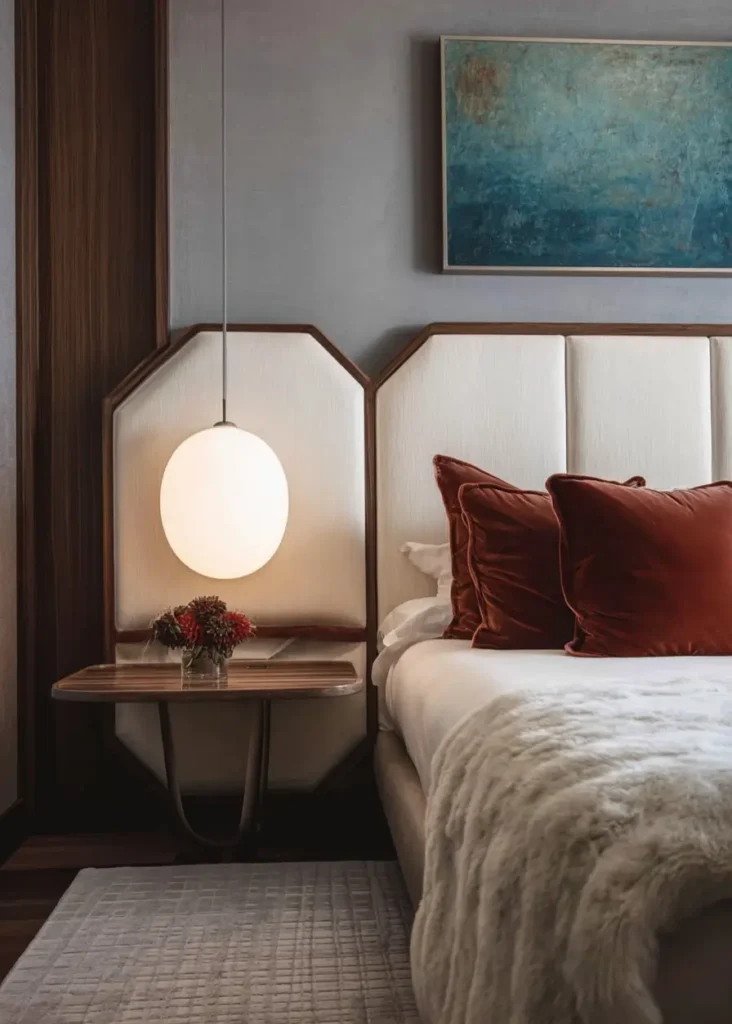
- Extend a wood-framed arch wide enough to visually enclose both nightstands, not just the width of the mattress and pillows.
- Combine a wood arch frame with a central upholstered panel if you want both the architectural scale of wood and the tactile comfort of fabric in one design.
- Use the arch's width as a way to visually define the entire sleeping zone as one cohesive area, current guidance ties this specifically to a layered, deliberate design rather than a headboard treated in isolation.
Material Choices Making a Comeback
- Tufted velvet: best paired with neutral bedding and warm accent colors, current guidance ties this combination specifically to a cohesive, timeless look.
- Leather or faux leather: reads well against a textured wall, current documentation pairs the two rather than a flat, plain backdrop.
- Painted or mural finish: the lowest-cost, most easily refreshed option, and the only one of the three that's genuinely wipeable.
Common Mistakes
- Sizing the arch to the mattress instead of the wall. The documented "shelter" headboard trend is specifically defined by stretching to the wall's full width, not stopping at the bed frame.
- Mixing all three curved styles, classic, coastal, and mid-century, in one room. Each is documented as a distinct, coherent mood, combining them risks diluting all three.
- Choosing fabric purely for looks without considering the acoustic benefit. The real documented project specifically credits the wall-spanning velvet headboard with improving the room's sound, not just its appearance.
- Assuming a painted headboard can't look architectural. Current guidance frames painted headboard walls as a real focal point in their own right, not a lesser substitute for upholstery.
Common Questions
Does a curved fabric headboard actually change how a room sounds, or is that an exaggeration? A real, documented project specifically credits a wall-to-wall velvet headboard with improving a room's acoustics, alongside softening its visual feel, so the effect is grounded in an actual described project, not just a general claim.
Is a painted arch a real substitute for an upholstered one, or just a cheaper compromise? Current guidance treats it as a legitimate, distinct 2026 trend in its own right, with its own specific advantage, being wipeable, rather than framing it as a lesser version of fabric.
What's the easiest way to add architectural weight to a curved headboard? Extending the arch's width to frame the nightstands on either side is a real, documented technique for turning a simple headboard into something that reads as built-in architecture.
Which material is most associated with the classic, timeless direction specifically? Tufted velvet in a soft brown hue is described as making a strong comeback for exactly that classic, elegant feeling.
Do I need to choose just one curved style, or can my headboard evolve over time? There's nothing stopping you from changing direction later, current documentation simply notes that each style, classic, coastal, or mid-century, reads most coherently when it isn't blended with the others at once.
What I keep coming back to is that acoustics detail, it's such a small, unglamorous reason compared to everything else on a mood board, and it's the one that actually convinced me this is worth doing properly rather than picking a shape because it looked good in a photo.
If you're choosing between fabric and paint, let the acoustic benefit be part of that decision, not just the look. A wall-spanning fabric arch does real, measurable work a painted one can't.
— written after learning the softest-looking option was also doing the most work
Shop the Story
- ochre velvet upholstery fabric
- wall to wall headboard panel kit
- tufted velvet headboard
- arch stencil for painted headboard
- wood arch nightstand frame
- faux leather tufted panel